
EPISODE · May 5, 2026 · 53 MIN
Surgeons Are Still Testing for Leaks the Same Way You'd Check a Bicycle Tire with Liam Burns
from The Crux of Medtech · host Crux of Medtech
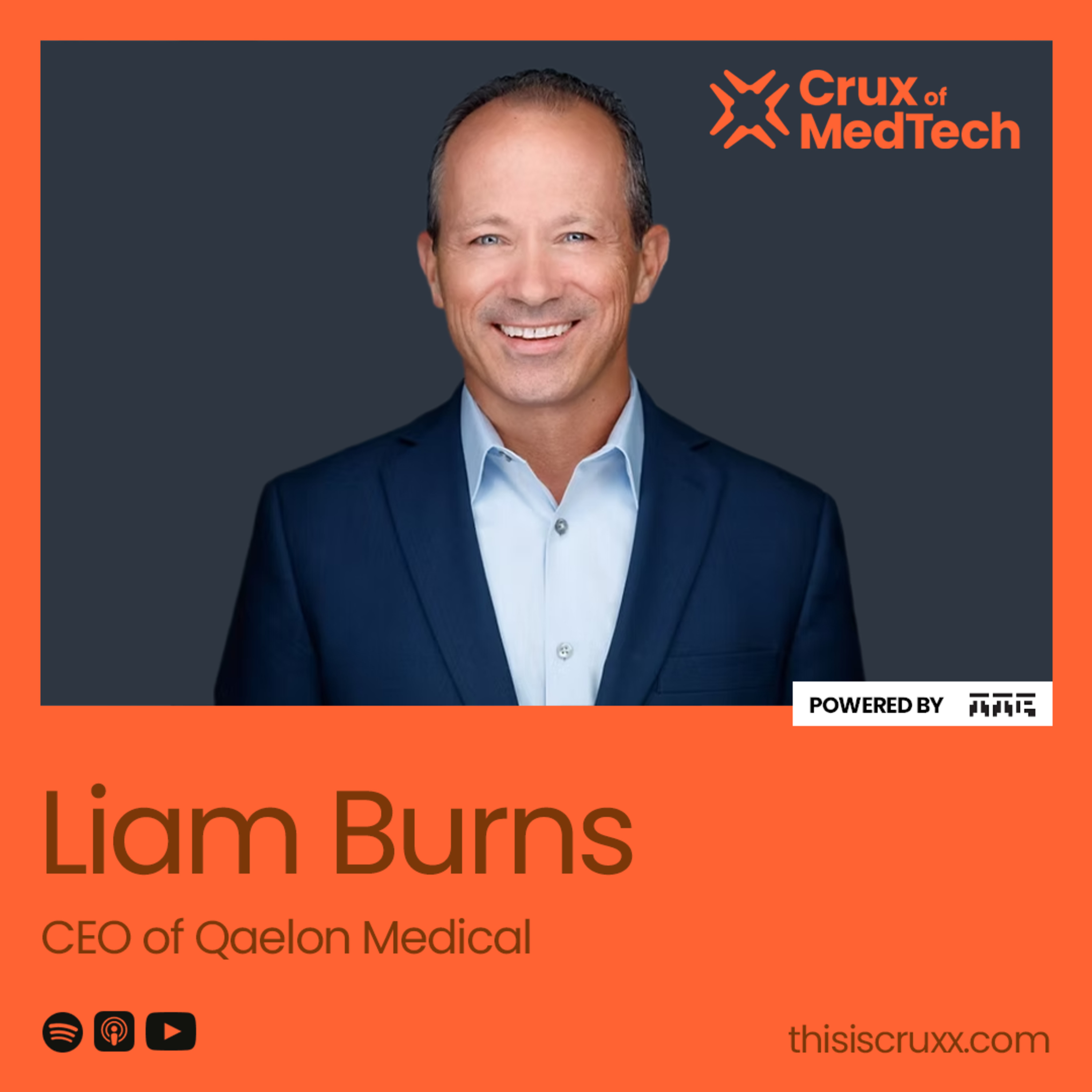
Liam Burns, CEO of Qaelon Medical, joins Henry Norton to talk about one of surgery's most dangerous and overlooked complications: the anastomotic leak.With leak rates in colorectal surgery now estimated at 18-20% and the standard detection method dating back to 1910, Liam explains how Qaelon is digitizing leak detection to give surgeons real-time, objective data in the OR.He also shares the personal motivation driving the mission, his son Colin's battle with Crohn's disease, the leadership lessons he carried from the US Navy into medtech startups, and why he believes your device's data belongs to the surgical community.Key Topics:Why surgical leak rates are far higher than the community historically believedHow Qaelon's gas-monitoring platform detects leaks in under 30 secondsThe case for constant flow insufflation in robotic surgeryBuilding a GI data ecosystem from pre-op through post-opCareer lessons from J&J/Ethicon, Power Medical, and ConMedWhy medtech founders should watch the full procedure, not just their product's momentRelated Insights:How capitated CMS payments are shifting the financial burden of complications back onto US hospitalsThe combination of insufflation and perfusion imaging for detecting subtler post-operative defectsWhy "give me what I want, not what I ask for" should guide every medtech product roadmapCore Challenges:The air bubble test, surgery's standard leak detection method since 1910, is a visual analog inspection that misses defects invisible to the naked eye. Yet it remains the only tool most surgeons have.Surgeons have never been able to objectively measure leak size, meaning there is no data-driven way to assess which defects are clinically significant and which are not.Tune in now to hear how Qaelon Medical is replacing a century-old test with real-time digital leak detection, and what it takes to build a medtech startup around a problem this personal.The Crux of MedTech podcast is brought to you by Cruxx, a specialist surgical robotics recruitment agency. To learn more about Cruxx, click here.A big thank you to our sponsors on this season of the podcast; TTP plc With a 35-year track record, TTP excels in turning innovative ideas into market-ready solutions. Their team of 300+ experts deliver breakthrough solutions in areas ranging from endoluminal robotics and navigation systems to ultrasound imaging. Whether you're a startup or a multinational, TTP plc can accelerate your development with the latest technologies. Learn more at TTP.com
Embed this episode
NOW PLAYING
Surgeons Are Still Testing for Leaks the Same Way You'd Check a Bicycle Tire with Liam Burns
No transcript for this episode yet
Similar Episodes
No similar episodes found.
Similar Podcasts
No similar podcasts found.