
EPISODE · Aug 7, 2026 · 20 MIN
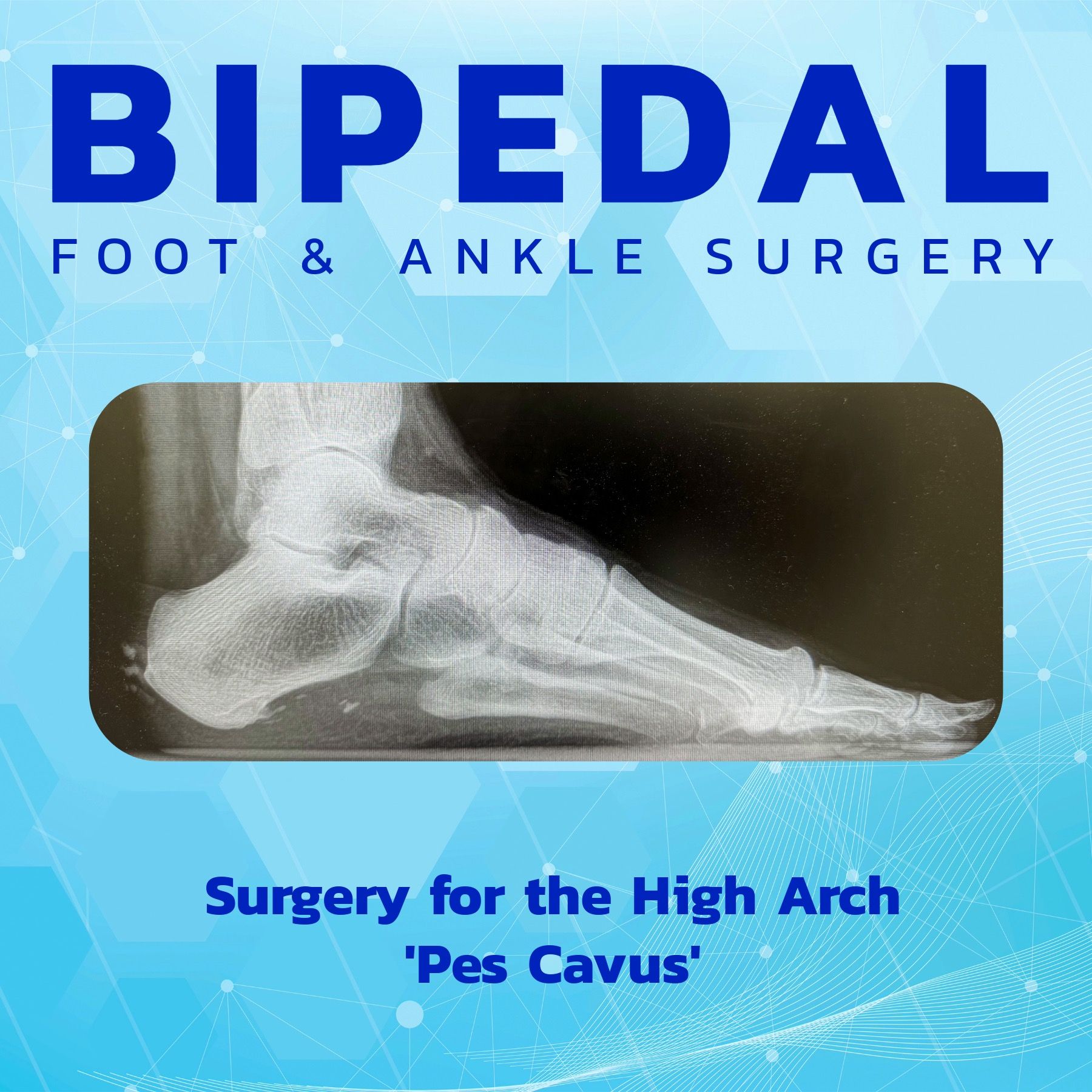
Surgery for the High Arch - Pes Cavus
from BIPEDAL · host Robert Weinstein, DPM, FACFAS
Pes cavus (high arch) is notoriously difficult to approach since there are so many manifestations. It may be masked since there are a variety of ways the foot and leg will compensate, and often the presenting symptoms seemingly have nothing to do with the deformity. A classic example is the chronic ankle sprainer. While the injury is in the ankle, the set up for the injury is rigidity in the foot structure. Another example is multiple hammered toes. The patient sees their curled toes, but the reason is mechanical instability across a structurally high arch leading to imbalance and downstream contractures. Notably, many of these patients suffer from neurological issues, which may not have even been discovered yet. Part of the workup for pes cavus is a thorough neurological inventory - reflexes, range of motion, muscle strength, gait observation, and occasionally EMG/NCV studies or even back MRI. The practitioner has to keep all options open for reconstruction. The goal is a stable, plantigrade foot. Lowering the arch height may be the visual objective, but restoring balance and stability is the surgical objective. This is why so much time is placed in clinical and radiographic evaluation - to formulate the best treatment plan, which is often multi-dimensional. Tendon transfers are commonly performed as part of a comprehensive surgical reconstruction. This involves changing lever arm directions and power. Assisting weaker muscles or weakening over powering muscles is the goal. When we think about the foot moving about the ankle, the lever arm and power of the tendon becomes important - tendons attaching further from the axis exert greater torque about that axis, and tendons of greater diameter exert more force than tendons of smaller diameter. Therefore it is a careful balance of force enhancement and force reduction along with force vectors that is very much an art on the part of the surgeon. Bone work is done to create a stable platform across which the tendons can function. When a structural deformity exists (for example a rigidly plantarflexed first ray) then tendon transfer alone will not achieve the goal of stability. This is when osteotomy or arthrodesis is used. In cases of neurological deficit we almost always choose arthrodesis, for its predictable long term success and maintaining a sufficient structure upon which to balance and ambulate. At least for as long as possible, and some of the neurological conditions are progressive and degenerative. The content of this podcast is for educational and informational purposes only and does not constitute medical advice. Always seek the advice of your physician or other qualified health provider with any questions you may have regarding a medical condition.
Embed this episode
What this episode covers
In this episode I discuss the high arch foot and surgical decision making. This process involves deformity evaluation for apex of condition, reducibility of the arch height, and soft tissue versus bone correction, including tendon transfers and osteotomies. While a relatively small percent of pathology, pes cavus is a difficult condition to surgically manage since the manifestation of the condition can have so many downstream effects.
NOW PLAYING
Surgery for the High Arch - Pes Cavus
No transcript for this episode yet
Similar Episodes
No similar episodes found.
Similar Podcasts
No similar podcasts found.