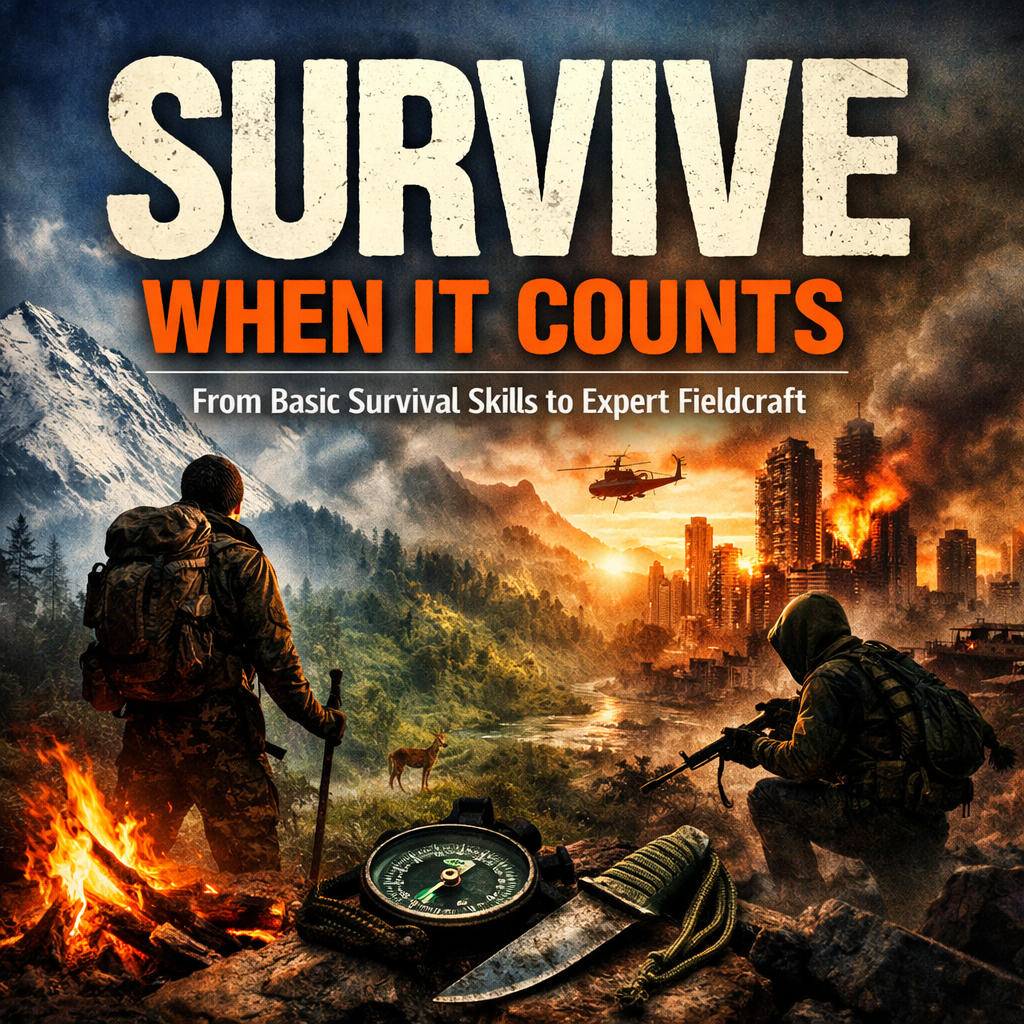
Survival Training For Beginners episode artwork

EPISODE · Jun 16, 2026 · 3 MIN

Survival Training For Beginners

from Survive When It Counts

If you’re looking for survival training for beginners, the best place to start is not with dramatic scenarios or extreme gear. It starts with calm thinking, simple skills, and a clear understanding of what keeps you alive when conditions turn difficult. In this episode, we’re breaking survival down into practical steps anyone can learn, whether you’re heading into the backcountry, preparing for emergencies, or just want more confidence outdoors. The first lesson in survival training for beginners is mindset. Panic burns energy, clouds judgment, and turns small problems into big ones. The goal is to slow down, assess your situation, and focus on the basics: shelter, water, fire, and signaling. If you can stay calm, you can make better decisions. That’s why survival is not just about tools or toughness. It’s about discipline, awareness, and the ability to think clearly when things go wrong. Once your mindset is in place, the next step is understanding priorities. Water comes first because dehydration can quickly become life-threatening. Learn how to find it, collect it, and purify it. Fire comes next because it provides warmth, helps dry clothing, boosts morale, and can make water safer to drink. Shelter is equally important, especially in cold, wet, or windy conditions. Even a simple tarp, natural cover, or debris shelter can make a major difference. Beginners often think survival means doing everything at once, but the real skill is knowing what matters most right now. Another key part of survival training for beginners is learning to work with your environment instead of against it. That means understanding weather, terrain, and clothing. If you know how to read the sky, spot changing conditions, and choose the right layers, you reduce risk before it becomes an emergency. It also means practicing basic navigation so you don’t get lost in the first place. A map, compass, and the ability to identify landmarks can save time, energy, and stress. The more familiar you are with your surroundings, the less likely you are to make dangerous mistakes. Finally, beginners need to build practical habits, not just knowledge. Pack a simple emergency kit. Learn basic first aid. Practice setting up shelter before you need it. Try starting a fire in poor conditions. Carry water treatment options and a reliable signaling method. These small actions build confidence fast because they turn theory into experience. Survival skills improve through repetition, and every bit of practice makes you more capable when it counts. Survival training for beginners is really about building a foundation. You don’t need to master everything at once. Start with the essentials, practice them regularly, and add new skills over time. The more prepared you are, the less likely you are to freeze when conditions turn hostile. Stay calm, stay aware, and focus on the fundamentals. That’s how survival becomes skill, and skill becomes confidence. Sponsor: Find the book on Amazon and Books Central Website

If you’re looking for survival training for beginners, the best place to start is not with dramatic scenarios or extreme gear. It starts with calm thinking, simple skills, and a clear understanding of what keeps you alive when conditions turn difficult. In this episode, we’re breaking survival down into practical steps anyone can learn, whether you’re heading into the backcountry, preparing for emergencies, or just want more confidence outdoors. The first lesson in survival training for beginners is mindset. Panic burns energy, clouds judgment, and turns small problems into big ones. The goal is to slow down, assess your situation, and focus on the basics: shelter, water, fire, and signaling. If you can stay calm, you can make better decisions. That’s why survival is not just about tools or toughness. It’s about discipline, awareness, and the ability to think clearly when things go wrong. Once your mindset is in place, the next step is understanding priorities. Water comes first because dehydration can quickly become life-threatening. Learn how to find it, collect it, and purify it. Fire comes next because it provides warmth, helps dry clothing, boosts morale, and can make water safer to drink. Shelter is equally important, especially in cold, wet, or windy conditions. Even a simple tarp, natural cover, or debris shelter can make a major difference. Beginners often think survival means doing everything at once, but the real skill is knowing what matters most right now. Another key part of survival training for beginners is learning to work with your environment instead of against it. That means understanding weather, terrain, and clothing. If you know how to read the sky, spot changing conditions, and choose the right layers, you reduce risk before it becomes an emergency. It also means practicing basic navigation so you don’t get lost in the first place. A map, compass, and the ability to identify landmarks can save time, energy, and stress. The more familiar you are with your surroundings, the less likely you are to make dangerous mistakes. Finally, beginners need to build practical habits, not just knowledge. Pack a simple emergency kit. Learn basic first aid. Practice setting up shelter before you need it. Try starting a fire in poor conditions. Carry water treatment options and a reliable signaling method. These small actions build confidence fast because they turn theory into experience. Survival skills improve through repetition, and every bit of practice makes you more capable when it counts. Survival training for beginners is really about building a foundation. You don’t need to master everything at once. Start with the essentials, practice them regularly, and add new skills over time. The more prepared you are, the less likely you are to freeze when conditions turn hostile. Stay calm, stay aware, and focus on the fundamentals. That’s how survival becomes skill, and skill becomes confidence. Sponsor: Find the book on Amazon and Books Central Website

NOW PLAYING

Survival Training For Beginners

0:00 3:14

No transcript for this episode yet

We transcribe on demand. Request one and we'll notify you when it's ready — usually under 10 minutes.

Breaking News Show | eTurboNews Juergen Thomas Steinmetz News is relevant to the global travel and tourism industry, human rights and global issues.Breaking news when it happens and only from the source. LIGHTS, CAMERA, SMILE! Creatives Club Media Lights, Camera, Smile, is a podcast for anyone with a dream to share something with the world, out of the overflow of themselves - be it their mind, their heart, their personalities, and much more. Each of us are alive in this moment in time, with an innate ability to have ideas and create various things to benefit both ourselves and the people around us for a reason, and here, you will find the encouragement, the inspiration, and the motivation to do just that. Hosted by Cicily, founder of Creatives Club, she dives into various topics surrounding creativity and business. Exploring entrepreneurship for creatives in a corporate reality, sharing tips and tricks in a media centered company, answering questions regarding what a creative actually is are just a few of the things discussed on this podcast. Be encouraged to create for yourself as Cicily gets vulnerable by pivoting the camera to herself for the first time.To submit questions for Cicily to answer, or have her address certain t Solving for Change MOBIA Technology Innovations Solving for Change welcomes business and technology leaders to share stories of bold business transformation within complex organizations. In an era when technology and markets are changing around businesses, the key to staying competitive is to evolve in response to those changes.  MOBIA’s Mike Reeves and Marc LeBlanc investigate business transformation, deconstructing the challenges, ambitions, and market disruptions that drive companies to embark on transformation journeys, and exploring their unique approaches to achieving meaningful outcomes.  What sparks leaders to pursue business transformation? How do they overcome the challenges along the way? What are the keys to creating enduring change?  Through in-depth conversations with business and technology leaders, Mike and Marc answer these questions and explore how businesses evolve by pulling four key transformation levers: people, process, technology, and culture. Invictus by Greyana, A Tomione Podfic M+G Readings Sporadic uploads thanks to gallstones.Voldemort intended the object to be used by his most loyal follower in the event that his horcruxes were destroyed, but it ended up in Hermione’s possession instead.It sent her back to a time when he was much less the monster that she’d always known him to be. Nothing could have prepared her for the intelligence and charm of Tom Riddle.He isn’t who she thought he was.Hermione discovers that it’s a dark descent into the madness of the man she should hate, but can’t… a descent she will never emerge fr

Frequently Asked Questions

How long is this episode of Survive When It Counts?

This episode is 3 minutes long.

When was this Survive When It Counts episode published?

This episode was published on June 16, 2026.

What is this episode about?

If you’re looking for survival training for beginners, the best place to start is not with dramatic scenarios or extreme gear. It starts with calm thinking, simple skills, and a clear understanding of what keeps you alive when conditions turn...

Can I download this Survive When It Counts episode?

Yes, you can download this episode by clicking the download button on the episode player, or subscribe to the podcast in your preferred podcast app for automatic downloads.
URL copied to clipboard!