
EPISODE · Oct 3, 2025 · 1H 18M
Surviving and Thriving: The Enduring Relevance of Rhetoric and Grace
from Lens of Hopefulness · host John Passadino
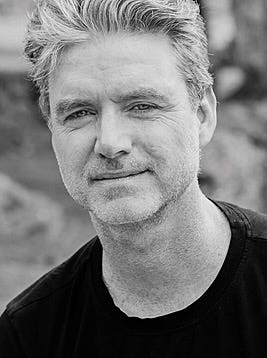
In my latest episode is from “The John Passadino Show,” I interviewed Professor Daniel B. Gallagher, a philosophy and literature professor at Ralston College with prior experience a decade of secretarial service at the Vatican for Popes Benedict XVI and Francis. Professor Gallagher, a former Catholic priest, specializes in medieval philosophy and Latin literature and is an accomplished writer on metaphysics, aesthetics, and theology.We opened with a discussion of rhetoric — defined as the art of persuasion, informing, motivating, or entertaining. Gallagher explained the three classical pillars of rhetoric:- Ethos (character/credibility)- Pathos (emotional appeal)- Logos (logical argument)He also highlighted that these elements were central in ancient and classical education, that people cultivated persuasive skills instead of naturally possessing them, and discussed their shifting role and perception in today’s social media-driven society. I agreed that social media posting and messaging have dramatically changed our communication for better and for worse.Professor Gallagher compared ancient and modern communication, noting the erosion of face-to-face conversation and the prevalence of online interactions. We discussed how emotional appeals (pathos) often dominate internet discourse, sometimes at the expense of reason, and how combining ethos, pathos, and logos makes for effective communication.When I asked Daniel to point out an example of stellar execution of rhetoric, he used Dr. Martin Luther King Jr. as his example. The professor cited King as a master of blending all three rhetorical aspects. The professor hailed King’s “I Have a Dream” speech as a specific example of rhetorical excellence.Gallagher also mentioned Donald Trump, for purpose of analyzing speech patterns, saying that even though his style is often criticized, Trump communicates rhetorically on purpose, using persuasive techniques from his business experience, and that his speech is calculated. I agreed and emphasized Trump has specialized in “pathos,” in a manipulative style since the 2016 election, during which he bragged of free press coverage. Like moths to a light, the media flocks to every word he says, good or bad, and propagates it out to the public, who leap to emotional conclusions, which I feel is Trump’s goal. Incite emotional responses. Pathos.Gallagher suggested looking beyond political debate for good examples of communication — community meetings, fiction, and non-political writing all provide valuable models. He believes practical, local debates open opportunities for constructive dialogue, contrasting them with the polarization of “big questions” and national politics. We thought back to the concept of town meetings, where community members need to solve a particular problem, such as whether to invest in a town pool, versus determining what ideology works best for the vast population of a complex nation, a near impossible task when not using a rhetorical skill set.The professor made a great point while comparing today’s world to the ancient world stating, “…in the ancient world, you had to either fight really well…or you had to speak really well and usually you had to do both and Julius Caesar is a good example of someone who could do both….”Imagine a world in which you needed to refine your skills to survive versus today when simply filming an altercation and posting it can garner hundreds of thousands of views. What would our political world look like if it consisted of skilled orators?The conversation then shifted to Gallagher’s experience working with the Vatican on the Pope’s secretarial staff. His duties included speechwriting, diplomatic communication, and translating in Latin. He provided insights into the Vatican’s structure, the Pope’s spiritual — rather than purely administrative — authority. I talked about the grass roots Catholics who volunteer in parish life and how far removed they are from the hierarchy of the Pontiff yet are true representatives of the church.We spoke of the new Pope Leo and how he reached out recently to families whose loved ones were victims of a school shooting. Daniel said, “It was directly to console the families of the victims and the community. And it goes via the archbishop…it was a very touching…” and it typified the form of communications Daniel accomplished.I commented on how we focus so much on ideology and who is following proper rules and the resulting negative opinon while neglecting to see the goodness in the Holy See.We then spoke of God’s grace, and Gallagher shared his personal journey from priesthood to parenthood, emphasizing grace as an unearned, freely given gift. We discussed human suffering — its theological implications, and the role of free will in suffering. Sometimes humans create their own suffering through choices made. We spoke of dealing with diseases like cancer and of collective tragedies like 9/11 and the Holocaust.Why is it that people come together during challenging times? Why can’t we do so on normal days? And why do those tragedies occur in the first place? Often, free will drove humankind toward toxic choices.I spoke of seeing local artists painting a colorful mural at a beach and how art and beauty were representations of God’s grace in everyday life. Those people got lost in their art and didn’t focus on the negatives we are continually drilled with. So, my answer is, us humans can do it. We can focus on goodness and grace during normal times. There’s no need to use tragedy as a conduit to put our differences aside.Below, I summarize what I learned from the interview:- Rhetoric is a learned, practiced skill with enduring relevance for meaningful, constructive conversation. Unfortunately, it’s missing from today’s “social media” communications, and it seems a very small percentage can practice the art to its fullest potential.- Effective communication requires integrating ethos, pathos, and logos, especially in divisive or emotional contexts. In ancient times people needed to practice it to survive. Today, people wing it, and the results can be disastrous and toxic.- Activism, volunteering, and community are essential to healing and change versus attacking each other on social media or via a bully pulpit.- Grace is a transformative theme — understood not just through our faith, but as an everyday phenomenon of unexpected generosity. The Professor spoke of grace he’s received via his family and stated, “Grace is nothing more than receiving something which you are entirely unworthy of. In fact, it is receiving a gift which you did everything to forfeit or even refuse.”- Open philosophical engagement — including disagreements and discoveries — enriches personal growth and connections. We need to share ideas and opinions to grow as humans.We closed the episode with reflections on the value of authentic conversation and encouragement to seek high-quality writing, such as Gallagher’s articles on Medium, for continuing the deep philosophical discussions as heard in the interview.Regarding grace, I spoke to a distinguished professor, and I would not have met him if God’s grace had not guided me.You can see and hear the full interview on YouTube or on Spotify, Apple Podcasts, Amazon Music, and Audible. This is a public episode. If you would like to discuss this with other subscribers or get access to bonus episodes, visit lensofhopefulness.substack.com
Embed this episode
Ready to play
Surviving and Thriving: The Enduring Relevance of Rhetoric and Grace
No transcript for this episode yet
Similar Episodes
No similar episodes found.
Similar Podcasts
No similar podcasts found.