
EPISODE · May 2, 2026 · 24 MIN
Swing Trading Is Better Than Day Trading For Most People
from Breaking News To Trading Moves
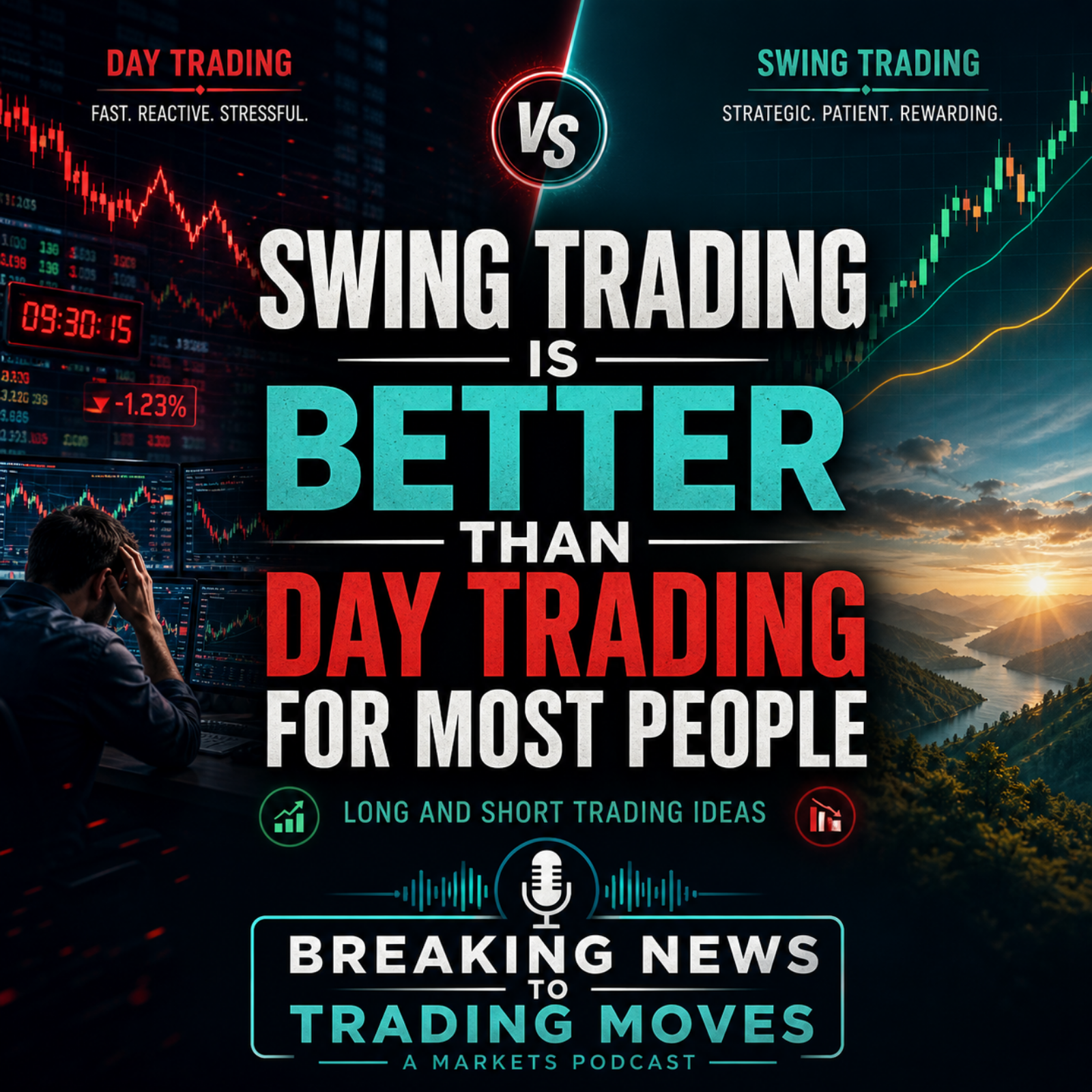
In this episode of Breaking News to Trading Moves, we debate whether swing trading offers a more realistic path for most retail traders than day trading. The discussion starts with a powerful analogy: building a suspension bridge is difficult, but at least the maths is fixed. Trading is different. Markets move like a Category 5 hurricane, with algorithms, liquidity, news, fees and sudden shocks changing every second.The case for swing trading is built around survival. Most people are not full-time traders. They have jobs, families, limited capital and limited emotional bandwidth. That makes the intraday market difficult, because every decision happens under pressure. Day traders face spreads, slippage, commissions, fast-moving order books and the stress of watching every tick. Why Swing Trading May Suit Most PeopleSwing trading gives the retail trader more space to think. Instead of reacting to every candle, the trader can study daily and weekly charts, wait for cleaner setups, and make decisions when the market is closed. Calmer decision-making often leads to better discipline. A trader who is not staring at a flashing screen all day is less likely to revenge trade, chase breakouts, panic sell, or cut winners too early.The episode also explores the cost problem. Frequent trading creates friction. Every round trip can involve spreads, fees and slippage. For a small account, those costs can become a serious hurdle before the trader has even made a profit. Swing trading reduces the number of trades, helping each setup develop with less drag.The Day Trading CounterargumentThe debate does not ignore the appeal of day trading. Intraday trading offers one major benefit: no overnight exposure. A day trader can close the laptop knowing they are flat, avoiding earnings gaps, geopolitical shocks and after-hours news. The episode also looks at simulated prop firms, liquidity rebates, drawdown limits and the idea that disciplined day traders may profit from emotional mistakes.But the question is not whether day trading can work. The question is whether it is better for most people. Day trading may suit a small group of disciplined traders who understand order flow, risk limits and market microstructure. For the average person, the speed, stress and frequency of decisions can make it a much harder game.Main Points CoveredWhy swing trading may align better with normal work and life schedulesHow daily and weekly charts can reduce intraday noiseWhy transaction costs can damage small trading accountsHow day trading removes overnight gap riskWhy simulated prop firms can help some traders but may also create pressureHow emotional trading and thesis drift damage both methodsWhy risk management matters more than the chosen time frameThe Core LessonWhether you trade intraday or hold for several days, the maths must work. A strategy without risk control is not a strategy; it is hope dressed up as confidence. Risking too much, trading too often, ignoring costs or treating the market like a casino will eventually destroy the account.Swing trading is better for most people because it gives traders the chance to step back, think clearly, avoid intraday friction, and build a process around patience rather than speed. Day trading can still be viable, but only for those who can operate with strict rules, emotional control and a proven edge.Both sides agree on one point: the market does not reward excitement. It rewards discipline, maths, patience and execution. Whatever time frame you choose, the structure only holds if the numbers are sound.#StockMarket #Trading #Investing #DayTrading #SwingTrading #TradingPsychology #RiskManagement #RetailTrading #TechnicalAnalysis #TraderMindset #TradingStrategy
Embed this episode
Ready to play
Swing Trading Is Better Than Day Trading For Most People
No transcript for this episode yet
Similar Episodes
No similar episodes found.
Similar Podcasts
No similar podcasts found.