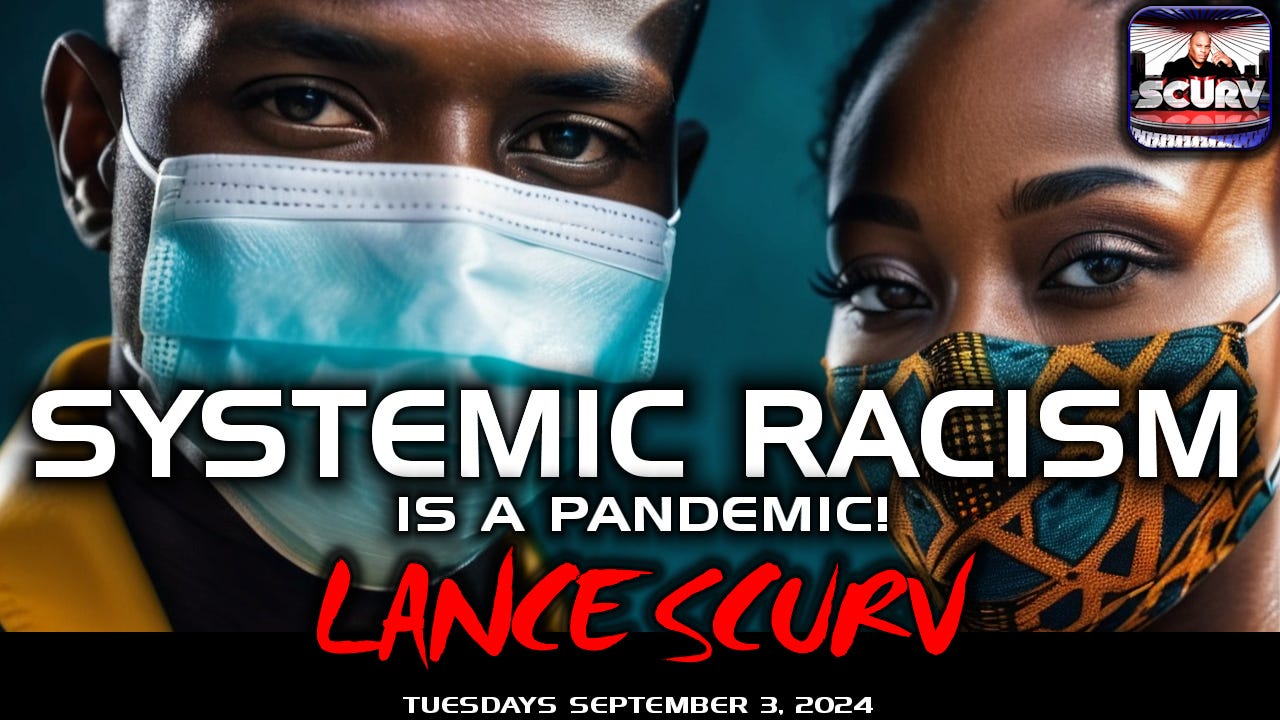
SYSTEMIC RACISM IS A PANDEMIC...
from LanceScurvX Hosted by LanceScurvX
The experience of African-Americans in the United States has been deeply shaped by systemic racism embedded within the various systems that are supposed to ensure fairness and justice for all citizens. While the narrative of equal opportunity and justice for all is promoted as a cornerstone of American democracy, the reality for Black Americans has often been far from this ideal. Generations of African-Americans have faced systemic barriers, discrimination, and violence that have left many disillusioned and skeptical of the institutions meant to protect and serve them. For many African-Americans, the struggle against systemic racism is not merely a historical footnote but a continuing reality. From the judicial system to healthcare, education, and beyond, Black Americans have repeatedly encountered disparities that reveal the deep-seated inequities within these systems. These disparities are not just about isolated incidents or individual failures but are the result of long-standing institutional practices that have consistently marginalized Black communities. As a result, African-Americans have often found themselves disenfranchised and disappointed by systems that were never designed with their well-being in mind. The widespread disillusionment with these systems is rooted in lived experiences of injustice and inequality. For many, the realization that these systems are not just failing but actively working against them comes with a profound sense of betrayal. This feeling of betrayal is particularly acute when considering the promises of freedom, equality, and justice that are supposed to define the American experience. Instead, African-Americans have often been met with a reality that is starkly different, one where their rights are not guaranteed but are contingent on a system that is all too willing to deny them. This discussion seeks to explore the specific ways in which African-Americans have been disenfranchised and disappointed by the various systems in the United States. By examining the key institutions that govern American life, we can better understand why Black Americans have long been skeptical of these systems and why this skepticism is not just justified but necessary. Through detailed exploration of each system, we will uncover the ways in which they have perpetuated inequality and injustice, providing a comprehensive understanding of the Black experience in America. Judicial System The judicial system, which includes courts, judges, and the entire legal process, has long been a source of injustice for African-Americans. From the days of slavery through the Jim Crow era and into the present, the courts have often been used as a tool of oppression rather than justice. The criminalization of Black bodies, disproportionately harsh sentencing, and the over-policing of Black communities are just a few examples of how the judicial system has failed African-Americans. This system, which is supposed to be blind to race, has repeatedly shown its bias, leading to a profound distrust among Black Americans. Courts and Legal ProcessesAfrican-Americans have faced a legacy of biased legal practices that continue to this day. Historically, courts have upheld laws that explicitly discriminated against Black people, from the infamous Dred Scott decision to the separate-but-equal doctrine of Plessy v. Ferguson. Even after the Civil Rights Movement, the courts have often failed to protect Black Americans from systemic racism. For instance, mandatory minimum sentencing laws and the war on drugs have disproportionately affected Black communities, leading to mass incarceration that has devastated countless lives. Furthermore, Black defendants are more likely to be convicted and receive longer sentences than their white counterparts for the same crimes. This disparity extends to capital punishment, where African-Americans are disproportionately represented on death row. The cumulative effect of these injustices has been the erosion of trust in the judicial system among African-Americans, who see it as more likely to harm than help them. Judges and Jury BiasBias within the judiciary itself is another major issue. African-Americans are underrepresented in the judiciary, leading to a lack of perspective and understanding of the Black experience in the courtroom. Moreover, implicit bias among judges and jurors often results in unfair trials. Studies have shown that Black defendants are more likely to be perceived as guilty and are less likely to receive the benefit of the doubt compared to white defendants. This bias is not limited to criminal cases but extends to civil litigation as well, where Black plaintiffs often face an uphill battle in securing fair outcomes. The cumulative effect of these factors is a judicial system that perpetuates inequality rather than serving as a pillar of justice. Healthcare System The healthcare system in the United States is another area where African-Americans have historically faced discrimination and neglect. From the Tuskegee syphilis experiment to present-day disparities in healthcare access and outcomes, the healthcare system has often been a source of harm rather than healing for Black Americans. The legacy of medical experimentation on Black bodies and the ongoing inequities in healthcare delivery have contributed to a deep mistrust of the system among African-Americans. Medical Racism and DisparitiesThe history of medical racism in the United States is long and troubling. African-Americans have been subjected to unethical medical experiments, denied access to quality healthcare, and have had their health concerns dismissed by medical professionals. The Tuskegee syphilis study, where Black men were deliberately left untreated for syphilis so that researchers could study the progression of the disease, is one of the most egregious examples. However, medical racism extends beyond historical atrocities; it is a present-day reality. Black women, for instance, are three to four times more likely to die from pregnancy-related causes than white women, a disparity driven by both systemic factors and individual bias. African-Americans are also less likely to receive pain medication or be taken seriously when reporting symptoms, leading to worse health outcomes. Access to HealthcareAccess to healthcare remains a significant barrier for many African-Americans. Despite the passage of the Affordable Care Act, which expanded healthcare coverage for millions of Americans, Black Americans are still less likely to have health insurance compared to their white counterparts. Additionally, the healthcare facilities serving predominantly Black communities are often underfunded and understaffed, leading to lower quality care. The geographic distribution of healthcare providers also plays a role, with many Black Americans living in areas that are medically underserved. These disparities in access contribute to poorer health outcomes, including higher rates of chronic conditions such as hypertension, diabetes, and heart disease. The cumulative effect is a healthcare system that, instead of being a source of support, often exacerbates the health challenges faced by African-Americans. Educational System Education is often touted as the great equalizer, yet for African-Americans, the educational system in the United States has been anything but equal. From underfunded schools in predominantly Black neighborhoods to discriminatory practices in both K-12 and higher education, the educational system has systematically disadvantaged Black students. These inequities not only limit opportunities but also perpetuate cycles of poverty and social immobility. School Segregation and Funding DisparitiesDespite the landmark Brown v. Board of Education decision that declared school segregation unconstitutional, American schools remain deeply segregated along racial lines. Black students are more likely to attend underfunded schools with fewer resources, less experience… Get full access to LanceScurvX at www.lancescurvx.com/subscribe
Embed this episode
No transcript yet.