
EPISODE · Aug 24, 2026 · 53 MIN
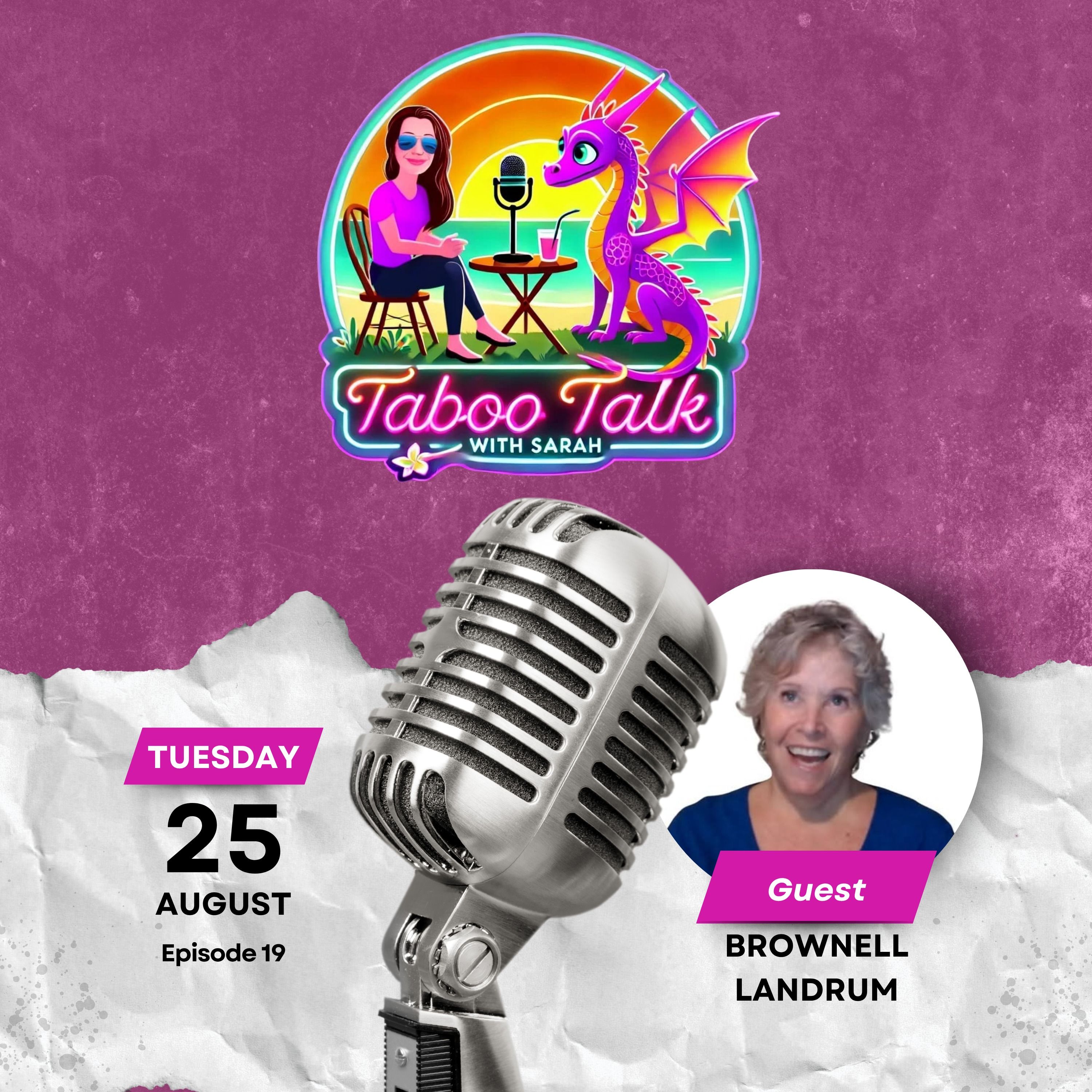
Taboo Talk Season 2 Episode 19 The Science of Wishing: How Hope Can Change What Happens Next with Brownell Landrum
from Taboo Talk with Sarah · host Sarah Jordan-Ross
🔑 Main Topics & Takeaways 1. Wishing can be more than wishful thinking Brownell began researching wishing while world-building for one of her novels. What started as storytelling led her to explore anthropology, psychology, neuroscience and other fields she believes help explain why wishing and its rituals can be powerful. 2. Make your wishes peaceful, positive and purposeful Brownell introduces her Three Ps of Wishing: peaceful, positive and purposeful. Rather than continually focusing on what we don't want, she encourages people to identify the positive outcome they're actually seeking. 3. Goals, prayers and wishes aren't necessarily the same thing Brownell describes goals as generally focusing on what we believe we can control, prayer as often releasing what we can't control to a higher power, and wishes as potentially occupying the space between the two—combining personal action with openness to possibilities beyond our control. 4. Sometimes a “no” redirects us toward something better Not every wish needs to come true exactly as imagined. Brownell describes four possible responses to a wish—yes, no, wait, or something better—and introduces what she calls the expansive pivot: moving beyond one narrowly defined outcome to understand the feelings or deeper needs underneath it. 5. Hope isn't passive For someone who has stopped wishing because life has disappointed them too many times, Brownell's message is compassionate but challenging: allowing ourselves to imagine something different is itself meaningful. Sarah closes the conversation with the idea that wishing isn't about escaping reality—it's about changing it. 🗣️ Memorable Quotes “Wishes need to be peaceful, positive, and purposeful.” — Brownell Landrum “Sometimes no isn't an ending, it's just more information.” — Brownell Landrum “Wishing's not about escaping reality, it's about changing it.” — Sarah Jordan-Ross ⏱️ Key Moments & Timestamps 00:00 – Sarah introduces hope—not wishful thinking, but the kind that helps us keep moving when life hasn't gone according to plan. 01:10 – Meet Brownell Landrum and enter the world of wishes. 01:26 – Why Brownell began taking wishing seriously. 02:00 – How writing A Love Story to the Universe led Brownell into researching wishes. 02:45 – Is there actually science behind wishing? 03:46 – The different scientific fields Brownell connects to wishing. 04:00 – Why seemingly simple rituals like birthday candles and shooting stars may matter. 04:54 – Neuroplasticity and our ability to continue rewiring our brains. 05:45 – Brownell introduces the Three Ps: peaceful, positive and purposeful. 06:25 – Why our brains look for evidence supporting what we already believe. 07:13 – The reticular activating system and why we suddenly start noticing what we're looking for. 08:59 – The default mode network and why answers sometimes arrive in the shower or on a walk. 10:24 – Survival mode can stop us from asking ourselves what we actually want. 10:53 – Fight-or-flight, cortisol and why anxiety can make creative problem-solving harder. 12:59 – The surprising ideas Brownell encountered while researching wishes. 13:50 – Wishful thinking versus wishing followed by action. 14:24 – The difference between a goal, a prayer and a wish. 15:57 – Brownell's idea of “cosmic collaboration.” 17:31 – Why “I want to feel better” may create a different relationship with change than a number on the scales. 18:32 – Repetition, practice and training our attention toward possibilities. 19:23 – Brownell's unusual sneezing story and why she interpreted it as a message from her father. 20:31 – Human beings as meaning-making machines. 21:12 – Why listening when our bodies “whisper” may matter. 21:30 – Brownell's idea of reverse optimism. 22:29 – Sarah reflects on turning painful experiences into purpose. 23:18 – Jackie Wilkinson and Turning the Tables on Trauma. 24:43 – The “Blue Balloon Phenomenon.” 26:33 – Why strange ideas shouldn't automatically be dismissed simply because they sit outside our current understanding. 29:47 – Staying open to possibilities without necessarily claiming certainty. 31:02 – Dr. Jill Bolte Taylor and My Stroke of Insight. 32:59 – A tangent with an important message: understand your body and notice when something changes. 37:00 – “Our body whispers at us long before it yells at us.” 37:51 – Working with your body instead of constantly fighting against it. 39:39 – Brownell explains the Cosmic Wish Experiment. 40:00 – Creating “wish circles” and practising a collective wish for eight weeks. 41:43 – Can a wish change because you changed? 41:59 – The four possible responses: yes, no, wait, or something better. 43:30 – The expansive pivot: looking underneath a specific wish to understand what you're truly seeking. 45:01 – Legally Blonde and the difference between what we want and what we need. 45:45 – Cast Away as another example of wants, needs and unexpected redirection. 47:41 – Unanswered prayers and blessings we sometimes only recognise in hindsight. 49:21 – What Brownell would say to someone who has stopped wishing altogether. 50:00 – How hope can spread socially when people begin believing something different is possible. 51:33 – What could happen if we focused more on what connects us than what separates us? 52:34 – One minute a day of being peaceful, positive and purposeful. 52:48 – Sarah's closing thought: wishing isn't about escaping reality; it's about changing it.
Embed this episode
What this episode covers
What if wishing wasn't simply something we did when blowing out birthday candles—but a way of training our brains to notice possibilities, find solutions and move toward something better? In this fascinating conversation, Sarah sits down with author and storyteller Brownell Landrum, creator of the Cosmic Wish Experiment and author of The Art and Science of Wishing, to explore the psychology and science Brownell connects with wishing, the difference between wishes, prayers and goals, and why hope is something we can actively practise. They also explore neuroplasticity, meaning after adversity, listening to our bodies, unanswered prayers, and what might happen when people begin hoping—and wishing—together.
NOW PLAYING
Taboo Talk Season 2 Episode 19 The Science of Wishing: How Hope Can Change What Happens Next with Brownell Landrum
No transcript for this episode yet
Similar Episodes
Dec 11, 2025 ·26m
Similar Podcasts
No similar podcasts found.