Tales from the crib
from the rohn report Hosted by rohn bayes
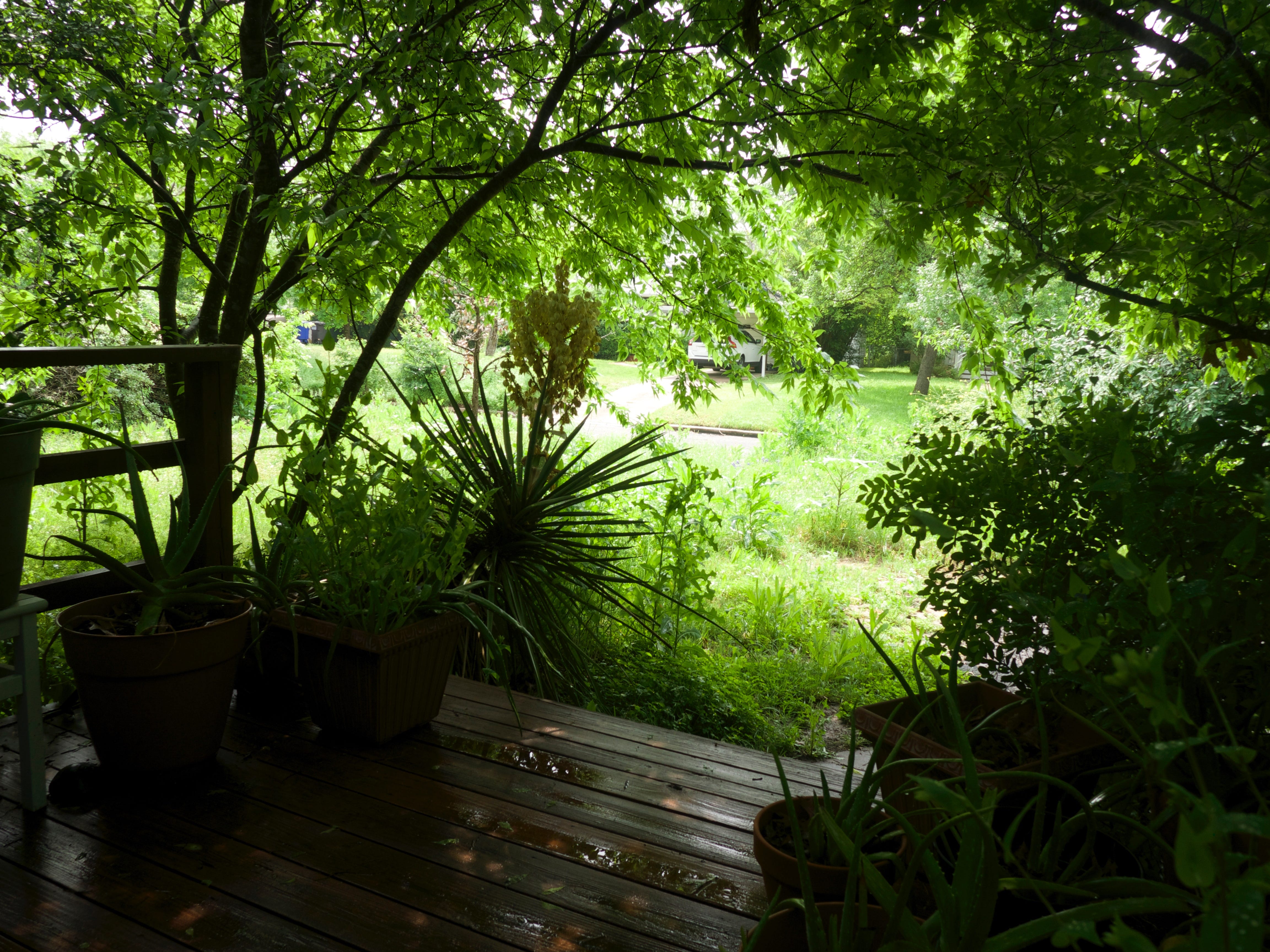
Enjoy the audio version or After writing about refugees in my last post I got a comment from Mary Ann pointing out that not only are people refugees but animals are refugees too. Pushed out of their natural living areas by humans, AKA ‘development’, they have to adapt or perish. My veterinarian once told me that when he was a kid there were deer roaming about in the wild savannah on the other side of Eisenhauer Road which is just a few blocks from my house. Now the deer, not to mention the snakes, the buffalo, the coyotes, the javelinas, the bears, the bobcats, the armadillos, the jack rabbits, the wild turkeys and the wild savannah have all disappeared. The spirit of the land, too, has disappeared. It’s no longer called by the names given to it by the long ago people who knew it intimately and lived with it and gave thanks to it. In Robin Wall Kimmerer’s lovely book Braiding Sweetgrass she recalls her childhood summers spent canoe camping in the Adirondacks with her family and her father’s morning naming ritual. “I can picture my father, in his red-checkered shirt, standing atop the rocks above the lake. When he lifts the coffee pot from the stove the morning bustle stops: we know that it’s time to pay attention. He stands at the edge of camp with the coffee pot in his hands, holding the top in place with a folded pot holder. He pours coffee out on the ground in a thick brown stream. The sunlight catches the flow, striping it amber and brown and black as it falls to the earth and steams in the cool morning air. With his face to the morning sun, he pours and speaks into the stillness, ‘Here’s to the gods of Tahawus.’” Tahawus is the Algonquin name for Mount Marcy, the highest peak in the Adirondacks. It means ‘cloud splitter’. “Sometimes my father would name the gods of Forked Lake or South Pond or Brandy Brook Flow, wherever our tents were settled for the night. I came to know that each place was inspirited, was home to others before we arrived and long after we left. As he called out the names and offered a gift, the first coffee, he quietly taught us the respect we owed these other beings and how to show our thanks for summer mornings.” Our names for things generally bear no relation to the place itself (Mt. Marcy was named for a governor of New York who never set foot on it). Neither do we recognize the land as having a personality and an essential nature. We don’t see how it gives to us from its own resources, how it supports a biosphere with all its intricacies and so we don’t give back. And because we don’t depend on the land like the ancient people did but instead buy our food in a grocery store, grown far away on a mechanized farm, trucked in to the city and put on the shelf for us to select, we don’t have an intimate relationship with the land. We don’t participate in the growing or the harvesting so how could we? And the result is that the land is abused and denuded and made to give, give, give without any reciprocity. The spirits of the land, or however you want to think about that, are ignored and unrecognized. They are exiled. To know the spirit of the place where you live you have to interact with it through the seasons, not treat it as something inanimate, it seems to me. And here I’d like to pivot and talk about my little piece of land, where I live in the middle of this aging suburban neighborhood carved out of the post oak savannah of Central Texas some 70 years ago. There once were park like grasslands here with trees gathered in mottes or along the rivers, and now there are houses and streets and lawns. And cars. And trees planted according to our design, the Cedar Elms and Live Oaks that line our streets. But here at my place, the large Pecan presides over a small backyard and a pool of water, several pools actually, and it litters the ground with sweet pecans in the mast years. So many pecans that neither I nor the squirrels can gather them all and the seedlings spring up where they have rooted. There are song birds here. The lovely mockingbird, singing with all its heart, and the mourning doves with their cooing, a pair of cardinals, with their cheeping and trilling, and a sparrow family nesting under the eaves. There are squirrels jumping around in the Hackberries and the Spanish Oaks and racing across the power lines like acrobats. The raccoons visit sometimes (they like the water) and shelter under the house. I had a mother and her kit once. There is a opossum and her joey in residence. I had to chase her out of my bedroom the other day. She was rummaging around in the cardboard boxes under the shelving as if she was going to make a nest there. I watch the seasons come and go. Fall gives way to Winter and Winter gives way to Spring. The rains come and the plant people pop up. The ground cover covers the ground and the Bluebonnets push their way through the cleavers and the clover and the dead leaves. Wildscaping, you could say I guess. If it’s green and it grows it’s good, I would say. So many flowers grow here in a wet Spring, that it’s truly amazing. The dog walkers and small children pause as they pass by, if only for a moment, and take notice. Once there was a forest of Sunflowers some 10 feet tall in my front yard and one day while I walked among them I was dive bombed by the Mockingbird. Turns out the underside of the broad Sunflower leaves harbored colonies of caterpillars and she was not willing to share. There are three cats in residence here, Kybo, the tiny kitten I found lost and abandoned in the middle of the street one night and Betos, who I brought home from the pound to replace Tee Tah who got ate by a coyote, and Bob, the feral one who showed up all on his own and lives under the house, wild and unsociable. All are installed in the landscape and make their patrols out and about, here and there, looking for the perfect spot to lay out and meditate. Nobody has been exiled among these folks. They’ve all been saved and sheltered. One night while sleeping outside on the futon under the Chinaberry I was awakened by a piercing shriek. It was alarming. I had never heard that sound before. I took my trusty flashlight and began searching in the trees at the edge of my property. It seemed to have come from above. Seeing nothing, I aimed the beam into the Pecan tree above my head and there sat the Great Horned Owl looking down at me. Kybo and Tee Tah were there too and may have been the object of his interest but I guess he realized they were too heavy or maybe too gnarly for predation. A few minutes passed and he flew off, silently, over the neighbor’s fence. I felt gifted. I felt like my place belonged not only me but to the wild ones. I often hear strange sounds in the night, besides the train whistle and the occasional car from the distant expressway. Is that a bird? Is that a frog? Are they trying to find a mate? Are they singing just for the heck of it? I don’t really know and don’t need to know. I just lie there in the dark, under the Chinaberry, and feel the mystery. Yesterday I saw a small Hawk drinking from the bog filter and then it flew up to the power lines in the alley and perched there looking at me. We considered each other for a moment and then he (or she) leaped into the air, swooped down and landed in another tree farther off, not visible to me anymore. Hawks fly with a different style and attitude than do the Mourning Doves, the predominant bird around here. Confidence and power is their aerial signature. One day I was sitting on the back porch when I noticed that the Blue Jay’s call had changed from a casual mellifluous note to something more urgent. The Mourning Doves all took flight and just then a Hawk came blasting through the under… This is a public episode. If you'd like to discuss this with other subscribers or get access to bonus episodes, visit rohn.substack.com/subscribe
Embed this episode
No transcript yet.