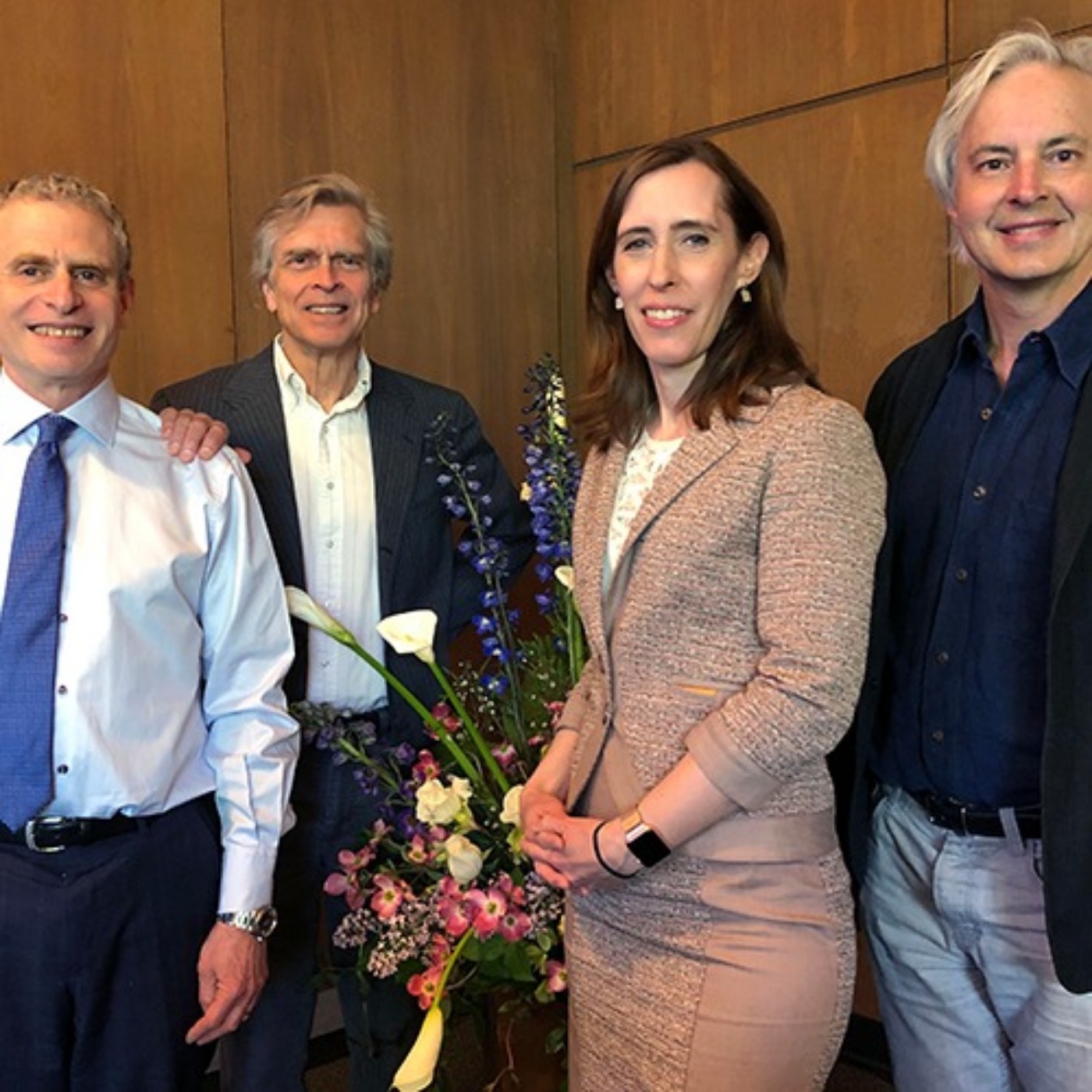
Tanner Lectures, day 3: Commentators respond to Ripstein, discuss morality of war episode artwork

EPISODE · May 31, 2019 · 1H 53M

Tanner Lectures, day 3: Commentators respond to Ripstein, discuss morality of war

from Berkeley Talks

For the 2019 Tanner Lectures at UC Berkeley, Arthur Ripstein, a professor of law and philosophy at the University of Toronto, argues that the very thing that makes war wrongful — the fact which side prevails does not depend on who is in the right — also provides the moral standard for evaluating the conduct of war, both the grounds for going to war and the ways in which wars are fought.In the last of three days of lectures and discussions, which took place on April 9-11, commentators Chris Kutz, a law professor at UC Berkeley who focuses on moral, political and legal philosophy; Oona Hathaway, a professor law at Yale Law School; and Jeff McMahan, a professor of moral philosophy at the University of Oxford, provide commentary on Ripstein’s previous two lectures.“What’s puzzling is that Arthur seems to want to link up this principle to the idea of a future peace and internally to the principle of action by the aggressor,” said Kutz in his commentary. “The peace imagined by the aggressor nation isn’t the peace of a just defender, it’s a peace based upon forcible change. Now, Arthur seemed to suggest that there’s no coherent alternative to the just defender’s limited aims in war, that any other conception of war makes war a matter of what he called extermination. Even for an aggressor’s state, that seems to me an exaggerated characterization.”The Tanner Lectures on Human Values is presented annually at nine universities: UC Berkeley, Harvard, Michigan, Princeton, Stanford, Utah, Yale, Cambridge and Oxford. This series was founded in 1978 by the American scholar, industrialist and philanthropist, Obert Clark Tanner, who was also a member of the faculty of philosophy at the University of Utah. He was also an Honorary Fellow of the British Academy. Tanner’s goal, in establishing the lectures through the Tanner philanthropies, was to promote the search for a better understanding of human behavior and human values. He hoped that the lectures would advance scholarly and scientific learning in the area of human values, and contribute to the intellectual and moral life of humankind.Learn more about the 2019 Tanner Lectures.Listen and read a transcript of this talk on Berkeley News. Hosted on Acast. See acast.com/privacy for more information.

For the 2019 Tanner Lectures at UC Berkeley, Arthur Ripstein, a professor of law and philosophy at the University of Toronto, argues that the very thing that makes war wrongful — the fact which side prevails does not depend on who is in the right — also provides the moral standard for evaluating the conduct of war, both the grounds for going to war and the ways in which wars are fought.In the last of three days of lectures and discussions, which took place on April 9-11, commentators Chris Kutz, a law professor at UC Berkeley who focuses on moral, political and legal philosophy; Oona Hathaway, a professor law at Yale Law School; and Jeff McMahan, a professor of moral philosophy at the University of Oxford, provide commentary on Ripstein’s previous two lectures.“What’s puzzling is that Arthur seems to want to link up this principle to the idea of a future peace and internally to the principle of action by the aggressor,” said Kutz in his commentary. “The peace imagined by the aggressor nation isn’t the peace of a just defender, it’s a peace based upon forcible change. Now, Arthur seemed to suggest that there’s no coherent alternative to the just defender’s limited aims in war, that any other conception of war makes war a matter of what he called extermination. Even for an aggressor’s state, that seems to me an exaggerated characterization.”The Tanner Lectures on Human Values is presented annually at nine universities: UC Berkeley, Harvard, Michigan, Princeton, Stanford, Utah, Yale, Cambridge and Oxford. This series was founded in 1978 by the American scholar, industrialist and philanthropist, Obert Clark Tanner, who was also a member of the faculty of philosophy at the University of Utah. He was also an Honorary Fellow of the British Academy. Tanner’s goal, in establishing the lectures through the Tanner philanthropies, was to promote the search for a better understanding of human behavior and human values. He hoped that the lectures would advance scholarly and scientific learning in the area of human values, and contribute to the intellectual and moral life of humankind.Learn more about the 2019 Tanner Lectures.Listen and read a transcript of this talk on Berkeley News. Hosted on Acast. See acast.com/privacy for more information.

NOW PLAYING

Tanner Lectures, day 3: Commentators respond to Ripstein, discuss morality of war

0:00 1:53:09

No transcript for this episode yet

We transcribe on demand. Request one and we'll notify you when it's ready — usually under 10 minutes.

Carnivores Don't Get Sunburn - Carnivore Diet Talks Carnivores Don't Get Sunburn - Carnivore Diet Talks Welcome to “Carnivores Don’t Get Sunburn,” where we have fun and explore the carnivore diet and its transformative power. Join us as we uncover real stories from individuals who have thrived on this diet, defying convention and embracing optimal health. Plus, stay tuned for our upcoming documentary featuring diverse carnivores overcoming health challenges. Learn more at www.carnivoredietdocumentary.com.Excitingly, we’re working on an upcoming documentary where we’ll feature carnivores from various walks of life, conquering diverse health challenges. Join us on this journey and learn more at www.carnivoredietdocumentary.com.Join us in uncovering the power of the carnivore diet. Prepare to be inspired, informed, and empowered to embrace optimal health and well-being.Welcome to “Carnivores Don’t Get Sunburn: Unveiling Real Stories of the Carnivore Diet.” Stay tuned for our upcoming documentary. Discover how this lifestyle can transform lives. Learn more at www.carnivoredietdocumentary.com IT IS WHAT IT IS with SHALLZ - SHALLY ZOMORODI Shally Zomorodi What?  "It is what it is" with ShallZ – Shally ZomorodiWhen? WeeklyHow long? 35 minutesEvery week, Mother of 4, wife, morning TV news anchor and ultimate hostess, Shally Zomorodi talks about life - its up's and downs and how to stay on track in her weekly podcast, ‘It is what it is.’  Known for her high energy, infectious smile and ability to see the cup as half full Shally talks about all things in life and how to work through its challenges. From parenting, marriage, friendships, current events to how to smile when it just seems impossible ‘It is what it is’ is the perfect podcast to help inspire you to dance through the rain. Tracking Nuclear Weapons Programs Center for Strategic and International Studies The CSIS Proliferation Prevention Program talks to experts about transparency and nuclear weapons. Cover Stories with Chess Life US Chess Chess Life Editor John Hartmann talks to the authors of each month's Chess Life cover story.

Frequently Asked Questions

How long is this episode of Berkeley Talks?

This episode is 1 hour and 53 minutes long.

When was this Berkeley Talks episode published?

This episode was published on May 31, 2019.

What is this episode about?

For the 2019 Tanner Lectures at UC Berkeley, Arthur Ripstein, a professor of law and philosophy at the University of Toronto, argues that the very thing that makes war wrongful — the fact which side prevails does not depend on who is in the right —...

Can I download this Berkeley Talks episode?

Yes, you can download this episode by clicking the download button on the episode player, or subscribe to the podcast in your preferred podcast app for automatic downloads.
URL copied to clipboard!