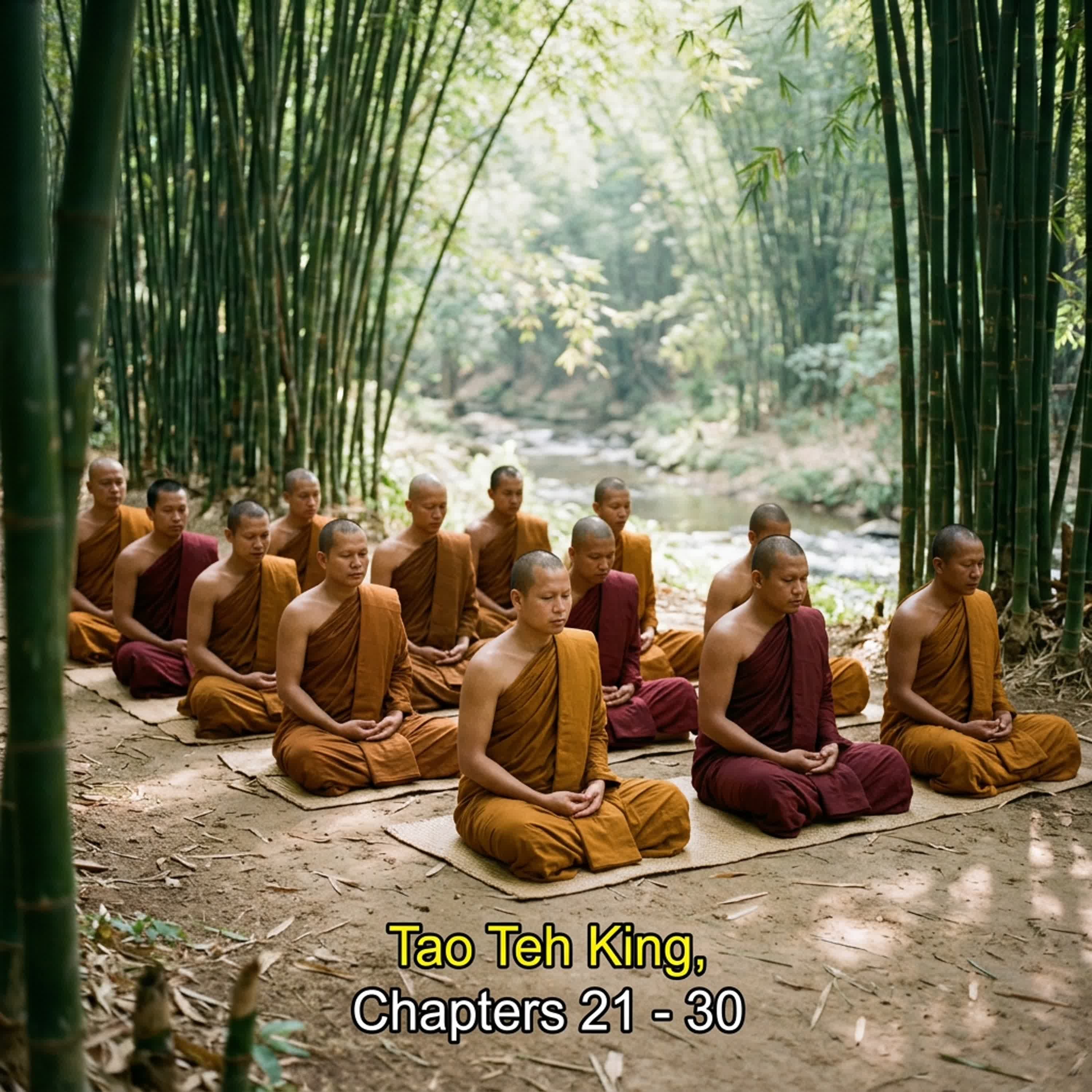
Tao Te Ching - 3 - Chapters 21-30
from Wisdom for the Present: Eastern Wisdom Literature Hosted by Kanu Emeruwa
What if the absolute peak of your effort—the relentless hustle, constant optimization, and aggressive striving—is the exact reason you are failing? In a modern culture obsessed with self-advancement, the ancient Chinese philosophical text, the Tao Te Ching, introduces a deeply counterintuitive operating system for reality. It suggests that forcing outcomes and pushing to the extreme is not a pathway to success, but a catastrophic mistake that breeds friction, burnout, and eventual collapse. By examining Chapters 21 through 30 of this classic work, we can uncover how stepping back and aligning with the natural flow of reality actually unlocks enduring, sustainable power. To understand how disruptive these ideas truly are, we must look at the brutal historical crucible from which they emerged. Far from being written in a tranquil monastery, the Tao Teh King was forged during the Warring States period, a bloody era of relentless conflict, massive armies, and extreme political instability. When faced with neighboring warlords massing at the border, the instinctive human reaction is to grip the wheel tighter, raise taxes, conscript soldiers, and strike aggressively to control the chaos. Yet, the text subversively advises war-torn leaders that their frantic, ego-driven attempts to control everything are the very reasons their empires are bleeding, pointing instead to stillness, restraint, and the natural flow of reality as the ultimate sources of strength. This ancient critique directly challenges our modern 21st-century realities, where digital algorithms and hustle culture reward constant noise and self-display. The text offers a visceral physical metaphor: "He who stands on his tiptoes does not stand firm; he who stretches his legs does not walk easily." In our professional lives, standing on our tiptoes looks like an executive inflating their resume, an influencer posting hyper-filtered curated lives, or a founder artificially pumping a startup's valuation rather than building a solid product. This straining is fragile, unstable, and exhausting, yet we mistake the burning in our calves for productivity. The Tao Teh King compares such self-conceit to remnants of food or a bodily tumor, warning that micromanaging complex systems like a business or marriage out of fear ultimately suffocates the natural equilibrium required for them to thrive. When we experience chaos, our default response is to trigger sudden, explosive actions to force our way through. However, the Tao Teh King reminds us of a simple meteorological reality: a violent wind does not last a whole morning, and a sudden torrential rain does not last a whole day. Spasmodic high-energy states rapidly burn themselves out, yet we constantly mistake short-lived kinetic bursts for enduring strength. True and enduring power belongs to the one who possesses gravity, because "gravity is the root of lightness; stillness, the ruler of movement." To navigate the storms of life without losing our center, we must stay close to our "baggage wagons"—the unglamorous but essential grounding logistics of our health, sleep, families, and ethical boundaries. Scurrying away from these heavy roots to chase brilliant, shiny prospects of instant success only leaves us stranded and depleted in the wilderness when the inevitable burnout hits. Ultimately, reclaiming our agency is about cultivating frictionless, effortless competence. The skillful traveler leaves no tracks, and the brilliant leader secures results not through the "bolts and bars" of rigid micromanagement, but by working with the natural topography and intrinsic motivations of their team. Even in moments of conflict, a skillful commander strikes a decisive, necessary blow to protect boundaries and immediately stops. They do not continue operations to satisfy their ego or assert total dominance over an opponent. Crossing that line from defense into revenge only plants "briars and thorns" of resentment and hostility in our own path. By embracing stillness and leaving empty space rather than over-striving, we can step off the battlefield of ego and allow the natural flow of life to restore balance. In This Episode * The Effort Paradox: Discover why frantic, ego-driven attempts to force outcomes generate massive resistance, leading to friction and burnout. * The Crucible of Chaos: Understand how the Tao Teh King was forged during the brutal Warring States period as a subversive guide to finding peace in conflict. * The Tiptoe Metaphor: Unpack how inflating our egos, displaying ourselves online, and over-exerting our positions compromises our stability and leads to collapse. * Guarding the Baggage Wagons: Learn why sacrificing slow, unglamorous, but vital grounding roots—like health, relationships, and ethics—for shiny prospects is self-destructive. * Frictionless Competence: Explore how true mastery involves working with the natural topography of situations and people rather than enforcing rigid, fear-based rules. * The Uncarved Block: Shift from a disposable meritocracy mindset to one of interdependence, viewing others as raw material with inherent potential. * Striking and Stopping: Discover how to protect boundaries out of absolute necessity without crossing into the "salted earth" tactics of revenge and total dominance. Practical Reflection Where in your life or career are you currently "standing on your tiptoes"—straining to maintain an artificial image or over-exerting yourself to impress others? What are your "baggage wagons"—the heavy, grounding roots of your health, sleep, relationships, or ethics—and have you been tempted to march away from them lately? In your current conflicts or professional challenges, are you striking a necessary boundary and stopping, or is your ego pushing you to dominate and "salt the earth"? Suggested Substack Excerpt Discover why trying harder might be the very reason you're failing. This episode unpacks Chapters 21–30 of the Tao Teh King, offering a deeply counterintuitive blueprint for finding true power in stillness, gravity, and frictionless action. AI Disclosure This episode was created using Google NotebookLM Audio Overview, based on human-curated source material, structured guidance, and editorial review. AI is used as a tool for clarity and delivery, not as a replacement for thoughtful study or engagement with the original texts. Copyright © 2026 Wisdom for the Present / Kamashcu Production Studios. All rights reserved. This is a public episode. If you would like to discuss this with other subscribers or get access to bonus episodes, visit wisdomforthepresent.substack.com
Embed this episode
No transcript yet.