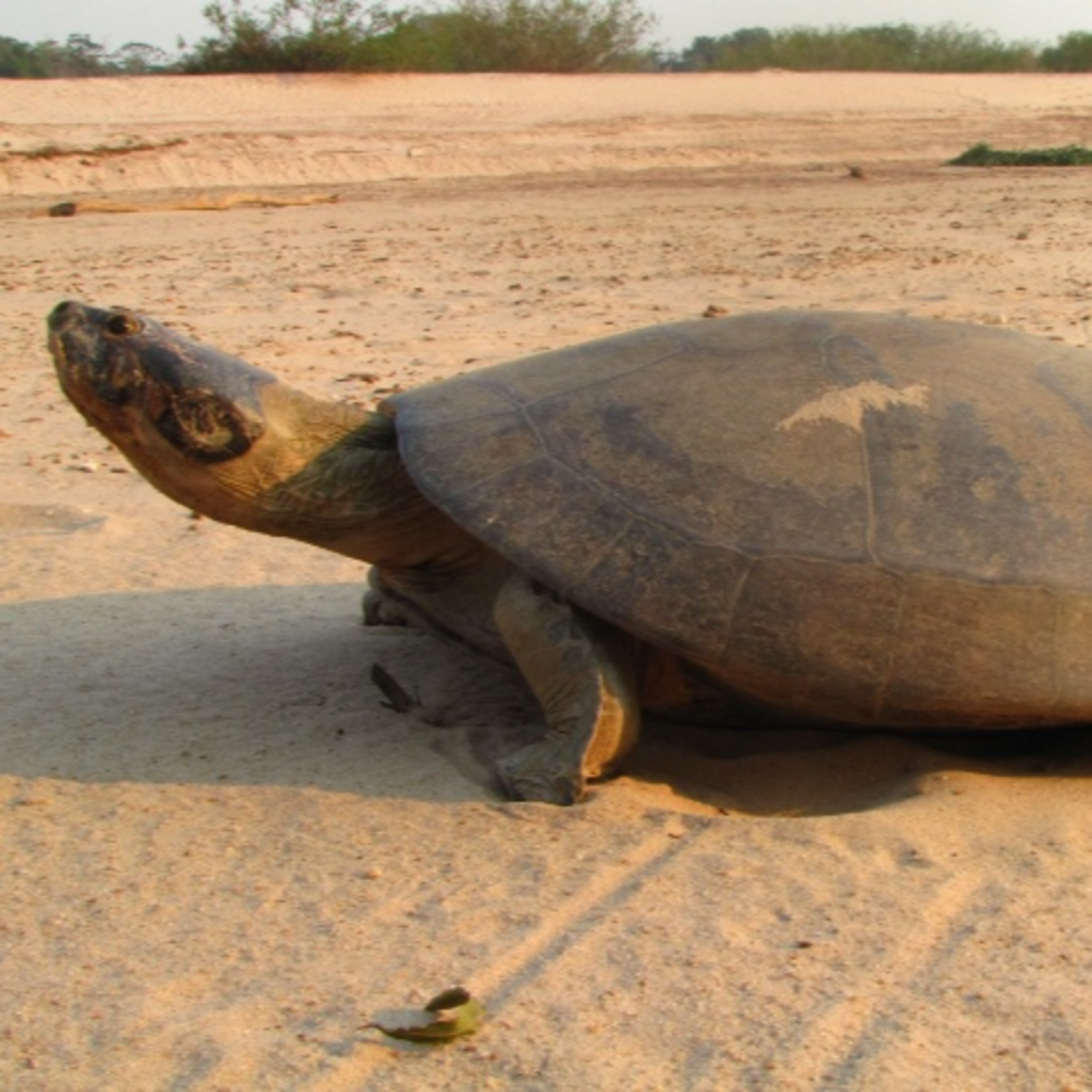
Tartaruga da Amazônia. Amazon turtle. episode artwork

EPISODE · Dec 10, 2020 · 3 MIN

Tartaruga da Amazônia. Amazon turtle.

from Podcasts de Ecologia/Composições musicais/NaturezaEcology Podcasts/Musical Compositions/Nature · host multimidiavillage

The Amazon turtle (Podocnemis expansa) is a freshwater turtle from the Podocnemididae family and lives in the Amazon River and its tributaries, also known as jurará-açú, araú, capitaris and aiuçá. It is considered the largest freshwater chelonian in South America, occurring in Colombia, Venezuela, Guyana, Brazil, Peru, Ecuador and Bolivia. In Brazil, it occurs in all states in the North region and in the states of Goiás and Mato Grosso, as well as in the Midwest region. It can reach 90 centimeters in length and weigh up to 75 pounds. They are turtles of daytime habit and feed on roots, fruits, seeds, small fish, mollusks and crustaceans, and therefore are omnivorous animals. Females are usually larger than males. The species has a single annual reproductive period. The spawning period starts in September and ends in December. After finding the ideal spawning spot, they rest on the riverbed for four to five days, observing the beach from the water and making visits to the site during the night to recognize possible pit opening points and nest formation. . Oviposition can last up to four hours and usually occurs in the evening, but eventually it can occur in the morning, as observed in the Xingu and Trombetas rivers, in the state of Pará. 50 to 300 eggs are deposited and covered with sand by the females after complete the spawning. The eggs are round and flexible-shelled and hatch after 40 to 80 days of incubation. As in other species of turtles, temperature is an important environmental factor in determining the sex of the Amazon turtle, where higher temperatures in the nest result in a larger number of females and lower temperatures result in more males hatching from the nest eggs. The main threat to the existence of the Amazon turtle is still man, because although the capture of adults and the collection of chelonian eggs is prohibited by Brazilian legislation, this is a common practice in the Amazon today. Photo credit: Rafael Valadão. https://www.icmbio.gov.br/portal/faunabrasileira/estado-de-conservacao/7431-repteis-podocnemis-expansa-tartaruga-da-amazonia2

The Amazon turtle (Podocnemis expansa) is a freshwater turtle from the Podocnemididae family and lives in the Amazon River and its tributaries, also known as jurará-açú, araú, capitaris and aiuçá. It is considered the largest freshwater chelonian in South America, occurring in Colombia, Venezuela, Guyana, Brazil, Peru, Ecuador and Bolivia. In Brazil, it occurs in all states in the North region and in the states of Goiás and Mato Grosso, as well as in the Midwest region. It can reach 90 centimeters in length and weigh up to 75 pounds. They are turtles of daytime habit and feed on roots, fruits, seeds, small fish, mollusks and crustaceans, and therefore are omnivorous animals. Females are usually larger than males. The species has a single annual reproductive period. The spawning period starts in September and ends in December. After finding the ideal spawning spot, they rest on the riverbed for four to five days, observing the beach from the water and making visits to the site during the night to recognize possible pit opening points and nest formation. . Oviposition can last up to four hours and usually occurs in the evening, but eventually it can occur in the morning, as observed in the Xingu and Trombetas rivers, in the state of Pará. 50 to 300 eggs are deposited and covered with sand by the females after complete the spawning. The eggs are round and flexible-shelled and hatch after 40 to 80 days of incubation. As in other species of turtles, temperature is an important environmental factor in determining the sex of the Amazon turtle, where higher temperatures in the nest result in a larger number of females and lower temperatures result in more males hatching from the nest eggs. The main threat to the existence of the Amazon turtle is still man, because although the capture of adults and the collection of chelonian eggs is prohibited by Brazilian legislation, this is a common practice in the Amazon today. Photo credit: Rafael Valadão. https://www.icmbio.gov.br/portal/faunabrasileira/estado-de-conservacao/7431-repteis-podocnemis-expansa-tartaruga-da-amazonia2

NOW PLAYING

Tartaruga da Amazônia. Amazon turtle.

0:00 3:03

No transcript for this episode yet

We transcribe on demand. Request one and we'll notify you when it's ready — usually under 10 minutes.

No similar episodes found.

No similar podcasts found.

Frequently Asked Questions

How long is this episode of Podcasts de Ecologia/Composições musicais/NaturezaEcology Podcasts/Musical Compositions/Nature?

This episode is 3 minutes long.

When was this Podcasts de Ecologia/Composições musicais/NaturezaEcology Podcasts/Musical Compositions/Nature episode published?

This episode was published on December 10, 2020.

What is this episode about?

The Amazon turtle (Podocnemis expansa) is a freshwater turtle from the Podocnemididae family and lives in the Amazon River and its tributaries, also known as jurará-açú, araú, capitaris and aiuçá. It is considered the largest freshwater chelonian in...

Can I download this Podcasts de Ecologia/Composições musicais/NaturezaEcology Podcasts/Musical Compositions/Nature episode?

Yes, you can download this episode by clicking the download button on the episode player, or subscribe to the podcast in your preferred podcast app for automatic downloads.
URL copied to clipboard!