
EPISODE · Oct 9, 2025 · 32 MIN
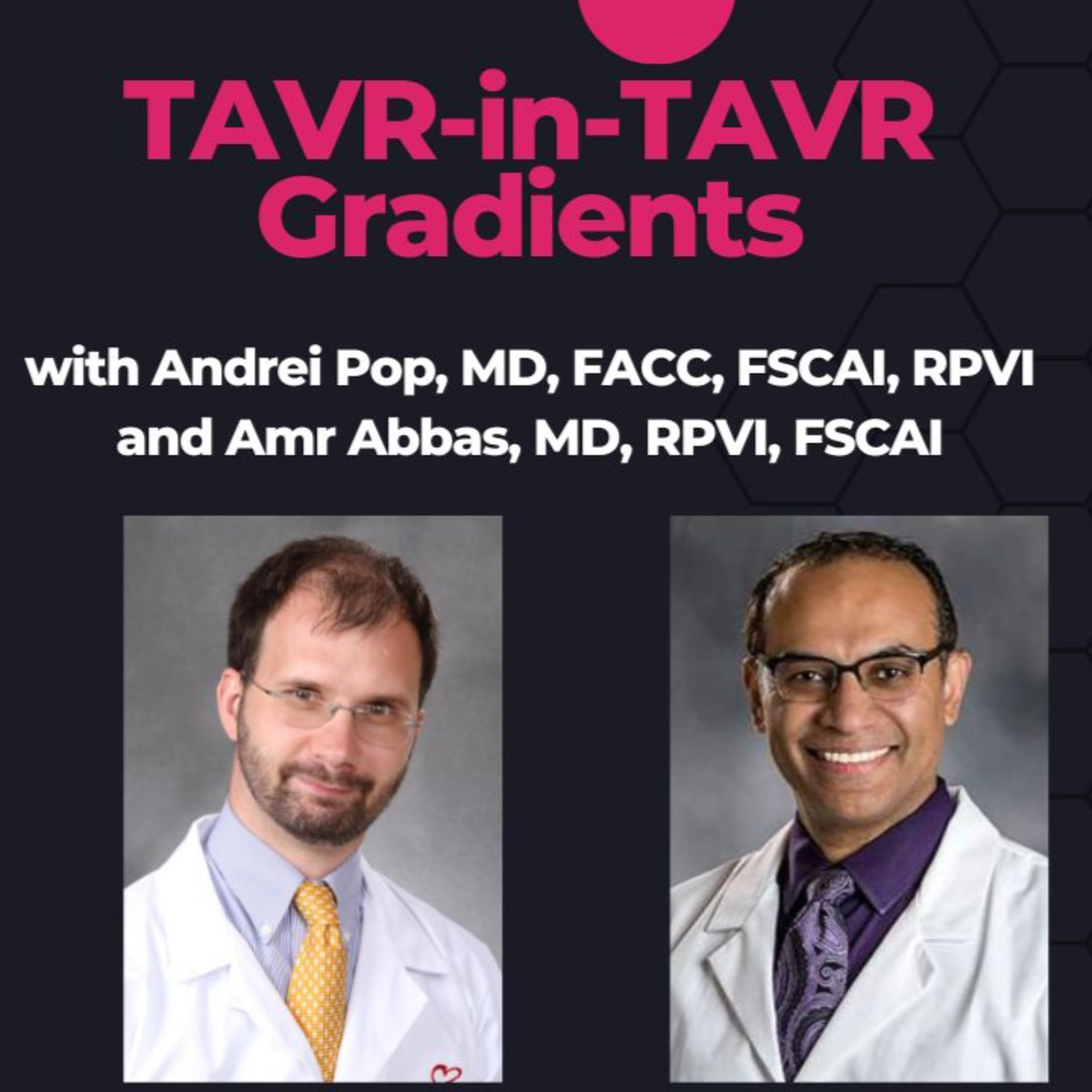
TAVR-in-TAVR Gradients Explained: Flow, Expansion & Patient Outcomes with Dr. Amr Abbas and Dr. Andrei Pop
from The Murmur Pod · host MurmurMD
What really drives gradients after TAVR-in-TAVR—and do they actually matter?In this conversation, Dr. Amr Abbas and Dr. Andrei Pop break down the nuances behind gradient measurements, patient-prosthesis mismatch (PPM), and valve expansion strategy in redo TAVR.Key takeaways include:Why echo gradients differ from invasive gradients even under identical hemodynamicsUnderstanding discordance between flow and pressure in post-TAVR assessmentWhy PPM is less concerning in normal-flow patients than previously believedHow flow state—not gradient—drives outcomes after TAVR or SAVRThe role of predicted vs measured PPM and valve-specific flow patternsInsights on undersizing vs overexpansion and how to optimize redo TAVR resultsWhy well-expanded valves may outperform “bigger” but underexpanded onesHow lifetime management means moving past numbers to patient-centered outcomesThis is a must-watch for interventional cardiologists and structural heart teams focused on redo TAVR planning, flow hemodynamics, and lifetime valve strategies.00:00 – Introduction: TAVR-in-TAVR and gradient anxiety 01:10 – Invasive vs echo gradients: why they don’t match 03:00 – Discordance and measurement error in post-TAVR gradients 04:25 – Understanding pre-discharge echo gradient increases 05:15 – When gradients are “nuisance” findings vs real issues 06:00 – PPM redefined: what echo really measures 07:30 – Flow-derived valve area and its pitfalls 09:00 – Flow vs gradient: the real driver of outcomes 10:00 – Lessons from the PARTNER and TVT data 12:30 – Predicted vs measured PPM in clinical context 14:00 – The role of ejection fraction and low-flow states 16:00 – Flow patterns: laminar vs turbulent impact on velocity 18:00 – Valve sizing: smaller expanded vs larger underexpanded 20:00 – Expansion optimization and stent analogy 22:00 – Valve labeling, true ID, and expansion limits 24:30 – Historical shift: from “biggest valve possible” to “best expansion possible” 26:30 – Oversizing risks, skirts, and modern generation valves 28:00 – The balance between PVL, pacemaker risk, and expansion 30:00 – Lifetime management: beyond numbers to patient outcomes 31:00 – Closing thoughts & takeaways#TAVR #ValveInValve #TAVinTAV #InterventionalCardiology #StructuralHeart #Echocardiography #AorticValve #PPM #Hemodynamics #MurmurMD
Embed this episode
NOW PLAYING
TAVR-in-TAVR Gradients Explained: Flow, Expansion & Patient Outcomes with Dr. Amr Abbas and Dr. Andrei Pop
No transcript for this episode yet
Similar Episodes
No similar episodes found.
Similar Podcasts
No similar podcasts found.