Make a Wish Canada has been granting wishes for kids living with critical illnesses for over 40 years. Because we know, wishes are medicine. Ask your doctor if filling a Wish prescription for a Wish kid is right for you. Side effects may include Sundip parents of your favorite celebrity, a royalty-a-day-the-water park, helicopter ride, unicorn sightings, meeting your heroes, becoming a ship-captain pilot, fewer trips at ER and printout outcomes, the strength to fight. Eight out of ten Wish kids said their wish gave them the strength to fight their critical illness.
Wishes are medicine. Donate today. That's long play our docuseries exploring the people and forces shaping the South is back. New slash, the South is the new political epicenter of the country. Democrats are way on their heels in this region, but Republicans are going through their own reckoning in the South too.
We're in the final stretch of the midterms and the political map has only gotten more competitive with new states and districts emerging as potential flips. So we thought it was time to get back out on the road and take a closer look at what's actually happening on the ground. I'm Erin Haynes, journalist and expert on all things southern politics. And I'm Jennifer Paul-Mary, former White House communications director. Tune in on Mondays to Long Play series on YouTube or wherever you get your podcasts.
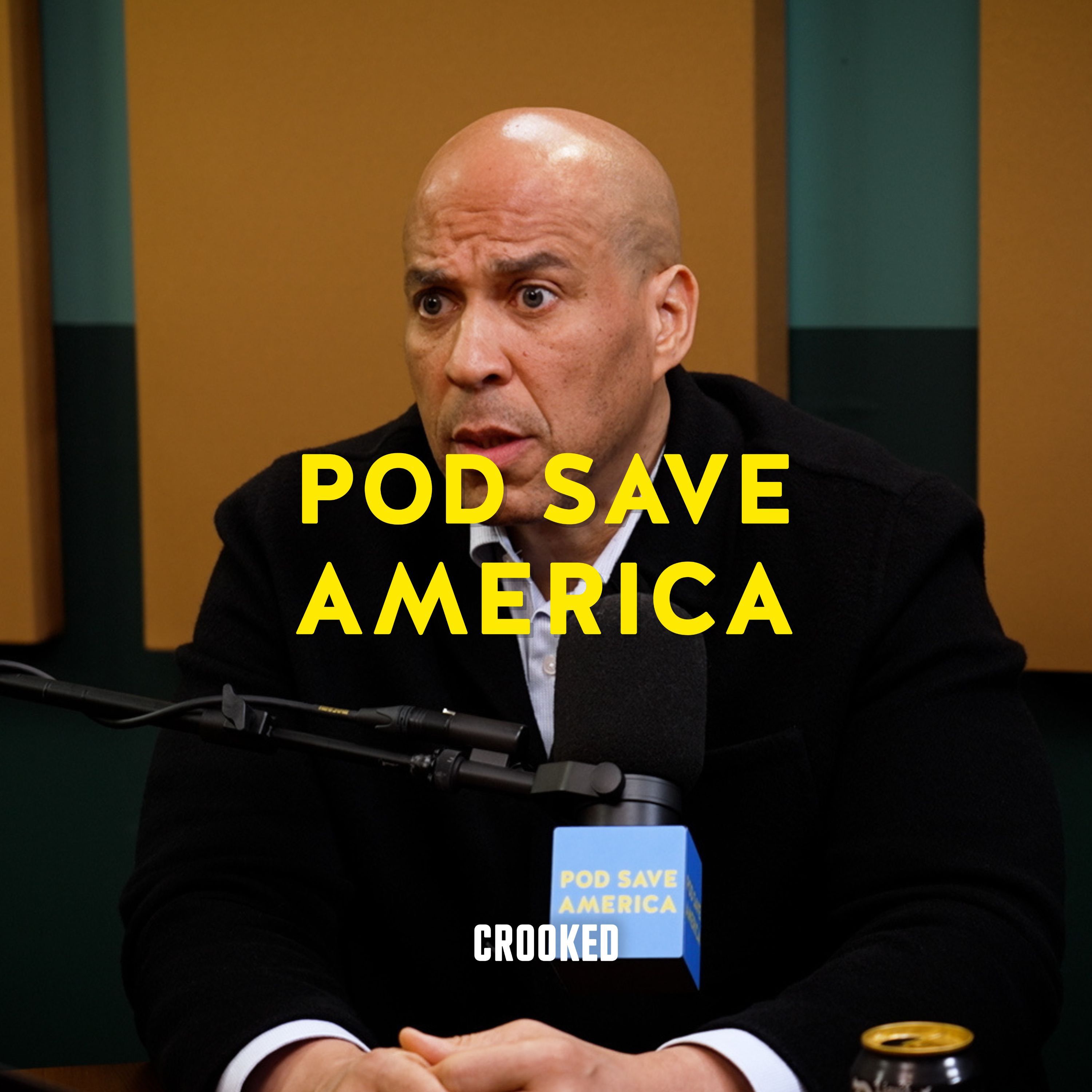
Spent a lot of time on his tax proposal, his big idea to raise the standard deduction to $75,000, which would provide a lot of tax relief for middle-class families, but would also mean most Americans don't pay income tax and what it means to have a democratic party that is advocating against taxes for the middle-class. Well, Republicans are advocating against taxes for the wealthy and what it says about our politics. I really liked this conversation with Cory Booker. I'm really glad he gave us the time and I think you'll like it too. So take a listen.
Senator Cory Booker, welcome back to the pie. It's really great to be back on. So before we started, we were just talking about this. You recently got married. I'm getting married in a couple months.
You have an age gap. Any challenges of marrying someone younger than you? Well, younger and cooler than me. I thought you before. Yes, much so.
No, I think every marriage is unique. Every relationship is unique. But from the second I met her, I always say that the Wizard of Oz, my life was in black and white. I didn't realize it. And then suddenly it just got to be technical.
But any references? She's in the room. She's in the room. She can pull her. Is there any references he doesn't get to you?
Yeah. I think it's music. Oh, I remember on her wedding, there was a song that... And now I'm going to embarrass myself because when I ask what the song is, but everybody rushed to the dance floor and started dancing. It's a nice guy.
I just didn't know the song. It was just a weird song. Play Canton races. Something more, something I could really jig to. Yes, I do get jiggy with it.
But that's a different generation too. Yeah, I think it's my corny dad jokes. But that's a universal problem in my life. My staff allows me one dad joke a day. I feel like you're old when you're young.
I have been told that I am an older soul. Like I was a boring friend. I don't drink. I was always like the desic made a driver. So I think I was always the adult in the room.
Yeah, interesting. Interesting. Wonder if that'll change. Wonder if it'll have an immature face or you're sort of unmanageable at some point. I think that maybe towards the very end.
Who knows? We see this with Republican senators. When they retire, all of a sudden they become constructively cantankerous. I will tell you though, I'm psyched to hear this news because it really is life's greatest blessing and the most important choice I think you make in your life in terms of your own happiness and joy. And I think that you are going to find a deeper and richer life as a married man.
I hope so. I think that's true. And that famous Thursday, An after, Fox reported. Pam Bondy is out as Attorney General speaking of relationships that didn't work out, replacing her with Deputy AG Todd Blanche in the interim. What is your reaction to the news?
I mean this is an agency. They renamed the Department of Defense, the Department of War. They should be reading this department of injustice. It is an agency doing such destructive things to our well-being and safety. That is their trash in the Constitution investigating the Fed chair investigating Senators and Congress people.
people, they are proving mergers, where they used to give a lot more substantive analysis now. They're laying this mask or concentration. They moved out FBI agents who were focused on our national security, our voting security and more to do immigration enforcement. It's just an agency that's been doing really horrific things. And so who's at the head of it?
The question is, are we ever going to see Donald Trump put somebody in place that understands that that's not his personal group of lawyers to pursue his vendettas and agendas and instead to actually pursue justice? And I don't think we'll get that ever and out of this president. It creates attention. I know you're on the Judiciary Committee, so it's going to come before your committee in that having someone as incompetent as a christen, you know, in charge of that agency reveals something about the policies, right? And if what Trump wants is a more competent, less in your face, bombastic and ridiculous figure as Pam Bondi, doesn't that almost help him achieve his ends of politicizing the department?
I'm not sure who knows who's going to be up for us. I just, for me, this is one of the darker and more dangerous corners of the Trump administration that often doesn't get the kind of attention it should. I know people who have been careerists that have left that office when they start saying we're going to not investigate the kind of anti-Muslim, anti-Semitic, anti-tax, or no, we're going to investigate attacks on Christianity and attacks on Christians. We're going to investigate a bigotry against white people, the kind of things that they're doing from that department that undermine a lot of the urgencies we have, including foreign entities trying to undermine our local elections.
It's just a very, very dangerous thing in the characteristics of who's there. As long as they're submitting to Donald Trump's will and direction, we have a very cancerous problem that is going to affect Americans more than they realize. Do any of your Republican colleagues share any of these concerns? Is this confirmation process going to be any kind of opportunity for a look at the ways in which the department has made this work? I was pleasantly surprised to see, like, Tom, tell us, for example, go after Christine Oum telling the truth.
I just don't know if that's going to be the case for whomever he puts up. I just don't know the name yet. There has been to seem to be a little appetite for checking and balancing and providing accountability and oversight of the Department of Justice. Remember, this is not just the panbodneys realm. It's also cash-but-tell.
There are a number of people serving in agencies underneath the attorney general that are doing really, really bad things. The pardon attorney, for example, is there, and here's a president that has been just wholesale pardoning people who pay him or pay his friends and then turn around, as we've seen in some cases, some of the biggest fraudsters and then invest in his companies or help him advance his crypto schemes. So this is, and they've gotten rid of all the safeguards in Specter Generals and the like. So again, this is a changing round. The desk chairs on a ship that is sinking hopefully, but I do not expect any kind of real change as long as people are going to continue to give up their patriotism for their personal loyalty to Donald Trump.
So last night, Trump addressed the country on Iran. There are a lot of varying stories of what he was going to use the time to do. He ended up not doing very much at all to reiterate the policy, which is the war is over and we're continuing to fight the war. What was the reaction to the speech? What do you view as your job in the Senate to try to check what Trump is doing?
More than a month into the biggest military buildup since we're in Afghanistan, this unilaterally declared war by Donald Trump and now he's coming to the American people. The first time he has actually made statements, now he's made tons of statements, but he's contradicted himself multiple times about why we got in there and he's changed the story multiple times from unconditional surrender. All the things he wanted as an off-ramp, he continues to change them. Now he's in crisis. He's broken what Colin Powell would say, the pottery barn rule.
If you break it, you buy it, you fix it. But yet now he's saying that even the Strait of Hormuz, which I was the but for clause, but for him doing this, we would not be in the worst global oil shock ever. He's making pronouncements last night and he's just going to walk away. I barely, you fix it. Yeah, exactly.
And so you add to that the cost to American people, American lives lost, hundreds and hundreds of people, soldiers injured, tens of billions of dollars. And then he has the flagrant, morally bankrupt statement of saying, oh, we can't afford Medicare and Medicaid. The state, this is his speech. But I'm spending tens of billions of dollars, but we can't afford affordable child care in America, which other competitive nations have realized we have a national urgency to provide the best for our children, to provide health care for our people. He's saying we can't afford that, the man that cut a trillion dollars out of Medicaid.
And yet he comes up with our resources, our treasure, to go to this war. So what I get very upset about in the Senate is, number one, all of his enablers who know this is wrong, who would have never allowed any president to go this far into a war without having an open hearing. Remember, this is a Congress that is utterly practicing some advanced form of yoga where they're bending over backwards to supplicate themselves and do Donald Trump's will. They do not want open hearings. They do not want to check and balance him, ask questions, no accountability, no oversight.
And those enablers, to me, and this is enablers in the Justice Department, enablers in Congress, all the people who are enabling this man to do what he is doing and the harm is doing offend me worse than even Donald Trump does. And so what should the Senate be doing? Number one, we shouldn't be doing business as usual. And Democrats in the Senate, this is why I'm happy to have joined with a small group of democratic senators should do everything we can, every lever we can, to force them to focus on the outrageous of this war that's wildly unpopular with the American public. And so what we're doing right now is forcing power's resolution votes to one of the privileged votes that an individual senator can force to the Senate for.
And we're trying to do these with regularity, not to let these guys in the Senate just continue to pretend like there's not this major military operation that is a sink for American blood and treasure right now and force them to have this conversation. But it has to be matched by growing outrage in the public. And I'm seeing a lot more of that. But this is a president that needs to be checked and balanced since Republicans in Congress won't do it. Leaders, and we all are the leaders we are looking for, need to start fighting back because it's his standard now that he's creating an America.
Think about the standard now. Any president at any time could spend $40, $50 billion to go to war with any country and for a month not even come before the American people tell you why. And by the way, when we finished with Iran, he has told us, I want to take Cuba. He has told us that, hey, maybe I will take Greenland as well. This is a president if he's not checked, is setting number one, a new standard that is dangerous and unconstitutional against what the founders said.
But even worse than that, is capable and liable of doing anything unless he's held to account. So is there any way to view if there is some kind of a supplemental that's been talked about $1 billion supplemental for the war in Iran? Is there any argument that that would be anything other than retroactive approval for the conflict? I would see it exactly as that. I would say see it as, and again, rewarding a president who unilaterally declared war, which is contrary to the Constitution.
I do not think, and they're going to try to pitch this as, how could you vote against America having to pick your weapon system? You're replenishing the weapons. You're replenishing the weapons and so on. And so for Donald Trump to say two to three weeks, which I think is, I do not see it ending two or three weeks, but maybe they end combat operations there. It doesn't mean that the fallout of that is going to be, it doesn't mean that he will have any way secured fissile material for nuclear weapon.
It doesn't mean he will have achieved regime change, which he said with a more brutal regime. It doesn't mean they're going to stop killing their own citizens. Like he said, horrifically that he said he was going to stop. None of his long-term goals have been achieved. And now we're going to just say, that's fine.
Let's put more money into the military to cover for the bill that the tab you rang up. This is why I think Congress is just dangerously broken right now. If that's the exercise we're about to do, or if they try to do that somehow through reconciliation. I actually was confused about it. Can they do it through reconciliation or where they need to pay for it?
Technically, will the supplemental be a 60-vote vote or do you think they can figure out a way to make it part of it? Again, this is a Congress and a president that will change the rules. What rule on that? They're redistricting in the middle of a term. What rules are they respecting?
Well, far apart, they have so far respected parliamentarian. They've respected that distinction between the 50-vote threshold on budget bills and 60- votes and everything else. Before they have, so far they have. But there wasn't a rate on the Capitol until there was. There wasn't a president that did this kind of war effort in our entire history unilaterally until he did.
If there's anything that you and I should be confident of, is that Donald Trump and his enabling Republicans are going to do things that have not been done before to further undermine our democracy and frankly, the will and the interests of the American people. Long play, our docuser is exploring the people and forces shaping the South is back. News slash, the South is the new political epicenter of the country. Democrats are way on their heels in this region, but Republicans are going through their own white house communications director. Tune in on Mondays to long play series on YouTube or wherever you get your podcasts.
Long play, our docuser is exploring the people and forces shaping the South is back. News slash, the South is the new political epicenter of the country. Democrats are way on their heels in this region, but Republicans are going through their own reckoning in the South. We're in the final stretch of the midterms and the political map has only gotten more competitive with new states and districts emerging as potential flips. So we thought it was time to get back out on the road and take a closer look at what's actually happening on the ground.
I'm Erin Haines, journalist and expert on all things southern politics. And I'm Jennifer Paul Mary, former White House Communications director. Tune in on Mondays to long play series on YouTube or wherever you get your podcasts. So as you've been debating this war in Iran, part of it has been the U.S. relationship with Israel.
There has been a real turn against APAC, APAC in terms of what it does to fund Democrats, also the ways in which it runs ads in an underhanded way to attack candidates. It doesn't like more broadly support for Israel has been dropping among at least the same time, but it's just a great way to do the same. Like more broadly, support for Israel has been dropping among Democrats, given Israel's conduct of the war in Gaza. What do you say to people, especially young people, who believe Israel is committed to genocide in Gaza, that Benjamin Netanyahu is a war criminal, and that if Democrats can't say that plainly, that tells them that Democrats don't share their moral values?
Well, my focus should be for everybody in that region is ending what has been this horrific decades of conflict in that region that has taken lives in both places. And pitting this group, us versus them, there's a simple reality I keep telling people over and over again. We will never be able to achieve justice and independence for Palestinians without Israeli security and they'll never be Israeli security until there's justice and independence for Palestinians. And so the politics of this should not drive us as much as the moral urgency, which is to bring this conflict to an end. And it's a conflict that, unfortunately, because of Netanyahu, who is in the same category as Trump, but worse.
And what's going on, not just in Gaza right now, but what's going on in the West Bank, which is why I'm leading Democrats on trying to sanction people who are committing these atrocities in the West Bank, is we have to be clear that in that region, we have a decades-long conflict and America should be playing a positive role into bringing it to an end. I've heard you give a version of this answer before, and you've been pressed on this and say you don't want to call a Benjamin Netanyahu, say, work criminal. What happens if you do? What changes by just saying, I believe Benjamin Netanyahu is a work criminal, and that signals what our sort of moral parameters are for the kind of leadership in Israel, we view as acceptable.
This is not a political test for me. Benjamin Netanyahu is a horrible person who enabled October 7 and has failed to take accountability. Where he knew about the Qataris funding this horrific terrorist organization, Hamas, he knew about that, he allowed that funding to continue, has failed in that sense. He has within his own administration people that are committing atrocities right now in the West Bank, as we've seen over these last few weeks, no problem calling him out and saying that he should be held accountable for any crimes that he's committed. My focus, and has been consistently before October 7, is trying to be a force as a member of the Foreign Relations Committee to do everything that I can to bring this enduring conflict to an end.
He's got an election coming up this year, and Netanyahu, and I hope that people of Israel not only vote him out, but then jail him because he's obviously has crimes right now that he's being investigated for. But there's still a problem in that region, and we still need to bring it for to a conclusion. And I will continue to try to be, like I was there on October 7, I will continue to try to be someone who finds a way, in every way possible leveraging my position on the Foreign Relations Committee as the US Senator, and the suffering and the needless dying, and really the injustice within that region. I'm a Jewish person. I've struggled with how to talk about this, and I find that for me the way I refer to them to talk about it is just to lay out that struggle in a longer form, in a podcaster's having conversation, but we live in a social media age, and people are genuinely shocked and outraged by Israel's conduct of the war.
And there's a lot of young people who didn't grow up with the kind of pro-Israel mindset with Israel as this democracy has a beacon in a land of autocracies. They just have seen it as an aggressor. And it's led to a real sentiment in which Zionism itself has become a slur. And at the same time, I find that there are people that want to defend Israel and accuse people of anti-Semitism simply for being so outraged by Israel's conduct of the war. And I just wonder how some of you talk about a lot of these intersecting values in the book.
Have we lost the ability to really talk about this as a society in a way that's productive? Because a lot of people talking past each other, but there is an Israel filled with millions of people there. There are Palestinians that deserve a right to self-determination, but we seem mired in sometimes language and anger about it. That's a really thoughtful analysis, and I think it's right spot on. And I think it's indicative of a larger problem where we see things in terms of absolutes that don't give us any space to have conversation or some kind of constructive pathway out of the hardened tribalism that exists not just in this region, but in our politics here in America, where we're just yelling at each other and not giving any space whatsoever to find that common ground.
The reality is crises like that and others around the planet right now, and I'm on the Foreign Relations Committee, I'm dealing with other hotspots on the globe. If you cannot have dialogue, if you cannot imagine that the person who feels fundamentally different on this issue, that they still have some shared humanity where maybe, and I write about this in my book around the abject outrage in the differences between Frederick Douglas and Abraham Lincoln. Abraham Lincoln wasn't a vowed abolitionist. Frederick Douglas was.
And here were two men that had very moral differences, deeply moral issues when Frederick Douglas would fight the president because the president wasn't fighting for it, what was happening to captured African Americans. There was a much different treatment if you were captured by the Confederates and the Black versus if you were a white soldier. And the hard end differences, and yet they found ways to sit down, not to yell at each other, but to cobble together the kind of coalition needed to end the nightmare that they were in. And so, yeah, I see when it comes to Israel and the Palestinian people and the cause for justice in that region, I hear people often more concerned with being right and labels that are being used or use the same words I'm using or you yourself are evil, as opposed to saying there is misery and suffering in that region.
And perhaps we can find ways to work to end it. During that crisis, my office and most senators have staffs that are better than them. We were using the way we were trying to position ourselves as people that could have conversations with Palestinian leaders, conversations with Israeli leaders, because I said our moral urgency is to stop people dying. And we found ways that perhaps we would not have been able to to get sick gods and children out because we could have communications with people in both sides of the conflict to get American doctors, many of them muslim themselves in to help people. And yet we would bump into walls of people who on both sides were infuriated and had certain litmus tests on both sides of this issue that often would direct their ire towards me.
And so, again, this is a generationally long conflict in the Middle East. My biggest fears is the conflicts are growing here at home. And what I mean by that is when I go into skiffs, classify hearings and briefings, I see this as open information. But I see our adversaries who have warehouses full of people who just go on to our social media and try to whip up the conflicts that we have between us, including this one. One of my friends was just showing me bot analysis of where the origins of these people who come in and try to throw matches on anything they can to get more hate and division, even in the Democratic Party.
How can we make the Democratic Party members hate each other more as if we need help? But that's the point. The biggest threat to our nation, in my opinion, is not the threat matrix that I see in the different nations that are trying to undermine us. The biggest threat to our democracy, which was shown in the time of the Civil War and the heroism of Douglas and Lincoln who found a working relationship, the biggest threat is our inability to talk to each other, to find common ground, to work through our most difficult solutions. And sometimes, especially in in-group, forget the Republicans that attack.
Often the in-group sanctions are so bad. It debilitates even the Democratic Party from coming together around common views and beating the very people in the other side of the aisle who pose the greatest threats. So I wasn't going to ask you about this. And I'm going to say I pre-regret being part of the discourse about this because I think it's talked about enough. But you're saying I do think it's a natural question, which is through your office, you said, and it's just one person, but it's part of a large group of people that have this point of view that you wouldn't say go on like Hassan Piker's stream because he's said some heinous and stupid shit in the past.
But to me, this is what I want to understand. To me, I would expect you'd be like chomping at the bit to say, you know what? Of course I'm going to go there because I want to represent this point of view in a place that doesn't normally hear it. I want to talk about the ways in which I think some of the things he said are offensive the same way you might want to go confront somebody on Fox News or you've met with, talked to New Gingrich and he said crazy shit in the past too. So maybe part of the way out of this is for someone like you to go to those spaces, even if there have been things that are offensive to people.
First of all, somehow we're having a much more deeper and personal conversation. I thought I'm going to be very candid with that. Gotcha. I always want to talk to you about deep things. No, I appreciate that.
And that's why I appreciate you, frankly. So here's the candor. I had no idea who this person was a few days ago. I never knew their name. That's going around to me.
And I still haven't heard him speak even. I haven't heard anything he's done. The man sitting over there is my comms director. It's almost as if there's a bunch of focus on one random streamer and it's not really the right way to have a big debate. Yeah, that's my point.
So my comms director said to me, oh, we were getting asked this question, we're going to go on the show. And I'm like, well, who is this person? And all he did, the totality of this person he gave right now, I don't know what he's on on camera. So I don't feel like I'm implicating him. The totality of what he did to me was show me four or five of the most outrageous things.
They're pretty outrageous. They are. I said, OK, well, whoa, let's give whatever you saw officially coming out of my office. So here's a couple of things. And I have this experience.
I don't want to say daily. My wife experienced it last night in the airport as somebody was wanting to take a moment as I come off this very long flight. It's to scream at me. But calling me a mother. Well, you're not the mother.
Oh, you're right. I never thought about that analysis here. Any kind of card with you, I appreciate that. All kinds of other texts. I think about it.
I think that my wife wants to come back here often. Suddenly she likes you. My point is the first rule of mental. Actually, this is not my first rule of mental. I have a number of them.
I really want all your listeners to like, this is a very good rule for mental health first and foremost. You do not have to attend every argument you're invited to. And pick and choose because sincerely I meet with thousands of people from town halls to round tables and the like. And I want to be very thoughtful about how I apply my energy. And so whether it was extraordinary woman who brought me together a few weeks ago with Palestinian leaders from my state to have a direct, very candid conversation to meeting with Republicans in my state who are straight up, think I have horns before we sit down.
I choose often to try to sit down with people on the other side of the aisle or on the other side of ideological bridges to try to remind them that we have common humanity. One of my favorite experiences in the Senate, and you'll appreciate this, was with Jim in Hoff, if you remember the man who brought a snowball, the senator who brought a snowball to the Senate floor, Bill Bradley gave me this advice. Three things I should abide by if I'm going to be a really good senator. And one of them was, go towards the key. Don't you tell your in the paint?
No, sadly he can't help my very average basketball abilities. But meet with every one of your Republican colleagues. Go out to dinner with them, get to know them as human beings. And when I got down there I went on this wild odyssey. But in Hoff I couldn't get a meeting with.
So I go into his office and to for Bible study. And there's a brand of Christianity. I'm sure he advised by that is very different than the Christian faith, very different than the faith I have. And so I go into his office and immediately my implicit biases are surprised because I did not expect to see this elder, white, right wing conservative on his altar is one of his main shelves, he had a picture of him in an affectionate embrace with a black girl. And I didn't call my elder senators back then by the first name.
I just said, Mr. Chairman, sir, who dat? And he tells me this story about them adopting a young child out of a very, very difficult service. I'm not going to act it. Months later I'm on the Senate floor angry and pouting in the back because there's a big education bill going through that's being managed by a great Tennessee Republican who ran for president multiple times, Lamar Alexander.
And he's no, there's a delicate balance of often it's in the Senate. No amendments. Let's just get this bill through. And I think my amendment is important because the worst educational, some of the worst educational outcomes in our country are for kids that are homeless or kids that are in foster systems. And I wanted to do something to create what I thought was better assurances that they would get the educational services that they deserve.
Long story short is I see in half come in as I'm sitting at the balcony. I remember that story and I walk down there and I say, sir, I know you have a particular concern for kids from disadvantaged circumstances. Can I tell you about my amendment? And would you would you co-sponsor? I just went for the fences and gave me the Senate version of no, which is I'll think about it.
Let me talk to my staff and I said, okay, and I walk back to my back row where I was sitting back then and still am. And I look up and he's like his GPS coordinates are off. He's walking right into the dem section and walking right up to me and he goes, Corey, we're in. And I go, what do you mean? You're in.
And he said, I'll co-sponsor your amendment. And I was off quickly. And I was sat there stunned and then I look up and I see Chuck Grassley on the floor and I went over to him and I made my case and as soon as he saw that in half was on, he said to me, not that I'll talk to my staff. He goes, I'm on it too. Long story short is I went to Alamar after getting all of these people supporting it that you would not expect and look at him.
He laughs and he says, Corey, this will get on the bill and it's a lot of land now. And that was the one that banned the transathletes from something? No, it was not. No, I'm sorry. It's not appropriate.
No, it's look, if there's anything as a guy who's now written two books, one called United One Cold Stand, so together it stands united. Oh boy. All right. But, but when I was mayor of the city in Newark and I wanted to get shit done, the way I would tell my staff is that uncommon coalitions create uncommon results. And the best, if everybody in your coalition agrees with you on everything, then your coalition is not big enough.
And we right now have this ability to want to eviscerate others if they don't use the language we want them to use, if they don't agree with us on everything. And there is no way the most complicated problems in this country and in this world will be solved if you can't find ways of bringing people together to do the hard work of finding common ground and finding common cause. And if it's not everything, can we move this forward? And the last example I'll give is just guns in America. I'm not sure if there's been many senators who've been more affected by gun violence clearly more Kelly is one, but the guy who knows lots of people have been murdered in Newark and people I cared about deeply, I feel a sense of urgency.
And I wanted to solve problems, not simply moralize about them and found out that only one shooting in my city in all the years I was married was done by somebody who bought a gun legally. And I know AKS and other automatic weapons, which I have strong feelings on, but the handguns that flow into communities like mine. And then I find out through polling that most gun owners, most NRA members agree on universal background checks. But yet we can't pass that legislation. Long play, our docuseries exploring the people and forces shaping the South is back.
New slash, the South is the new political epicenter of the country. Democrats are way on their heels in this region, but Republicans are going through their own reckoning in the South too. We're in the final stretch of them in terms and the political map has only gotten more competitive with new states and districts emerging as potential flip. So we thought it was time to get back out on the road and take a closer look at what's actually happening on the ground. I'm Erin Haines, journalist and expert on all things Southern politics.
And I'm Jennifer Palmieri, former White House communications director. Tune in on Mondays to Long Play series on YouTube or wherever you get your podcasts. Long play, our docuseries exploring the people and forces shaping the South is back. New slash, the South is the new political epicenter of the country. Democrats are way on their heels in this region, but Republicans are going through their own reckoning in the South too.
We're in the final stretch of them in terms and the political map has only gotten more competitive with new states and districts emerging as potential flip. So we thought it was time to get back out on the road and take a closer look at what's actually happening on the ground. I'm Erin Haines, journalist and expert on all things Southern politics. And I'm Jennifer Palmieri, former White House communications director. Tune in on Mondays to Long Play series on YouTube or wherever you get your podcasts.
I think it's something about gun violence. Mass shooting is galvanized people's attention, but the majority of people who are killed by guns are killed by, first of all, they're dying by suicide. And they're being killed in more like a quotidian mayhem that doesn't get as much attention. Or empathy. Which would also, I think, lead to challenging some of Democrats own priors about the best way to address gun violence, including around mental health and a few other issues that aren't specifically related to guns.
Do you think that we've attended to mass shootings as a culture more than we have to the actual common ways of dying by guns? Yeah, I think it's an absolutely a problem. I'm proud of the bill that I got a chance to write some of the sections of the first one of the first one of the years we got passed on guns that for me, the my part was the community violence intervention money and getting a lot of that into communities like mine in New Jersey that really helped to stop the kind of violence we see in Camden and Newark and Patterson and Pabasam's sake. I know it captures people's attention and often it's frustrating to me. I just watched this documentary about Black Jewish relations and when good men chain in shawoner died, I never knew this before, so I saw the documentary how ferociously noble the white wives were of the Jewish men that died with Cheney, that they were saying, when they were dredging for their bodies and they were doing this massive search, they found black body after black body after black body that had been murdered and thrown into that river, but it never got national attention.
And these, remember this one was, sorry, that you would not be paying attention to this yet another black person being murdered unless there were white people being murdered as well. And so I will still remember in my life, I think the most like broken, one of the most broken I've ever felt in my life was after a murder in my neighborhood. I tried and vain to stop this kid from bleeding to death and I was so shaken by it. I still only remember how I got home. And but as I'm wiping this kid's, I just lost my first mayoral race.
It seemed like forever till I get a chance again. I felt like I failed so many people who believe that I could bring an end to this level of violence and I never felt this level of anger before. As I sat there and tried to wipe this kid's blood off my hands and my anger was at our own nation for this, the obscenity of indifference towards the constant death of people in my community that didn't even make the newspapers anymore. And so look, I feel this frustration now globally and locally, like getting people even mentioned Sudan on a podcast is seems almost impossible to talk about American weapons there being used in this in this humanitarian crisis.
I feel that at home still that we still live in a nation we joke now more than ever about marijuana, but there's still thousands of marijuana possession arrests in America, disproportionately black and brown people. I feel this discord that are that are political politics and the issues we debate and don't truly keep centered the people who are really struggling while we debate in the unfinished business of America. And I feel like we're losing. We are actually losing what my parents generation handed me when my dad's generation 95% did better. If you were going to be born poor on the planet earth, even poor and black like my father in a segregated town, this was the best country because it had the best social mobility in that generation.
Pell grants covered the majority of the deal worked and it was the deal still remember Democrats kept majorities through the tip on Neil years from FDR through tip on Neil because most of America believed in the deal and believed that Democrats were fighting for them. My generation by the way, God bless my father's generation. They're now leaving the political stage. Last baby boom president last baby boom heads of the Senate. My generation and your generation.
We've seen the collapsing of the deal. We've seen all the FDR sort of did now collapsing. I'm you know this I'm plant based and our food system is now controlled by like four or five companies. Meat packing, the famous book by Upton Sinclair the jungle which exposed all the horrors of the peeping industry and created changes for a while for a few decades as middle class jobs. Now it's more corporately concentrated than it was back then and the same kind of dangers are popping up.
So I could keep going through. You are not the bargain. This is how bad the bargain is and how much other countries are out Americaning us. We're no longer the best country to be born poor. Class is England.
It's better to be born there. Your sole goal is to make it into out of the bottom quintile. Yeah, but then you still English at the end of it. I guess my point is is our politics and the divides that define them are failing Americans. And if there's anything that's going to save not the Democratic Party, screw parties for a second.
If there's anything that's going to save the promise of America, it has got to be a renewal of that deal, a redemption of that deal and a different kind of thinking, not just about our problems but how we think about each other. And that's the urgency of this moment. We can argue ourselves to death and meanwhile this country and the people who are really getting screwed right now are going to continue to hurt unless we figure out a way to get ourselves out of this. And I would be wrong if I did not tell you one of the reasons why we're stuck is because of the outsized poisonous influence of money and politics. And this is why I don't understand what's happening right now in the Democratic Party.
People are talking about APAC, but why are we talking about all PACs? Why are we talking about the fact that all of the money flowing into our politics right now is destructive and anti-democratic, especially because it's so few people who are fueling the billions of dollars. Remember, all the money spent on Donald Trump's campaign, 10 people spent 44% of it. But it's not just their problem. We have a big money problem on our side as well.
Ten years ago, I think it was about that I was one of the first people in Congress to say no corporate PAC money. At the end of last year, I said enough. I don't want to start asking. I want to say no more issue area PACs as well. I think that the fact that I can sit down, I'm on the ad committee and we have oversight of crypto.
And as I'm negotiating because I think the crypto markets need structure and so I'm at the good faith negotiations at the table with Barasso and his team. And for arguing another person here, it's off camera, she knows that this phone call that came in. But while we're negotiating the details of this bill, that industry puts together, I think it's $175 million PAC where they're willing to drop 10, 20, 30, 40 million against people. And I think that it was so grotesque that you got a call where somebody from that industry tried to apologize. What was the exact words?
Yeah, we don't want you to think this is a threat. We want you to know it is. Yeah. So in terms of addressing some of the deeper issues, you proposed the keeping your pay action. I wanted to ask you about it because I think it's insane and I want you to convince me why I'm wrong.
No federal income tax on the first $75,000 of people's earnings. Sounds good. You'll pay for it by raising the corporate tax rate, top marginal rate and closing the carry interest loop. And other things. And other things.
There's a few other pay for it in a few other ways and increase child tax credit, a few other things. Here's my question about it. If you believe the majority of Americans shouldn't be paying income tax. Shouldn't be paying income tax on their first $75,000 of household earnings. Which would mean the majority of Americans would pay income tax?
Which means the majority of Americans would not pay income tax, yes. Does that suggest that right now people are not getting the value from their taxes that they ought to be getting? Like, I want to hire, I want a more progressive income tax, I want a more progressive tax system, I want the rich to pay more, I want corporations to pay more. But don't we want to live in a society where everyone says, you know what? No, nobody likes taxes.
Everyone would like their taxes to be lower. I benefit from the highways. I benefit from having the best military in the world. I benefit from having a TSA. I benefit from what our government does for us and I believe in government as a Democrat.
And so therefore we're all going to pay our share into the tax. So let me address it in a few ways. So first of all, I'm glad you kept saying income tax. Because you and I pay a lot of federal taxes that are not income taxes. Payroll tax, gas tax, a lot of places.
But and those are very regressive. Yeah. So on the stand, poor people are paying a lot more than wealthy people when it comes to most federal taxes. That's the first point. So we're just now talking about income tax, but you're stipulating that we're all paying into the common kitty, even if we don't pay income tax.
Well, and as of right now, the current standard deduction is what, around $30,000 for a family, but payroll tax is kicking in $1. So this is a tax cut that you're proposing for that doesn't hit people that are making the least. It actually hits people making more, which we say above $7. No, because then you're ignoring the massive increase in the CTC and the EIT. So this cuts child poverty in half.
This cuts the overall poverty rate. And I've seen different estimates by people who run the numbers from 10% to greater. So this is a massive boost to the people that live in neighborhoods like the one I live in, where if you sit down with a woman, single mom, one young kid, make $60,000 a year, she'll get almost $6,000 of their own income. So before we talk about the analysis that you did, I just wanted to let you know, because I've done this in focus groups, sitting down, not focus groups, political groups, kitchen tables, round the kitchen table, and just asking real Americans what this would mean for their lives. And literally having people, when they do the calculator on my website, start tearing up because they're treading water, they're barely saying a float.
And $6,000 to them is the difference between them making their rent payment and keeping up with all these costs. So when I talk to intellectuals like us, I get one response, when I talk to American, I don't even know how to solve such respect for you. I'm just saying to you, when I sit down with real Americans who are really struggling right now, I've talked to families that make $100,000 a year and are not keeping up with the cost of their health care and childcare. So I just want you to know, if you and I were to go out in the streets right now, just with our little calculator and ask people, if you're asking now the philosophical question of shouldn't people on their first $75,000 pay, and I will tell you this, we, and I'm including us who are progressive people, we have tolerated in America, the top tax level, drifting off of the rest because they pay an effective tax rate lower than the teacher or firefighter or the people that are soldiers who are fighting right now in the rent.
So think about the absurdity of this, the tax avoidance that's built into our system. You stick with that. So why have we been okay with, and I have not been, have not been, we are not as outraged as all that I'm getting about, a tax level that suddenly lets people enjoy what the wealthiest have enjoyed because they've built into the system. Let me tell you things that we defend. I will defend the mortgage interest deduction, but did you know most of that tax expenditure is enjoyed by the top 20%.
Well, this is, I know what you'll defend the mortgage interest deduction because you're from an expensive state like New Jersey where a lot of people benefit. You defend the salt deduction, which is just a way of saying that people in rich states should pay for less of their local government and have it be subsidized from people from states that have less local government. All of these are ways around. So I agree, people are really struggling. Healthier costs are insane.
Education costs are insane. Gas prices are really high. There's not enough opportunity. Like incomes have been flat. Housing has become a massive crisis and so many places where the jobs are.
Okay. Those are the real problems. So you're basically saying, and so we're going to zero out your taxes, which a lot of people would be a huge relief for them. But it doesn't address the underlying problem which we've built in economy in which it's, the people are not making enough to get by. And so I'm telling you right now, because you are a good political thinker and strategist.
I'm telling you right now, you have the Senate, the House and the White House, and you've got six months to redeem the Democratic Party. I say you need big, bold ideas that people feel right away and that make sense to people. And I'm going to try my best over the next coming months to be one of those people that starts putting out the big ideas, swinging for the fences that show we're creating a new deal in America. That we're creating something that can redeem the dream for America that you don't believe anymore because half the country doesn't. They're working harder than their parents are making less.
And so this of all the ideas, again, we have a few more big ideas we're rolling out. But this is basic. It's simple. I get it. And finally, working class people can keep more of their paycheck.
You can tell me Democratic Party, you want to mittle around the edges. But you're going to let my family, I'm one of those families making low six figures. I got two kids and you're going to tell me I can keep $10,000 more of my money. Well, I'm telling you right now, that goes so much farther than you trying to give me some alphabet soup things that the Democratic Party is going to try to do. My grandfather, who is a Republican, became a new deal Democrat because of the big, bold ideas like Social Security that was going to actually end poverty or, and we now know it hasn't because we haven't done the right thing by Social Security.
But end poverty for a generation of elder people in our country. The Democratic Party needs big, bold ideas again. And this one is simple that everybody can understand. And if you don't go on the website, put your earnings in and see how much more money you have. And you still pay federal taxes and you still pay payroll taxes.
You pay your Medicare taxes. You pay that. I get that. I guess, I'm just sort of, is it like, I agree, I'm sure it's popular to tell everybody that you're not going to pay taxes anymore. Like I think that you're right.
I don't know how much big of an idea. You're just raising the standard deduction. You and I should be precise with the words. You're not paying taxes. You're paying.
Well, this is what I'm saying. You're not paying taxes anymore. So I think it's definitely a bold idea to raise the standard deduction to 70,000. But you're leaving in place, say, like the payroll system that comes off of people's first dollar, right? Right.
Which we should change you and I both know. We should, the higher, higher income earners who pay a much lower percentage of their income in that we should be affecting that as well. If we're going to make Social Security more solvent and there, we should increase Social Security for people who live off of their Social Security checks like a lot of people do and live in poverty. I'm still a progressive that believes we need to have a common sense tax system that actually benefits working people in America. I'm telling you, if you and I, and you've seen this data, looking at working people in America, most of them feel like they're being screwed, that the deal isn't working and that they are seeing more and more of their pay check go out and less of the resources they need to make sure their family can eat and pay for prescription drugs and do more.
Longplay, our docu-series exploring the people and forces shaping the South is back. New Slash, the South is the new political epicenter of the country. Democrats are way on their heels in this region, but Republicans are going through their own reckoning in the South too. We're in the final stretch of the midterms and the political map has only gotten more competitive with new states and districts emerging as potential for lives. So we thought it was time to get back out on the road and take a closer look at what's actually happening on the ground.
I'm Erin Haines, journalist and expert on all things Southern politics. And I'm Jennifer Palmieri, former White House Communications director. Tune in on Mondays to Longplay series on YouTube or wherever you get your podcasts. Before we get back to my conversation with Senator Booker, become a friend of the pond.
Go to crookit.com slash friends and sign up to become a subscriber. It helps build this pro-democracy independent media company. You get ad-free episodes. You get episodes that are just for subscribers like Podsave America Only Friends and Polar Coaster where Dan breaks down the latest polls in a really helpful way. You also become part of the community online in the Discord.
You can subscribe wherever you get your content. We're all over the place, but go to crookit.com slash friends and sign up is the best way you can support what we're doing here. Thank you. It's also something that's good for you. It's good.
You're doing it for you too. So sign up. Crookit.com slash friends now back to Senator Crook. More and more people's paychecks are going towards the daily cost of living. Not to the government.
We just passed the Trump's big, big, big bill did increase the child tax credit. Right? Yeah. I'm running out of rhetoric and into the facts. Thank you.
And to me, I want to have a simple progressive tax code and a government that works in functions and delivers value for people. I don't see how creating a $5 trillion hole that you're going to know. Can I challenge you? I want to challenge you. You are comfortable with the riches of the richest.
Because the sake calls of $5 trillion is not fair. Not fair. Because it's not a $5 trillion hole. If you're paying it by unrigging the tax system. My understanding is that even if you raise the top rates, even if you close the care interest level, I am for every progressive, I am for every pay for you.
I want to do every pay for you. Yes. But if I were saying, all right, I've got a few trillion dollars and I'm going to try to give it to people in tax relief, the income tax because of the standard deduction, it's not going to people that are paying the payroll tax. There's a lot of people that make very little money that will not benefit very much from this bill. Yes.
No, you're wrong. If you're expanding the CTC and if you're expanding the EITC, I'm sorry to talk to acronym to your audience. Earned income tax credit in the child tax. Yes. Significantly, you're going to make sure that, and by the way, we expanded to teenagers who work who don't get the EITC and to our elders that work and they'll get the EITC.
So even if you're somebody that has part-time earnings, you're going to benefit now from the EITC. So trust me, we design this so that we are cutting poverty in America and making work pay. And why is that person, that working class person who makes a nurse in a cop who makes $100,000 a year, why do we say they're making too much money? They're struggling right now. I don't think they're making too much money.
Right. And so this is not that they're making too much money, but that we shouldn't be looking to benefit people across the income scale. And so what I'm simply saying is that it doesn't cost anything if you were taking away all of these tax avoidance schemes of the largest corporations and you use it to fund this, then it costs nothing. It's just stopping the people at the top who have been benefiting from a rigged system and finally letting the people in our country who are working have the benefits of this democracy. Because right now, all the benefits are accruing to the wealthiest who are seeing compound gains like they've never seen before.
When are working people in America going to get their fair deal? And so you think the only way to get to a fair deal is people pay payroll tax, but they pay no income tax. It's for security. It's for Medicare. I'm like, I'm trying to understand it.
I'm sick with you. They pay for security. But the money you pay in income taxes is for everything else that the government does. And you're saying that people that make under a certain amount of money just aren't receiving enough benefits to the United States. So what I'm asking now is a guy who would defend the standard deduction we have right now.
Maybe you want to raise it to 55. Maybe you want to raise it to 65. Why are you okay with a large percentage of Americans that don't pay very large percentage of Americans don't pay federal income taxes now either? And so if you're comfortable with that, why don't you be comfortable with moving it up a little bit more and giving relief to those people as well? I guess what my view of it is that I actually am not uncomfortable with doing that.
I worry that what we're signaling is we have lost the ability to make an argument that government provides a basic good that we all share in that collectively we all pay into this income tax and it's and we hate it and it stinks, but we're building an economy in which people have opportunities and we are going to be so careful with your money because it's everyone's money that we are going to have a government that works for people. So these are not contrary arguments. And I'll add one more thing, which is a system in which people are paying income tax payroll tax paying into all these different buckets in which people that make under 40k pay a higher percentage of their taxes than people making a billion dollars is a stupid system. The answer is zero income tax, which doesn't help hit the people making paying payroll tax on their first dollar, but build a better system from the ground up in which we can look at and say in a graduated way, this is a progressive income tax system that is fair across.
So my friend, why are you the tyranny of the or? I'm the liberation of the and. I believe in government. I'm a former mayor. When we made shit work in Newark, when we went from filling potholes from months to literally hours, when we made people who are paying their parking ticket not to come to see home made on the long lines, when we made somebody who wants to put an addition on their house so they can rent it out, I love making things work.
We have a government. The government is a snack for pointing out the right problems but coming up with disastrous solutions. Do you want to talk about the need for a more efficient, more effective government that lowers the friction points for Americans that make them frustrated? Hell, just paying taxes in America is a testimony to corporate corruption because it's a handful of corporations every time you want to make it easier. They come in because tax finds our taxes.
So what I'm saying to you is this is one idea of a suite of ideas that the Democratic Party, I believe, needs to get on board of and yes, one of them is redeeming government. This idea of the Reagan era government bad? No, bad government is bad. Stupid government bad. But that's the idea that we pool our collective resources and provide real services from high speed rail to quality to world class education to childcare for everybody in our country that they can have affordable childcare.
These are things I passionately believe in. And I'm telling you, we got to think bigger that we can do this, give taxpayers in the country a break, let them have what the richest of the richest had for a little while and still find ways to do the other things. There was this again in my book, this wonderful woman named Marissa Broger who's my speech writer who came to help me on this book, she finds this quote one day, she was, I want to read you this. And this written in the beginning in the middle of the day that the other people could live in there before. That's a great thing to see.
Plus, we have an uncle who says, are we a nation? Are we a government or are we a government? It gave me chills. Because less and less, we're thinking we're a nation where we do have common cause and we're looking as government, it's just, Hey, I have a loyalty to this thing, government. I think government is bad.
And the right has so demonized this idea that, I'm sorry, public schools are one of the greatest inventions in democracy. That's government having roads and bridges that actually work in our efficient and effective that can fuel commerce. That's government, hell, keeping me safe. Every day from toxins and chemicals in my food, that's government and we should celebrate that. Unless the first part of this conversation we were having is we get back to seeing that we have something in common as a nation That we are people that have an obligation that are very founders as imperfect as they were said that we have to pledge to each other Our lives are fortunes and our sacred honor Well, we know the sacred honors going because we hate each other We know the fortunes going because we have people that want to live this life as I can collect as much dollars as possible So my bank account is big as possible before I die and then hell I'm not paying taxes on that I'm just gonna give it to my people so I just don't understand isn't that all an argument for saying hey if we're gonna have a Country together if Democrats are gonna say to people the only fair income tax rate for you is zero no That I'm just I'm listening to what you're saying. I'm following the logic of it
I like I think we should have a single-payer health care system That's gonna require everybody paying into taxes instead of paying insurance We to me the question is are people getting value out of their taxes? Yes, right? And you would say no and I'm saying no no I would not say no I Look I will do this again And I've done it before I was telling people when I was running for mayor in Newark if you vote for me I'm gonna ask for more from you than any elected leader has ever asked for you because there's no way we're gonna turn around Newark Was no way we're gonna do impossible things unless everybody's pitching in and I hate it. I hate that George Bush When we for the first time ever in American history he took our country to war and said I'm giving you a tax break It was the first time we didn't collectively invest in our national effort which we you and I would disagree that it was an unworthy war I hate that I hate that we don't feel like we're all in on making America work The minor difference we're having right now is where the standard deduction should be right where it is or to give relief to people to a generation of folks Millennials do not believe they can pay rent And so what I'm simply saying is give more people the same break for the last 40 years that we've given the wealthiest of the wealthy
Give them a chance to invest in savings. Hey, this is 529 vehicle That's bullshit too in the sense that I believe in 529s, but they're overwhelmingly used right ask this family groups around the table Anybody have any money to invest and there's nobody did why can't we just say to the next generations as a baby boomers start to leave the stage You know what millennials we're gonna let you keep more of your money. You're still gonna have obligations This is still a nation. This is a country in fact We demand more patriotism not your flag pin not your song What real patriotism is is a quiet devotion to this country and you show that by your devotion to your fellow woman and man by your neighbor That's we need to revive that sense of patriotism where we are all in and where that standard deduction line is right now The tax code's written for the wealthiest. Yeah, let's the Democratic Party say you know what we're gonna give you a break finally We're gonna create a new deal with a rigged tax code is not rigged anymore for the wealthy It's fair for you Okay, and we're gonna do that by letting you keep more of your money doesn't mean that we're not gonna ask you to pay any taxes When you buy a beer this is not a beer, but looks like one from far away We're gonna have taxes on that hell Regressive sales tax I'm like when are we gonna finally federally legalize marijuana and tax the shit out of it so we can create more revenue tax with alcohol
I'm sorry about taxing your wheat man. It's fine, but my point is we are a nation of abundance. We are much of a great wealth I don't feel it. Why are we thinking so narrowly you're killing here? What we have so much wealth, but yet we have so many poor struggling people. Yes
The economy is fucked up and broken. Yes massive structural problems Yes, and your answer is to say the taxes are bad. I'm saying the why are you why are you telling me that's my singular answer? We must come together and share in our shared obligations our blood our fortune our treasure But if you're any income tax over zero for the majority of Americans is unfair you're mischaracterizing again And I love you and I say this thing of idea that it has to be and you're not saying it's temporary before we fix things You're not saying it's you're saying the new tax code will have these numbers in it And I worry about what happens when we have go from having when we have two anti-tax parties because I worry about living in a society In which we don't allow conversations about trade-offs We don't allow conversations about nuance and all of a sudden we've got one party that's against taxes for the rich one party That's against taxes for the middle class and then what happens right?
And it's fun to be against taxes. Everybody's tax. I am a tax. I'm a I am not an anti-tax person. No, my brother. No, okay
I am not anti-working class people being screwed well That's a stop in the name of love stop in the name of love stop in the name of the time You said if I'm sitting here talking about all those other taxes We just talked about and the people are gonna have to pay why can't for the working class people? I am not anti-tax I am pro working people keeping more of their money and yeah When you raise the standard deduction, there'll be some people using to tolerate it at where it is the standard Ductions now, but but they're not complaining about that Why not give a little more relief to people who feel like the deal is made and now I'm gonna tell you something exciting? If we had five big ideas that we ran on as a party and and then got into office and I love President Biden I partnered with him on the chipset and the infrastructure bill But people in my neighborhood Did not see those changes and didn't feel like it changed for them five big ideas that we in the first three months do and everybody feels A real change in their lives. It's not just having more money in the pocket It's like suddenly seeing billionaires not have influence on our politics because we banned the packs that I've given up We say nobody can take that everybody has got to have the same standard I put forward and I'm living on myself no issue area packs
No, whatever we kill citizens united and that the worst decision. That's maybe that's another one of our bold ideas We make everybody from a president won't be able to have crypto coins a senator won't be able to trade stocks and the highest court in the land won't have the lowest Ethics laws like they do right now where billionaires take them out on these fancy hunting trips and give them mobile homes Oh, wow, this democratic party made a change in my life immediately my family's life immediately So we can actually pay our rent and have quality childcare and now they're showing us that finally It's not gonna be the money to interest them fighting against every single day They're corrupting our politics that are allowing corporate concentration and more but wait a minute They banned all that as well. What are you guys gonna do for the third act?
Imagine we did big ideas like that right away and then turn to the country and say we still have some problems to solve like gun violence We still have some problems to solve like health care Mm-hmm and some of these things we may have to pay for and why and why we have an I mean we have it now you got deposits in the emotional bank account of a nation that has nothing left to give I'm a worker leverage. Yes, I build my housing. Yes, I mean, I'm going to be right on the economy Which people have opportunity even if they are paying taxes and here's the big thing I really want to tell you you pull off those first three or four things in you're not only gonna win back the loyalty of people that are tired of voting for Democrats and seeing nothing happen You're gonna start seeing people on the other side of the aisle say wait a minute You're now explaining to me how workers get screwed with things like non-compete clauses and Labor laws and I actually get you I'm a factory worker that's voted Republican the last 20 years and this guy's making sense And I'm listening to him now because my life has gotten materially better What I want for the Democratic Party is no more damn elections where one person gets 49.7 and the other person gets 49.3 We need a wave election. We need a generational renewal
We need people to begin to believe again that they have people in office And it's not you don't get that through talk when I won in the city of Newark is a guy who would barely lived there back in 1998 I knew people their vote for me wasn't that we believe in you It's we're gonna give you a shot to deliver for us And and when we get that shot if we should get that shot again and have the trifactor We better deliver and deliver big and bold like FDR did with our version in our generation of the new deal all right all right fine We'll do it. Okay, Eric right booger. Thank you so much I thought it was gonna be wow because you didn't hold back and I appreciate you I've heard it once I've heard a thousand times senator Booker the book is stand 25 hours in New York, Vance I did not I did we're circling the drain we're circling the toilet now. You gotta get him out of here Yeah, I just got places to be thank you. I know thank honestly. Thank you. It's really good. Thank you to senator Cory Booker for joining us
I'm glad we got to do that it was a great freewheeling conversation I appreciate that he's going to give us the time and I appreciate you for listening We will be back in your feeds with John Tommy and me with a new episode of Ponce, America on Tuesday and Other than that obviously at the confirmation hearings from a free trump whatsoever Turned your own eyes If you want to listen to Ponce, America ad-free and get access to exclusive podcast go to critic.com To subscribe on supercast sub-sac YouTube or Apple podcast also Please consider leaving us a review that helps boost this episode and everything we do here at cricket Ponce, America is a quick Media production our producer is Saul Rubin our associate producer is Farrah Safari Austin Fisher is our senior producer Reed Turlin is our executive editor Adrian Hill is our head of news and politics the show is mixed and edited by Andrew Chadwin Jordan Cantor is our sound engineer with audio support from Kyle Seglin and Charlotte Landis Matt to Grote is our head of production Naomi Sengel is our executive assistant thanks to our digital team Elijah Cohn Haley Jones Ben Heffcoat Mia Kellman Carol Peloviv David tolls and Ryan Young our production staff is proudly unionized with the writers Guild of America East
Long play our docuseries exploring the people and forces shaping the South is back news slash the South is the new political epicenter of the country Democrats are way on their heels in this region But Republicans are going through their own reckoning in the South too We're in the final stretch of them in terms and the political map has only gotten more competitive with new states and districts emerging as potential Flips So we thought it was time to get back out on the road and take a closer look at what's actually happening on the ground I'm Erin Haynes journalist and expert on all things southern politics and I'm Jennifer Paul Mary former White House communications director Tune in on Mondays to long play series on YouTube or wherever you get your podcasts