
EPISODE · May 19, 2026 · 28 MIN
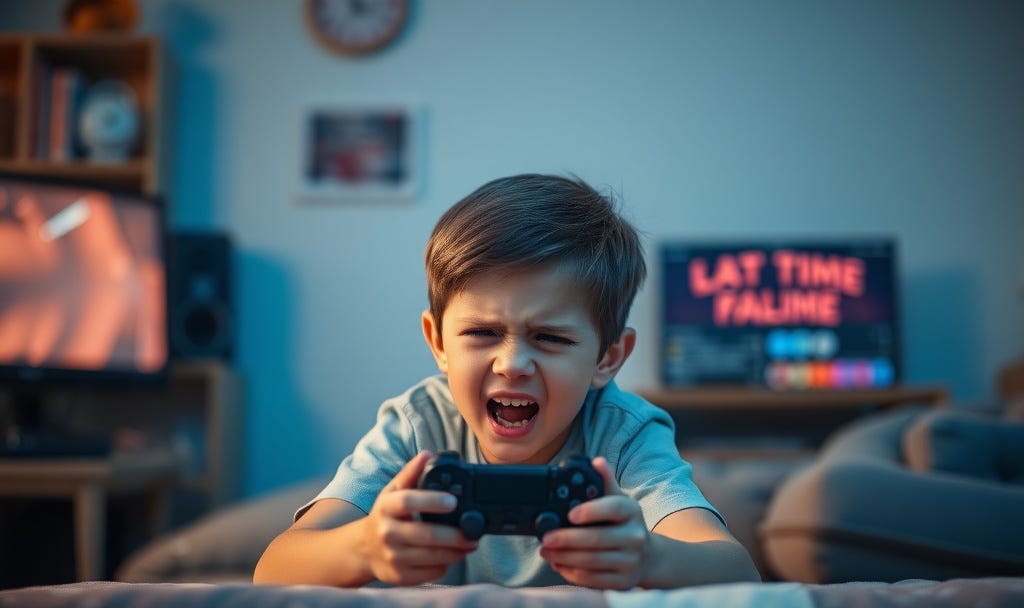
Teaching Emotional Regulation Through Gaming Rage
from Continuing Education for Homeschooling Families · host Heidi
SHOW NOTESWhen the Controller Gets Slammed: Teaching Emotional Regulation Through Gaming RageEpisode Summary Gaming rage isn’t a parenting failure — it’s a neuroscience problem. This episode breaks down what’s actually happening in your child’s brain during a meltdown, what the research says about emotional validation and skill-building, and exactly what to do in the moment, after the storm, and over the long haul to raise a kid who can handle losing gracefully.What You’ll Learn* Why losing gracefully is a learned skill — and why kids’ brains literally aren’t equipped to do it yet* What Dr. John Gottman’s research on emotion coaching says about validation and calming down* A step-by-step approach for the moment of rage, the aftermath, and the long game* How to build a calm-down toolkit with your child before the next meltdown hits* Why gradual social exposure — not avoidance — is the right move for homeschool families worried about their child’s emotional regulation in group settingsResearch & Resources Mentioned* Arain, Mariam, et al. “Maturation of the Adolescent Brain.” Neuropsychiatric Disease and Treatment, 2013. https://pmc.ncbi.nlm.nih.gov/articles/PMC3621648/* Hartley, C.A. & Somerville, L.H. “The Neuroscience of Adolescent Decision-Making.” Current Opinion in Behavioral Sciences, 2015. (Referenced in Lumen Learning’s Adolescent Psychology course: https://courses.lumenlearning.com/adolescent/chapter/brain-changes/)* Gottman, John M. Raising an Emotionally Intelligent Child. Simon & Schuster, 1997. Overview of emotion coaching research and the five-step model.* Gottman Institute. “How to Strengthen Your Child’s Emotional Intelligence.” https://www.gottman.com/blog/strengthen-childs-emotional-intelligence/* Medlin, Richard G. “Homeschooling and the Question of Socialization Revisited.” The Peabody Journal of Education, 2013. https://www.stetson.edu/artsci/psychology/media/medlin-socialization-2013.pdfAdditional Resources* The Whole-Brain Child by Daniel J. Siegel & Tina Payne Bryson — practical neuroscience for parents, written for actual humans (not just researchers)* Raising Good Humans by Hunter Clarke-Fields — mindfulness-based approach to emotional regulation for both kids and parents* The Gottman Institute’s free resources on emotion coaching: https://www.gottman.com/parents/Key Terms* Executive Function — A set of mental skills including impulse control, working memory, and flexible thinking. These are housed primarily in the prefrontal cortex and develop throughout childhood and into early adulthood.* Prefrontal Cortex — The front region of the brain responsible for planning, decision-making, and impulse control. Last brain region to fully develop — research places full maturity around age 25.* Emotion Coaching — A parenting approach developed by Dr. John Gottman in which parents acknowledge and validate a child’s feelings rather than dismissing or immediately correcting them. Associated with faster emotional recovery and stronger long-term regulation skills.* Fight-or-Flight Response — The body’s automatic stress response when a perceived threat is detected. In this state, the rational prefrontal cortex is essentially offline, making reasoning or teaching ineffective until the child returns to calm.* Gradual Exposure — A research-backed approach to building tolerance for challenging situations by starting small and increasing difficulty over time. Used in both therapeutic and educational contexts. This is a public episode. If you would like to discuss this with other subscribers or get access to bonus episodes, visit homeschoolce.substack.com
Embed this episode
Ready to play
Teaching Emotional Regulation Through Gaming Rage
No transcript for this episode yet
Similar Episodes
No similar episodes found.
Similar Podcasts
No similar podcasts found.