
EPISODE · Dec 21, 2025 · 5 MIN
Teaching Tempo as Sensation, Not BPM | iServalan | Continuum Method
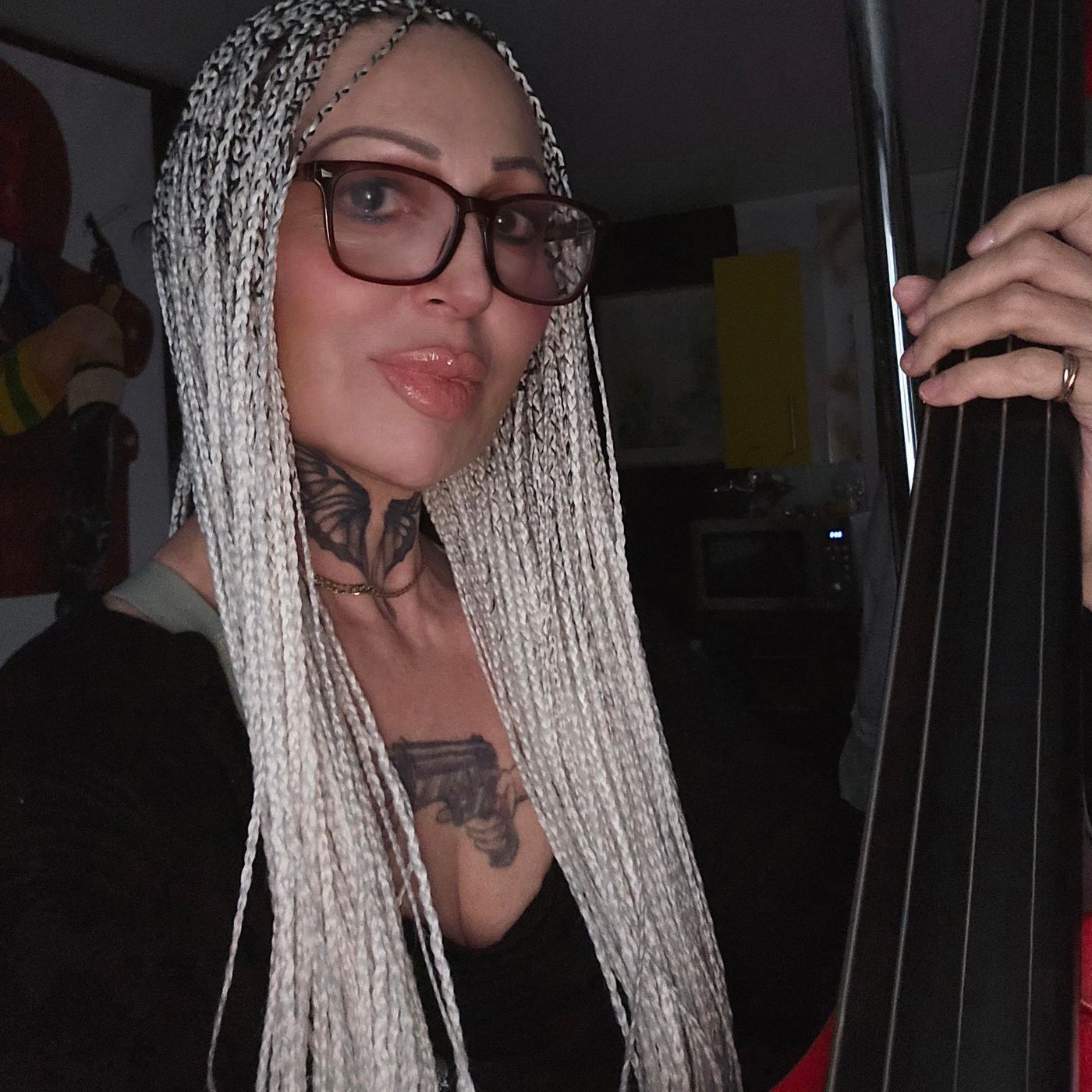
from Continuum Music Studio · host Sarnia de la Maré FRSA
Teaching Tempo as Sensation, Not BPM(Why time must be felt before it can be counted)Tempo is usually introduced as a number.60 BPM.80 BPM.120 BPM.Neat. Measurable. Reassuring.And completely insufficient.Because tempo is not, first and foremost, a calculation. It is a bodily agreement. A shared sense of how long something takes, how much weight it carries, and how urgently it wants to move forward. Before it is counted, tempo is experienced.The mistake in much modern teaching—and almost all AI-mediated music—is to reverse that order.When learners are taught tempo as BPM first, they learn compliance before understanding. They learn to obey an external clock rather than to inhabit musical time. The metronome becomes a supervisor instead of a reference. Rhythm becomes something to “stay inside” rather than something to shape.The Continuum Approach takes a different stance.Tempo begins as sensation.It lives in walking pace, breathing, pulse, gravity, effort. A slow tempo feels heavy before it feels slow. A fast tempo feels light—or panicked—before it feels fast. Even silence has tempo: the length of a pause carries emotional weight long before it can be timed.This is why children often play with beautiful timing long before they can count it. Patta-cake-patta-cake-baker's-man, and even hopscotch, shows an innate and committed understanding of tempo and what fun it can be. They slow instinctively at the end of a phrase. They rush when excited. They linger when something matters. These are not errors. They are untrained musical intelligence.Counting comes later—not to replace sensation, but to name it. We need it as musicians to organise feelings and enable us to play music with others.In orchestral music, tempo is negotiated constantly. No conductor worth following treats tempo as a fixed speed. It flexes around harmony, texture, and collective breath. In jazz, tempo exists as an elastic centre—felt, implied, argued with. The beat may be steady, but the music leans against it, ahead of it, behind it.This kind of time cannot be taught by grid.It must be taught through:gesture (how the body initiates sound)resistance (how effort changes speed)arrival (how time behaves when something lands)release (how motion dissolves)Only after these sensations are familiar does BPM become useful. At that point, the number is no longer an authority. It is a translation—a way of communicating shared feeling efficiently, not a rule that dictates it.AI systems cannot do this because sensation is not stored in data. It emerges in relationship: between player and instrument, between players, between sound and space. AI can replicate tempo values flawlessly, but it cannot experience why a tempo needs to change.And this is why platform culture struggles with living time.TikTok, Reels, Shorts—these environments demand rhythmic obedience. Fixed clip lengths punish rubato. Fermatas break loops. Tempo drift disrupts metrics. So music adapts by flattening time until it behaves predictably.What disappears is not complexity, but permission.Permission to hesitate.Permission to breathe.Permission to let time thicken or thin in response to meaning.Teaching tempo as sensation restores that permission early—before learners internalise the idea that music must always behave. It tells them: time is not something you are trapped inside. It is something you participate in.The metronome still has a place.So does counting.So does precision.But none of them come first.First comes the feeling of moving through sound.Only then do we decide how fast it was.That ordering—sensation before measurement—is one of the quiet foundations of the Continuum. And without it, we risk raising musicians who can keep perfect time, but have no idea when it should give way.The De La Maré Music ContinuumWritten and presented by iServalan™ (the stage name of Sarnia de la Maré FRSA)Music, listening, and the Continuum Approach: Exploring sound across genres, eras, and performance cultures — from Baroque to punk, hip-hop to minimalism — without hierarchy or haste.iservalan.com🎧 Podcast & essays: 🎻 Music School#iServalan #ContinuumApproach #MusicPodcast #RadicalListening #MusicAcrossGenres#PerformanceCulture #SarniaDeLaMaré
Embed this episode
Ready to play
Teaching Tempo as Sensation, Not BPM | iServalan | Continuum Method
No transcript for this episode yet
Similar Episodes
No similar episodes found.
Similar Podcasts
No similar podcasts found.