
PODCAST · music
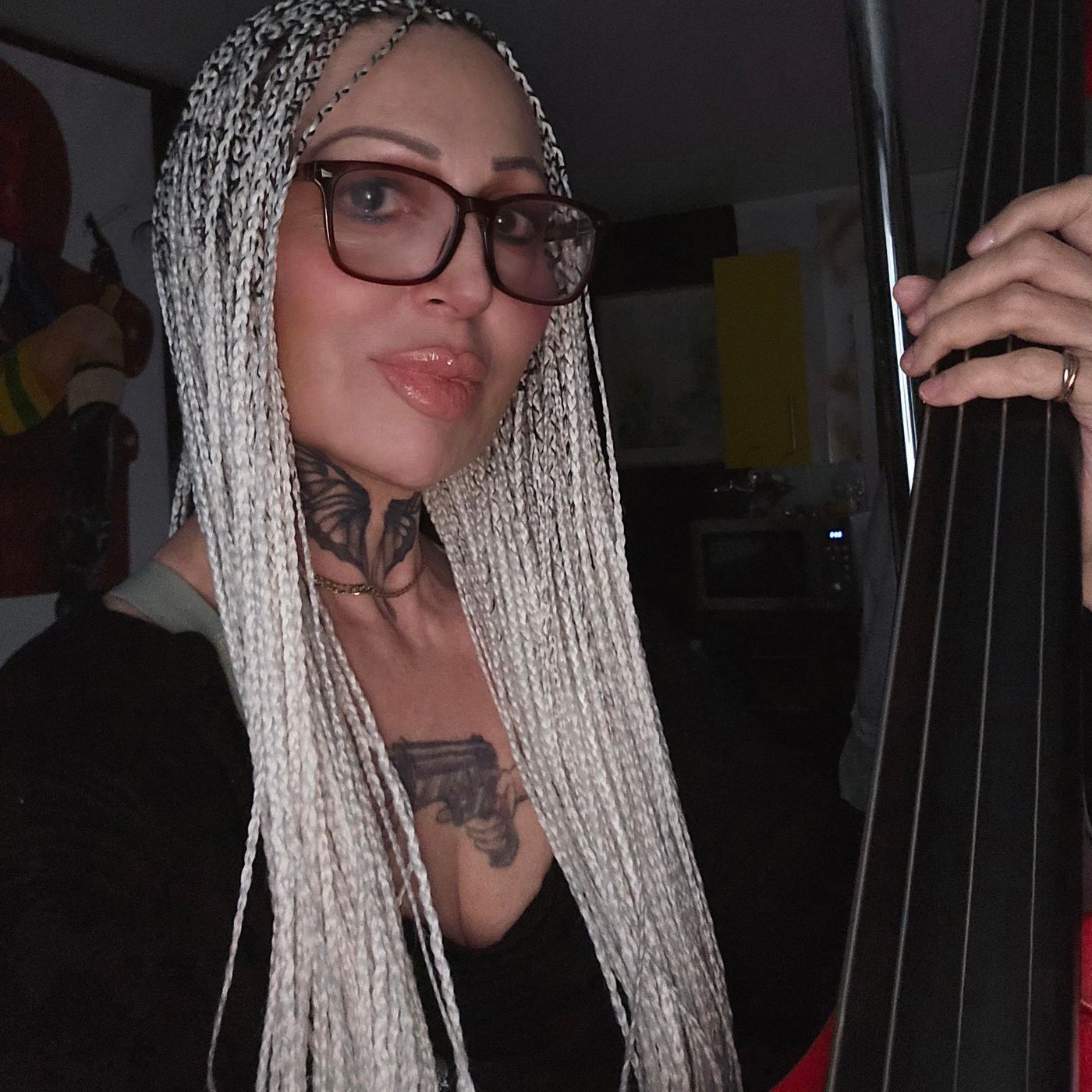
Continuum Music Studio
by Sarnia de la Maré FRSA
The De la Maré Music Continuum is an adaptive, pressure-free framework for musical learning created by Sarnia de la Maré.https://www.iservalan.com/2026/08/the-de-la-mare-music-continuum-adaptive.html🌱 Continuum Music Studio — Sarnia de la Maré This podcast channel shares my work developing the Continuum Method: a personalised, pressure-free approach to learning music. I’m a multi-instrumentalist, educator, and author, and I teach through adaptive methods shaped around individual learning styles, personalities, and creative temperaments.My work focuses on:• Confidence and creative wellbeing• Neurodiversity-aware learning• Sustainable practice• Long-term musical development• Artisti
-
296
Welcome to the De La Maré Music Continuum. Thirds as musical tools for composers and musicians
The De La Maré Music ContinuumWritten and presented by iServalan™ (the stage name of Sarnia de la Maré FRSA)Music, listening, and the Continuum Approach: Exploring sound across genres, eras, and performance cultures — from Baroque to punk, hip-hop to minimalism — without hierarchy or haste.iservalan.com🎧 Podcast & essays: 🎻 Music School#iServalan #ContinuumApproach #MusicPodcast #RadicalListening #MusicAcrossGenres#PerformanceCulture #SarniaDeLaMaré
-
295
Welcome to the De La Maré Music Continuum. This is an essay celebrating the beautiful third.
The De La Maré Music ContinuumWritten and presented by iServalan™ (the stage name of Sarnia de la Maré FRSA)Music, listening, and the Continuum Approach: Exploring sound across genres, eras, and performance cultures — from Baroque to punk, hip-hop to minimalism — without hierarchy or haste.iservalan.com🎧 Podcast & essays: 🎻 Music School#iServalan #ContinuumApproach #MusicPodcast #RadicalListening #MusicAcrossGenres#PerformanceCulture #SarniaDeLaMaré
-
294
West Dean College’s Musical Instruments programme: A De La Maré Music Continuum InfoPod
The De La Maré Music ContinuumWritten and presented by iServalan™ (the stage name of Sarnia de la Maré FRSA)Music, listening, and the Continuum Approach: Exploring sound across genres, eras, and performance cultures — from Baroque to punk, hip-hop to minimalism — without hierarchy or haste.iservalan.com🎧 Podcast & essays: 🎻 Music School#iServalan #ContinuumApproach #MusicPodcast #RadicalListening #MusicAcrossGenres#PerformanceCulture #SarniaDeLaMaré
-
293
The Heart of the Workshop: A Viola Maker’s Bench. A De La Maré Music Continuum InfoPod.
Welcome to the Continuum Pedagoy Music School at iservalan.comThe De La Maré Music ContinuumWritten and presented by iServalan™ (the stage name of Sarnia de la Maré FRSA)Music, listening, and the Continuum Approach: Exploring sound across genres, eras, and performance cultures — from Baroque to punk, hip-hop to minimalism — without hierarchy or haste.iservalan.com🎧 Podcast & essays: 🎻 Music School#iServalan #ContinuumApproach #MusicPodcast #RadicalListening #MusicAcrossGenres#PerformanceCulture #SarniaDeLaMaré
-
292
Jonathan Hill: UK Specialist in Viola d’Amore Making. A De La Maré Music Continuum Info Pod
From the De La Maré Music ContinuumThe De La Maré Music ContinuumWritten and presented by iServalan™ (the stage name of Sarnia de la Maré FRSA)Music, listening, and the Continuum Approach: Exploring sound across genres, eras, and performance cultures — from Baroque to punk, hip-hop to minimalism — without hierarchy or haste.iservalan.com🎧 Podcast & essays: 🎻 Music School#iServalan #ContinuumApproach #MusicPodcast #RadicalListening #MusicAcrossGenres#PerformanceCulture #SarniaDeLaMaré
-
291
Lesson Project Songs on a Semitone, Lesson by iServalan for Continuum Music Studio
ABOUT PAGE https://www.iservalan.com/2026/08/the-de-la-mare-music-continuum-adaptive.htmlThe De La Maré Music ContinuumWritten and presented by iServalan™ (the stage name of Sarnia de la Maré FRSA)Music, listening, and the Continuum Approach: Exploring sound across genres, eras, and performance cultures — from Baroque to punk, hip-hop to minimalism — without hierarchy or haste.iservalan.com🎧 Podcast & essays: 🎻 Music School#iServalan #ContinuumApproach #MusicPodcast #RadicalListening #MusicAcrossGenres#PerformanceCulture #SarniaDeLaMaré
-
290
Specific open-string etudes and studies, a review of classic scores for tutors and students
The De la Maré Music Continuum | Adaptive, Pressure-Free Music Learning Framework The De La Maré Music ContinuumWritten and presented by iServalan™ (the stage name of Sarnia de la Maré FRSA)Music, listening, and the Continuum Approach: Exploring sound across genres, eras, and performance cultures — from Baroque to punk, hip-hop to minimalism — without hierarchy or haste.iservalan.com🎧 Podcast & essays: 🎻 Music School#iServalan #ContinuumApproach #MusicPodcast #RadicalListening #MusicAcrossGenres#PerformanceCulture #SarniaDeLaMaré
-
289
Lesson and Practice Ideas for Tutors and Students. De La Maré Music Continuum, a 21st Century Pedagogy.
Lesson and Practice Ideas for Tutors and Students. De La Maré Music Continuum, a 21st Century Pedagogy.Open-string work forms one of the most versatile and foundational tools in string pedagogy for violin, viola, cello, and double bass. Because open notes require no left-hand fingering, they free the student (and teacher) to isolate tone production, right-hand technique, rhythmic precision, dynamics, articulation, and listening skills without the simultaneous demand of accurate intonation or shifting. Used creatively, open-string exercises turn the simplest pitch material into a rich laboratory for musical and technical development.A basic interactive format begins with the teacher calling a note name (G, D, A, E on violin; C, G, D, A on viola and cello; E, A, D, G on double bass). The student responds by sounding the corresponding open string. From this starting point the teacher can immediately layer additional instructions: “Play that note higher than the stand,” “Play it lower,” or “Match the pitch exactly.” Even though the open string itself cannot change pitch, the exercise trains the ear and the concept of relative pitch while reinforcing the names and locations of the open strings. Students quickly internalize which string produces which pitch and begin to hear the natural resonance of each instrument’s open strings.Right-hand technique is the area that benefits most dramatically from open-string practice. The teacher can direct the student to use an up-bow or a down-bow, to begin on the frog or the tip, or to sustain a whole bow versus a short stroke. Directional control becomes automatic when the left hand is unoccupied. Dynamics are equally straightforward: the teacher calls for loud or soft, then crescendo or diminuendo across a single open note or a sequence of open strings. Speed variations—fast détaché, slow sustained strokes, or gradual accelerando—further refine bow control and contact point. Alternating between bowed and pizzicato versions of the same open note teaches the student to produce clear, resonant pizzicato while maintaining a free right hand, then to return smoothly to the bow.Additional layers expand the pedagogical value. The teacher may call for different articulations (legato, staccato, spiccato, martelé) on open strings so that the physical motion is learned before being complicated by fingered notes. String crossings—simple patterns such as G–D–A–E or more complex sequences—develop smooth bow-arm levels and accurate string selection. Rhythmic dictation works especially well: the teacher claps or speaks a rhythm, and the student plays it on a designated open string, then on alternating strings. Ensemble games are natural extensions; one student plays a steady open-string pulse while another invents rhythms or dynamics above it, or the entire class responds in unison when the teacher names a string and a quality (loud up-bow on A, soft pizzicato on G, etc.).Tone production receives focused attention. With no left-hand pressure to contend with, students can experiment with bow speed, weight, and contact point to discover the richest sound each open string can produce. Teachers often ask students to “find the ringing tone,” then to maintain that quality while changing dynamics or bow direction. On the lower instruments—cello and double bass—open-string work also cultivates a sense of the instrument’s natural resonance and helps students feel the physical vibration that later informs left-hand placement and vibrato.These exercises scale easily across levels. Absolute beginners gain security in string names, basic bow holds, and simple listening. Intermediate players refine string crossings, varied articulations, and dynamic control. Advanced students use open strings for sophisticated bowing studies, tone-color exploration, and even as drones for improvisation or ear-training. Because the material is so simple, the teacher can keep the pace brisk and the atmosphere playful, reducing performance anxiety while still demanding precision.In short, open-note practice is far more than a preliminary warm-up. By systematically varying the teacher’s verbal cues—note name, higher or lower, up or down bow, loud or soft, fast or slow, pizzicato or bowed, legato or detached, single string or crossing—the lesson transforms the four open strings into a comprehensive training ground. Students leave each session with clearer tone, more reliable right-hand technique, sharper ears, and a deeper familiarity with their instrument’s most fundamental pitches.More From the De La Maré Music Continuum at iservalan.com.The De La Maré Music ContinuumWritten and presented by iServalan™ (the stage name of Sarnia de la Maré FRSA)Music, listening, and the Continuum Approach: Exploring sound across genres, eras, and performance cultures — from Baroque to punk, hip-hop to minimalism — without hierarchy or haste.iservalan.com🎧 Podcast & essays: 🎻 Music School#iServalan #ContinuumApproach #MusicPodcast #RadicalListening #MusicAcrossGenres#PerformanceCulture #SarniaDeLaMaré
-
288
The Undulating Practice Method | De La Maré Music Continuum, A 21st Century Pedagogy
https://www.iservalan.com/2026/08/the-de-la-mare-music-continuum-adaptive.htmlThe De La Maré Music ContinuumWritten and presented by iServalan™ (the stage name of Sarnia de la Maré FRSA)Music, listening, and the Continuum Approach: Exploring sound across genres, eras, and performance cultures — from Baroque to punk, hip-hop to minimalism — without hierarchy or haste.iservalan.com🎧 Podcast & essays: 🎻 Music School#iServalan #ContinuumApproach #MusicPodcast #RadicalListening #MusicAcrossGenres#PerformanceCulture #SarniaDeLaMaré
-
287
Image Scores: Improvisation, Composition, and the Freedom of the Line | De La Maré Music School
https://www.iservalan.com/2026/08/the-de-la-mare-music-continuum-adaptive.htmlThe De La Maré Music ContinuumWritten and presented by iServalan™ (the stage name of Sarnia de la Maré FRSA)Music, listening, and the Continuum Approach: Exploring sound across genres, eras, and performance cultures — from Baroque to punk, hip-hop to minimalism — without hierarchy or haste.iservalan.com🎧 Podcast & essays: 🎻 Music School#iServalan #ContinuumApproach #MusicPodcast #RadicalListening #MusicAcrossGenres#PerformanceCulture #SarniaDeLaMaré
-
286
Open Strings: Confidence, Resonance, and the First Sense of Intonation, De La Maré Music Continuum
https://www.iservalan.com/2026/08/the-de-la-mare-music-continuum-adaptive.htmlThe De La Maré Music ContinuumWritten and presented by iServalan™ (the stage name of Sarnia de la Maré FRSA)Music, listening, and the Continuum Approach: Exploring sound across genres, eras, and performance cultures — from Baroque to punk, hip-hop to minimalism — without hierarchy or haste.iservalan.com🎧 Podcast & essays: 🎻 Music School#iServalan #ContinuumApproach #MusicPodcast #RadicalListening #MusicAcrossGenres#PerformanceCulture #SarniaDeLaMaré
-
285
Music as Mental and Physical Occupation in Recovery | De La Maré Music Continuum, A 21st Century Pedagogy
https://www.iservalan.com/2026/08/the-de-la-mare-music-continuum-adaptive.htmlThe De La Maré Music ContinuumWritten and presented by iServalan™ (the stage name of Sarnia de la Maré FRSA)Music, listening, and the Continuum Approach: Exploring sound across genres, eras, and performance cultures — from Baroque to punk, hip-hop to minimalism — without hierarchy or haste.iservalan.com🎧 Podcast & essays: 🎻 Music School#iServalan #ContinuumApproach #MusicPodcast #RadicalListening #MusicAcrossGenres#PerformanceCulture #SarniaDeLaMaré
-
284
Using the Body in Music ,The De La Maré Music Continuum, A Pedagogy for the 21st Century
https://www.iservalan.com/2026/08/the-de-la-mare-music-continuum-adaptive.htmlThe De La Maré Music Continuum, A Pedagogy for the 21st CenturyThe De La Maré Music ContinuumWritten and presented by iServalan™ (the stage name of Sarnia de la Maré FRSA)Music, listening, and the Continuum Approach: Exploring sound across genres, eras, and performance cultures — from Baroque to punk, hip-hop to minimalism — without hierarchy or haste.iservalan.com🎧 Podcast & essays: 🎻 Music School#iServalan #ContinuumApproach #MusicPodcast #RadicalListening #MusicAcrossGenres#PerformanceCulture #SarniaDeLaMaré
-
283
Teaching Tempo as Sensation, Not BPM | The De La Maré Music Continuum A Pedagogy for the 21st Century
The De La Maré Music Continuum A Pedagogy for the 21st Centuryhttps://www.iservalan.com/2026/08/the-de-la-mare-music-continuum-adaptive.htmlThe De La Maré Music ContinuumWritten and presented by iServalan™ (the stage name of Sarnia de la Maré FRSA)Music, listening, and the Continuum Approach: Exploring sound across genres, eras, and performance cultures — from Baroque to punk, hip-hop to minimalism — without hierarchy or haste.iservalan.com🎧 Podcast & essays: 🎻 Music School#iServalan #ContinuumApproach #MusicPodcast #RadicalListening #MusicAcrossGenres#PerformanceCulture #SarniaDeLaMaré
-
282
Before the First Note: Why We Begin With Understanding, Not Instruction. The Delamaré Music Continuum.
https://www.iservalan.com/2026/08/the-de-la-mare-music-continuum-adaptive.htmlThe De La Maré Music ContinuumWritten and presented by iServalan™ (the stage name of Sarnia de la Maré FRSA)Music, listening, and the Continuum Approach: Exploring sound across genres, eras, and performance cultures — from Baroque to punk, hip-hop to minimalism — without hierarchy or haste.iservalan.com🎧 Podcast & essays: 🎻 Music School#iServalan #ContinuumApproach #MusicPodcast #RadicalListening #MusicAcrossGenres#PerformanceCulture #SarniaDeLaMaré
-
281
The Stringed Instrument Bow: Where Sound Actually Begins | De La Maré Music Continuum
https://www.iservalan.com/2026/08/the-de-la-mare-music-continuum-adaptive.htmlThe Stringed Instrument Bow: Where Sound Actually Begins | De La Maré Music Continuum | Sarnia de la Maré FRSAThe De La Maré Music ContinuumWritten and presented by iServalan™ (the stage name of Sarnia de la Maré FRSA)Music, listening, and the Continuum Approach: Exploring sound across genres, eras, and performance cultures — from Baroque to punk, hip-hop to minimalism — without hierarchy or haste.iservalan.com🎧 Podcast & essays: 🎻 Music School#iServalan #ContinuumApproach #MusicPodcast #RadicalListening #MusicAcrossGenres#PerformanceCulture #SarniaDeLaMaré
-
280
Why Slow Practice Is Crucial to Excellence | The De La Maré Music Continuum by Sarnia de la Maré FRSA
The De La Maré Music Continuum by Sarnia de la Maré FRSAThe De La Maré Music ContinuumWritten and presented by iServalan™ (the stage name of Sarnia de la Maré FRSA)Music, listening, and the Continuum Approach: Exploring sound across genres, eras, and performance cultures — from Baroque to punk, hip-hop to minimalism — without hierarchy or haste.iservalan.com🎧 Podcast & essays: 🎻 Music School#iServalan #ContinuumApproach #MusicPodcast #RadicalListening #MusicAcrossGenres#PerformanceCulture #SarniaDeLaMaré
-
279
Why Ten Minutes Is Enough — And Why We Distrust the Idea by De La Maré Music Continuum
https://www.iservalan.com/2026/08/the-delamare-music-continuum-is.htmlThe De La Maré Music ContinuumWritten and presented by iServalan™ (the stage name of Sarnia de la Maré FRSA)Music, listening, and the Continuum Approach: Exploring sound across genres, eras, and performance cultures — from Baroque to punk, hip-hop to minimalism — without hierarchy or haste.iservalan.com🎧 Podcast & essays: 🎻 Music School#iServalan #ContinuumApproach #MusicPodcast #RadicalListening #MusicAcrossGenres#PerformanceCulture #SarniaDeLaMaré
-
278
The De la Maré Music Continuum Adaptive, pressure-free framework for musical learning
The Delamaré Music Continuum is an adaptive, pressure-free framework for musical learning created by Sarnia de la Maré.The De La Maré Music ContinuumWritten and presented by iServalan™ (the stage name of Sarnia de la Maré FRSA)Music, listening, and the Continuum Approach: Exploring sound across genres, eras, and performance cultures — from Baroque to punk, hip-hop to minimalism — without hierarchy or haste.iservalan.com🎧 Podcast & essays: 🎻 Music School#iServalan #ContinuumApproach #MusicPodcast #RadicalListening #MusicAcrossGenres#PerformanceCulture #SarniaDeLaMaré
-
277
Composition from the First Note: Cultivating Agency in the Continuum Approach Foundations
From the new Book The Continuum Approach to Music: Foundations: A Pedagogical Framework for Musical Learning by Sarnia de la Maré FRSA.The De La Maré Music ContinuumWritten and presented by iServalan™ (the stage name of Sarnia de la Maré FRSA)Music, listening, and the Continuum Approach: Exploring sound across genres, eras, and performance cultures — from Baroque to punk, hip-hop to minimalism — without hierarchy or haste.iservalan.com🎧 Podcast & essays: 🎻 Music School#iServalan #ContinuumApproach #MusicPodcast #RadicalListening #MusicAcrossGenres#PerformanceCulture #SarniaDeLaMaré
-
276
Working with Microtones in Continuum Pedagogy From the New Book by Sarnia de la Mare FRSA
The Continuum Approach to Music: Foundations: A Pedagogical Framework for Musical Learning by Sarnia de la Maré FRSA.The De La Maré Music ContinuumWritten and presented by iServalan™ (the stage name of Sarnia de la Maré FRSA)Music, listening, and the Continuum Approach: Exploring sound across genres, eras, and performance cultures — from Baroque to punk, hip-hop to minimalism — without hierarchy or haste.iservalan.com🎧 Podcast & essays: 🎻 Music School#iServalan #ContinuumApproach #MusicPodcast #RadicalListening #MusicAcrossGenres#PerformanceCulture #SarniaDeLaMaré
-
275
Digital Tools, Human Performance, and the Continuum of Modern Musicianship #continuum
From the book The Continuum Approach to Music: Foundations: A Pedagogical Framework for Musical Learning by Sarnia de la Maré FRSA.The De La Maré Music ContinuumWritten and presented by iServalan™ (the stage name of Sarnia de la Maré FRSA)Music, listening, and the Continuum Approach: Exploring sound across genres, eras, and performance cultures — from Baroque to punk, hip-hop to minimalism — without hierarchy or haste.iservalan.com🎧 Podcast & essays: 🎻 Music School#iServalan #ContinuumApproach #MusicPodcast #RadicalListening #MusicAcrossGenres#PerformanceCulture #SarniaDeLaMaré
-
274
Free Vocal Linguistics: Voice as Language Before Words. Continuum Pedagogy Essay.
From the book The Continuum Approach to Music: Foundations: A Pedagogical Framework for Musical Learning by Sarnia de la Maré FRSA.The De La Maré Music ContinuumWritten and presented by iServalan™ (the stage name of Sarnia de la Maré FRSA)Music, listening, and the Continuum Approach: Exploring sound across genres, eras, and performance cultures — from Baroque to punk, hip-hop to minimalism — without hierarchy or haste.iservalan.com🎧 Podcast & essays: 🎻 Music School#iServalan #ContinuumApproach #MusicPodcast #RadicalListening #MusicAcrossGenres#PerformanceCulture #SarniaDeLaMaré
-
273
Visual Scores in the Continuum Approach: Implementation and Practice. #continuumpedagogy
From the book The Continuum Approach to Music: Foundations: A Pedagogical Framework for Musical Learning by Sarnia de la Maré FRSA.The De La Maré Music ContinuumWritten and presented by iServalan™ (the stage name of Sarnia de la Maré FRSA)Music, listening, and the Continuum Approach: Exploring sound across genres, eras, and performance cultures — from Baroque to punk, hip-hop to minimalism — without hierarchy or haste.iservalan.com🎧 Podcast & essays: 🎻 Music School#iServalan #ContinuumApproach #MusicPodcast #RadicalListening #MusicAcrossGenres#PerformanceCulture #SarniaDeLaMaré
-
272
The Continuum Approach for Children: Inclusion, Early Agency, and Complementary Pathways.
From the new book coming soon The Continuum Approach to Music: Foundations: A Pedagogical Framework for Musical Learning by Sarnia de la Maré FRSA.The De La Maré Music ContinuumWritten and presented by iServalan™ (the stage name of Sarnia de la Maré FRSA)Music, listening, and the Continuum Approach: Exploring sound across genres, eras, and performance cultures — from Baroque to punk, hip-hop to minimalism — without hierarchy or haste.iservalan.com🎧 Podcast & essays: 🎻 Music School#iServalan #ContinuumApproach #MusicPodcast #RadicalListening #MusicAcrossGenres#PerformanceCulture #SarniaDeLaMaré
-
271
Neuroplasticity, Continuum Pedagogy, and Teaching Neurodiverse Adult Students #continuum
From the book The Continuum Approach to Music: Foundations: A Pedagogical Framework for Musical Learning by Sarnia de la Maré FRSA.The De La Maré Music ContinuumWritten and presented by iServalan™ (the stage name of Sarnia de la Maré FRSA)Music, listening, and the Continuum Approach: Exploring sound across genres, eras, and performance cultures — from Baroque to punk, hip-hop to minimalism — without hierarchy or haste.iservalan.com🎧 Podcast & essays: 🎻 Music School#iServalan #ContinuumApproach #MusicPodcast #RadicalListening #MusicAcrossGenres#PerformanceCulture #SarniaDeLaMaré
-
270
Continuum Music Pedagogy: Learning an Instrument, Taking the Leap as an Adult
From the Book The Continuum Approach to Music: Foundations: A Pedagogical Framework for Musical Learning www.iservalan.comThe De La Maré Music ContinuumWritten and presented by iServalan™ (the stage name of Sarnia de la Maré FRSA)Music, listening, and the Continuum Approach: Exploring sound across genres, eras, and performance cultures — from Baroque to punk, hip-hop to minimalism — without hierarchy or haste.iservalan.com🎧 Podcast & essays: 🎻 Music School#iServalan #ContinuumApproach #MusicPodcast #RadicalListening #MusicAcrossGenres#PerformanceCulture #SarniaDeLaMaré
-
269
Continuum Music Pedagogy™: The Architecture of the Augmented Octave, Augmented Unison
The De La Maré Music ContinuumWritten and presented by iServalan™ (the stage name of Sarnia de la Maré FRSA)Music, listening, and the Continuum Approach: Exploring sound across genres, eras, and performance cultures — from Baroque to punk, hip-hop to minimalism — without hierarchy or haste.iservalan.com🎧 Podcast & essays: 🎻 Music School#iServalan #ContinuumApproach #MusicPodcast #RadicalListening #MusicAcrossGenres#PerformanceCulture #SarniaDeLaMaré
-
268
Philip Glass’s Minimalist Language: How It Influenced Bowie, Eno, and even Hip Hop #continuum
Philip Glass’s minimalist language—built on repetition, gradual process, and pulsed energy—crossed from the downtown experimental scene into popular music, offering techniques and attitudes that numerous rock, new-wave, and alternative bands absorbed and transformed. The De La Maré Music ContinuumWritten and presented by iServalan™ (the stage name of Sarnia de la Maré FRSA)Music, listening, and the Continuum Approach: Exploring sound across genres, eras, and performance cultures — from Baroque to punk, hip-hop to minimalism — without hierarchy or haste.iservalan.com🎧 Podcast & essays: 🎻 Music School#iServalan #ContinuumApproach #MusicPodcast #RadicalListening #MusicAcrossGenres#PerformanceCulture #SarniaDeLaMaré
-
267
The ‘Add One Note’ Method in Continuum Music Pedagogy™ An essay for teachers and practitioners.
Follow the method at www.iservalan.comThe De La Maré Music ContinuumWritten and presented by iServalan™ (the stage name of Sarnia de la Maré FRSA)Music, listening, and the Continuum Approach: Exploring sound across genres, eras, and performance cultures — from Baroque to punk, hip-hop to minimalism — without hierarchy or haste.iservalan.com🎧 Podcast & essays: 🎻 Music School#iServalan #ContinuumApproach #MusicPodcast #RadicalListening #MusicAcrossGenres#PerformanceCulture #SarniaDeLaMaré
-
266
The Foundational Power of Scales in Continuum Pedagogy At Continuum Music School
The Foundational Power of Scales in Continuum Pedagogy At Continuum Music School, we view scales not as dry technical exercises, but as living maps of the instrument—tools that build note recognition, refine intonation, and unlock fluid musicianship from the very first lessons. Scales create an internal GPS for the player: they orient the hands, ears, and mind across the full range of the instrument while training the most essential skill of all—hearing and matching pitch with precision. Why Scales Matter for Mapping, Recognition, and Intonation Every instrument has its own geography. On string instruments, the fingerboard can feel vast and unmarked; on winds or keyboards the layout is more fixed, yet the relationships between notes still need to be internalized. Scales systematically map that territory. By repeatedly traversing the same intervallic patterns, students develop spatial awareness—knowing exactly where each note lives under the fingers or in the embouchure—and auditory recognition so that the sound of a pitch is instantly identified. Intonation, the heart of musical beauty, improves dramatically when scales are practiced deliberately. The ear learns the pure relationships between notes, and the body learns the micro-adjustments required to produce them. Without this foundation, repertoire remains a collection of isolated notes rather than a coherent, in-tune musical language. How We Introduce Scales: Start Small, Expand Fast Continuum Pedagogy recommends beginning scales immediately—often in the very first lessons—with the simplest possible unit: the root note alone. Feel its resonance, match it to a reference pitch, and establish a clear sense of home. From there, add just three or four notes. A short ascending and descending fragment already teaches direction, interval size, and basic finger or hand patterns. The key is to expand as soon as possible. New notes are introduced the moment the previous ones feel secure, steadily building until the student can travel three or more octaves with confidence. This rapid yet supported growth prevents the scale from becoming a static, one-octave ritual and instead turns it into a dynamic exploration of the instrument’s full range. Simultaneously, new fingering options are explored at the earliest opportunity. Alternative fingerings, shifts, or hand positions are not saved for advanced stages; they are introduced while the scale is still fresh. This develops flexibility, problem-solving, and a deeper understanding of the instrument’s design. Students learn that there is rarely only one “correct” way—only ways that serve musical and technical goals. Practicing with Tuned Drones The secret ingredient that elevates scale practice at Continuum Music School is our library of tuned drones. These free resources, available on YouTube and regularly updated with new versions for different tempos, bow variations, and instrumental needs, provide a constant, pure reference pitch. Playing scales against a drone forces the ear to lock onto accurate intonation in real time. The drone reveals every slight deviation and rewards every successful match, training both listening and adjustment skills far more effectively than practicing in isolation. Because the drones are continuously refreshed, students can keep the work engaging: slower tempos for deep listening, faster ones for agility, varied articulations or bowings for expressive control. The result is scale practice that feels alive rather than repetitive. Building Lifelong Musicianship When scales are approached this way—rooted in the home note, expanded quickly across multiple octaves, enriched with alternative fingerings, and grounded by tuned drones—they cease to be a chore and become a daily conversation with the instrument. Students gain a reliable mental and physical map, sharper note recognition, and the refined intonation that makes music sing. At Continuum Music School we invite every learner, from absolute beginners onward, to start this journey immediately. The drones are free, the method is simple, and the musical rewards compound quickly. Open your instrument, sound the root, add the next few notes, and let the continuum of learning unfold—one carefully tuned scale at a time.The De La Maré Music ContinuumWritten and presented by iServalan™ (the stage name of Sarnia de la Maré FRSA)Music, listening, and the Continuum Approach: Exploring sound across genres, eras, and performance cultures — from Baroque to punk, hip-hop to minimalism — without hierarchy or haste.iservalan.com🎧 Podcast & essays: 🎻 Music School#iServalan #ContinuumApproach #MusicPodcast #RadicalListening #MusicAcrossGenres#PerformanceCulture #SarniaDeLaMaré
-
265
Visual Image Scores: The Freedom to Create Noise and Participate, Continuum Music Pedagoy
The De La Maré Music ContinuumWritten and presented by iServalan™ (the stage name of Sarnia de la Maré FRSA)Music, listening, and the Continuum Approach: Exploring sound across genres, eras, and performance cultures — from Baroque to punk, hip-hop to minimalism — without hierarchy or haste.iservalan.com🎧 Podcast & essays: 🎻 Music School#iServalan #ContinuumApproach #MusicPodcast #RadicalListening #MusicAcrossGenres#PerformanceCulture #SarniaDeLaMaré
-
264
Somatic Practice and the Alexander Technique: Embodied Awareness in a Digitised World #continuum
The De La Maré Music ContinuumWritten and presented by iServalan™ (the stage name of Sarnia de la Maré FRSA)Music, listening, and the Continuum Approach: Exploring sound across genres, eras, and performance cultures — from Baroque to punk, hip-hop to minimalism — without hierarchy or haste.iservalan.com🎧 Podcast & essays: 🎻 Music School#iServalan #ContinuumApproach #MusicPodcast #RadicalListening #MusicAcrossGenres#PerformanceCulture #SarniaDeLaMaré
-
263
Consistently Readjusting the Body: Returning to the Principles of Playing #continuummusic
The De La Maré Music ContinuumWritten and presented by iServalan™ (the stage name of Sarnia de la Maré FRSA)Music, listening, and the Continuum Approach: Exploring sound across genres, eras, and performance cultures — from Baroque to punk, hip-hop to minimalism — without hierarchy or haste.iservalan.com🎧 Podcast & essays: 🎻 Music School#iServalan #ContinuumApproach #MusicPodcast #RadicalListening #MusicAcrossGenres#PerformanceCulture #SarniaDeLaMaré
-
262
What is the Continuum Music Studio? What can it do for musicians? Let's find out with iServalan
The De La Maré Music ContinuumWritten and presented by iServalan™ (the stage name of Sarnia de la Maré FRSA)Music, listening, and the Continuum Approach: Exploring sound across genres, eras, and performance cultures — from Baroque to punk, hip-hop to minimalism — without hierarchy or haste.iservalan.com🎧 Podcast & essays: 🎻 Music School#iServalan #ContinuumApproach #MusicPodcast #RadicalListening #MusicAcrossGenres#PerformanceCulture #SarniaDeLaMaré
-
261
Why Physics Matters in Music: Gravitational Pull, Forces, and Kinetic Energy in the Continuum Approach
The De La Maré Music ContinuumWritten and presented by iServalan™ (the stage name of Sarnia de la Maré FRSA)Music, listening, and the Continuum Approach: Exploring sound across genres, eras, and performance cultures — from Baroque to punk, hip-hop to minimalism — without hierarchy or haste.iservalan.com🎧 Podcast & essays: 🎻 Music School#iServalan #ContinuumApproach #MusicPodcast #RadicalListening #MusicAcrossGenres#PerformanceCulture #SarniaDeLaMaré
-
260
Harnessing Gravity: Effortless Power in Bow Technique and Piano Playing #continuum #musicschool
The De La Maré Music ContinuumWritten and presented by iServalan™ (the stage name of Sarnia de la Maré FRSA)Music, listening, and the Continuum Approach: Exploring sound across genres, eras, and performance cultures — from Baroque to punk, hip-hop to minimalism — without hierarchy or haste.iservalan.com🎧 Podcast & essays: 🎻 Music School#iServalan #ContinuumApproach #MusicPodcast #RadicalListening #MusicAcrossGenres#PerformanceCulture #SarniaDeLaMaré
-
259
Somatic Techniques as Part of the Continuum Pedagogy by iServalan for Chronic Muscle Issues
Part of the Continuum Pedagogy by iServalanThe De La Maré Music ContinuumWritten and presented by iServalan™ (the stage name of Sarnia de la Maré FRSA)Music, listening, and the Continuum Approach: Exploring sound across genres, eras, and performance cultures — from Baroque to punk, hip-hop to minimalism — without hierarchy or haste.iservalan.com🎧 Podcast & essays: 🎻 Music School#iServalan #ContinuumApproach #MusicPodcast #RadicalListening #MusicAcrossGenres#PerformanceCulture #SarniaDeLaMaré
-
258
Breathing Against the Beat: A String Player’s Guide to Freeing Your Air (and Your Playing) #continuum
Part of the Continuum approach by iServalan read by my AI voice as I lost my voiceThe De La Maré Music ContinuumWritten and presented by iServalan™ (the stage name of Sarnia de la Maré FRSA)Music, listening, and the Continuum Approach: Exploring sound across genres, eras, and performance cultures — from Baroque to punk, hip-hop to minimalism — without hierarchy or haste.iservalan.com🎧 Podcast & essays: 🎻 Music School#iServalan #ContinuumApproach #MusicPodcast #RadicalListening #MusicAcrossGenres#PerformanceCulture #SarniaDeLaMaréThis episode includes AI-generated content.
-
257
Mastering “He’s a Pirate” from Pirates of the Caribbean: A Complete Guide to ABRSM Cello Grade 3.
This is an InfoPod for Continuum School of Music.Mastering “He’s a Pirate” from Pirates of the Caribbean: A Complete Guide to ABRSM Cello Grade 3.Choosing repertoire for an ABRSM exam is never just about picking notes off a page—it’s about finding music that lets a young cellist grow technically while discovering their own musical voice. For Cello Grade 3 in the 2024 syllabus (still current in 2026), the refreshed lists offer wonderful variety across Lists A, B and C. One piece that stands out for its immediate appeal, clear character and excellent teaching value is “He’s a Pirate” (from Pirates of the Caribbean: The Curse of the Black Pearl) arranged by Alan Bullard, found in List C of the Cello Exam Pieces from 2024, Grade 3 (ABRSM).This short, energetic film-music arrangement is perfect for illustrating how ABRSM assesses pieces and how players can balance rock-solid technique with vivid musical personality. Whether you’re preparing it for a Practical Grade exam (three pieces plus supporting tests) or a Performance Grade (four pieces plus overall performance mark), the principles remain the same.The ABRSM Marking Framework for PiecesEvery piece in ABRSM exams—regardless of grade or format—is marked out of 30 using five interconnected criteria: Pitch (accuracy and intonation), Time (tempo, pulse and rhythm), Tone (control and quality of sound), Shape (musical phrasing, detail, dynamics and articulation), and Performance (communication of character and style). Examiners mark up or down from the pass band (20–23) by balancing these qualities. Distinction (27–30) requires highly accurate notes and intonation, fluent and flexible rhythm that conveys character, sensitive and well-projected tone, expressive idiomatic shaping, and assured, fully committed communication. Merit sits comfortably in the middle with largely secure playing and clear musical conviction. Pass level shows generally reliable work with some shape and involvement. Below-pass marks appear when accuracy, control or communication break down noticeably.Crucially, there is no artificial split between “technique” and “creativity.” Technique (accurate pitching, rhythmic security, tonal control) provides the foundation. Musicality and creativity live primarily in Shape and Performance. The best performances make technique serve expression rather than exist in isolation. A technically flawless but characterless “He’s a Pirate” will rarely reach Distinction; conversely, wild expression without rhythmic drive or clean intonation will also fall short.Why “He’s a Pirate” Works So Well at Grade 3List C pieces are chosen precisely because they reflect “a wide variety of musical traditions, styles and characters.” Alan Bullard’s arrangement captures the swashbuckling energy of the film score in a form perfectly scaled for Grade 3 cellists. Expect driving rhythms, clear melodic lines in the lower and middle registers of the cello, opportunities for accented and detached bowing, and dynamic contrast that lets the player bring the adventure to life.The piece demands:Secure rhythm and pulse — the pirate theme lives or dies on its rhythmic vitality.Confident bow control — a mix of detached strokes, possible accents or short spiccato-like effects, and good string crossing.Reliable intonation — especially when moving between positions or playing in minor-key harmonies typical of this style.Rich cello tone — the instrument’s natural warmth and resonance should shine through even in energetic passages.Clear character and storytelling — this is where creativity shines. Examiners want to hear the fun, the swagger, the sense of adventure.How to Play It: Practical, Step-by-Step Advice1. Start with the big picture. Listen to several versions of the original film track and to the official ABRSM recording (or high-quality student performances on YouTube). Absorb the energy, the minor-key drive, and the way the melody pushes forward. Then sing or hum the main theme while tapping the pulse—this internalises both rhythm and character before the bow even touches the string.2. Build technical security (Pitch + Time + Tone).Practice slowly with a metronome, focusing first on clean intonation and even rhythm. On the cello, pay special attention to left-hand placement and shifting if the arrangement moves out of first position. Use open strings or drones to check intonation. For tone, aim for a focused, ringing sound rather than a scratchy or fluffy one—engage the string properly with the bow and use appropriate contact point and speed. Energetic passages still need core tone; don’t let speed sacrifice quality.3. Develop bow technique and articulation.“He’s a Pirate” rewards crisp, rhythmic bowing. Experiment with détaché, light martelé or controlled spiccato depending on the exact passage. Accents should feel purposeful and musical, not aggressive. String crossings need to be smooth and in time. Record yourself—does the rhythm drive forward with excitement, or does it feel laboured?4. Shape the music and communicate character (Shape + Performance).This is where the piece moves from “correct” to “compelling.” Think in phrases: where does the melody breathe? Where does it surge? Use dynamics thoughtfully—crescendos into climaxes, sudden contrasts for dramatic effect. Add subtle vibrato on longer notes to warm the tone and enhance expression (Grade 3 level, so tasteful and not overdone). Most importantly, play as if you’re telling the story of a pirate adventure. Examiners love conviction: stand tall, project the sound, and enjoy the music.5. Practise performing.Once the notes are secure, run the piece as a complete performance. Play with the piano accompaniment (required for this piece). Record full run-throughs and listen critically using the five criteria. Ask: Is the rhythm alive? Is the tone consistent and attractive? Do I sound like I’m enjoying being a pirate cellist?Technique Serving CreativityIn “He’s a Pirate,” technical demands directly enable the fun. Clean rhythm and secure bowing give you the freedom to add swagger and accents without the performance falling apart. Reliable intonation lets the minor-key harmonies speak with colour. Good tone production makes the cello sing even when the music is driving and rhythmic. When these foundations are solid, you can safely lean into the character—perhaps a slightly cheeky accent here, a dramatic dynamic swell there. That balance is exactly what takes a performance from Pass/Merit into Distinction territory.Exam-Day Tips Specific to This PieceIt is an accompanied piece, so ensure your pianist is well-rehearsed and you both agree on tempo and character.You may play from memory if you wish (a copy must still be provided for the examiner).Announce the piece clearly at the start of the exam or Performance Grade video.Recover gracefully from any slips—examiners expect some nerves and reward resilience.In Performance Grades, think about how this energetic piece sits in your overall programme—contrast it with a more lyrical List B choice for balance.Broader Benefits and Next StepsWorking on “He’s a Pirate” at Grade 3 builds skills that transfer beautifully to later repertoire: rhythmic vitality for Baroque dances, tonal warmth for Romantic melodies, and the confidence to bring character to any style. Many cellists who start with film or folk-inspired pieces in the early grades go on to tackle concertos and sonatas with the same sense of storytelling.If you’re also following a Suzuki approach (which emphasises beautiful tone, listening, and review from the earliest stages), this piece complements that foundation perfectly. The same principles of rich tone and rhythmic security apply, even though the repertoire sits outside the core Suzuki books.Whether you’re a student, parent or teacher preparing for ABRSM Cello Grade 3, treat “He’s a Pirate” as more than an exam requirement. Approach it as a miniature adventure: master the technical map (accuracy, rhythm, tone), then let your personality steer the ship. When technique and creativity sail together, the result is not just a good mark—it’s a performance that makes examiners and listeners smile.End of InfoPodMore at iServalan.comThe De La Maré Music ContinuumWritten and presented by iServalan™ (the stage name of Sarnia de la Maré FRSA)Music, listening, and the Continuum Approach: Exploring sound across genres, eras, and performance cultures — from Baroque to punk, hip-hop to minimalism — without hierarchy or haste.iservalan.com🎧 Podcast & essays: 🎻 Music School#iServalan #ContinuumApproach #MusicPodcast #RadicalListening #MusicAcrossGenres#PerformanceCulture #SarniaDeLaMaré
-
256
ABRSM vs Suzuki Methods for Instrumentalists New Learners Advice with Sylibi Explained #continuum
Book lessons at iServalan.comThe De La Maré Music ContinuumWritten and presented by iServalan™ (the stage name of Sarnia de la Maré FRSA)Music, listening, and the Continuum Approach: Exploring sound across genres, eras, and performance cultures — from Baroque to punk, hip-hop to minimalism — without hierarchy or haste.iservalan.com🎧 Podcast & essays: 🎻 Music School#iServalan #ContinuumApproach #MusicPodcast #RadicalListening #MusicAcrossGenres#PerformanceCulture #SarniaDeLaMaré
-
255
ABRSM Grade 1 Cello Exam Pieces with Descriptions and Information on Required Techniques #cellists
Join me on Patreon to book lessons. The De La Maré Music ContinuumWritten and presented by iServalan™ (the stage name of Sarnia de la Maré FRSA)Music, listening, and the Continuum Approach: Exploring sound across genres, eras, and performance cultures — from Baroque to punk, hip-hop to minimalism — without hierarchy or haste.iservalan.com🎧 Podcast & essays: 🎻 Music School#iServalan #ContinuumApproach #MusicPodcast #RadicalListening #MusicAcrossGenres#PerformanceCulture #SarniaDeLaMaré
-
254
The Pattern Paradox: Why Artists Break What the World Repeats: Continuum Pedagogy
Essays from the Continuum Approach by Sarnia de la MAré FRSAThe De La Maré Music ContinuumWritten and presented by iServalan™ (the stage name of Sarnia de la Maré FRSA)Music, listening, and the Continuum Approach: Exploring sound across genres, eras, and performance cultures — from Baroque to punk, hip-hop to minimalism — without hierarchy or haste.iservalan.com🎧 Podcast & essays: 🎻 Music School#iServalan #ContinuumApproach #MusicPodcast #RadicalListening #MusicAcrossGenres#PerformanceCulture #SarniaDeLaMaré
-
253
Free Vocal Linguistics Voice as Language Before Words | Continuum Pedagogy
Free Vocal Linguistics: Voice as Language Before Words In much formal musical training, the voice is introduced in a restricted and highly structured way. It is treated primarily as a vehicle for lyrics: a means of delivering text clearly, pronouncing language correctly, and performing established repertoire with accuracy. Sound becomes subordinate to language, and language itself becomes subordinate to meaning. The result is a hierarchy in which expression is often filtered through correctness before it is allowed to emerge naturally. Yet this approach represents only a small portion of the voice’s historical and human function. Long before the development of written language or lyrical composition, the voice served as gesture, rhythm, breath, invocation, and emotional signal. It carried calls across landscapes, soothed children, summoned communities, and expressed feeling in forms that did not rely on words. In this deeper sense, the voice operated not merely as a delivery system for language, but as a generative instrument of thought and connection. Free vocal linguistics proposes a compositional perspective that restores the voice to this more original role. Rather than treating words as the starting point of musical expression, it recognises the voice itself as a thinking instrument — capable of producing musical structure, emotional intention, and even semantic suggestion before language is finalised, and sometimes without language at all. In this approach, the voice becomes a site of emergence rather than delivery. Most singers recognise this instinctively. Before a lyric is written or remembered, the voice often already senses the shape of something: a melodic contour, a tension in the breath, a rhythmic pulse, or a particular emotional weight. We hum fragments, repeat syllables, linger on vowels, or circle around a sound that feels meaningful even before its meaning is clear. In these moments, sound precedes explanation. The voice discovers something first, and interpretation follows later. Free vocal linguistics does not rush past this phase or treat it as a temporary inconvenience. Instead, it recognises it as a form of compositional intelligence. The voice explores its material through physical and acoustic parameters rather than through vocabulary. A singer may experiment with vowel resonance, the sharpness or softness of consonants, the length of breath phrases, shifts between registers, or the subtle hesitations and accents of rhythm. None of these elements require a dictionary. They require attention to sound itself. A practical way to begin composing in this manner is to allow provisional language to exist without correction or pressure. Early vocal sketches may contain half-phrases, phonetic fragments, invented syllables, or repeated names and sounds. A singer might sustain a vowel without any semantic obligation, or build rhythmic patterns out of syllables that carry no fixed meaning. At this stage, words behave like sketch lines in drawing: temporary structures that help shape the work without yet defining it. Importantly, such sounds are not meaningless. They represent a form of pre-linguistic sense-making. The voice is organising breath, rhythm, and emotional tone in a way that prepares the ground for language. Only later does the composer ask a different kind of question: not “What should I say here?” but “What does this sound want to say?” Traditions such as scat singing illustrate this principle clearly. Scat is often perceived as a virtuosic flourish or a decorative improvisation within jazz performance. In reality, it functions as a kind of linguistic rehearsal space. Through non-word syllables, singers map rhythmic ideas, explore harmonic movement, and test melodic pathways before committing to text. In a similar way, many chant traditions across cultures rely on repetition, elongated vowels, and a deliberately limited vocabulary. Meaning emerges through structure, breath, and resonance rather than through complex syntax. These practices reveal that vocal expression exists along a continuum. At one end lies spoken language, with its precise semantic demands. Moving along the spectrum we find poetic language, sung lyrics, chant, and finally non-word vocalisation. None of these forms is inherently superior to another; they simply occupy different cognitive and emotional registers. Free vocal linguistics recognises all of them as legitimate compositional territories. Within contemporary songwriting culture, lyrics are frequently treated as the origin of the creative process. This approach can produce clarity and narrative focus, but it may also suppress musical instinct. When words arrive first, phrasing must adapt to pre-existing sentences, and melodic exploration can become constrained by grammatical structure. By contrast, allowing lyrics to emerge later often results in phrasing that feels more natural to the voice. Repetition becomes expressive rather than redundant, ambiguity remains possible, and the singer retains a greater sense of agency within the material. In such a process, words are not selected primarily for cleverness or rhetorical impact. They are chosen because they fit the sound that has already formed. Language becomes the final crystallisation of something that began as breath and vibration. To compose lyrics in this way is not to abandon language, but to respect its emergence. The lyrical artist becomes less an author imposing statements and more a listener shaping possibilities. The composer curates sound-events, guiding them toward language rather than forcing them into it. A song, in this model, is not a closed object but an interpretive field — something that can be sung, spoken, rearranged, or reimagined without losing its identity. Within the Continuum framework you have been developing, free vocal linguistics can operate at several levels. It may serve as a foundational practice that grants permission to make sound without predetermined outcomes. It can function as a gateway to composition, allowing structure to arise from the voice itself. It may also act as a “cement module,” integrating listening, breath, rhythm, and linguistic awareness into a unified creative process. This approach is particularly supportive for learners and artists who feel constrained by traditional text-first thinking. Neurodivergent learners often respond well to sound-led exploration, where sensory and rhythmic engagement precede formal language. Instrumentalists returning to voice can rediscover vocal expression without the pressure of lyrical performance. Composers experiencing writer’s block may find that allowing the voice to lead opens pathways that purely verbal strategies cannot access. Above all, free vocal linguistics rests on a simple but often forgotten truth: the voice does not need to be trained in order to begin. It needs permission to sound and to be heard. Before we speak, we make sound. Before we explain, we sing. Before we write, the voice has already discovered something. Free vocal linguistics is therefore less a technique than a remembering — a return to an ancient human capacity in which voice, breath, and meaning arise together.The De La Maré Music ContinuumWritten and presented by iServalan™ (the stage name of Sarnia de la Maré FRSA)Music, listening, and the Continuum Approach: Exploring sound across genres, eras, and performance cultures — from Baroque to punk, hip-hop to minimalism — without hierarchy or haste.iservalan.com🎧 Podcast & essays: 🎻 Music School#iServalan #ContinuumApproach #MusicPodcast #RadicalListening #MusicAcrossGenres#PerformanceCulture #SarniaDeLaMaré
-
252
How Scales and Sympathetic Strings Teach the Ear to Play | The Continuum Approach to Music
How Scales and Sympathetic Strings Teach the Ear to Play. Before we talk about scales, we should talk about listening. Most people are introduced to scales as ladders — up, down, repeat — something to conquer with the fingers. But the original purpose of a scale was never speed or accuracy. It was orientation. A way of placing the body inside a sound world and letting the ear learn where it belongs. When you play slowly inside a scale — especially one built around open strings — something subtle happens. The instrument begins to answer you. Certain notes bloom. Others resist. Some feel inevitable, while others feel like questions. This isn’t theory. It’s acoustics teaching the ear. Sympathetic strings make this process impossible to ignore. Unlike stopped strings, sympathetic strings do not respond to effort or intention. They only respond to truth. When a pitch aligns clearly enough with the harmonic field of the instrument, the sympathetic strings vibrate. When it doesn’t, they remain still. In this way, they act like a mirror for the ear — not judging, not correcting, simply responding. This is why sympathetic systems are so powerful for ear-led playing. They remove the idea of “right notes” and replace it with felt resonance. You don’t choose the pitch because it’s correct; you choose it because the instrument opens. Scales, in this context, are no longer exercises. They become listening paths. A scale like D major works so well on bowed instruments not because of tradition, but because of physics. Open strings align. Overtones reinforce one another. The body of the instrument resonates freely. When sympathetic strings are tuned to the same tonal centre, they amplify this effect, turning even a single bowed note into a small harmonic environment. This teaches the ear in three ways at once:You hear the note you are playingYou hear the instrument respondingYou feel the vibration in the bodyThat triangulation is ear training of the deepest kind. Why “Beating” Happens — and Why It’s Useful When two strings are close in pitch but not aligned, you hear a gentle pulsing or wavering in the sound. This is called beating. It happens because the sound waves from each string are slightly out of sync, interfering with one another. Beating isn’t a mistake — it’s information. When the pulses are slow and wide, the notes are far apart.When the pulses speed up, the notes are getting closer.When the beating disappears, the pitches have aligned. This is one of the most reliable ways the ear learns intonation. You’re not measuring; you’re listening for calm. The ear recognises alignment as a kind of settling — a moment when the sound stops arguing with itself. Sympathetic strings make beating especially obvious. If a note is slightly off, the sympathetic strings will shimmer unevenly or fall silent altogether. As you adjust the pitch, you’ll hear the beating slow, soften, and finally dissolve into a stable ring. That moment of stillness is the instrument saying: yes. Over time, the ear begins to anticipate this. You start to aim for resonance rather than correction. Intonation becomes something you arrive at, not something you fix. Guided Listening Practice (5–7 minutes) You can do this on any instrument with open strings. Instruments with sympathetic strings make it clearer, but the principle is universal.Choose a tonal centrePick one open string — D works beautifully — and let it ring. Bow or play it slowly. Don’t add anything yet.Listen for the roomNotice how the sound fills the space. Don’t analyse. Just let the note exist until it feels complete.Introduce a second pitch slowlyAdd another note from the scale — perhaps A or F♯ — very gently. Hold it. Do not adjust immediately.Notice the beatingListen for pulsing, wobbling, or shimmer. Don’t judge it. This is the sound giving you information.Micro-adjust until the sound settlesWithout looking, adjust the pitch slowly. As the beating slows and disappears, notice the moment the instrument opens and the sound becomes calm.Return to the tonicGo back to the open string. Notice how it now feels more familiar, more anchored.End in stillnessStop playing and let the sound fade completely before moving on.This practice isn’t about perfection. It’s about trusting the ear to recognise belonging. Beyond a Single Instrument At this point, the specific instrument matters less than the behaviour it encourages. Any instrument that offers:a stable tonal centreringing or open stringsand sympathetic responsecan support ear-led learning. Some musicians encounter this through historical bowed instruments with sympathetic strings. Others through drone instruments, altered tunings, or hybrid setups. Across cultures and centuries, different traditions have arrived at the same understanding: resonance teaches faster than instruction. In the Continuum approach, we don’t chase accuracy. We cultivate sensitivity. Scales are not drills; they are environments. Sympathetic strings are not decorations; they are teachers. Scales show us the landscape.Beating shows us when we’re lost.Resonance tells us when we’ve arrived. And in that listening, the ear learns not how to perform — but how to belong.The De La Maré Music ContinuumWritten and presented by iServalan™ (the stage name of Sarnia de la Maré FRSA)Music, listening, and the Continuum Approach: Exploring sound across genres, eras, and performance cultures — from Baroque to punk, hip-hop to minimalism — without hierarchy or haste.iservalan.com🎧 Podcast & essays: 🎻 Music School#iServalan #ContinuumApproach #MusicPodcast #RadicalListening #MusicAcrossGenres#PerformanceCulture #SarniaDeLaMaré
-
251
Interlude Lyrics Songs Live Readings in the Public Domain | Continuum Approach
The Continuum Framework™ — A ManifestoThe Continuum Framework™ is a non-linear approach to musical learning that understands sound not as a series of achievements to be climbed, but as a field to be entered, explored, and returned to across a lifetime. Rather than separating technique, theory, improvisation, composition, and listening into hierarchical stages, the Continuum recognises them as interdependent behaviours that emerge at different intensities depending on context, nervous system, age, and intention. Musical development is not a ladder of progress, but a living relationship with sound.At its core, the Continuum privileges resonance over correctness, agency over compliance, and time over urgency. It rejects the idea of “beginner” and “advanced” music as fixed categories, acknowledging instead that the same material can serve radically different depths of experience. An open string, a single gesture, or a sustained field of sound can hold as much musical truth for a professional as for a child encountering music for the first time. Learning stabilises when safety replaces pressure, listening precedes performance, and curiosity is allowed to lead.The Continuum Framework is not a method to be completed but an architecture of rooms — spaces that invite entry, return, and deepening. These rooms accommodate multiple pathways: early learners, returning adults, neurodivergent musicians, and advanced practitioners all inhabit the same musical terrain in different ways. In this way, the Continuum does not train musicians toward an endpoint; it supports musical life itself — cyclical, adaptive, and unfinished.©2026 Sarnia de la Maré FThe De La Maré Music ContinuumWritten and presented by iServalan™ (the stage name of Sarnia de la Maré FRSA)Music, listening, and the Continuum Approach: Exploring sound across genres, eras, and performance cultures — from Baroque to punk, hip-hop to minimalism — without hierarchy or haste.iservalan.com🎧 Podcast & essays: 🎻 Music School#iServalan #ContinuumApproach #MusicPodcast #RadicalListening #MusicAcrossGenres#PerformanceCulture #SarniaDeLaMaré
-
250
The Continuum Framework™ — A Manifesto by Sarnia de la Maré FRSA #pedagogy
The Continuum Framework™ — A Manifesto. The Continuum Framework™ is a non-linear approach to musical learning that understands sound not as a series of achievements to be climbed, but as a field to be entered, explored, and returned to across a lifetime. Rather than separating technique, theory, improvisation, composition, and listening into hierarchical stages, the Continuum recognises them as interdependent behaviours that emerge at different intensities depending on context, nervous system, age, and intention. Musical development is not a ladder of progress, but a living relationship with sound. At its core, the Continuum privileges resonance over correctness, agency over compliance, and time over urgency. It rejects the idea of “beginner” and “advanced” music as fixed categories, acknowledging instead that the same material can serve radically different depths of experience. An open string, a single gesture, or a sustained field of sound can hold as much musical truth for a professional as for a child encountering music for the first time. Learning stabilises when safety replaces pressure, listening precedes performance, and curiosity is allowed to lead. The Continuum Framework is not a method to be completed but an architecture of rooms — spaces that invite entry, return, and deepening. These rooms accommodate multiple pathways: early learners, returning adults, neurodivergent musicians, and advanced practitioners all inhabit the same musical terrain in different ways. In this way, the Continuum does not train musicians toward an endpoint; it supports musical life itself — cyclical, adaptive, and unfinished.The De La Maré Music ContinuumWritten and presented by iServalan™ (the stage name of Sarnia de la Maré FRSA)Music, listening, and the Continuum Approach: Exploring sound across genres, eras, and performance cultures — from Baroque to punk, hip-hop to minimalism — without hierarchy or haste.iservalan.com🎧 Podcast & essays: 🎻 Music School#iServalan #ContinuumApproach #MusicPodcast #RadicalListening #MusicAcrossGenres#PerformanceCulture #SarniaDeLaMaré
-
249
The Disappearing Teacher From Self Taught to Self Directed Continuum Music Studio
The De La Maré Music ContinuumWritten and presented by iServalan™ (the stage name of Sarnia de la Maré FRSA)Music, listening, and the Continuum Approach: Exploring sound across genres, eras, and performance cultures — from Baroque to punk, hip-hop to minimalism — without hierarchy or haste.iservalan.com🎧 Podcast & essays: 🎻 Music School#iServalan #ContinuumApproach #MusicPodcast #RadicalListening #MusicAcrossGenres#PerformanceCulture #SarniaDeLaMaré
-
248
Eye Surgery and the effects on a musician in recovery Continuum Music Studio
I have had some time to repair but the struggle is very real.The De La Maré Music ContinuumWritten and presented by iServalan™ (the stage name of Sarnia de la Maré FRSA)Music, listening, and the Continuum Approach: Exploring sound across genres, eras, and performance cultures — from Baroque to punk, hip-hop to minimalism — without hierarchy or haste.iservalan.com🎧 Podcast & essays: 🎻 Music School#iServalan #ContinuumApproach #MusicPodcast #RadicalListening #MusicAcrossGenres#PerformanceCulture #SarniaDeLaMaré
-
247
Continuum Music Framework Book Launch on Amazon by Sarnia de la Mare #iServalan™
The De La Maré Music ContinuumWritten and presented by iServalan™ (the stage name of Sarnia de la Maré FRSA)Music, listening, and the Continuum Approach: Exploring sound across genres, eras, and performance cultures — from Baroque to punk, hip-hop to minimalism — without hierarchy or haste.iservalan.com🎧 Podcast & essays: 🎻 Music School#iServalan #ContinuumApproach #MusicPodcast #RadicalListening #MusicAcrossGenres#PerformanceCulture #SarniaDeLaMaré
We're indexing this podcast's transcripts for the first time — this can take a minute or two. We'll show results as soon as they're ready.
No matches for "" in this podcast's transcripts.
No topics indexed yet for this podcast.
Loading reviews...
ABOUT THIS SHOW
The De la Maré Music Continuum is an adaptive, pressure-free framework for musical learning created by Sarnia de la Maré.https://www.iservalan.com/2026/08/the-de-la-mare-music-continuum-adaptive.html🌱 Continuum Music Studio — Sarnia de la Maré This podcast channel shares my work developing the Continuum Method: a personalised, pressure-free approach to learning music. I’m a multi-instrumentalist, educator, and author, and I teach through adaptive methods shaped around individual learning styles, personalities, and creative temperaments.My work focuses on:• Confidence and creative wellbeing• Neurodiversity-aware learning• Sustainable practice• Long-term musical development• Artisti
HOSTED BY
Sarnia de la Maré FRSA
CATEGORIES
Loading similar podcasts...
Frequently Asked Questions
How many episodes does Continuum Music Studio have?
Continuum Music Studio currently has 50 episodes available on PodParley. New episodes are automatically indexed when they're published to the podcast feed.
What is Continuum Music Studio about?
The De la Maré Music Continuum is an adaptive, pressure-free framework for musical learning created by Sarnia de la Maré.https://www.iservalan.com/2026/08/the-de-la-mare-music-continuum-adaptive.html🌱 Continuum Music Studio — Sarnia de la Maré This podcast channel shares my work developing the...
How often does Continuum Music Studio release new episodes?
Continuum Music Studio has 50 episodes. Check the episode list to see recent publication dates and frequency.
Where can I listen to Continuum Music Studio?
You can listen to Continuum Music Studio on PodParley by clicking any episode. We provide an embedded audio player for direct listening, and you can also subscribe via your preferred podcast app using the RSS feed.
Who hosts Continuum Music Studio?
Continuum Music Studio is created and hosted by Sarnia de la Maré FRSA.
URL copied to clipboard!