
EPISODE · Dec 8, 2025 · 3 MIN
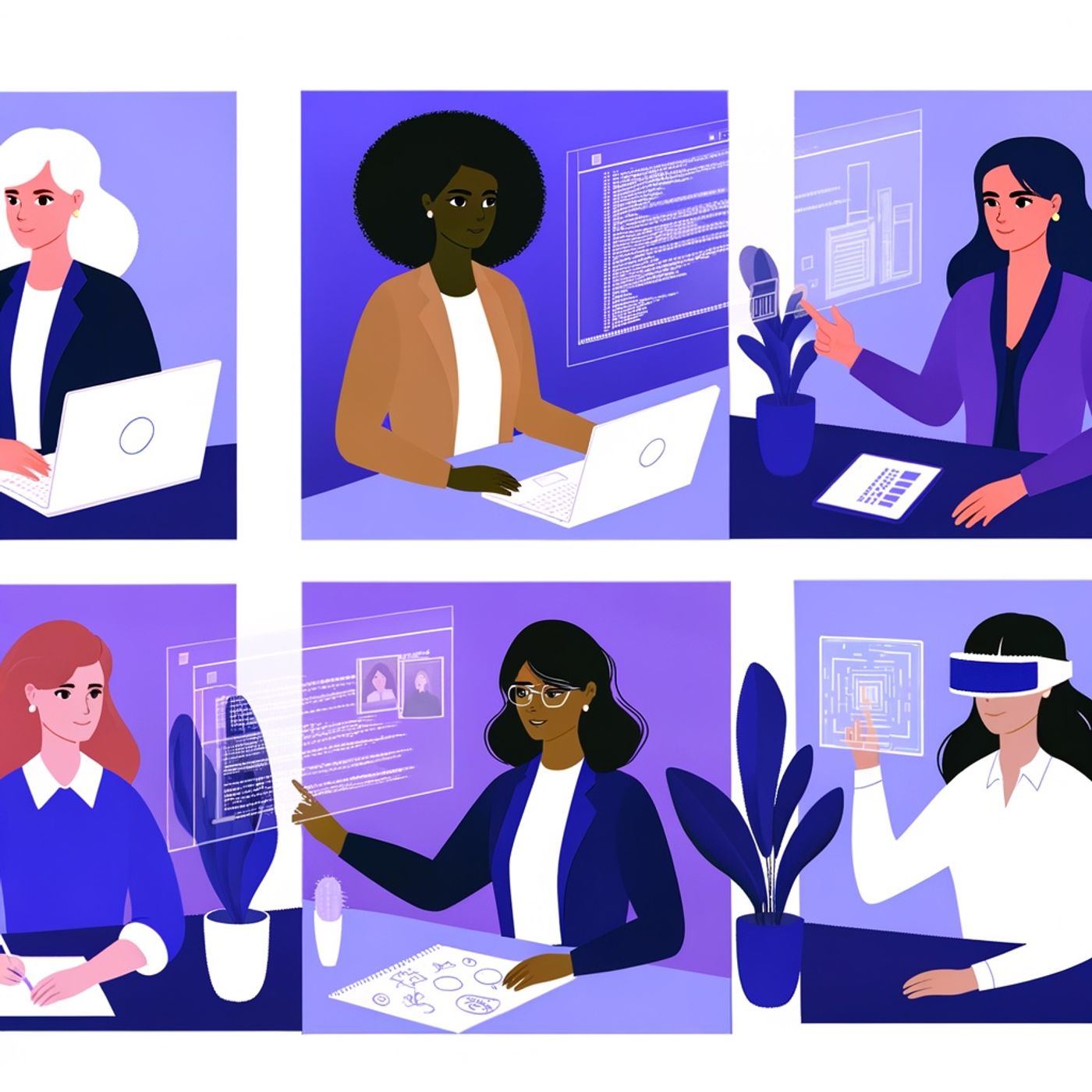
Tech's Equity Equation: Navigating Pay, Power, and Persistence as a Woman in the Industry
from Women in Business · host Inception Point AI
This is your Women in Business podcast. Welcome back to Women in Business. Let’s dive straight into what it really means to be a woman navigating today’s economic landscape in the tech industry. Right now, according to CompTIA’s State of the Tech Workforce and analysis summarized by AIPRM, women hold roughly a quarter to just under a third of tech roles in the United States, and similar patterns show up globally. That means in an economy increasingly defined by artificial intelligence, cloud computing, and digital products, women are still underrepresented at the very tables where the future is being coded and funded. But representation is only the first layer. Exploding Topics reports that women in tech earn about 84 cents for every dollar earned by men in similar roles, and women in software development earn even slightly less than that. So when we talk about inflation, rising housing costs, or student debt, women in tech are often facing those pressures with less pay for the same skills. That pay gap directly shapes how much emergency savings we can build, when we feel safe to start a company, or whether we can walk away from a toxic job. At the same time, there is power in where women are gaining ground. CompTIA’s breakdown of tech roles, again reported by AIPRM, shows that women are close to half of all data scientists in the United States. That matters in an era where data drives everything from credit scoring to hiring algorithms. When women are in those data rooms, we influence how fair those systems are, who they serve, and who gets left out. But staying in tech is often harder than getting in. Research brought together by StrongDM and Spacelift shows that women are about 45 percent more likely than men to leave the industry, and about half of women in tech leave by age 35. They cite “bro culture,” limited advancement, and lack of flexibility as major reasons. That means the economic cost is not just lower pay today, it is also lost equity, missed promotions, and fewer women accumulating long-term wealth through stock options and leadership roles. The leadership pipeline is still narrow. StrongDM notes that only about 17 percent of tech companies have a woman CEO, and reporting on big firms like Apple, Meta, Amazon, Microsoft, and Google shows no history of a female chief executive at those giants. Fewer women at the top means fewer champions for parental leave policies, inclusive hiring, and equitable pay that help women weather economic volatility. And yet, this is not a story of scarcity, it is a story of leverage. McKinsey and CompTIA both highlight that when companies invest in real diversity and inclusion, they see stronger performance and faster innovation. That gives women in tech bargaining power: we can ask about pay transparency in interviews, push for remote and flexible work that keeps us in the game, and use networks like WomenTech Network, WeAreTechWomen, and Women in Digital to share salary data, referrals, and fun This content was created in partnership and with the help of Artificial Intelligence AI.
Embed this episode
NOW PLAYING
Tech's Equity Equation: Navigating Pay, Power, and Persistence as a Woman in the Industry
No transcript for this episode yet
Similar Episodes
No similar episodes found.
Similar Podcasts
No similar podcasts found.