
EPISODE · Nov 3, 2025 · 3 MIN
Tech's Tipping Point: Women Redefining the Future Economy
from Women in Business · host Inception Point AI
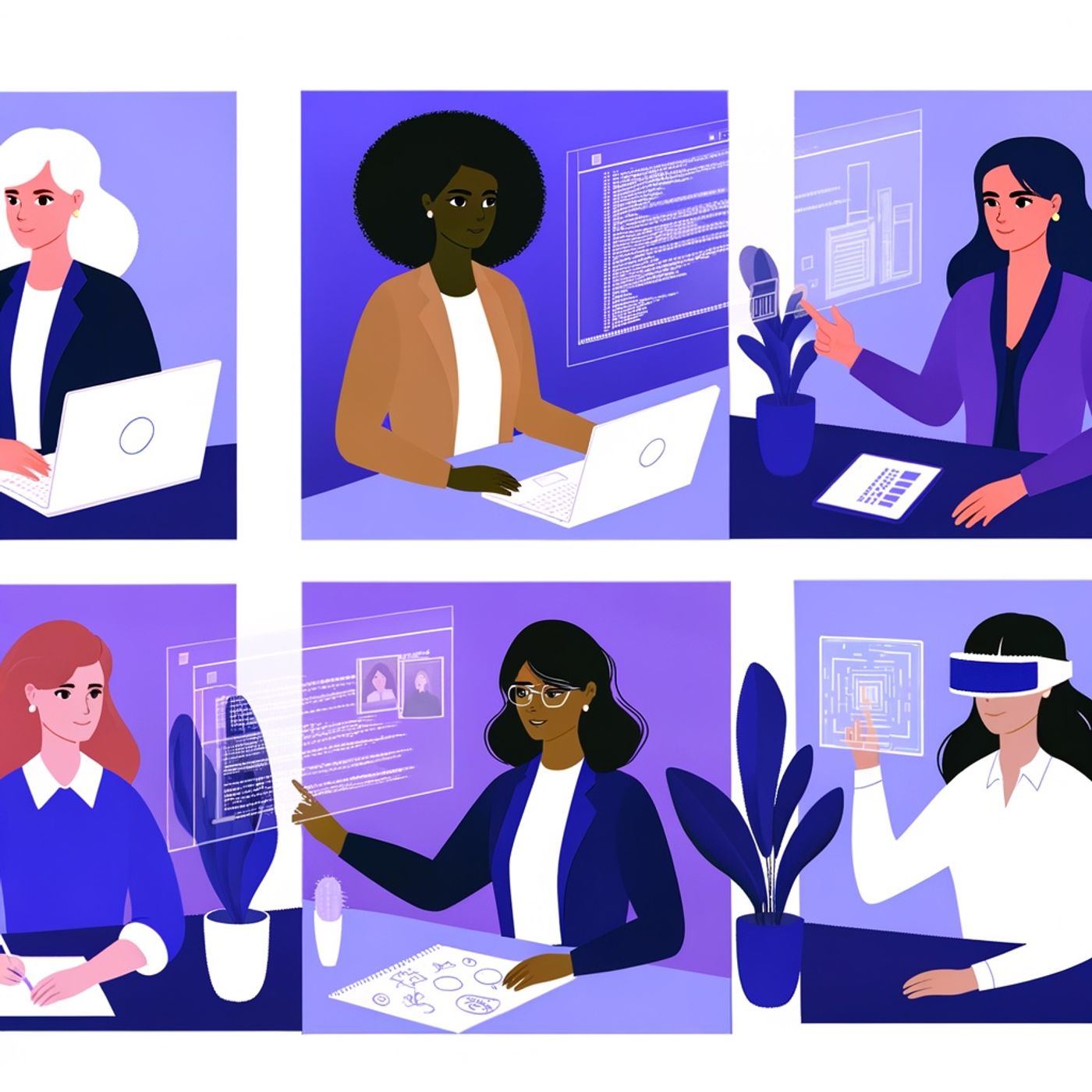
This is your Women in Business podcast. Welcome back to Women in Business. Today, we're diving right into the heart of tech—a space where opportunity collides with challenge, and where women are redefining what's possible in the current economic landscape. Let's talk numbers and realities first. According to recent findings from CompTIA and Nash Squared, even as technology drives our global economy, less than a third of digital sector roles are held by women in the United States, and only about 14% of global tech leaders are women. That's a six-point rise since 2015, but still miles from equality. The story is the same across big players like Amazon, Facebook, Apple, Google, and Microsoft, where women remain a minority. Yet, progress pulses—San Jose offers the highest tech earnings, and cities like Little Rock and Columbia are outpacing traditional tech hubs in wage growth and gender diversity. Now, here are five key points for our conversation—each a lens through which every woman in tech, or aspiring to join the industry, might navigate today’s dynamic economic terrain. First, the pipeline problem. Studies show women are still underrepresented in STEM degrees—just 21% in computer science and 22% in engineering. This impacts not only who gets hired but also how ideas and innovations reflect real-world needs. Is the industry doing enough to cultivate talent from education through career launch? More partnerships with universities, targeted initiatives for girls in STEM, and real investment in mentoring can help women see themselves in tech—and stay there. Second, retention and burnout. The pandemic proved that remote work is both a blessing and a challenge. While flexibility soared, so did burnout, especially for women balancing work, caregiving, and the escalating demand for digital skills. In fact, nearly 60% of women in tech say a lack of growth and advancement would drive them to quit. How can tech companies cultivate environments and policies that not only attract women but make them want to build long-term careers? Third, the leadership gap. Though women CEOs and CTOs are still rare—just 17% and 8%, respectively—the rise of women-led startups and tech role models is shifting the narrative. Leaders like Whitney Wolfe Herd at Bumble and Reshma Saujani, founder of Girls Who Code, inspire many. But changing culture means more than inspirational stories; it requires structural change. Are boardrooms and VC firms ready to invest in diverse leadership and inclusive decision-making? Fourth, the importance of intersectionality. Experiences in tech aren’t monolithic. Gender, race, ethnicity, disability, and age all shape how individuals experience hiring, pay, advancement, and workplace culture. For true progress, policies must reflect this plurality. Mentorship programs, inclusive recruitment, and storytelling projects that spotlight underrepresented voices are essential. Fifth, technological transformation is both a threat and a tool. The s This content was created in partnership and with the help of Artificial Intelligence AI.
Embed this episode
NOW PLAYING
Tech's Tipping Point: Women Redefining the Future Economy
No transcript for this episode yet
Similar Episodes
No similar episodes found.
Similar Podcasts
No similar podcasts found.