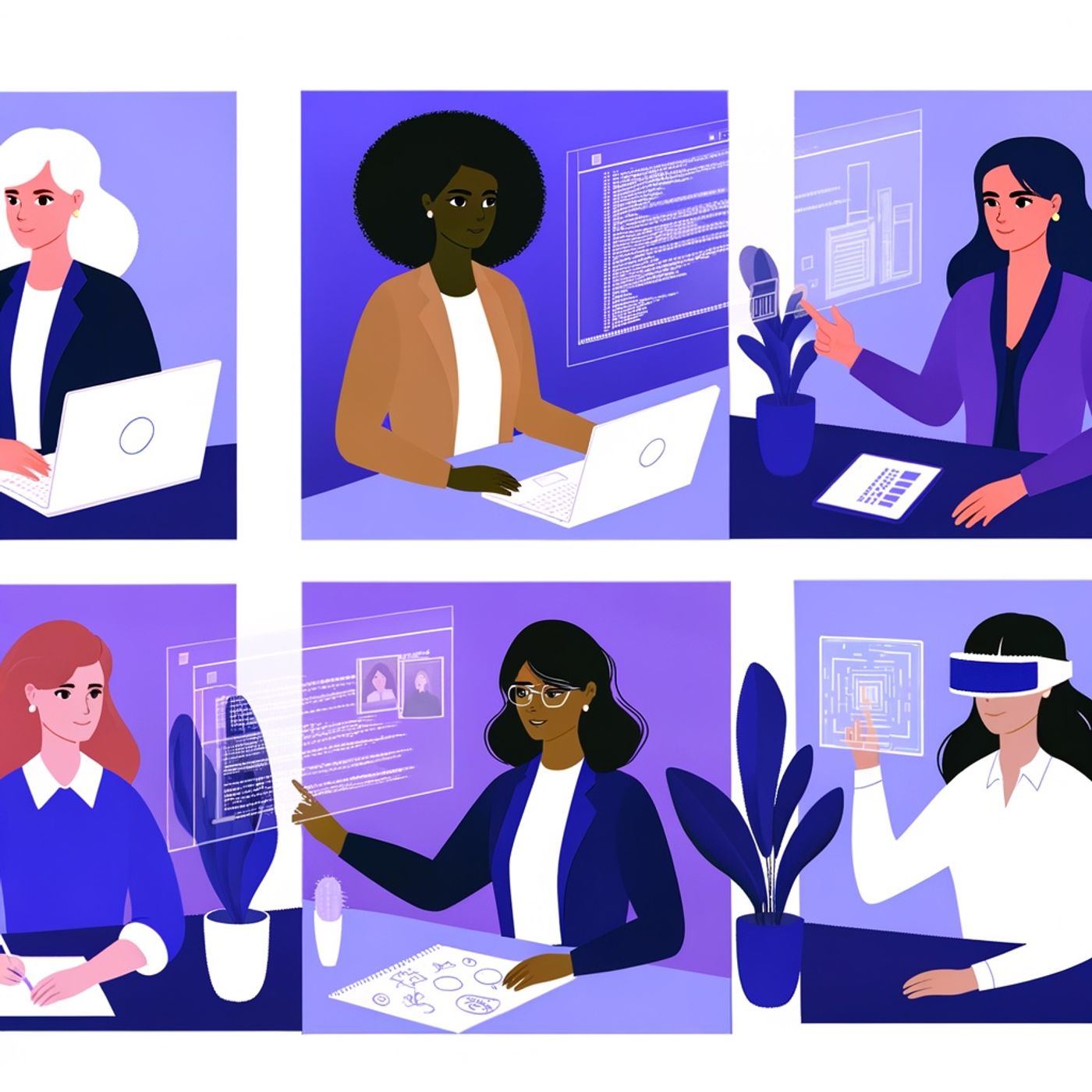
Tech's Uneven Terrain: Navigating Gender Gaps and New Pathways episode artwork

EPISODE · Aug 24, 2025 · 3 MIN

Tech's Uneven Terrain: Navigating Gender Gaps and New Pathways

from Women in Business · host Inception Point AI

This is your Women in Business podcast. Welcome back to Women in Business. Today, I want to invite you into a candid conversation about what it really means to be a woman navigating the economic landscape of the tech industry right now. Let’s skip the small talk and look squarely at the data, experiences, and—most importantly—our opportunity for impact. Let’s start with presence. Although women make up nearly half the global workforce, only about 26% of the tech workforce is female, according to recent numbers from CompTIA and global research. Even within the giants—places like Apple, Google, and Microsoft—women rarely fill more than a third of roles, and in core technical jobs, it’s often less than 25%. When it comes to the C-suite, the picture narrows further: only about 8% of CTOs and 17% of tech CEOs are women, and none of the so-called Big Five—Google, Apple, Meta, Amazon, or Microsoft—have ever had a female CEO. That stark spotlight, listeners, is our first discussion point: representation and the persistent gender gap, especially at leadership levels. But let’s get real about culture, too. Over 70% of women in tech recently reported encountering a so-called “bro culture” at work—a climate where male networks dominate and advancement can hinge on connections women are often denied access to. More than half of women surveyed by the WomenTech Network cited discrimination or harassment that held back their careers. The result? By age 35, half of all women who work in tech have left the industry. That leads us into our second big point: workplace culture and its quiet cost, from burnout to exclusion. So, what about the pipeline? Fewer women are pursuing computer science than thirty years ago. The proportion of women earning tech-related degrees in the U.S. has dropped from 37% in 1985 to around 21% today. The reasons run deep: from early education gaps, lack of role models—think Reshma Saujani with Girls Who Code trying to change this—and a perception that tech is “not for women.” So our third discussion point must be about education, access, and the imperative to build sustainable pipelines. Then there’s the pay gap. On average, men in tech earn about $15,000 more than women in similar roles. Promotion rates lag too; for every 100 men promoted to manager, just 87 women move up. And with scarce mentorship and opaque advancement processes, those gaps become chasms. Our fourth theme is the combined challenge of pay equity, promotion, and the quest for transparent advancement. But here’s a silver lining worth spotlighting. Remote work has started to shift the field, offering more flexibility and sometimes expanding opportunity—though, as we saw during the pandemic, it also brought unique burnout risks. Meanwhile, the rise of AI and digital tools is giving women new pathways to contribute and innovate. Around 40% of women in tech now use Gen AI at work, with nearly three-quarters saying it’s boosted their productivity. Our fifth discussion po This content was created in partnership and with the help of Artificial Intelligence AI.

This is your Women in Business podcast. Welcome back to Women in Business. Today, I want to invite you into a candid conversation about what it really means to be a woman navigating the economic landscape of the tech industry right now. Let’s skip the small talk and look squarely at the data, experiences, and—most importantly—our opportunity for impact. Let’s start with presence. Although women make up nearly half the global workforce, only about 26% of the tech workforce is female, according to recent numbers from CompTIA and global research. Even within the giants—places like Apple, Google, and Microsoft—women rarely fill more than a third of roles, and in core technical jobs, it’s often less than 25%. When it comes to the C-suite, the picture narrows further: only about 8% of CTOs and 17% of tech CEOs are women, and none of the so-called Big Five—Google, Apple, Meta, Amazon, or Microsoft—have ever had a female CEO. That stark spotlight, listeners, is our first discussion point: representation and the persistent gender gap, especially at leadership levels. But let’s get real about culture, too. Over 70% of women in tech recently reported encountering a so-called “bro culture” at work—a climate where male networks dominate and advancement can hinge on connections women are often denied access to. More than half of women surveyed by the WomenTech Network cited discrimination or harassment that held back their careers. The result? By age 35, half of all women who work in tech have left the industry. That leads us into our second big point: workplace culture and its quiet cost, from burnout to exclusion. So, what about the pipeline? Fewer women are pursuing computer science than thirty years ago. The proportion of women earning tech-related degrees in the U.S. has dropped from 37% in 1985 to around 21% today. The reasons run deep: from early education gaps, lack of role models—think Reshma Saujani with Girls Who Code trying to change this—and a perception that tech is “not for women.” So our third discussion point must be about education, access, and the imperative to build sustainable pipelines. Then there’s the pay gap. On average, men in tech earn about $15,000 more than women in similar roles. Promotion rates lag too; for every 100 men promoted to manager, just 87 women move up. And with scarce mentorship and opaque advancement processes, those gaps become chasms. Our fourth theme is the combined challenge of pay equity, promotion, and the quest for transparent advancement. But here’s a silver lining worth spotlighting. Remote work has started to shift the field, offering more flexibility and sometimes expanding opportunity—though, as we saw during the pandemic, it also brought unique burnout risks. Meanwhile, the rise of AI and digital tools is giving women new pathways to contribute and innovate. Around 40% of women in tech now use Gen AI at work, with nearly three-quarters saying it’s boosted their productivity. Our fifth discussion po This content was created in partnership and with the help of Artificial Intelligence AI.

NOW PLAYING

Tech's Uneven Terrain: Navigating Gender Gaps and New Pathways

0:00 3:25

No transcript for this episode yet

We transcribe on demand. Request one and we'll notify you when it's ready — usually under 10 minutes.

MG Show MG Show The MG Show, hosted by Jeffrey Pedersen and Shannon Townsend, is a leading alternative media platform dedicated to uncovering the truth behind today’s most pressing political issues. Launched in 2019, the show has grown exponentially, offering unfiltered insights, comprehensive research, and real-time analysis. With a commitment to independent journalism and factual integrity, the MG Show empowers its audience with knowledge and encourages active participation in the political discourse. Eat to Live Jenna Fuhrman, Dr. Fuhrman Our health is our most precious gift and smart nutrition can change your life. Each month, join Dr. Fuhrman and his daughter, Jenna Fuhrman as they discuss important topics in the world of nutrition. Eat to Live will change the way you eat and think about food. French Your Way Jessica: Native French teacher founder of French Your Way Boost your French listening skills and test your comprehension with this one of a kind series of podcasts. Get the chance to listen to a real conversation between native speakers talking at normal speed AND customise your learning experience through carefully designed sets of questions (2 levels of difficulty) available for download at www.frenchvoicespodcast.com. All interviews also come with the transcript. French teacher Jessica interviews native speakers of French from around the world who share a bit of their life and passion. Where else would you meet in one same place a French yoga teacher based in Melbourne, a soap manufacturer from Provence, or a couple cycling around the world? The Small Business Startup School – Business Notes | Financial Literacy | Retail Psychology – For Professionals & Entrepreneurs The Small Business Startup School Inc. Starting or buying a small business? While personal circumstances may vary, business patterns remain timeless. On The Small Business Startup School, we explore strategies, insights, and practical solutions to help entrepreneurs confidently navigate their journey.Hosted by Ola Williams—a retail entrepreneur, fintech founder, and financial coach with over two decades of experience—this podcast marries financial awareness and retail psychology with optimism to deliver actionable takeaways.Join us to learn, grow, and connect as we uncover the keys to business success.Let’s continue to learn together and be encouraged to keep on connecting!

Frequently Asked Questions

How long is this episode of Women in Business?

This episode is 3 minutes long.

When was this Women in Business episode published?

This episode was published on August 24, 2025.

What is this episode about?

This is your Women in Business podcast. Welcome back to Women in Business. Today, I want to invite you into a candid conversation about what it really means to be a woman navigating the economic landscape of the tech industry right now. Let’s skip...

Can I download this Women in Business episode?

Yes, you can download this episode by clicking the download button on the episode player, or subscribe to the podcast in your preferred podcast app for automatic downloads.
URL copied to clipboard!