
EPISODE · Sep 5, 2021 · 12 MIN
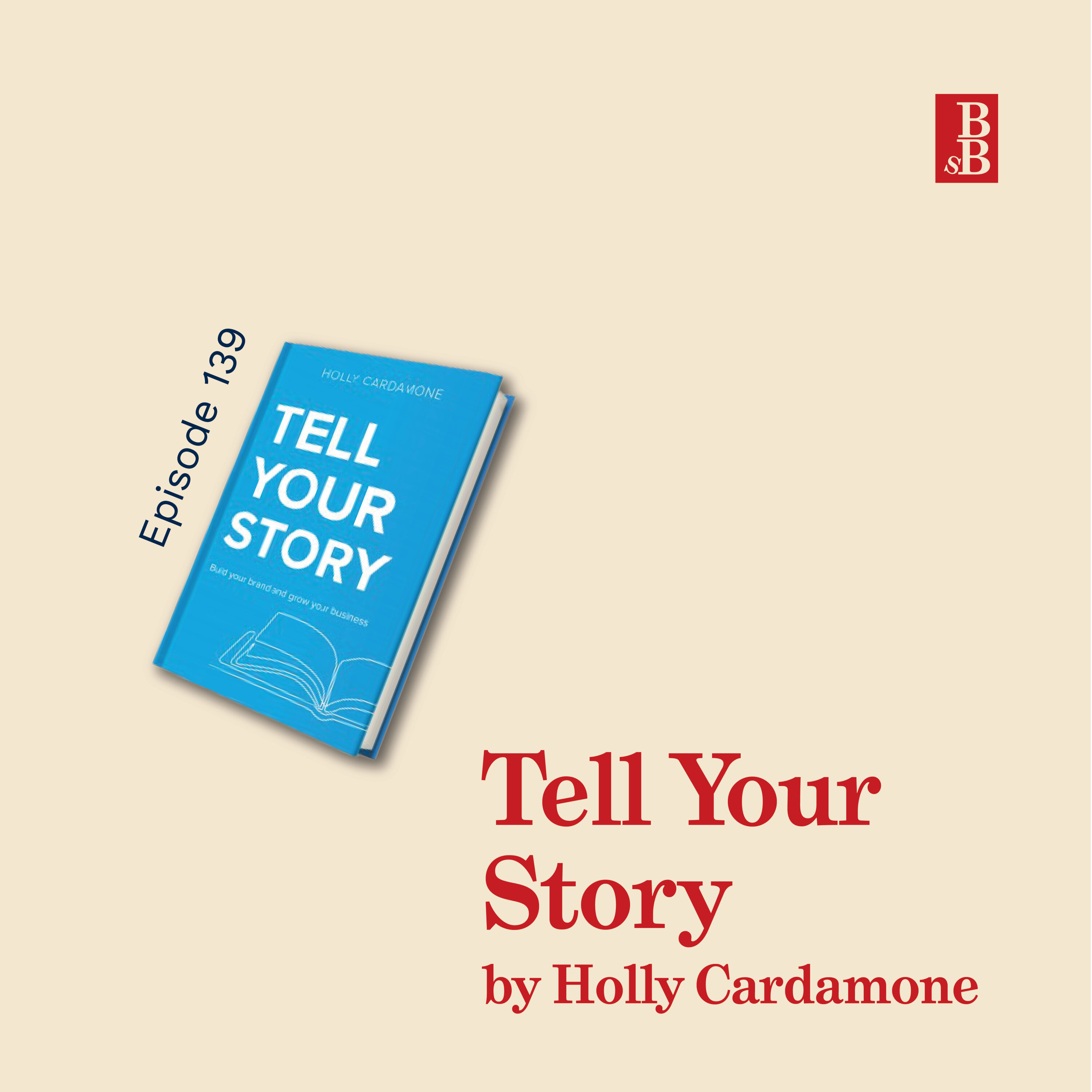
Tell Your Story by Holly Cardamone: how to stop being a boring business writer
from Steph's Business Bookshelf Podcast · host Steph Clarke
About the author Holly Cardamone is a Melbourne-based author, communications specialist, writer and all round Word Nerd who works with people to tell their story and grow their business using beautiful communications. Through her consultancy, Blue51 Communications, Holly provides specialist communications support and mentoring and business writing services. She writes anything and everything, and almost always with a smile on her face and a coffee within grasp. She’s a water baby, a voracious reader, an almost fearless box jumper (Google it) and is hands down the person you want on your table at a trivia night. Source: https://www.blue51.com.au/my-story/ About the book People in business often have massive creativity, impeccable services and unique ideas, but a lot of business writing is bad. Excruciatingly so. This book is for people who: Feel too close to their work for the objectivity to share their message accurately and effectively in writing. Know that their written words aren’t working as hard as they should. Love what they do but need help to polish their message. Find it really difficult to explain on paper both what they do, and the benefits they could genuinely bring to peoples’ lives. The perfect book for people who are in the business of growing their brand, be it personal or professional, this super-actionable, solutions-focused guide provides motivation and practical support by the bucketload. It’s a funny, fresh and clever guide to communications, writing and branding storytelling. As readable as a novel, it’s packed from introduction to conclusion with ideas, suggestions, tips and strategies to tell your story and grow your business or influence with beautiful communications. Source: https://www.blue51.com.au/shop/tell-your-story/ Big idea #1 — Don’t be boring Early on in the book, Holly looks at some of the common issues in business writing. These include mistakes such as weak structures, introductions that don’t make sense, repetition, sentences that are just too long or too short, passive writing, jargon (bleugh), dense and difficult to read content, a lacks substance, and no call to action. The content in his book will help you overcome many of the common pitfalls that people fall into, as Holly shares how to craft compelling content, which keeps your readers reading. Holly recommends having five different touch points with your audience and that across these, you are consistent, accurate, and compelling. Much of this comes back to knowing your audience and how you want them to feel as a result of your communications. Side point: early on in the book, Holly talks about her experience and how she’s always loved writing as a child/teenager. Before she went to university, her English teacher at school suggested that the best writers have interesting life experiences. Therefore, maybe Holly should go and study something other than English, which was going to give her a pathway to stories. So Holly studied nursing. This isn’t something she necessarily wanted to do, but knew that this was the exposure she needed to a vast range of different people, at incredibly difficult times in their life, and would give her a huge amount of life experience (ie story material) for her future writing. She didn’t just studying nursing, but worked in that field before going back to university later to do a degree in communications and writing, which would then give her the additional chops and skills that she needed to then bring that life experience to life. And to go on to do the other types of writing that she does too. I think this is such an incredible investment to not being boring, and being a better writer. (And also, what great mentorship from that English teacher). Big idea #2 — Make a plan The crux of the book is really about having a tight plan for your communications. And your plan doesn’t need to be complex or overwhelming, it is essentially taking the what you do, and who you do it for, marrying those things together, and then putting it into a content plan. Throughout the book, Holly emphasises the importance of clarity in your writing, Holly also shares the usefulness of having a house style. This improves the consistency of your writing, and stops you having to make decisions all the time. A house style includes things such as whether you capitalise the first letter in your headings and subheadings (this tends to be a more American style) or they are in sentence case, where you only capitalise the first word and then any proper nouns the heading/subheading. A style guide would also include which spelling/dictionary you use (eg British English or American English), deciding which versions of words to use, whether you use hyphens or not, having a consistent format for times, dates, and numbers and your brand pronoun; I or we. The more decisions are covered in your style guide, the more consistent your writing will be, and therefore the more clarity it will have and the easier it will be to write. Big idea #3 — Sort to your structure To write compelling copy, the structure needs to work hard. Holly talks about hooking people in at the beginning, and offers ways to start a piece of writing with impact, be it a quote, a statement, a statistic, or a shocking fact. You need something that is going to encourage people to keep on reading. The middle of your piece of writing is where you make your case, and where you keep your reader reading. It’s the substance, so it’s important to make sure you actually do have some substance in order to write something of substance! And then finally at the end, you need a call to action. This is the ‘so what’, the response you want from your audience, or the link back to you that the piece of content is making. Holly also included some specific structures in the books, such as about pages, bios, emails, and landing pages, but you can use this in really any piece of writing, there’s just some particular nuance for certain contexts. And yes, in the book she does talk about SEO. The most important point here is that it shouldn’t override an interesting of a good piece of writing. We’ve all been to food blogs, for example, where all we want is that damn recipe, but we’ve got to wade through 2000 words about the weather, because people have put the, at their SEO needs above the reader experience. Don’t do that. Support my book habit: https://www.buymeacoffee.com/stephsbookshelfSee omnystudio.com/listener for privacy information.
Embed this episode
NOW PLAYING
Tell Your Story by Holly Cardamone: how to stop being a boring business writer
No transcript for this episode yet
Similar Episodes
No similar episodes found.
Similar Podcasts
No similar podcasts found.