
EPISODE · Aug 11, 2026 · 20 MIN
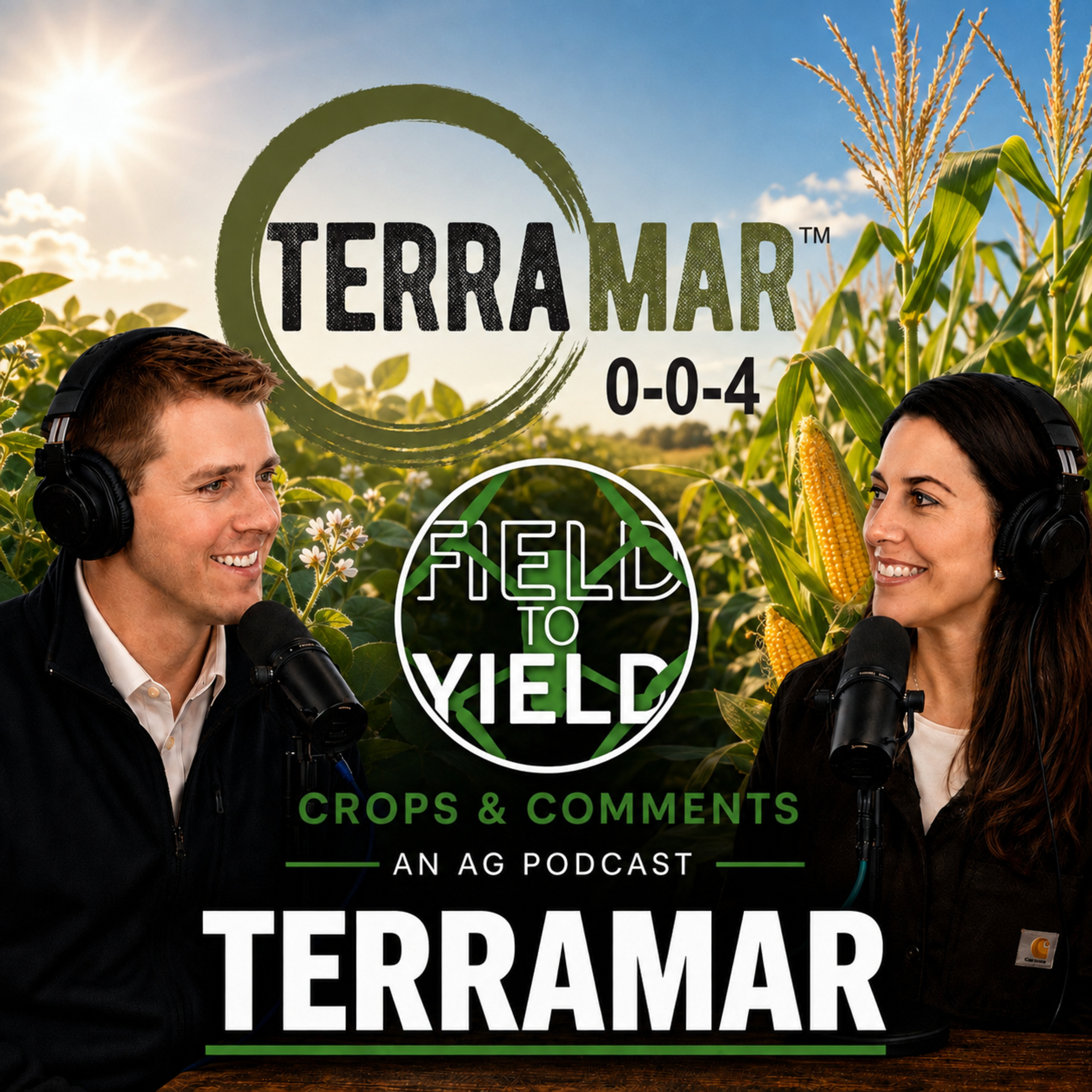
Terramar
from Field To Yield: Crops & Comments · host Geoff Reeves
Does a Kelp-and-Carbon Biostimulant Actually Pay in the Piedmont? Loveland's Terramar is showing up in more fungicide tanks across the Carolinas, so we dug into what it actually is and how it works inside the plant. It's a 0-0-4 — which means the potash on the label is a rounding error and the value proposition lives entirely in plant physiology. We walk through the mechanism, the tank-mix logic at VT/R1 corn and R3 soybeans, and whether a stress-mitigation product makes more sense than a full-season foliar nutritional on high-fertility poultry litter ground. What's actually in the jug — Biologically extracted kelp paired with leonardite-derived carbon; why the extraction method matters more than the guaranteed analysis Mechanism at the plant level — Antioxidant enzyme induction, nitrate transporter upregulation, stomatal and water relations, and a measured 3–5°F canopy temperature reduction The elicitor question — Laminarin and fucoidans have real defense-priming credentials in the literature, but here's why that doesn't make this a disease tool Additive, not synergistic — Strobilurins already deliver a greening effect, so we break down where the incremental bushel actually comes from The poultry litter angle — Why P and K foliars struggle to pay on built-up soils, and whether a physiology-limited product escapes that same ceiling Piedmont fit — Thin A-horizons over Cecil and Pacolet clay, record-warm overnight lows, and why this region should be a best-case scenario if the mechanism holds Running your own numbers — Breakeven math at current corn and soybean prices, plus a replicated check-strip design you can run this season
Embed this episode
Ready to play
Terramar
No transcript for this episode yet
Similar Episodes
No similar episodes found.
Similar Podcasts
No similar podcasts found.