
EPISODE · Jul 15, 2026 · 7 MIN
That Go There
from Renaissance Circle · host Steven Muskal, Ph.D.
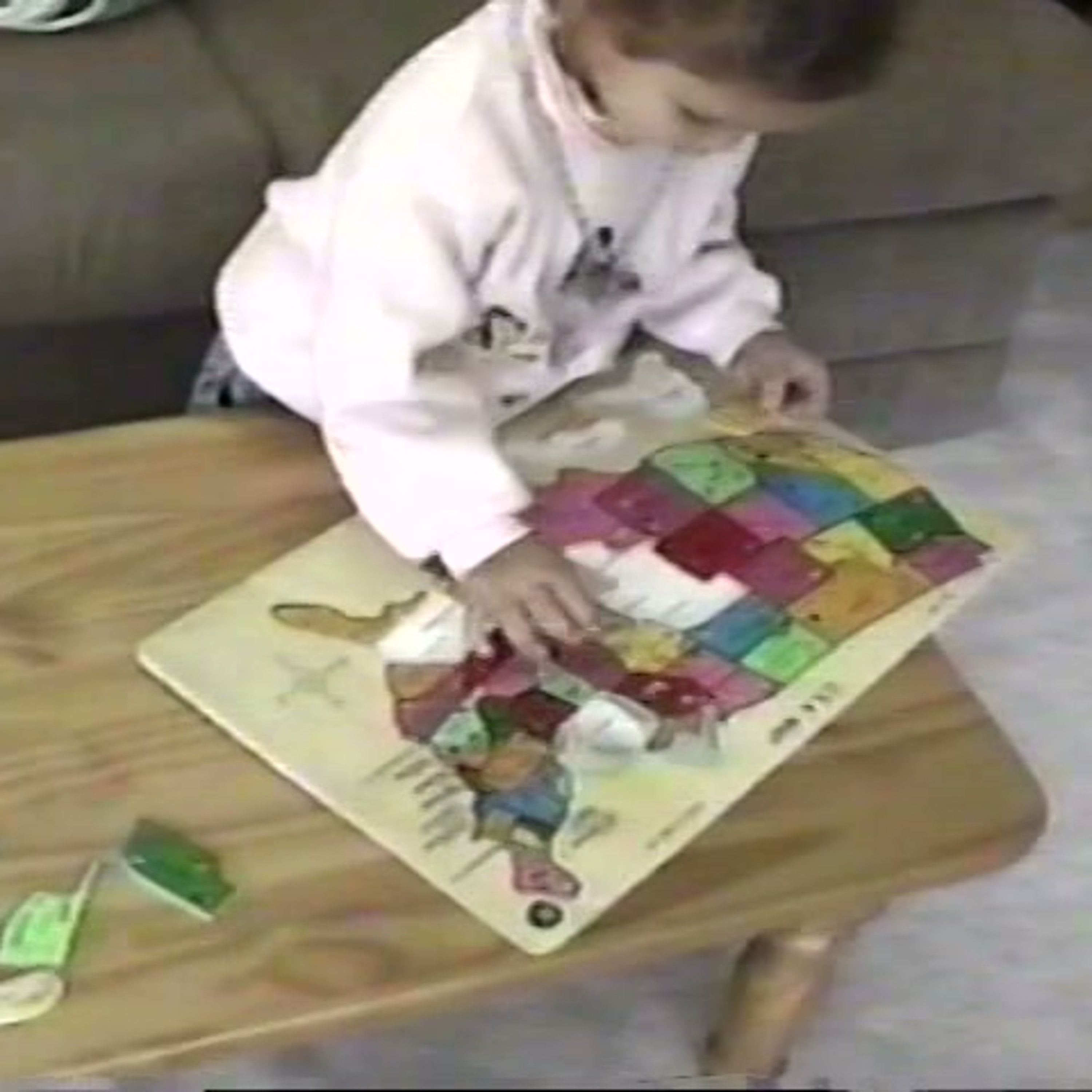
Why the memories worth keeping need a body that can move. Thirty years ago, my older daughter, two and a half at the time, sat on the floor with a wooden puzzle of the United States and placed every state exactly where it belonged. Nevada, there. Colorado, there. Ask her a capital and she would tell you, in that small serious voice kids use when they already know they are right. She could not do that today. Neither could I. But the tape remembers, and this episode is about that gap: between what a mind lets go of and what a piece of media holds onto, and what it takes to keep the second one alive. This is a story that runs from a family living room to a Berkeley computer lab in the late 1980s, where I learned, tape by tape, that the platform you are standing on will not be the platform you are standing on in five years. Moving my neural network research from DEC systems to Silicon Graphics workstations taught me to treat one question as a hard engineering requirement for anything I care about keeping: will I be able to read this in ten years? Most families learn that lesson too late. Betamax, lost. Video CDs, lost. MiniDV, lost. Blu-ray, which felt permanent for about a decade, lost. Every one of those formats held real memories: someone's wedding, someone's Christmas morning, someone's toddler doing a state puzzle. Nothing burned. The scrolls are all still in a drawer in someone's garage. What disappears is the machine that can read them, which for practical purposes is the same thing as gone. It is the Library of Alexandria on a budget, spread over decades instead of one bad afternoon in Egypt. In this episode: 0:00 The tape: a two and a half year old and the US state puzzle 1:21 Study with Hannah: 62,000 study cards and what we bother to record 1:57 Berkeley, DEC, and the machines that would not talk to each other 3:05 The Alexandria fire, on a budget: Betamax to Blu-ray 4:10 In silico memorialization: save the unremarkable footage, not just the highlight reel 5:10 Built to move, not to stay: why ToastOurFriend content belongs to the people in it 6:09 Where things go, and the one thing to do this weekend The ask is simple. Go find the tape, the disc, the drive you have not opened in a decade, and move what is on it somewhere that can survive the next format change. And if there is someone in your life worth celebrating while they can still see it, do not wait for the memorial version. Say it, film it, post it, now, while it can still land exactly where it is supposed to go. Read the essay: https://www.drstevenmuskal.com/p/that-go-there Celebrate someone while they can read it: https://toastourfriend.com Related listening: Father-Daughter Face-Off part one with Lili, part two with Hannah, and Homeownership, Healthcare, and AI with Lili, all at https://www.drstevenmuskal.com Steven Muskal, Ph.D. is the CEO of Eidogen-Sertanty and writes about AI, health, and the intersection of biology and technology at stevenmuskal.com.
Embed this episode
Ready to play
That Go There
No transcript for this episode yet
Similar Episodes
No similar episodes found.
Similar Podcasts
No similar podcasts found.