The 23rd Psalm
from Gnostic Reformation, Clear and Simple Hosted by Cyd Ropp
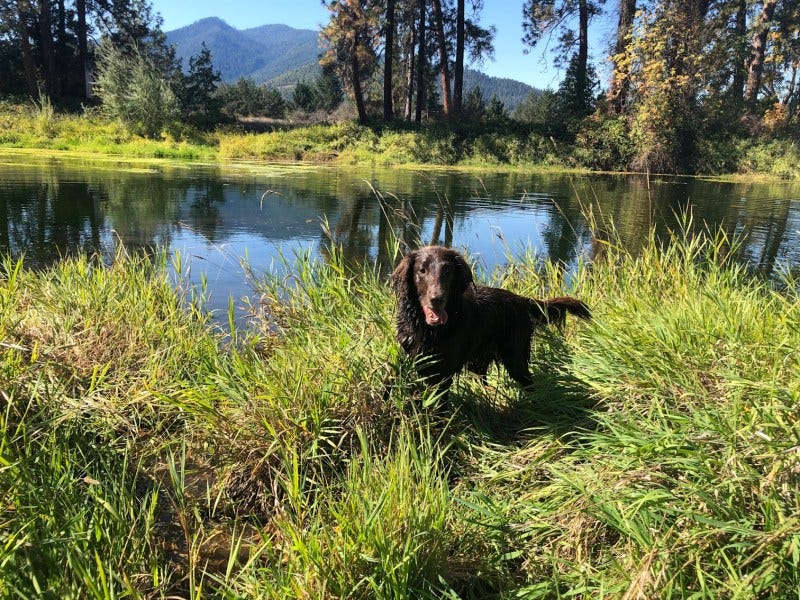
I’m going to read you some excerpts this morning from one of the listeners. She says a lot of people look at her as if she’s speaking Chinese when she talks about the things she’s learned. She says, “I don’t think the point is who is right versus wrong. But if we can come to a universal understanding that is about love, particularly the Father’s love, the Son’s love, and the Pleroma, the ALL and the Totalities—it’s all love.” And, indeed, it’s about rising above the memes, the particularities, to find the essence that is being conveyed, no matter what people are talking about. Is it love or is it anger and hate? That is a dichotomy. Is it life or is it ignorance and death? Those are dichotomies that cannot be overcome, because they are either/or. But as far as the particularities, those are not as important as where your heart lies. She says, “I see so many people who have podcasts, YouTube channels, and two week $300.00 classes that promise spiritual enlightening,” and it causes her to shake her head. “Other people seem to want to focus on things that don’t have much substance and then try to fill in the lines.” She asks me if there are any, “specific prayers that I would suggest to give glory to the Father, the Son, and the Pleroma. Are there specific prayers for that?” Well, I don’t have a particular litany of prayers. There are really only two prayers that I repeat pretty much daily. [Those two prayers are “The Lord’s Prayer,” and the 23rd Psalm.] Usually when I go to bed, or in the middle of the night if I wake up, if I say the 23rd Psalm, I immediately feel peaceful. It causes me to have a deep and relaxing breath when I’m beginning the very first stanza, and then I’m able to relax. I picture all of the events taking place in the 23rd Psalm, and then I often fall asleep before I even reach the end. So let me go ahead and recite the 23rd Psalm for you. And it’s a good one to memorize, because it’s pretty much all there and it’s very comforting. Here’s how it goes: The Lord is my shepherd. I shall not want. He makes me to lie down in green pastures. He leadeth me beside the still waters. He restoreth my soul. He leadeth me down paths of righteousness for his name’s sake. Yea, though I pass through the valley of the shadow of death, I will fear no evil. For thou art with me. Thy rod and thy staff, they comfort me. Thou preparest a table for me in the presence of my enemies. Thou anointest my head with oil. My cup runneth over. Surely goodness and mercy shall follow me all the days of my life, and I shall dwell in the House of the Lord forever. That’s the 23rd Psalm. And it’s not a ritualistic thing. It’s not a thing like repeat this 20 times in a certain cadence and all will be well with you. It’s more a matter of putting yourself into the place that’s being discussed. Picture yourself. So, when I say the 23rd Psalm to myself, I do think of myself as a sheep because it’s talking about the Good Shepherd. “The Lord is my shepherd.” So I picture Jesus looking like a shepherd and I’m one of the sheep lying down in the pastures. And it’s a beautiful pasture. I picture it in my mind. And I can stay there for a long time if I want to and look around the pasture at how beautiful it is. There’s a park near here that I call up in my mind because there’s a river that runs through it. And so the green pasture is at that park. And, “He leadeth me beside the still waters.” It’s peaceful water. It’s not a raging storm going on so that river is not flowing fast, but it’s very calm and wonderful. A good, safe place to bathe or to drink. And, symbolically, still waters represent calm. Calm emotions, not being in turmoil, but peaceful and calm. And it says, “He restoreth my soul.” So, whatever is bothering me or troubling me that happened during the day or that caused me to wake up in the night, there’s no need to lie there and to play it over in my mind. That is never helpful. That’s backward and down. You don’t want to replay bad things in the backward direction, which is history, and down, which is the demiurgic direction that stirs you up and makes you feel bad. So, “He restoreth my soul.” “He leadeth me down paths of righteousness for his name’s sake.” The paths of righteousness—another black and white choice is virtue or vice. We don’t dwell in the gray areas. Those cause turmoil. Those cause confusion. There isn’t any gray area between evil and righteousness. Evil is evil. Evil is a lack of knowledge, a lack of life and love. Evil is rooting for death and division. That is not a gray area. That is a bad area to wander through, so my Good Shepherd leads me down paths of righteousness for his name’s sake. Now, that sometimes used to throw me. What does this mean? Why am I going down paths of righteousness for his name’s sake and not for my sake? Because when we go down paths of righteousness, of course it’s onward and upward. It’s virtues. It’s dwelling on love, forgiveness, charity—the good side of the Ledger. But we are representatives of the Father. We are representatives of the Fullness of God. We represent here in this fallen plane the glorious Father above, and so it’s for His name’s sake that we reflect that righteousness because, well, first off, it’s for his sake he doesn’t want us to suffer. He doesn’t want us dwelling in the darkness. He wants us to walk with him. So it’s for his sake that we are with him. But it’s for our sake and it’s for the world’s sake because we’re reflecting the glory of God when we dwell in righteousness—when we spread love and not hate. When we’re kind and not angry. Then, “Yea, though I walk through the valley of the shadow of death…” See a lot of the people who explain the Bible to us like to look backward at history. I’m not that much into history. I know a lot of you folks are, but there’s really no point in it for my life. I dwell in the here and now. The here and now is all that we have. The history, particularly the history of 500 years, 1000 years, 2000 years, 3000 years ago, that is not going to lift you. That doesn’t help you, does it? So when people talk about walking through the valley of the shadow of death, yes, there was this place that the Hebrews referred to near Jerusalem as the valley of the shadow of death, or whatever. That’s a fractal of the story. It’s not the story. It’s an archetypal vision of the shadow of death, but the actual valley of the shadow of death is the fallen world—is material existence. We live in the shadow of death. It overhangs us at all times. At any minute you can lose this material existence. And the great fear of death that people have is not knowing that we go on after this material existence passes away. That’s the fear of death. People are paranoid and neurotic about death, about fearing death. Particularly in the middle of the night. So, even though we walk through the valley of the shadow of death, which is this material body that we are yoked to, we need not fear it. We will “fear no evil” because, and now we switch from talking about ourselves walking through the valley or through the pastures and near the still waters, now we start talking to the Good Shepherd himself. “I will fear no evil for thou art with me.” And now we switch from whatever dark vision we had of the fear, get off of it, and turn around. That’s what repentance means. It means to turn around, turn around and face the Lord, turn around and face the Good Shepherd who’s taking care of the flock. Who’s taking care of us, me, the little sheep? The Good Shepherd is with us. He’s with us at all times, so I need not fear death. I need not fear passing away or the terrible things that happen to me in this valley of the shadow of death where we now dwell. Because “Thou art with me,” and now you’re establishing a relationship with the Christ, with the Good Shepherd. So we’re taking our eyes off of the valley and we’re looking at the shepherd. And he loves us. And it’s his job—it’s the shepherd’s job to care for the sheep and to … This is a public episode. If you'd like to discuss this with other subscribers or get access to bonus episodes, visit cydropp.substack.com/subscribe
Embed this episode
No transcript yet.