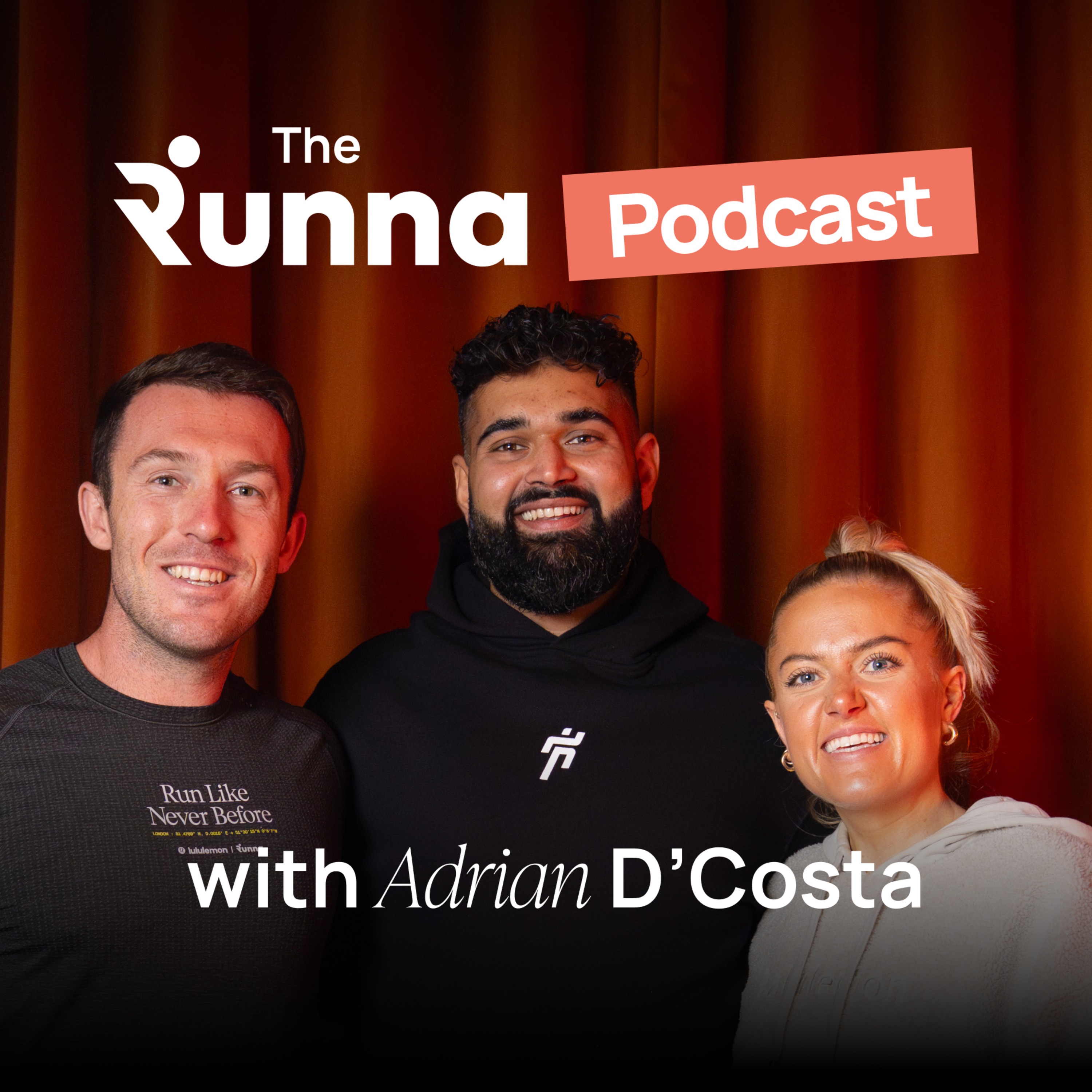
The 3 Most Common Running Injuries: How to Prevent & Treat Them with Physio Adrian D’Costa episode artwork

EPISODE · Nov 21, 2025 · 51 MIN

The 3 Most Common Running Injuries: How to Prevent & Treat Them with Physio Adrian D’Costa

from The Runna Podcast

Shin splints, runner's knee, and IT band syndrome explained by expert running physio Adrian D'Costa - discover how to prevent and fix the most common running injuries with proven strength training and recovery strategies.In this episode of The Runna Podcast, hosts Anya Culling and Ben Parker sit down with Adrian D'Costa, Head Physio at Runna and one of London's leading running injury specialists. Learn the science behind patellofemoral pain syndrome, medial tibial stress syndrome, and IT band pain and the prevention and load management techniques to keep you injury-free.What you’ll learn: ✅ Why runner's knee affects 25% of runners (and how to prevent it)✅ The truth about shin splints as a bone stress injury✅ Best strength exercises for runners: the "rainbow quadricep method"✅ Why hip stability beats stretching for IT band syndrome✅ Recovery secrets: cross-training, sleep, and smart training cycles✅ Load management strategies for marathon trainingThis episode targets the 3 most common running injuries, what they are and how to prevent & recover from them. *Listener Note*We hope you found this episode helpful. Please note that this discussion is for general information only and is not a substitute for individual medical advice.Part of this episode touched on hormonal health, and we’d like to provide some additional clarity.Hormonal contraception does not stop oestrogen production or inherently compromise bone health. Suppression of ovulation with combined hormonal contraception does not mean that oestrogen production stops, nor does it place someone into a low-oestrogen state.As discussed, menstrual changes can be one possible sign of physiological stress, but they should not be used as a primary or shortcut measure of health. For all athletes, assessment should focus first on training load, fuelling, recovery and overall energy availability.If you have any questions on the subject, please seek medical advice.🎧 Subscribe for new episodes every Friday, featuring Olympians, physios, and everyday runners chasing extraordinary goals.🎁 Try Runna FREE for 2 weeks with code PODCAST25: https://web.runna.com/redeem?code=PODCAST25📺 Watch the full episode → youtube.com/@therunnapodcast Hosted on Acast. See acast.com/privacy for more information.

Shin splints, runner's knee, and IT band syndrome explained by expert running physio Adrian D'Costa - discover how to prevent and fix the most common running injuries with proven strength training and recovery strategies.In this episode of The Runna Podcast, hosts Anya Culling and Ben Parker sit down with Adrian D'Costa, Head Physio at Runna and one of London's leading running injury specialists. Learn the science behind patellofemoral pain syndrome, medial tibial stress syndrome, and IT band pain and the prevention and load management techniques to keep you injury-free.What you’ll learn: ✅ Why runner's knee affects 25% of runners (and how to prevent it)✅ The truth about shin splints as a bone stress injury✅ Best strength exercises for runners: the "rainbow quadricep method"✅ Why hip stability beats stretching for IT band syndrome✅ Recovery secrets: cross-training, sleep, and smart training cycles✅ Load management strategies for marathon trainingThis episode targets the 3 most common running injuries, what they are and how to prevent & recover from them. *Listener Note*We hope you found this episode helpful. Please note that this discussion is for general information only and is not a substitute for individual medical advice.Part of this episode touched on hormonal health, and we’d like to provide some additional clarity.Hormonal contraception does not stop oestrogen production or inherently compromise bone health. Suppression of ovulation with combined hormonal contraception does not mean that oestrogen production stops, nor does it place someone into a low-oestrogen state.As discussed, menstrual changes can be one possible sign of physiological stress, but they should not be used as a primary or shortcut measure of health. For all athletes, assessment should focus first on training load, fuelling, recovery and overall energy availability.If you have any questions on the subject, please seek medical advice.🎧 Subscribe for new episodes every Friday, featuring Olympians, physios, and everyday runners chasing extraordinary goals.🎁 Try Runna FREE for 2 weeks with code PODCAST25: https://web.runna.com/redeem?code=PODCAST25📺 Watch the full episode → youtube.com/@therunnapodcast Hosted on Acast. See acast.com/privacy for more information.

NOW PLAYING

The 3 Most Common Running Injuries: How to Prevent & Treat Them with Physio Adrian D’Costa

0:00 51:32

No transcript for this episode yet

We transcribe on demand. Request one and we'll notify you when it's ready — usually under 10 minutes.

Frequently Asked Questions

How long is this episode of The Runna Podcast?

This episode is 51 minutes long.

When was this The Runna Podcast episode published?

This episode was published on November 21, 2025.

What is this episode about?

Shin splints, runner's knee, and IT band syndrome explained by expert running physio Adrian D'Costa - discover how to prevent and fix the most common running injuries with proven strength training and recovery strategies.In this episode of The Runna...

Can I download this The Runna Podcast episode?

Yes, you can download this episode by clicking the download button on the episode player, or subscribe to the podcast in your preferred podcast app for automatic downloads.
URL copied to clipboard!