
EPISODE · Mar 2, 2026 · 1 MIN
The 4-Post Auto Lift: Enhancing Fleet Maintenance and Storage in Industrial Settings
from The Publication Hub · host Sohaib Abbasi
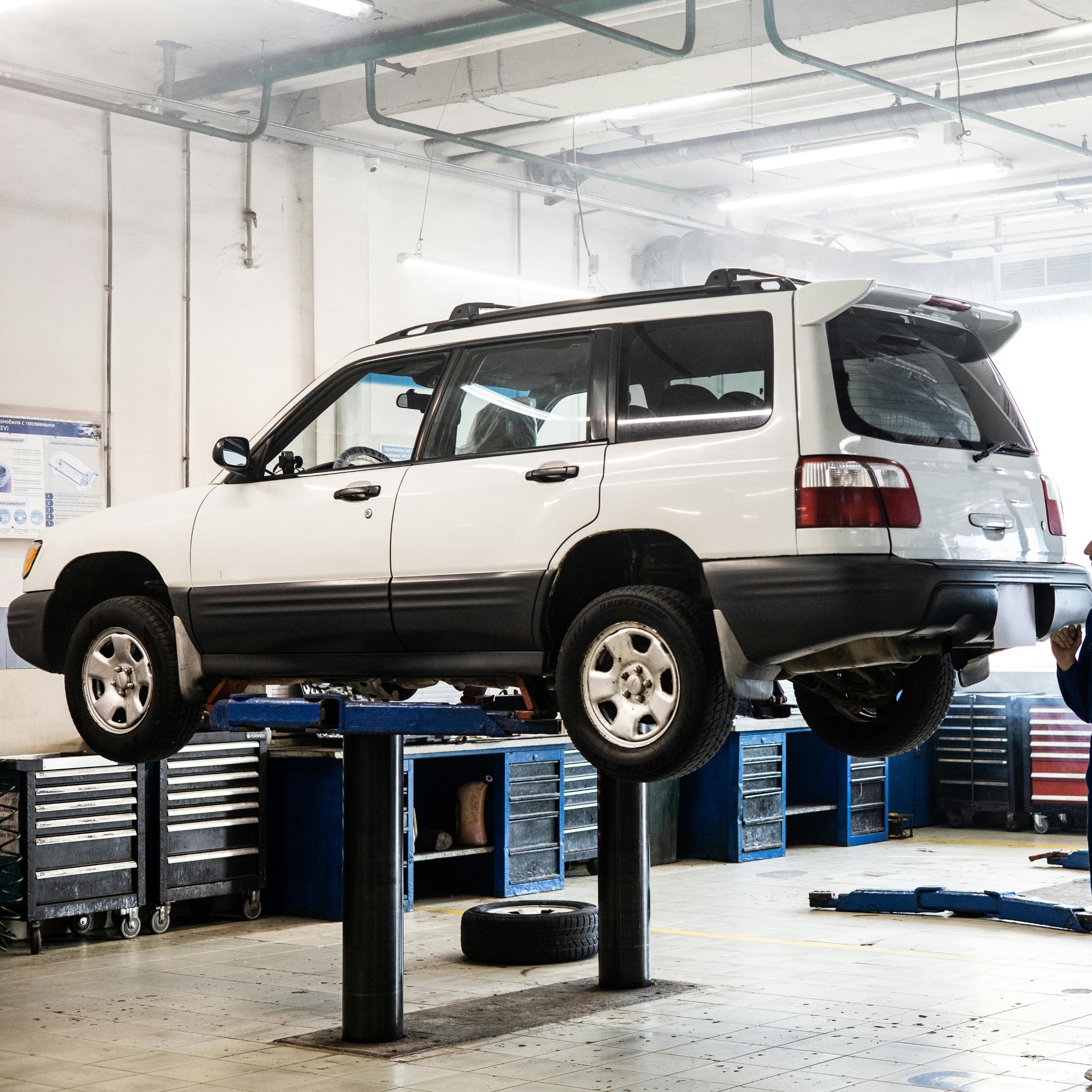
Introduction: Why a Four‑Post Lift is Indispensable for Industrial FleetsIn the logistics and warehousing sector, vehicle downtime translates directly into lost revenue. Whether maintaining a fleet of delivery vans, forklifts, or heavy trucks, having the right equipment to perform inspections, repairs, and storage is critical. The 4-Post Auto Lift has become a cornerstone of industrial maintenance facilities. Unlike two‑post lifts that suspend vehicles by their frame, a four‑post lift supports the vehicle by its wheels, providing a stable platform for undercarriage work, tire changes, and fluid servicing. Its robust construction—typically rated at 9,000 pounds or more—makes it suitable for a wide range of vehicles, from light trucks to industrial utility vehicles. Moreover, its space‑efficient design allows for vertical stacking, effectively doubling usable floor space in crowded maintenance bays or storage areas.Technical Overview and Industrial Use CasesA typical four‑post auto lift consists of four vertical posts, two runways, and a hydraulic or electro‑mechanical lifting mechanism. The runways are connected by cross‑members, and removable ramps allow easy drive‑on access. Common industrial applications include:Preventive maintenance – oil changes, transmission flushes, and brake inspections for delivery trucks and vans.Tire and wheel service – rotating, balancing, or replacing tires on heavy vehicles.Underbody cleaning and inspection – removing mud, salt, and debris from fleet vehicles after winter operations.Storage of off‑season vehicles – stacking snowplows, mowers, or spare vehicles to free up ground space.Assembly and fabrication – providing a stable elevated platform for welding or mounting equipment on vehicle frames.Alignment and suspension work – when equipped with alignment racks or accessories.Efficiency, Safety, and Productivity GainsInvesting in a quality four‑post lift directly impacts workshop productivity. Mechanics can work comfortably at waist height without bending or kneeling, reducing fatigue and improving work quality. The lift’s stability allows multiple technicians to work simultaneously on different parts of the vehicle. From a safety perspective, the four‑post design is inherently more stable than two‑post lifts, with automatic locking systems that engage at each height increment. The removable ramps eliminate tripping hazards when not in use. Additionally, by utilizing vertical space for storage, the lift helps declutter the shop floor, reducing the risk of accidents from crowded aisles.Core Specifications and Capacity ConsiderationsWhen evaluating a four‑post auto lift for industrial use, several technical parameters determine its suitability. Key specifications include:Lifting capacity – commonly 9,000 to 12,000 pounds for light trucks and vans; heavier models available for class 3‑5 vehicles.Runway length and width – must accommodate the wheelbase and track width of the largest vehicle in the fleet.Lifting height – typical maximum lift height is 70‑80 inches, sufficient for most undercarriage work.Power unit – hydraulic power pack with electric motor (110V or 220V) and manual override for emergencies.Locking system – automatic mechanical locks at regular intervals; some models include cable‑less synchronization for even lifting.Ramp design – removable or flip‑up ramps for drive‑through clearance; some include casters for mobility.Certification – look for certification to recognized safety standards (e.g., Canadian Standards Association or equivalent).Variables That Affect Performance and LongevityEven a well‑designed lift can underperform if key factors are overlooked. The following elements have the greatest impact:Floor flatness and strength – the lift must be installed on a level concrete slab of sufficient thickness (typically 4‑6 inches) to support the load and prevent settling.Anchor quality – inadequate anchoring can lead to lift movement; use manufacturer‑specified expansion anchors installed in solid concrete.Hydraulic fluid maintenance – contaminated or low fluid causes erratic operation; check and change per manufacturer recommendations.Load distribution – always center the vehicle on the runways; uneven loading can stress the structure and cause binding.Regular inspections – check cables, pulleys, and locking mechanisms for wear; lubricate moving parts as specified.Safety Protocols and Recommended PracticesTo ensure the lift remains a safe and reliable asset, adopt the following industry best practices:Operator training – only trained personnel should operate the lift; include instruction on controls, locking systems, and emergency procedures.Pre‑use inspection – visually check for damaged cables, leaks, or obstructions before each use.Load limits – never exceed the rated capacity; account for the weight of the vehicle plus any tools or materials placed on it.Clear the area – ensure no personnel are under the vehicle while lowering; use safety stands for additional support if working under the vehicle for extended periods.Lock engagement – always lower the vehicle onto the mechanical locks before working underneath; never rely solely on hydraulic pressure.Housekeeping – keep the lift area free of oil spills and clutter; wipe up any hydraulic fluid immediately.Essential Equipment and Complementary ToolsIntegrating a four‑post lift into a maintenance facility often requires additional equipment and accessories:Jack trays and rolling jacks – allow lifting individual wheels for tire service while the vehicle is on the lift.Alignment systems – turn plates and slip plates for wheel alignment work.Drip trays and fluid drains – for capturing oil and coolant during servicing.Overhead cranes or hoists – for lifting heavy components like engines or transmissions.Lubrication equipment – grease guns, oil dispensers, and air lines conveniently mounted nearby.Lighting and electrical outlets – bright LED lighting under the lift and power strips for tools.Advantages and Operational LimitationsAdvantages:Superior stability – four‑post design eliminates tipping concerns, making it ideal for heavy or uneven vehicles.Space savings – allows parking one vehicle above another, doubling floor space.Versatility – suitable for maintenance, storage, and detailing.Ease of use – drive‑on operation requires minimal setup; removable ramps allow clear floor when not in use.Limitations:Accessibility – working on suspension or brake components may be slightly more challenging compared to a two‑post lift, though accessory jacks can help.Installation requirements – requires a thick, level concrete slab and adequate ceiling height.Initial cost – higher than some two‑post models, but offset by longevity and safety features.Power dependence – most models require electricity; a power outage may trap a vehicle unless a manual release is available.Real-World Example: Fleet Maintenance in a Toronto Courier HubA major courier company in Toronto operates a fleet of 120 delivery vans from a central maintenance garage. With limited floor space, they needed a way to perform routine inspections without moving vehicles in and out constantly. They installed two 9,000‑pound 4-Post Auto Lift units side by side. Mechanics now lift one van for undercarriage checks while another is parked below on the adjacent lift, maximizing bay usage. During winter, the lifts are used to store snowplow equipment off‑season, stacked to free ground space for active vehicles. The facility manager reports a 25 percent increase in maintenance throughput and zero safety incidents in three years of operation.Conclusion: The Future of Industrial Vehicle LiftsAs fleets grow and facility space becomes more precious, the four‑post auto lift will continue to play a vital role in industrial maintenance and storage. Future trends include integration with electric vehicle charging stations, allowing lifts to double as EV service platforms, and smart diagnostics that monitor lift usage and alert operators to maintenance needs. For procurement managers and facility planners, selecting a lift with robust construction, certified safety components, and adaptability to future vehicle types ensures a long‑term return on investment. The 4-Post Auto Lift is not just a tool—it is a strategic asset for any industrial operation aiming to optimize its vehicle handling capabilities.
Embed this episode
NOW PLAYING
The 4-Post Auto Lift: Enhancing Fleet Maintenance and Storage in Industrial Settings
No transcript for this episode yet
Similar Episodes
No similar episodes found.
Similar Podcasts
No similar podcasts found.