
EPISODE · Jul 18, 2021 · 15 MIN
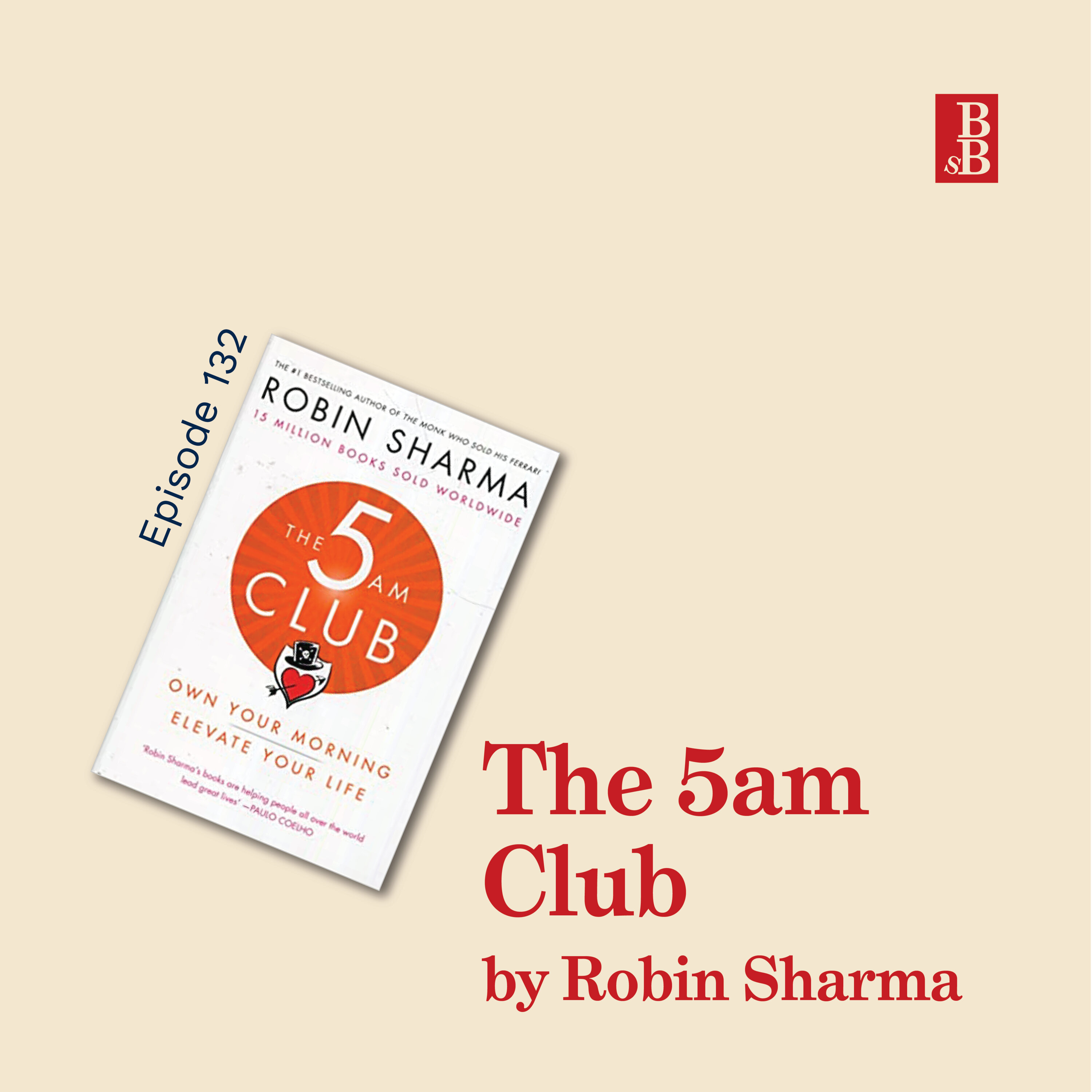
The 5am Club by Robin Sharma: the three big ideas from the worst book I've read
from Steph's Business Bookshelf Podcast · host Steph Clarke
About the author Robin Sharma is a globally respected humanitarian who, for over a quarter of a century, has been devoted to helping human beings realize their native gifts. Widely considered one of the top leadership and personal mastery experts and speakers in the world, his clients include NASA, Microsoft, Nike, Unilever, General Electric, FedEx, HP, Starbucks, Oracle, Yale University, PwC, IBM Watson, and the Young Presidents’ Organization. As a presenter, Robin Sharma possesses the rare ability to electrify an audience while delivering uncommonly original and tactical insights that lead to individuals doing their best work, teams providing superb results and organizations becoming unbeatable. His #1 international bestsellers such as The 5AM Club, The Monk Who Sold His Ferrari, and Who Will Cry When You Die? have sold millions of copies in over ninety-two languages and dialects; making him one of the most widely read authors in the world. Source: https://www.robinsharma.com/about-robin About the book The 5AM Club is Robin Sharma’s masterwork, blending his original insights into legendary leadership, uncommon creativity and exponential productivity with battle-tested tools to help you produce work that allows you to dominate in your field — while you live a life that inspires the world. Source: https://www.robinsharma.com/books Big idea #1 — Incremental changes for big results Ultimately, this is a book about small changes, or one small change in particular, getting up early, being the catalyst for numerous other changes, benefits, and positive results in your life. It’s also a bit of a nod to the compound effect, which if you’ve read anything else on habit building, you’ll know that the impact of the compound effect on habits (both good habits and not so good habits) is significant. There’s a quote in the book that says ‘the smallest of implementations is always worth more than the grandest of intentions’. The important points here are that 1) you have to start, and 2) you have to accept a level of discomfort when changing. There’s several points throughout the book where he talks about the fact that we need to get used to the discomfort we face when trying to implement a new change into our life, be it a new habit, or a way of doing things. And as you’ll see in the next big idea, there are a number of small changes that are suggested in the book which revolve around getting up early being the start of change. Big idea #2–20/20/20 This is the main method in the book. Yes, it’s a list of things to do at a certain time of the day, but it’s really more about the discipline of consistently taking these particular healthy actions. The three elements of 20/20/20 are; (05:00–05:20) Move for 20 minutes (get sweaty, hydrate, breathe to cleanse your early morning cortisol and boost your energy, serotonin and dopamine for the day) (05:20–05:40) Reflect for 20 minutes (journal, meditate, contemplate to practice gratitude, raise your awareness, and set intention for the day) (05:40–06:00) Grow for 20 minutes (read, listen to a podcast, practice a skill, or take a course to build your knowledge and skills) Yes, maybe you want to do more of each of those activities, but see this as your minimum effective dose, and something that’s easy to stick to every day. It’s easy to see that these are all good things to do, and doing them at a quiet undistracted time of the day, with a disciplined routine to them, is the main idea here. These are all activities that might fall by the wayside. We all know that if we wait until later in the day to do them, we’ll either talk ourselves out of them, forget to do them, or just not get round to them. And that can easily happen for days in a row if we don’t build a habit and get them done early. Big idea #3 — Own your story This flows through a few different places throughout the book, as an overall idea of not letting an imperfect past ruin your future. Robin argues that people who do extraordinary things aren’t different or special, they just act differently, and have better habits and systems. But if you tell yourself that you can’t, or you won’t, do something, then likely that will become true. It’s all an inside game. We need to own our story, and be the authors of that particular story or that book that we are, we are creating through our lives. And therefore, we can’t let what has happened previously, influence what happens next. Support my book habit: https://www.buymeacoffee.com/stephsbookshelfSee omnystudio.com/listener for privacy information.
Embed this episode
NOW PLAYING
The 5am Club by Robin Sharma: the three big ideas from the worst book I've read
No transcript for this episode yet
Similar Episodes
No similar episodes found.
Similar Podcasts
No similar podcasts found.