
EPISODE · Sep 15, 2020 · 31 MIN
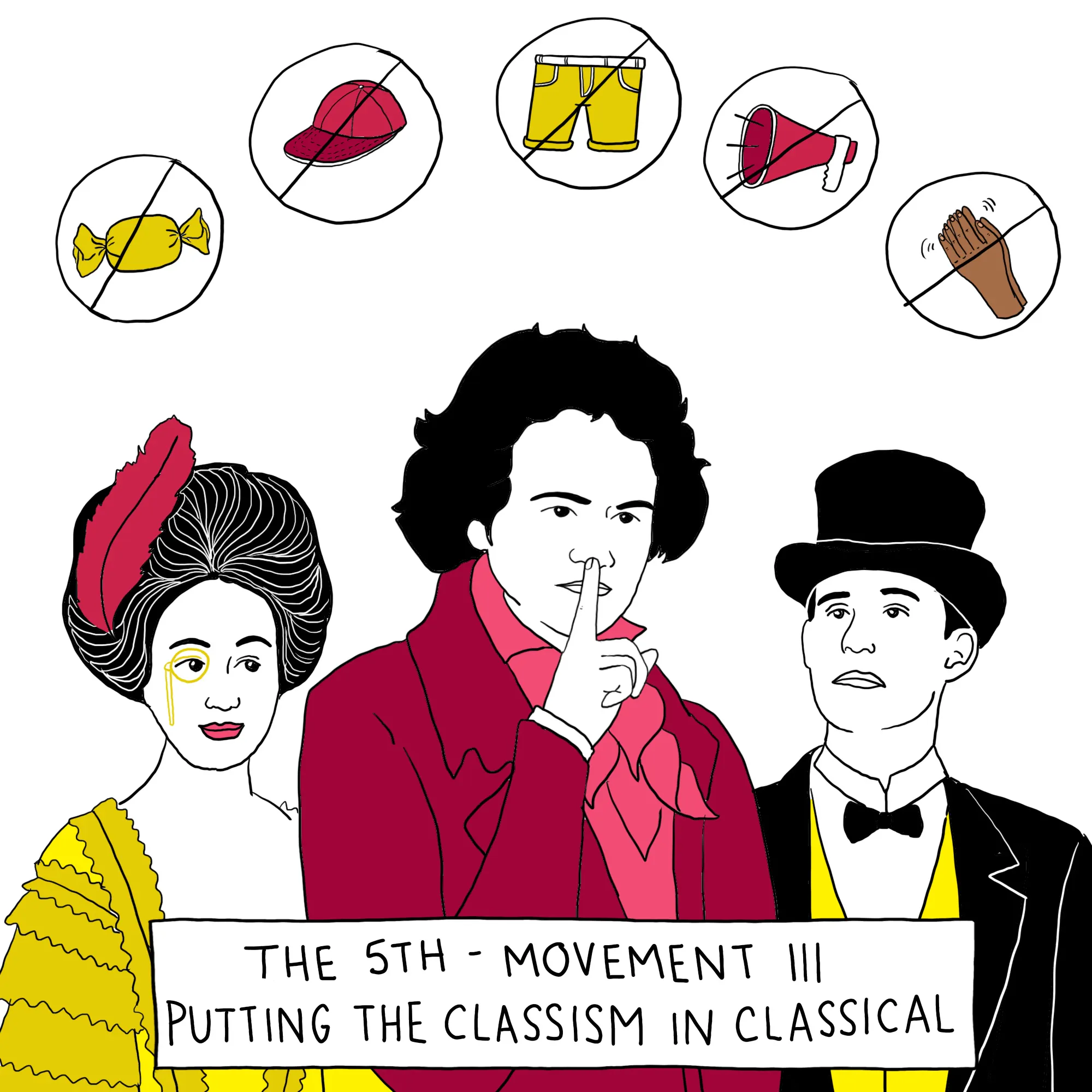
THE 5TH — MOVEMENT III, Putting the Classism in Classical
from Switched on Pop · host Vulture
Before Beethoven’s time, classical music culture looked and sounded quite different. When Mozart premiered his Symphony 31 in the late 1700s, it was standard for audiences to clap, cheer, and yell “da capo!” (Italian for “from the beginning!”) in the middle of a performance. After Beethoven’s Fifth Symphony debuted in the early 1800s, these norms changed — both because the rising industrial merchant class took ownership of concert halls and because of shifts in the music itself. As we explored in episodes I and II of the Switched On Pop podcast series The 5th, the musical complexity of Beethoven’s symphony required a different kind of listening. The Fifth’s four-note opening theme occurs and recurs in variations throughout the symphony, slowly shifting from minor to major keys and mirroring Beethoven’s experience with deafness. The Fifth’s creative rule-breaking — subverting the classical sonata form in the first movement, for example — requires close listening to fully grasp. Over time, these norms crystallized into a set of etiquette rules (e.g., “don’t clap mid-piece”) to enhance the new listening experience. In the third episode of The 5th, we explore how Beethoven’s symphony was used to generate the strict culture of classical music — and the politics that undergird those norms of behavior. Music Discussed Recording of The New York Philharmonic performing Beethoven’s Symphony No. 5 conducted by Jaap van Zweden used by permission from Decca Gold. Learn more about your ad choices. Visit podcastchoices.com/adchoices
Embed this episode
NOW PLAYING
THE 5TH — MOVEMENT III, Putting the Classism in Classical
No transcript for this episode yet
Similar Episodes
No similar episodes found.
Similar Podcasts
No similar podcasts found.