
EPISODE · Aug 17, 2026 · 19 MIN
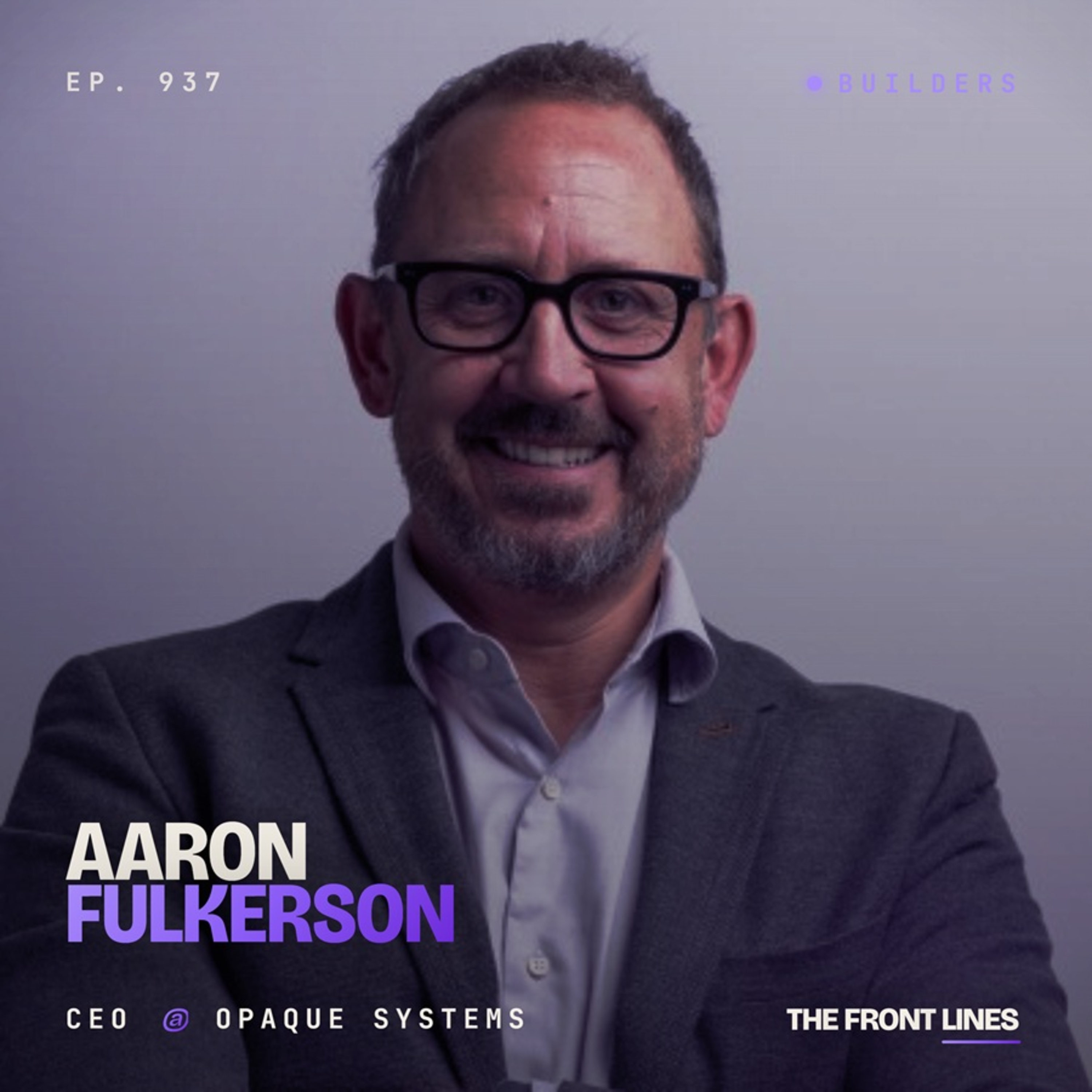
The 90% trust artifact that opened OPAQUE's market | Aaron Fulkerson
from BUILDERS · host Front Lines Media
In a recent episode of BUILDERS, we sat down with Aaron Fulkerson, CEO of OPAQUE, to learn how the company found its market in sovereign AI deployments after discovering that customers would accept 90% verifiability with known gaps rather than waiting for perfect end-to-end confidential computation.Topics Discussed:Why Aaron joined OPAQUE from ServiceNow only after the founders agreed to apply the technology to language modelsHow generative AI systems leak data by architecture, and why that threatens both enterprises and frontier labsThe first customer: a European Union cybersecurity agency running analytics and MLHow the focus evolved from high tech to regulated industries to sovereign deployments over roughly sixteen monthsThe 2025 realization that a trust artifact with 90% verifiability and known gaps was good enough for customersTurning down a nation-state-scale sovereign deployment in the UAE, and how that honesty turned the entity into a Series B investorWhy OPAQUE handed the Confidential Computing Summit to the Linux FoundationWhat Apple's private cloud compute expansion signals for enterprise AI adoptionGTM & Technology Adoption Lessons:Refuse to commercialize the wrong product: Before joining, Aaron told the founders that if the product did not involve language models, it was probably not interesting and would be too difficult to build a commercial effort around. The replatforming from confidential Spark analytics to language models started essentially on day one.Let customers define good enough: OPAQUE assumed it needed end-to-end confidential computation across CPUs and GPUs, but confidential GPU availability through hyperscalers was slow. The company discovered through customers that a trust artifact delivering roughly 90% verifiability of policies, with known gaps, was acceptable. Aaron called it a we-have-been-overthinking-this moment.Honesty about scale limits can win the deal: When a UAE entity wanted OPAQUE to roll out as part of a sovereign stack for a 13 gigawatt build-out, Aaron told them nation-state scale was not deliverable in 2025, since the company had just put its first customers into production. OPAQUE took on two or three enterprise-scale projects instead, and the entity became an investor in the Series B round.Follow the pain into regulated industries: The initial focus was high tech, but OPAQUE learned that regulated industries with strict requirements had the real urgency. Just over a year before the conversation, the company shifted focus to sovereign deployments: healthcare data, banking data, and high tech that is critical infrastructure.Build the ecosystem, not just the brand: OPAQUE hosts the Confidential Computing Summit, which grew until the Linux Foundation became co-host and took ownership. Aaron's view is that no one entity can own the digital sovereignty conversation; OPAQUE needs Google, Microsoft, and Apple building interoperability for the category to exist.Use the anchor example customers already trust: Aaron points to Apple architecting Siri's Gemini-powered processing to be confidential end-to-end. If a basic chatbot was too great a data leakage risk for Apple, enterprises running far leakier AI agents on far more valuable data have their answer.// Sponsors: Front Lines -- Silicon Valley's leading Podcast Production Studio. We help B2B tech companies launch, manage, and grow podcasts that drive demand, awareness, and thought leadership. Mention you are a listener and get a 10% discount. www.FrontLines.io/Podcast-as-a-Service
Embed this episode
Ready to play
The 90% trust artifact that opened OPAQUE's market | Aaron Fulkerson
No transcript for this episode yet
Similar Episodes
No similar episodes found.