
EPISODE · Jun 30, 2026 · 1H 14M
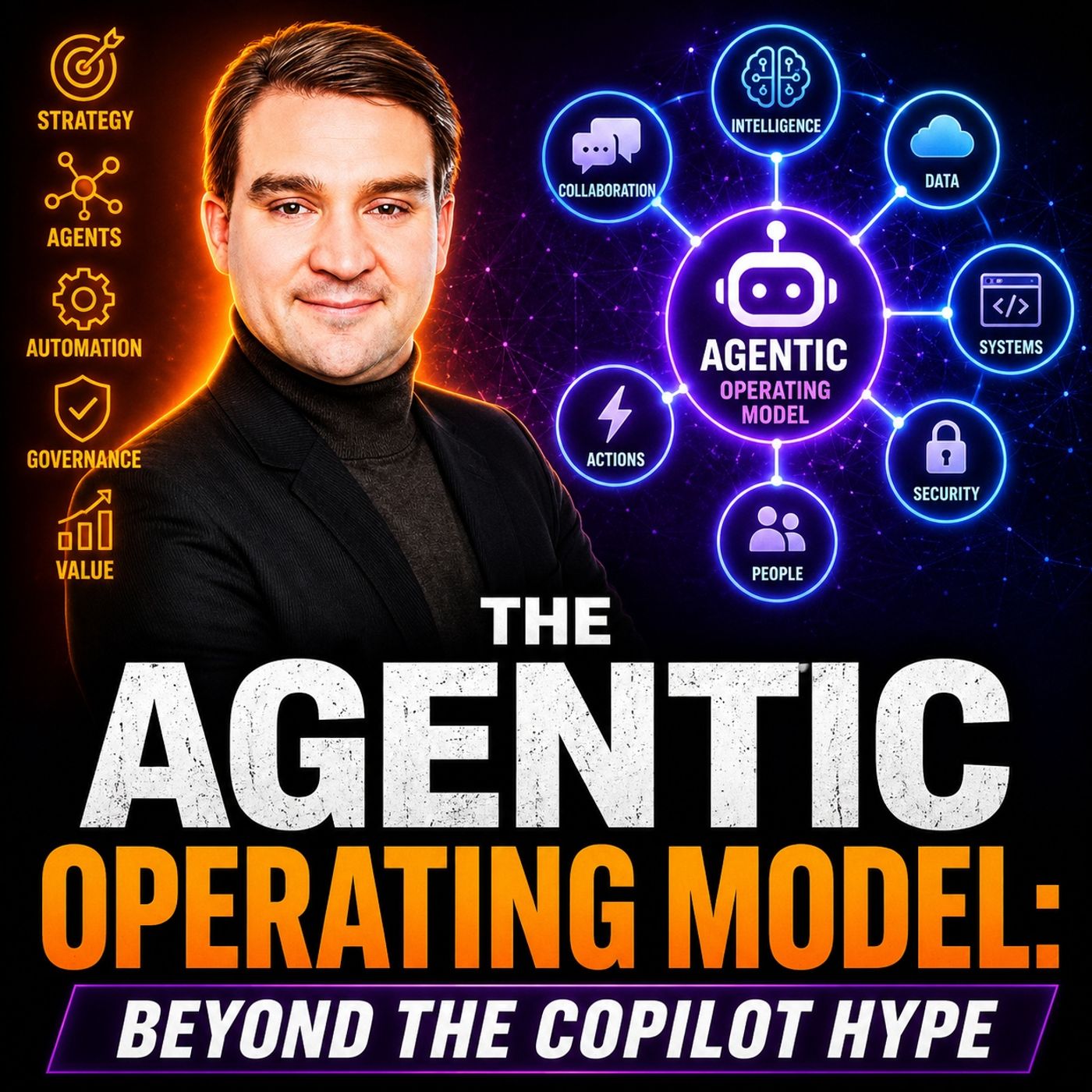
The Agentic Operating Model: Beyond the Copilot Hype
from M365.FM - Modern work, security, and productivity with Microsoft 365 · host Mirko Peters - Founder of m365.fm, m365.show and m365con.net
Most organizations believe they are implementing AI transformation. In reality, many are simply deploying chat interfaces on top of existing systems. While copilots and retrieval-based AI solutions have improved productivity, they often fail to address the deeper challenge: how organizations operationalize intelligence at scale.In this episode, we explore the emergence of the Agentic Operating Model, a new architectural approach that moves beyond traditional AI assistants and toward a future where specialized agents become active participants in business processes. We examine why Retrieval-Augmented Generation (RAG) architectures are reaching their limits, how real-time organizational context changes the equation, and why governance, identity, and policy management are becoming the critical foundations of enterprise AI.The discussion explores Microsoft's evolving vision around Work IQ, Agent 365, Entra Agent IDs, and Agent-to-Agent (A2A) communication. Rather than treating AI as a tool that simply retrieves information, the Agentic Operating Model positions AI agents as governed digital workers capable of reasoning, coordinating, and acting across enterprise systems.UNDERSTANDING THE LIMITATIONS OF TODAY'S AIMany AI deployments focus on document retrieval, knowledge search, and content generation. While valuable, these approaches often struggle when organizations require agents to reason about live business operations, dynamic workflows, and constantly changing environments.In this section, we explore:Why traditional RAG architectures introduce latency challengesThe difference between static knowledge and operational intelligenceHow fragmented data architectures create governance problemsWhy search alone is not organizational transformationSTATIC CONTEXT VS LIQUID CONTEXTA major theme of this episode is the distinction between static context and liquid context.Static context includes documented policies, procedures, knowledge bases, and archived information. Liquid context represents the real-time state of work happening across meetings, projects, conversations, approvals, tasks, and business operations.Topics covered include:Why organizations operate primarily on liquid contextThe limitations of document-centric AI architecturesHow real-time collaboration impacts decision-makingWhy context awareness becomes essential for intelligent agentsFROM SERVICE ACCOUNTS TO AGENT IDENTITIESOne of the most important shifts discussed is the transition from traditional service accounts toward dedicated agent identities.For years, automation relied on shared service accounts. However, as autonomous agents become more capable, organizations require stronger governance, traceability, accountability, and lifecycle management.Key concepts include:The governance challenges of service accountsWhy agent accountability mattersThe role of Entra Agent IDsLifecycle management for digital workersIdentity as the foundation of AI governanceWHY COPILOT ADOPTION OFTEN STALLSMany organizations successfully launch Copilot pilots but struggle to move beyond limited adoption.This episode examines why adoption often plateaus and explores the hidden barriers preventing organizations from scaling AI successfully.Topics include:Trust and accountability challengesGovernance gaps in AI deploymentsRead-only AI versus action-oriented AIOperational friction and organizational resistanceThe importance of ownership and transparencyWORK IQ AND THE FUTURE OF ORGANIZATIONAL REASONINGWork IQ introduces a fundamentally different approach to enterprise intelligence by enabling reasoning over live organizational signals instead of relying exclusively on indexed information.We discuss:What Work IQ actually isReal-time reasoning across Microsoft 365Native governance and compliance enforcementPersistent workspaces and organizational memoryContext-aware AI decision makingTHE RISE OF MULTI-AGENT SYSTEMSThe future is not one agent doing everything.The future is many specialized agents working together across finance, sales, operations, compliance, HR, customer service, and project management.This section explores:Agent specialization strategiesAgent-to-Agent (A2A) communicationMulti-agent orchestration modelsOrganizational reasoning at scaleAgentic density and collaborative intelligenceGOVERNANCE, SECURITY, AND POLICY-AS-CODEAs agents gain access to enterprise systems, governance becomes the defining success factor.We examine how Policy-as-Code transforms governance from documentation into enforceable infrastructure and why monitoring, auditing, and behavioral analysis become critical for enterprise AI.Topics covered include:Policy enforcement for agentsReal-time reasoning tracesDefender integration and anomaly detectionCompliance and auditabilityAgent monitoring and operational visibilityTHE ECONOMICS OF THE REASONING ERAThe transition from user-based licensing to consumption-based AI introduces entirely new financial considerations.Organizations must learn how to manage reasoning costs, optimize workflows, and build FinOps practices specifically designed for AI.Key discussions include:Copilot Credits and consumption billingReasoning architecture optimizationAgent ROI measurementFinOps for AICost governance and operational efficiencyTHE FUTURE OF THE AGENTIC ENTERPRISEThe Agentic Operating Model represents more than a technology shift. It represents a transformation in how organizations think about work itself.As specialized agents become governed participants within enterprise ecosystems, identity, policy, context, reasoning, and coordination become the new foundations of digital operations.The organizations that successfully embrace this transition will move beyond copilots and begin building intelligent operating systems capable of reasoning, coordinating, and acting at machine speed while maintaining governance, compliance, and accountability.If the last decade was defined by cloud transformation, the next decade may be defined by agentic transformation.Become a supporter of this podcast: https://www.spreaker.com/podcast/m365-fm-modern-work-security-and-productivity-with-microsoft-365--6704921/support.
Embed this episode
What this episode covers
Most organizations believe they are implementing AI transformation. In reality, many are simply deploying chat interfaces on top of existing systems. While copilots and retrieval-based AI solutions have improved productivity, they often fail to address the deeper challenge: how organizations operationalize intelligence at scale.In this episode, we explore the emergence of the Agentic Operating Model, a new architectural approach that moves beyond traditional AI assistants and toward a future where specialized agents become active participants in business processes. We examine why Retrieval-Augmented Generation (RAG) architectures are reaching their limits, how real-time organizational context changes the equation, and why governance, identity, and policy management are becoming the critical foundations of enterprise AI.The discussion explores Microsoft's evolving vision around Work IQ, Agent 365, Entra Agent IDs, and Agent-to-Agent (A2A) communication. Rather than treating AI as a tool that simply retrieves information, the Agentic Operating Model positions AI agents as governed digital workers capable of reasoning, coordinating, and acting across enterprise systems. UNDERSTANDING THE LIMITATIONS OF TODAY'S AI Many AI deployments focus on document retrieval, knowledge search, and content generation. While valuable, these approaches often struggle when organizations require agents to reason about live business operations, dynamic workflows, and constantly changing environments.In this section, we explore: Why traditional RAG architectures introduce latency challenges The difference between static knowledge and operational intelligence How fragmented data architectures create governance problems Why search alone is not organizational transformation STATIC CONTEXT VS LIQUID CONTEXT A major theme of this episode is the distinction between static context and liquid context.Static context includes documented policies, procedures, knowledge bases, and archived information. Liquid context represents the real-time state of work happening across meetings, projects, conversations, approvals, tasks, and business operations.Topics covered include: Why organizations operate primarily on liquid context The limitations of document-centric AI architectures How real-time collaboration impacts decision-making Why context awareness becomes essential for intelligent agents FROM SERVICE ACCOUNTS TO AGENT IDENTITIES One of the most important shifts discussed is the transition from traditional service accounts toward dedicated agent identities.For years, automation relied on shared service accounts. However, as autonomous agents become more capable, organizations require stronger governance, traceability, accountability, and lifecycle management.Key concepts include: The governance challenges of service accounts Why agent accountability matters The role of Entra Agent IDs Lifecycle management for digital workers Identity as the foundation of AI governance WHY COPILOT ADOPTION OFTEN STALLS Many organizations successfully launch Copilot pilots but struggle to move beyond limited adoption.This episode examines why adoption often plateaus and explores the hidden barriers preventing organizations from scaling AI successfully.Topics include: Trust and accountability challenges Governance gaps in AI deployments Read-only AI versus action-oriented AI Operational friction and organizational resistance The importance of ownership and transparency WORK IQ AND THE FUTURE OF ORGANIZATIONAL REASONING Work IQ introduces a fundamentally different approach to enterprise intelligence by enabling reasoning over live organizational signals instead of relying exclusively on indexed...
NOW PLAYING
The Agentic Operating Model: Beyond the Copilot Hype
No transcript for this episode yet
Similar Episodes
No similar episodes found.
Similar Podcasts
No similar podcasts found.