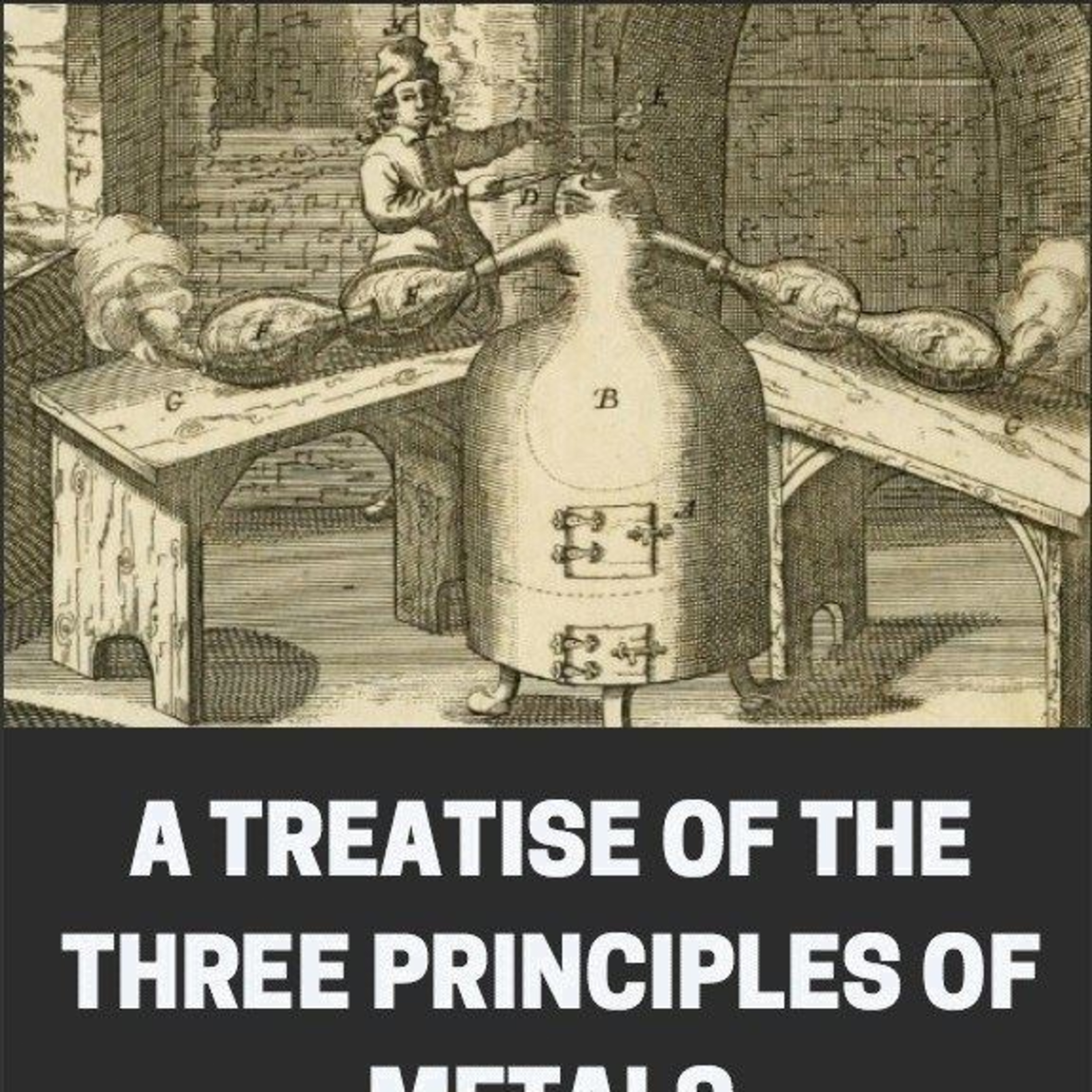
The Alchemical Trinity: Unlocking Sulphur, Mercury, and Salt in the Transformation of Metals episode artwork

EPISODE · Mar 25, 2025 · 25 MIN

The Alchemical Trinity: Unlocking Sulphur, Mercury, and Salt in the Transformation of Metals

from Occult Archives · host Falcon Millenium

A Treatise of the Three Principles of Metals by Johann Rudolph Glauber is a masterwork of 17th-century alchemical philosophy and practice, offering profound insight into the triadic forces that shape the transformation of both matter and spirit: Sulphur, Mercury, and Salt. Rooted in the Paracelsian tradition, this detailed manual merges chemical experimentation with esoteric knowledge, revealing how these three principles form the foundation of not only metals, but also of life, medicine, and spiritual evolution. Glauber, both a chemist and philosopher, guides readers through the symbolic and practical dimensions of alchemy, emphasizing purification, fixation, and the secret virtues of nature.The work begins with a deep dive into the nature of Sulphur, described as both a spiritual and material agent of transformation. Glauber explains that Sulphur is more than a chemical substance—it is the embodiment of the Element of Fire and the active force behind all change and combustion. In medicine, purified Sulphur acts as a miraculous healing agent, capable of restoring organs to their pristine function. In metallurgy, its properly fixed form becomes a red tincture capable of transmuting base metals like lead and copper into noble gold. Glauber warns, however, that only through rigorous purification—using fire, aqua fortis, and the sacred art of “Hyssop” (a symbolic term for separation and cleansing)—can Sulphur reveal its true potential.The second principle, Mercury, is treated as the vital fluid of life and the universal solvent in alchemical operations. Though less extensively detailed in this treatise, Glauber honors Mercury’s duality: it is both volatile and spiritual, the link between body and soul. When united properly with Sulphur and Salt, Mercury stabilizes and gives rise to the Philosopher’s Stone—a substance capable of healing all disease and transmuting metals. Glauber alludes to ancient wisdom that sees Mercury not just as quicksilver, but as a divine intermediary, echoing its role in both Hermetic and planetary traditions.Salt, the third principle, is portrayed as the fixed, stable matrix that binds the volatile nature of Mercury and the combustive energy of Sulphur. It represents the body—the crystallized form that can hold the essence of spirit and fire. Glauber reveals that purified Salt, when used correctly, creates the ideal foundation for alchemical tinctures and elixirs. He provides methods for combining Salt with Sulphur to create powerful red and white stones—substances capable of transforming not only metals but also human constitution. The famous “Sal Mirabile,” a salt derived from vitriol and sea salt, is described as a vital component in the whitening, fixing, and elevation of Sulphur into a stable, medicinal form.Throughout the treatise, Glauber offers exacting laboratory methods—from distillations and calcinations to reverberations and lixiviums. But beyond chemical recipes lies a profound philosophical message: alchemy is not merely about the transmutation of metals, but about the elevation of the soul. Glauber repeatedly affirms that only those pure of heart, diligent in study, and aligned with divine will shall unlock these secrets. He critiques those who chase gold for greed, emphasizing that the true treasures of alchemy are health, wisdom, and harmony with nature.The treatise concludes by emphasizing the superiority of fixed Sulphur for both medical and metallurgical purposes. Glauber introduces the idea of “gradatory waters” and “tinctures” that can, with proper preparation, not only cure disease but uplift even the most base materials into perfected states. A Treatise of the Three Principles of Metals is a rare fusion of spiritual doctrine and scientific precision. It invites chemists, mystics, and philosophers alike to explore the hidden powers of nature, promising that with discipline, reverence, and patience, the secrets of the universe may be unlocked—one element at a time.

A Treatise of the Three Principles of Metals by Johann Rudolph Glauber is a masterwork of 17th-century alchemical philosophy and practice, offering profound insight into the triadic forces that shape the transformation of both matter and spirit: Sulphur, Mercury, and Salt. Rooted in the Paracelsian tradition, this detailed manual merges chemical experimentation with esoteric knowledge, revealing how these three principles form the foundation of not only metals, but also of life, medicine, and spiritual evolution. Glauber, both a chemist and philosopher, guides readers through the symbolic and practical dimensions of alchemy, emphasizing purification, fixation, and the secret virtues of nature.The work begins with a deep dive into the nature of Sulphur, described as both a spiritual and material agent of transformation. Glauber explains that Sulphur is more than a chemical substance—it is the embodiment of the Element of Fire and the active force behind all change and combustion. In medicine, purified Sulphur acts as a miraculous healing agent, capable of restoring organs to their pristine function. In metallurgy, its properly fixed form becomes a red tincture capable of transmuting base metals like lead and copper into noble gold. Glauber warns, however, that only through rigorous purification—using fire, aqua fortis, and the sacred art of “Hyssop” (a symbolic term for separation and cleansing)—can Sulphur reveal its true potential.The second principle, Mercury, is treated as the vital fluid of life and the universal solvent in alchemical operations. Though less extensively detailed in this treatise, Glauber honors Mercury’s duality: it is both volatile and spiritual, the link between body and soul. When united properly with Sulphur and Salt, Mercury stabilizes and gives rise to the Philosopher’s Stone—a substance capable of healing all disease and transmuting metals. Glauber alludes to ancient wisdom that sees Mercury not just as quicksilver, but as a divine intermediary, echoing its role in both Hermetic and planetary traditions.Salt, the third principle, is portrayed as the fixed, stable matrix that binds the volatile nature of Mercury and the combustive energy of Sulphur. It represents the body—the crystallized form that can hold the essence of spirit and fire. Glauber reveals that purified Salt, when used correctly, creates the ideal foundation for alchemical tinctures and elixirs. He provides methods for combining Salt with Sulphur to create powerful red and white stones—substances capable of transforming not only metals but also human constitution. The famous “Sal Mirabile,” a salt derived from vitriol and sea salt, is described as a vital component in the whitening, fixing, and elevation of Sulphur into a stable, medicinal form.Throughout the treatise, Glauber offers exacting laboratory methods—from distillations and calcinations to reverberations and lixiviums. But beyond chemical recipes lies a profound philosophical message: alchemy is not merely about the transmutation of metals, but about the elevation of the soul. Glauber repeatedly affirms that only those pure of heart, diligent in study, and aligned with divine will shall unlock these secrets. He critiques those who chase gold for greed, emphasizing that the true treasures of alchemy are health, wisdom, and harmony with nature.The treatise concludes by emphasizing the superiority of fixed Sulphur for both medical and metallurgical purposes. Glauber introduces the idea of “gradatory waters” and “tinctures” that can, with proper preparation, not only cure disease but uplift even the most base materials into perfected states. A Treatise of the Three Principles of Metals is a rare fusion of spiritual doctrine and scientific precision. It invites chemists, mystics, and philosophers alike to explore the hidden powers of nature, promising that with discipline, reverence, and patience, the secrets of the universe may be unlocked—one element at a time.

NOW PLAYING

The Alchemical Trinity: Unlocking Sulphur, Mercury, and Salt in the Transformation of Metals

0:00 25:15

No transcript for this episode yet

We transcribe on demand. Request one and we'll notify you when it's ready — usually under 10 minutes.

No similar episodes found.

No similar podcasts found.

Frequently Asked Questions

How long is this episode of Occult Archives?

This episode is 25 minutes long.

When was this Occult Archives episode published?

This episode was published on March 25, 2025.

What is this episode about?

A Treatise of the Three Principles of Metals by Johann Rudolph Glauber is a masterwork of 17th-century alchemical philosophy and practice, offering profound insight into the triadic forces that shape the transformation of both matter and spirit:...

Can I download this Occult Archives episode?

Yes, you can download this episode by clicking the download button on the episode player, or subscribe to the podcast in your preferred podcast app for automatic downloads.
URL copied to clipboard!