The Alchemist's Code: Unlocking the Twelve Keys of Basil Valentine episode artwork

EPISODE · Mar 26, 2025 · 20 MIN

The Alchemist's Code: Unlocking the Twelve Keys of Basil Valentine

from Occult Archives · host Falcon Millenium

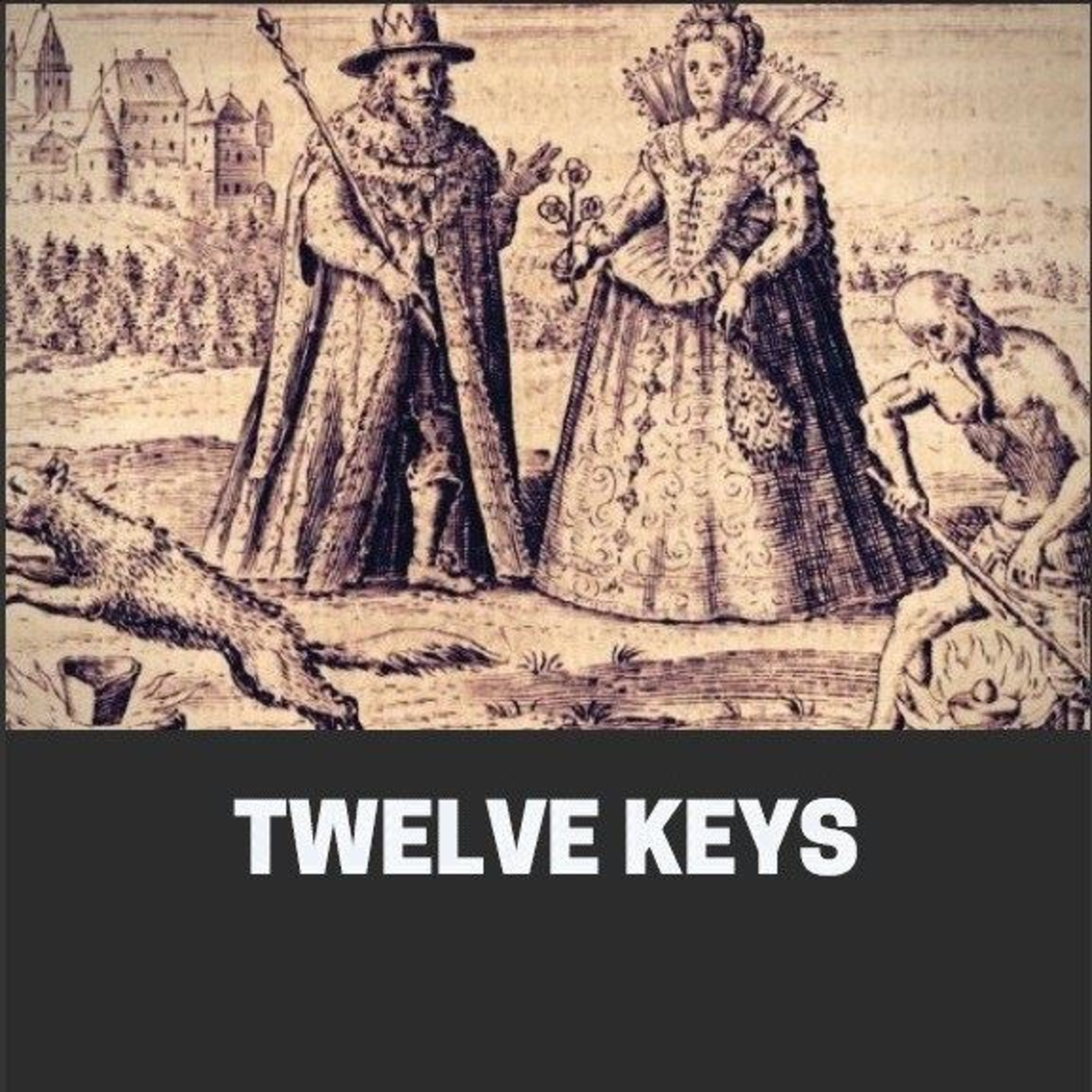
Hidden behind allegory, symbol, and fire, the Twelve Keys of Basil Valentine form one of the most mysterious and revered texts in the history of alchemy. Written in the 15th century by a Benedictine monk and master of the Hermetic arts, this enigmatic work was never intended for casual readers. It was a cipher—a sacred riddle—for those who sought not gold, but wisdom. In this episode, we unlock these Twelve Keys, not as mere operations for physical transmutation, but as profound metaphors for spiritual transformation.Each key represents a stage in the alchemical opus: from purification and dissolution to death, rebirth, and perfection. The language is richly symbolic—wolves eating kings, lions bleeding gold, dragons sleeping beneath mountains—yet beneath these arcane images lies a precise spiritual technology. Basil Valentine does not merely describe chemical experiments. He outlines a path of inner initiation, where the elements correspond not just to substances, but to states of consciousness. The alchemist, in this view, is not merely a craftsman in a lab, but a soul in the crucible of existence, laboring to refine base desires into divine will.The text opens with an invocation of divine purpose. Basil Valentine writes that he turned to alchemy not out of greed, but after abandoning the world and entering monastic life. His work, he insists, is not for the profane, but for those who pray, repent, and serve. His Twelve Keys, though cloaked in metaphor, aim to reveal the Philosopher’s Stone—the perfected essence said to heal all disease, transmute metals into gold, and even bestow spiritual illumination. And yet, he warns, this Stone is hidden not just by nature, but by the will of God. It will not yield itself to the proud or the impatient.As we explore each key, we discover the marriage of opposites: sulfur and mercury, male and female, sun and moon. These are not just chemical components—they are symbols of duality that must be united, slain, reborn. Valentine’s alchemical theatre plays out in cosmic cycles and mythic fables: a wolf devouring a king, then being burned into the ash from which new life springs. A queen bathing in fire. A dragon whose blood becomes medicine. These images are the soul’s metaphors, as relevant in psychological and spiritual terms as they are in metallurgical ones.What makes the Twelve Keys so powerful is not just their historical significance, but their layered wisdom. They operate simultaneously on material, moral, and mystical planes. The stages of alchemical work—calcination, dissolution, separation, conjunction, fermentation, distillation, and coagulation—mirror the path of inner transformation: confronting the ego, dissolving illusions, integrating the shadow, and ultimately birthing the true Self. Basil Valentine warns that without spiritual maturity, the alchemist will fail. But for the sincere seeker, his teachings offer not just gold, but grace.Join us in this episode as we unlock each of Basil Valentine’s Twelve Keys—decoding the symbolism, interpreting the metaphors, and tracing the hidden wisdom beneath the imagery. This is not just an analysis—it is an initiation. A guide to the inner lab. A roadmap through the sacred fire. For those willing to read with the eyes of the soul, The Twelve Keys reveals not just the Philosopher’s Stone—but the path to becoming it.

Hidden behind allegory, symbol, and fire, the Twelve Keys of Basil Valentine form one of the most mysterious and revered texts in the history of alchemy. Written in the 15th century by a Benedictine monk and master of the Hermetic arts, this enigmatic work was never intended for casual readers. It was a cipher—a sacred riddle—for those who sought not gold, but wisdom. In this episode, we unlock these Twelve Keys, not as mere operations for physical transmutation, but as profound metaphors for spiritual transformation.Each key represents a stage in the alchemical opus: from purification and dissolution to death, rebirth, and perfection. The language is richly symbolic—wolves eating kings, lions bleeding gold, dragons sleeping beneath mountains—yet beneath these arcane images lies a precise spiritual technology. Basil Valentine does not merely describe chemical experiments. He outlines a path of inner initiation, where the elements correspond not just to substances, but to states of consciousness. The alchemist, in this view, is not merely a craftsman in a lab, but a soul in the crucible of existence, laboring to refine base desires into divine will.The text opens with an invocation of divine purpose. Basil Valentine writes that he turned to alchemy not out of greed, but after abandoning the world and entering monastic life. His work, he insists, is not for the profane, but for those who pray, repent, and serve. His Twelve Keys, though cloaked in metaphor, aim to reveal the Philosopher’s Stone—the perfected essence said to heal all disease, transmute metals into gold, and even bestow spiritual illumination. And yet, he warns, this Stone is hidden not just by nature, but by the will of God. It will not yield itself to the proud or the impatient.As we explore each key, we discover the marriage of opposites: sulfur and mercury, male and female, sun and moon. These are not just chemical components—they are symbols of duality that must be united, slain, reborn. Valentine’s alchemical theatre plays out in cosmic cycles and mythic fables: a wolf devouring a king, then being burned into the ash from which new life springs. A queen bathing in fire. A dragon whose blood becomes medicine. These images are the soul’s metaphors, as relevant in psychological and spiritual terms as they are in metallurgical ones.What makes the Twelve Keys so powerful is not just their historical significance, but their layered wisdom. They operate simultaneously on material, moral, and mystical planes. The stages of alchemical work—calcination, dissolution, separation, conjunction, fermentation, distillation, and coagulation—mirror the path of inner transformation: confronting the ego, dissolving illusions, integrating the shadow, and ultimately birthing the true Self. Basil Valentine warns that without spiritual maturity, the alchemist will fail. But for the sincere seeker, his teachings offer not just gold, but grace.Join us in this episode as we unlock each of Basil Valentine’s Twelve Keys—decoding the symbolism, interpreting the metaphors, and tracing the hidden wisdom beneath the imagery. This is not just an analysis—it is an initiation. A guide to the inner lab. A roadmap through the sacred fire. For those willing to read with the eyes of the soul, The Twelve Keys reveals not just the Philosopher’s Stone—but the path to becoming it.

NOW PLAYING

The Alchemist's Code: Unlocking the Twelve Keys of Basil Valentine

0:00 20:23

No transcript for this episode yet

We transcribe on demand. Request one and we'll notify you when it's ready — usually under 10 minutes.

No similar episodes found.

No similar podcasts found.

Frequently Asked Questions

How long is this episode of Occult Archives?

This episode is 20 minutes long.

When was this Occult Archives episode published?

This episode was published on March 26, 2025.

What is this episode about?

Hidden behind allegory, symbol, and fire, the Twelve Keys of Basil Valentine form one of the most mysterious and revered texts in the history of alchemy. Written in the 15th century by a Benedictine monk and master of the Hermetic arts, this...

Can I download this Occult Archives episode?

Yes, you can download this episode by clicking the download button on the episode player, or subscribe to the podcast in your preferred podcast app for automatic downloads.
URL copied to clipboard!