
EPISODE · Jun 17, 2026 · 2 MIN
The American Lawn Is a Colonial Project: Grass, the Dream, and Ecological Collapse
from Education is Elevation · host The Conscious Lee
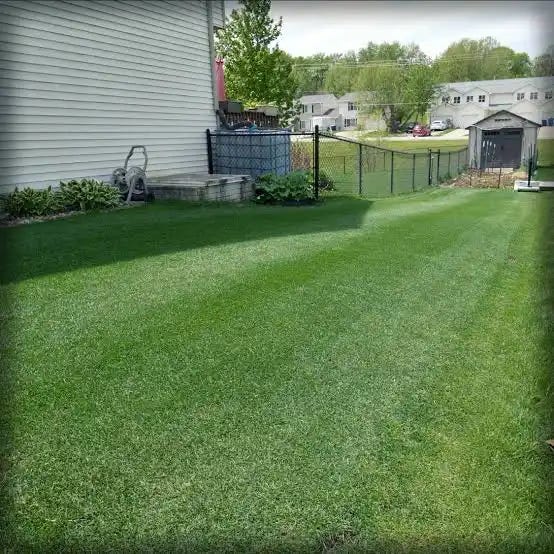
Education Is Elevation is a reader-supported publication. To receive new posts and support my work, consider becoming a free or paid subscriber.The Most Honest Acre in AmericaThe lawn looks like nothing. That’s the point. A flat green silence out front, mowed to the same height as the neighbor’s, asking for nothing, saying nothing. But the landscape in this country is shaped by colonialism, and the yard is where it’s hiding in plain sight. A lawn is an argument — a small, watered manifesto about land, labor, race, and who this country was built to hold. Let’s read it.Start with the thing nobody says out loud: the grass is not from here, and it is not innocent. The carpet of Poa pratensis — Kentucky bluegrass — that anchors most American lawns is native to Europe and the cooler reaches of Asia. It rode over in the 1600s in the holds and feed of colonists and their livestock, naturalized fast, and only later got rebranded with a homegrown name (NASA Earth Observatory; sod-industry historical record). Across the prairie and grassland West it is now classified as one of the most invasive plants on the continent — it crowds out the deep-rooted native perennials that held those ecosystems together for millennia. Bermuda grass, the Southern default, is African. The fescues are European. The American lawn is, almost in its entirety, a transplanted ecology laid down on top of a continent that was emptied to receive it.I. An Invasive Species Is the Whole Story in MiniatureThat is not trivia-night material. It is the argument at ground level. The historian Alfred Crosby called this ecological imperialism: European conquest of the temperate world was never only guns, germs, and steel — it was a biological invasion. Settlers traveled with a portmanteau biota, the grasses, weeds, livestock, and pathogens that remade conquered land until it looked and functioned like home. The land had to be made legible to the colonizer before it could be made profitable to him. Turfgrass is part of that portmanteau. The lawn isn’t the backdrop to settlement. It is settlement, growing.As the cultivation-narrative scholarship lays out, those imported grasses first took hold as feed for colonial livestock — but they did a second, quieter kind of work. A grassy, ordered field functioned as a physical marker, a piece of testimony that “civilized” use of the land had arrived. The mown green drew the boundary: this side colonizer, that side native peoples and the Indigenous ecologies the colonizer intended to displace. Even where the grass could not directly drive expansion the way cattle and the plow did, it normalized the alteration — it announced that the land was now permitted to be remade. Put it next to Patrick Wolfe’s formula that settler colonialism runs on a logic of elimination and is a structure, not an event, and the front yard reveals itself as one of the quietest expressions of that structure we have. The violence is finished and ongoing at once. That is what a structure is.II. They Decided the Land Was Inferior, TooHere is the part that should sit in your chest. The colonial project did not only decide that the people here were beneath them. It decided the land was beneath them.“Understand how evil you gotta be to not only believe the people are inferior and beneath you, but also believe the land itself is inferior and beneath you — and that you gotta bring your own in.”They were so lost in the sauce that everything indigenous to this place — the people and the ground they stood on — read to them as deficient. So they imported a replacement. The grass is the receipt. You don’t haul a European meadow across an ocean because you respect the prairie that’s already there; you do it because you have judged the prairie unworthy and decided to overwrite it. The manicured carpet of grass was a symbol of colonial possession — proof of conquest you could stand on in your slippers.There was a whole legal theology underwriting that contempt. John Locke, in the Second Treatise, made property flow from labor: the “industrious and rational” improver earns title, and land left “waste” is land going to ruin for want of improvement. The Puritans had vacuum domicilium — John Winthrop’s reasoning that land the natives hadn’t “subdued” in the European manner was legally vacant and free for the taking. The Crown had the broader terra nullius: nobody’s land, so anybody’s. Read those doctrines closely and the lawn is already inside them. The “improved” landscape — ordered, mown, visibly worked — was the proof of ownership. The “unimproved” landscape was the proof of vacancy, and vacancy was the license to dispossess. Indigenous land-management — controlled burns, polyculture, the cultivation of “wild” abundance — didn’t register as improvement because it didn’t look like an English estate. The aesthetic was the legal argument. And it still is: the “overgrown,” “unkempt” yard is treated as a moral failing and a fineable offense to this day. The colonist’s eye survives in the municipal weed ordinance.III. But Don’t Blame the GrassOne thing has to be said clearly, because the rigor is the whole point. When we call the grass “invasive,” there’s a trap right next to the truth, and we step around it on purpose.The trap is making the plant the villain. Some Indigenous scholars — see the Anishinaabe framework of an “invasive land ethic” in the journal Sustainability Science — push back on the popular move that treats introduced species as settler-occupiers and their eradication as “decolonization.” Their point is sharper than the binary: the grass is the passenger, not the driver. Plants are opportunistic; they go where a disrupted landscape lets them. What disrupted the landscape was colonialism — the land ethic, not the seed. Blaming the bluegrass is its own kind of being lost in the sauce: it lets the actual structure off the hook and slides toward the ugly place where native-versus-alien talk starts sounding like the rhetoric fascists used (German and Italian landscape movements in the 1930s literally weaponized “native plants” and “purity” to talk about people). We are not doing that.So hold both: the grass is non-native and it does real ecological damage where it crowds out native systems — and the indictment is of the colonial relation to land that brought it, normalized it, and keeps it on life support. The villain is never the messenger. It’s the regime that sent the message.IV. The Dream Had a Deed RestrictionNow the thing people actually mean when they invoke the lawn: the American Dream. The single-family house, the white picket fence, the dog, the green out front. That picture isn’t ancient. It was designed, marketed, and — the part that gets sanded off — racially engineered.The open, unfenced front lawn that reads as quintessentially American was a 19th-century invention. Frederick Law Olmsted designed Riverside, Illinois (1869) with mandatory setbacks and continuous green frontage. Frank J. Scott, in 1870, told the rising suburban middle class that hedging your yard from your neighbor’s view was practically un-Christian — the lawn was to be a shared civic offering, a commons stitched out of private parcels. Sold as democratic. Sold as community.But the commons it built had a color line written into the deed. When the lawn went mass-market — Levittown, the assembly-line Dream — it came with two kinds of fine print. The maintenance covenant: Levitt & Sons contractually required residents to mow on schedule and banned fences, so the uniform sweep would hold. And the racial covenant: Levittown’s standard lease and deed barred occupancy by anyone not of the “Caucasian race.” The grass had to be the same height and the people had to be the same color, written into the same document. Underneath sat the federal machinery — FHA and GI Bill financing routed by redlined appraisal maps toward white families and away from Black ones. Black veterans with the same benefits on paper were locked out of the neighborhoods where those benefits paid off. The lawn was the visible surface of a wealth-transfer machine: home equity that compounded for the families allowed onto the grass, denied to the families kept off it. When we talk about the racial wealth gap now, we are partly talking about who got a front yard in 1950. (This is the throughline straight out of the Levittown / residential segregation pack — the lawn is where that history is still standing.)V. The Lawn as Private GovernmentThe covenant didn’t die when courts made the racial clause unenforceable — it mutated into the homeowners’ association, a private government most Americans don’t recognize as a government. It taxes (dues), legislates (covenants), polices (compliance officers), and punishes (fines, liens, even foreclosure) — disproportionately aimed at the yard. Grass too tall, wrong species, a vegetable garden where turf should be: people have been fined, sued, and in this country even arrested over the state of their lawns. “Property values” is the stated reason, but property value is itself a coded system — the market’s memory of who and what was supposed to be where. The weed ordinance is where the old logic of “improvement” and the newer racial-property regime fuse into a single enforceable rule about grass height.VI. The Largest Crop That Feeds No OneNow the ecology presents its bill. Using satellite data, NASA researcher Cristina Milesi estimated turfgrass covers roughly 163,000 square kilometers of the continental U.S. — about the size of Texas, on the order of three times the acreage of irrigated corn. By that measure the lawn is the single largest irrigated “crop” in the country. It yields no food, no fiber, no fuel. Its only product is the appearance of order.What it drinks to make that appearance is staggering. The EPA puts landscape irrigation at nearly one-third of all residential water use — nearly 9 billion gallons a day nationwide — with as much as half lost outright to wind, evaporation, and runoff. The numbers are clear: it is unsustainable to keep a monoculture turfgrass alive at continental scale, and we defend it hardest in the arid West, exactly where it least belongs. Ecologically the lawn is a desert — a monoculture is a biodiversity dead zone that feeds almost none of the pollinators and soil life a varied native ground cover would. We’ve turned a Texas-sized stretch of the continent into a green that is, biologically, close to empty.Then the chemicals — and the genealogy here rhymes with everything above. One of the most common broadleaf herbicides in American weed-and-feed is 2,4-D, one of the two active ingredients in Agent Orange. Both 2,4-D and its partner 2,4,5-T were developed as herbicidal weapons in classified military research at Fort Detrick during WWII before being used to defoliate Vietnam (National Pesticide Information Center; U.S. Dept. of Veterans Affairs). The notorious dioxin toxicity tracked mainly to the 2,4,5-T component, and 2,4-D is not Agent Orange — that distinction matters and the honest version keeps it. But the lineage is real and not a metaphor: the chemical in the suburban garage descends directly from a chemical-warfare program. We took a tool built to strip the life off a landscape, scaled it down, dyed the bag friendly colors, and sold it as the path to a perfect yard.VII. The Double Whammy: From the Lawn to the Data CenterHere is where the past stops being the past. When we talk about data centers, we’re dealing with a double whammy of coloniality, and the lawn is step one.Step one was teaching the land to be thirsty for something it was never meant to grow — normalizing a water-guzzling invasive monoculture as the default American landscape, billions of gallons a day, no questions asked. Once a society accepts that it is normal to pour scarce water into an ornamental import, the harder ask gets easier. Step two arrives in our moment: the hyperscale data center, siting itself in already water-stressed regions and drinking enormous volumes for cooling, often in the same Sunbelt and Western communities that are already rationing during drought. Same move, new century — impose an alien, resource-devouring system on the land, brand it progress, and push the cost onto the people and ecologies least able to refuse. The grass and the server farm are run by the same logic: extraction dressed as improvement. (Pull this thread all the way back to the data centers / environmental justice pack — it’s the coloniality of infrastructure, and it never left.)VIII. Who Cuts the GrassAnd the labor — because racial capitalism, in Cedric Robinson’s sense, is the frame that holds all of this together. Robinson’s argument is that capitalism didn’t develop and then pick up racism by accident; it developed as racial capitalism, with racial hierarchy as a load-bearing part of how value is extracted. The lawn is a near-perfect specimen. The aesthetic of leisure — the green that signals you’ve arrived, that you have time and money for the purely ornamental — is overwhelmingly produced by the labor of people who are not at leisure, racially marked and politically precarious. The landscaping workforce leans heavily on Latino and immigrant labor, much of it low-wage, a meaningful share of it undocumented and therefore stripped of bargaining power. The same political order that polices the border manufactures the cheap, deportable labor that keeps the suburban yard immaculate. The lawn produces the image of one group’s ease out of the extracted hours of another group’s exhaustion. That isn’t a flaw in the system. That is the system, doing exactly what Robinson said it does.The Whole Chain Is Still StandingPut the pieces in a line and the lawn stops being innocent for good:* the invasive grass (off the colonial ships, on land cleared of Indigenous people and Indigenous ecologies);* the double contempt (a colonial mind that judged the people and the land beneath it, and brought its own in);* the doctrine of improvement (Locke, vacuum domicilium, terra nullius — the ordered green as proof of ownership and alibi for dispossession);* the racially engineered Dream (Olmsted’s open lawn, Levitt’s twin covenants, FHA redlining turning grass into compounding white equity);* the private government (the HOA and the weed ordinance, enforcing conformity for capital);* the ecological sacrifice (the largest irrigated non-crop in America, watered through droughts and dosed with the descendants of chemical weapons);* the double whammy (the same extractive logic now siting data centers in the communities the lawns already left thirsty);* the extracted labor (the racialized, deportable workforce producing the picture of someone else’s leisure).Anybody who wants to wave this off reaches for the same move: that was a long time ago. But there is no “long time ago” here, because the chain is unbroken. The grass is still imported. The improvement logic is still in the code. The equity built behind the covenant is still in the family that inherited it and missing from the family that didn’t. The HOA is still writing letters. The mower is still burning gas. The data center is still drinking the aquifer. The crew is still in the truck at 7 a.m. The lawn is not a relic of these systems — it is the place where every one of them is still operating, in the open, out front, mowed to a respectable height so you won’t look twice.This is the colonization and capitalism they keep trying to convince us benefited the whole world. I beg to differ. That is why it’s the most honest acre in America — everything this country would rather not say about itself is buried right there in the yard, and it is growing.5 Key Takeaways* The grass is colonial. Kentucky bluegrass is a Eurasian import, invasive in native prairie. Crosby called it ecological imperialism — the lawn isn’t the backdrop to settlement, it is settlement, growing.* They judged the land inferior — not just the people. The colonial mind held both in contempt and imported a replacement landscape. The lawn is the receipt, and “improvement” doctrine (Locke, vacuum domicilium, terra nullius) was the legal alibi for dispossession.* The Dream was racially engineered. Levittown’s deed required you to mow and barred anyone not “Caucasian” — same document. FHA redlining routed the lawn-and-equity to white families. The racial wealth gap starts at the front yard.* It’s the largest irrigated crop that feeds no one. Roughly Texas-sized, ~9 billion gallons of water a day (EPA), a biodiversity dead zone — dosed with herbicides (2,4-D) descended from WWII chemical-weapons research.* The chain is unbroken. The same extractive logic now drives data centers drinking the same scarce water, while precarious racialized labor maintains the picture of someone else’s leisure (racial capitalism). “Too long ago” is nonviable — it’s all still operating, out front.BECOME A PAID SUBSCRIBERI'm fighting to fill a critical void left by the retreat of public education media. I document and teach the histories, legal frameworks, and cultural knowledge that are being systematically erased or distorted. With no corporate backing or wealthy sponsors, this work depends entirely on readers like you. As a Black educator and researcher my work depends entirely on a community of readers, not corporate sponsors. If everyone reading this became a paid subscriber, we could build a full-time digital sanctuary: a new, independent source of PBS-depth reporting and curriculum, centered on Black expertise. But right now, less than 1% of my followers are paid subscribers.Education Is Elevation is a reader-supported publication. To receive new posts and support my work, consider becoming a free or paid subscriber.Sources & Further ReadingSettler colonialism & ecological imperialism: Alfred W. Crosby, Ecological Imperialism: The Biological Expansion of Europe, 900–1900; Patrick Wolfe, “Settler Colonialism and the Elimination of the Native” (2006); Eve Tuck & K. Wayne Yang, “Decolonization Is Not a Metaphor” (2012); Paul Robbins, Lawn People.The “invasive” framing — and its critique: envirobites and The Re-enchantment on Kentucky bluegrass as one of the most invasive grasses in North America; on the cautionary side, the Anishinaabe “invasive land ethic” (Sustainability Science, 2018) and critiques warning that native-vs-alien rhetoric can echo nativist discourse.Property, improvement, dispossession: John Locke, Second Treatise of Government; the colonial doctrines of vacuum domicilium and terra nullius.Racial geography of the suburb: Kenneth T. Jackson, Crabgrass Frontier; Richard Rothstein, The Color of Law; Frank J. Scott, The Art of Beautifying Suburban Home Grounds (1870); on Levittown’s maintenance and racial covenants.Ecology, water & inputs: Cristina Milesi et al. (NASA Earth Observatory / Environmental Management) on turfgrass as the largest irrigated crop; U.S. EPA WaterSense on landscape irrigation (~9 billion gallons/day); National Pesticide Information Center and U.S. Dept. of Veterans Affairs on 2,4-D, 2,4,5-T, and Agent Orange.Histories of the lawn & racial capitalism: Ted Steinberg, American Green; Virginia Scott Jenkins, The Lawn; Cedric J. Robinson, Black Marxism.Thanks for reading Education Is Elevation! This post is public so feel free to share it. This is a public episode. If you'd like to discuss this with other subscribers or get access to bonus episodes, visit theconsciouslee.substack.com/subscribe
Embed this episode
NOW PLAYING
The American Lawn Is a Colonial Project: Grass, the Dream, and Ecological Collapse
No transcript for this episode yet
Similar Episodes
No similar episodes found.
Similar Podcasts
No similar podcasts found.