
EPISODE · Feb 24, 2026 · 16 MIN
The Architectural History of the Goal Post in Football
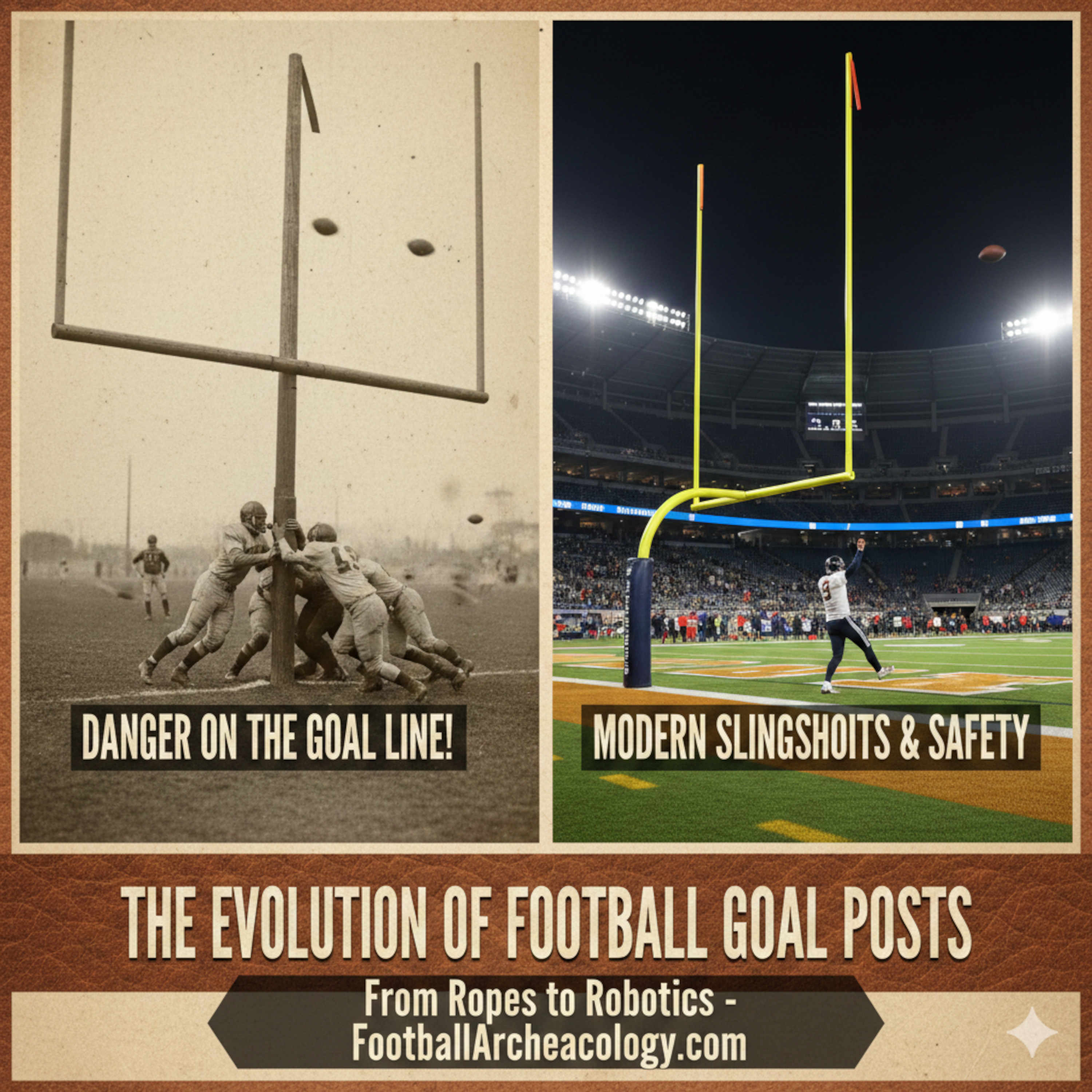
From Ropes to Goosenecks: The Surprising Evolution of Football Goal PostsIf you’ve ever watched a crowd storm the field to topple a goal post after a massive upset, you know these yellow structures are more than just sports equipment—they are symbols of victory. But the goal posts we see today in the NFL and NCAA are a far cry from the "cheesy, beat-up scrap lumber" used in the early days of the gridiron.Recently, Darin Hayes sat down with Timothy B. Brown of Football Archaeology to tear down the history of these iconic structures. From the cow pastures of the 1800s to the high-tech "slingshots" of today, here is how the goal post evolved.The discussion stems from Tim's recent Tidbit titled: A History of Goal Posts.1. The "Badminton" Era: Ropes and StringsIn the very earliest days of American football—derived from rugby and soccer—the setup was incredibly primitive. Instead of the rigid crossbars we see now, teams would often just erect two wooden posts and stretch a string or rope between them, roughly 10 feet off the ground.As Tim Brown noted, the rules were simple but familiar: "If you kicked the ball under that rope, it was soccer; if you kicked it over, it was rugby."2. The Danger on the Goal LineFor decades, goal posts were the classic "H-style" and were planted directly on the goal line. While this made sense for scoring, it created a massive safety hazard. Imagine a fullback sprinting for a touchdown, only to be stopped not by a linebacker, but by a 4x4 wooden beam.The Harvard-Yale Incident:In 1899, a Harvard player was famously stopped short of a touchdown because Yale defenders literally braced themselves against the goal post to hold the line.The Obstacle Course:A few years later, another Harvard runner knocked himself out by running head-first into the post before anyone even tackled him.3. The "Safety" Goal Post and the $50 PatentIn the early 1900s, an innovator named Edward Manley patented a "safety goal post." His design moved the heavy support posts 3 to 5 yards behind the goal line, using braces to suspend the crossbar over the actual line.While it was a brilliant idea for player safety, it didn't catch on immediately for one simple reason: Money. Manley charged $50 for every installation—a small fortune in 1900—leading many schools to stick with their dangerous (but free) wooden H-posts.4. Moving the Posts: Goal Line vs. End LineThe location of the goal post has hopped back and forth throughout history, usually to balance the difficulty of kicking:1927:College football moved the posts to theend line(the back of the end zone) to get them out of the way of runners and provide better angles for kickers.1932:The NFL moved them back to thegoal lineto encourage more scoring and break a record-high streak of tie games.1974:The NFL finally moved them back to theend linefor good. With the rise of soccer-style kickers, field goals had become too easy, and the league wanted to make the game more challenging again.5. The "Gooseneck" RevolutionThe modern, single-post "slingshot" or gooseneck design we see today didn't arrive until 1966. It was dreamt up by Jim Trimble (former coach of the Philadelphia Eagles) while he was playing with a fork at breakfast!Made of aluminum, these "Tele-Goal" posts were safer, more durable, and looked much more professional than the shop-class creations of yesteryear.Fun Fact: Before standardized equipment, many high school goal posts were built by the school's shop class. Students would weld the steel and even have the home economics class sew together old mattresses to create the first "padded" posts!Dive Deeper into Football HistoryThe history of the game is hidden in the details—from the width of the uprights to the sawdust inside a tackling dummy. If you love learning about the "antiquities" of the gridiron, be sure to check out Tim Brown’s work at FootballArchaeology.com.Join us at the Pigskin Dispatch website to see even more Positive football news!Don't forget to check out and subscribe to the Pigskin Dispatch YouTube channel for additional content and the regular Football History Minute Shorts.Miss our football by the day of the year podcasts, well don't, because they can still be found at the Pigskin Dispatch website.
Embed this episode
NOW PLAYING
The Architectural History of the Goal Post in Football
No transcript for this episode yet
Similar Episodes
No similar episodes found.
Similar Podcasts
No similar podcasts found.