
EPISODE · Jul 11, 2026 · 1H 25M
The Architecture of Agility: Bicep at Scale
from M365.FM - Modern work, security, and productivity with Microsoft 365 · host Mirko Peters - Founder of m365.fm, m365.show and m365con.net
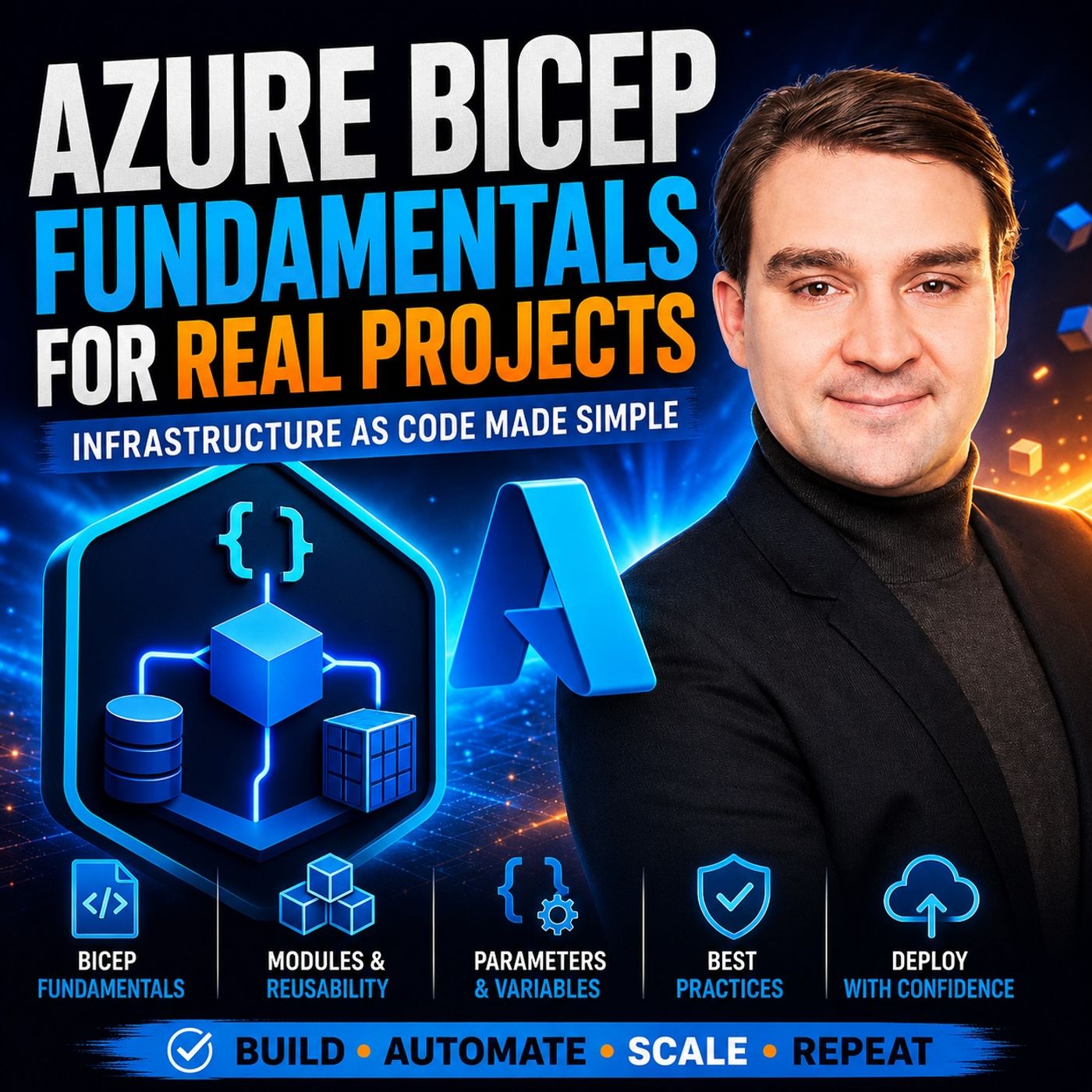
Modern cloud platforms don't fail because Azure isn't powerful enough—they fail because governance, automation, and developer experience weren't designed to scale together. In this episode of the M365 FM Podcast, host Mirko Peters explores how Azure Bicep evolves from a simple Infrastructure as Code language into the foundation of enterprise platform engineering. Rather than focusing on syntax, this deep dive examines the architectural principles that allow organizations to build Azure Landing Zones, governance models, subscription strategies, reusable modules, and self-service platforms that enable teams to innovate without sacrificing security or compliance. The episode challenges one of the biggest assumptions in enterprise IT: that tighter control automatically creates better governance. Instead, you'll discover why modern cloud platforms succeed by making the governed path the easiest path. From subscription vending and management groups to policy-as-code, FinOps, observability, and platform engineering, this episode provides a blueprint for designing Azure environments that remain agile as organizations grow.WHY LANDING ZONES ARE REALLY GOVERNANCE MODELS Azure Landing Zones are often presented as technical architectures, but they're much more than networking diagrams and subscription hierarchies. Every decision encoded in a Bicep module determines who can deploy infrastructure, who owns resources, how quickly teams can provision environments, and how governance flows across the organization. The episode explains why successful cloud platforms move away from gatekeeper governance toward enablement, replacing manual approvals with automated guardrails that empower teams while maintaining security and compliance. BUILDING FOR AGILITY, NOT CONTROL Many enterprises unintentionally create Shadow IT by making official infrastructure too slow to consume. Instead of preventing risk, excessive governance often encourages developers to work around official processes. Topics include:Subscription vendingSelf-service infrastructurePlatform engineeringDeveloper experienceShadow ITGovernance as CodeAutomationAzure Landing ZonesOrganizational agilityCloud operating modelsYou'll learn why reducing friction often improves security more effectively than adding additional approval processes.SCALING AZURE WITH REUSABLE BICEP MODULES As organizations grow, infrastructure cannot rely on copy-and-paste templates. Reusable, versioned Bicep modules become the building blocks for enterprise platforms. The discussion explores:Azure Verified Modules (AVM)Module registriesSemantic versioningInfrastructure contractsComposition patternsParameter designShared variablesResource modulesSolution modulesVersion controlRather than maintaining hundreds of custom templates, organizations can publish standardized modules that continuously evolve while maintaining compatibility across teams.MANAGEMENT GROUPS, POLICY & PLATFORM GOVERNANCE Governance begins long before a resource is deployed. This episode explains how Management Groups, Azure Policy, RBAC, and Policy Initiatives combine to create scalable governance models that automatically enforce organizational standards. Instead of treating policies as deployment blockers, you'll discover how audit-first strategies, policy-as-code, and automated compliance enable organizations to maintain security without slowing down innovation. PLATFORM ENGINEERING AND THE GOLDEN PATH The role of central IT is changing. Rather than acting as infrastructure gatekeepers, platform teams increasingly operate as internal product teams. The episode explores how self-service infrastructure, golden paths, reusable templates, and developer-first experiences allow application teams to provision secure Azure environments within minutes instead of waiting weeks for approvals. Platform engineering shifts the focus from enforcing permissions to enabling productivity. FINOPS, OBSERVABILITY & COST GOVERNANCE Enterprise cloud success isn't measured solely by uptime. Organizations must also understand infrastructure costs, policy compliance, operational health, and governance effectiveness. Topics include:FinOpsCost governanceAzure MonitorLog AnalyticsDiagnostic SettingsObservabilityTagging strategiesChargebackShowbackContinuous complianceYou'll learn how telemetry, policy enforcement, and financial accountability combine to create cloud environments that remain sustainable as Azure adoption grows.WHO SHOULD LISTEN? This episode is ideal for:Azure ArchitectsPlatform EngineersDevOps EngineersCloud EngineersEnterprise ArchitectsInfrastructure EngineersAzure AdministratorsSecurity ArchitectsIT Decision MakersMicrosoft MVPsAnyone designing enterprise Azure platformsWhether you're building Azure Landing Zones, implementing Azure Bicep, creating reusable Infrastructure as Code modules, modernizing governance, or adopting Platform Engineering, this episode provides practical guidance for building cloud platforms that balance agility, security, automation, and scalability. If you want to understand how successful enterprises use Azure Bicep not just as a deployment language, but as the foundation for modern cloud governance and platform engineering, this episode offers a comprehensive roadmap for designing Azure environments that can scale with both technology and business growth.Become a supporter of this podcast: https://www.spreaker.com/podcast/m365-fm-modern-work-security-and-productivity-with-microsoft-365--6704921/support.
Embed this episode
NOW PLAYING
The Architecture of Agility: Bicep at Scale
No transcript for this episode yet
Similar Episodes
No similar episodes found.
Similar Podcasts
No similar podcasts found.