
EPISODE · Jun 3, 2026 · 1H 8M
The Architecture of AI Movies: Copilot, Seedance & Higgsfield
from M365.FM - Modern work, security, and productivity with Microsoft 365 · host Mirko Peters - Founder of m365.fm, m365.show and m365con.net
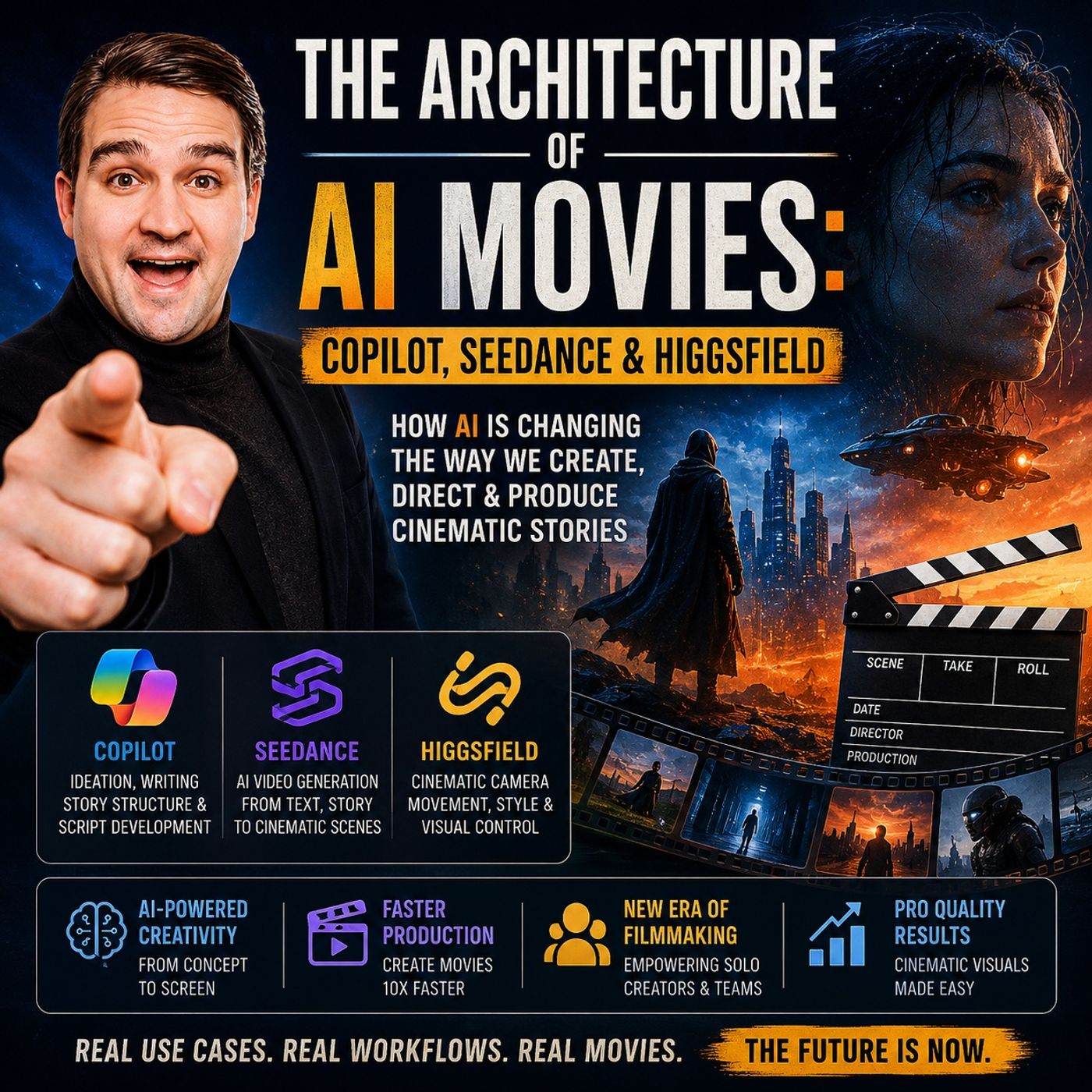
AI video generation is moving far beyond simple prompts.Most creators approach AI filmmaking by treating every tool as an isolated experience. They generate images in one platform, create video in another, and hope everything magically works together. The result is familiar to anyone experimenting with AI movies today: characters change appearance between shots, motion becomes distorted, scenes lose continuity, and production costs spiral through endless regeneration cycles.In this episode of M365 FM, Mirko Peters explores why successful AI filmmaking isn't about prompts—it's about architecture.Discover how Microsoft Copilot, Seedance 2.0, and Higgsfield each play a distinct role in a modern AI movie production pipeline. Instead of relying on random generations, learn how to orchestrate character consistency, camera motion, scene continuity, and governance through a structured workflow that produces predictable and repeatable results.WHY MOST AI MOVIES FAILThe majority of AI-generated videos suffer from the same fundamental problem: inconsistency.A character created in one scene suddenly looks different in the next. Facial features drift, clothing changes, backgrounds morph, and camera movement introduces visual artifacts that break immersion. Most creators blame the models themselves, but the real issue is usually a lack of orchestration.This episode examines why character drift happens, how motion complexity impacts render quality, and why successful AI productions require more than just clever prompting. You'll learn how professional AI creators think about reference packs, continuity management, and system design rather than relying on trial and error generation.THE ROLE OF COPILOT AS AN AI DIRECTORMost people use Copilot as a writing assistant.What if it became your director instead?Learn how Copilot can orchestrate an entire AI production pipeline by generating parametric shot lists, managing character definitions, enforcing continuity standards, and grounding every scene in structured project assets.Rather than creating random prompts, Copilot becomes the orchestration layer that ensures every tool in the workflow follows the same production blueprint.Topics include:Parametric shot planningCharacter anchor documentationAI production governanceMetadata-driven filmmakingSEEDANCE AND CHARACTER CONSISTENCYCharacter consistency remains one of the biggest challenges in AI filmmaking.The episode explores how Seedance 2.0 approaches identity preservation through Character References (Cref), role-based image design, reference packs, and prompt binding strategies. Learn why most character failures occur long before rendering starts and how structured reference management dramatically improves results.Discover practical techniques for creating identity anchors, managing character drift, and maintaining visual consistency across multiple scenes and production stages.Key concepts include:Character Reference (Cref)Identity AnchorsMaster Reference PacksCharacter Drift PreventionHIGGSFIELD AND CINEMATIC MOTIONGreat visuals mean nothing without believable movement.Higgsfield introduces advanced camera controls and motion systems that enable creators to generate cinematic movement using techniques familiar to filmmakers and directors of photography.The discussion explores camera presets, motion references, cinematic language, motion complexity thresholds, and the hidden technical limitations that influence render quality.You'll learn why more motion doesn't always create better results and how understanding motion thresholds can dramatically reduce failed generations and wasted credits.Topics covered include:Motion Control WorkflowsCamera PresetsDolly, Arc, Orbit, and Crane MovementsMotion Reference MappingCinematic Camera LanguageTHE THREE-TOOL AI MOVIE WORKFLOWThe real breakthrough happens when these tools work together.This episode introduces a practical architecture that combines Copilot, Seedance, and Higgsfield into a repeatable production system. Copilot manages planning and orchestration, Seedance handles character identity and visual consistency, and Higgsfield controls motion and cinematic execution.Instead of treating AI generation as a creative guessing game, the workflow creates a structured process that can scale from a single scene to a full production.Learn how to:Build AI movie production pipelinesCreate repeatable generation workflowsScale from single shots to full narrativesReduce regeneration cycles and production costsGOVERNANCE FOR AI FILMMAKINGProfessional production requires more than creativity.As AI filmmaking becomes increasingly sophisticated, governance, documentation, version control, and quality management become essential parts of the workflow.Mirko explores concepts such as Production Bibles, Character Documents, Configuration Tracking, Review Gates, Audit Trails, and Quality Standards that help teams maintain consistency across large-scale AI productions.These practices transform AI filmmaking from experimentation into a repeatable business process.THE FUTURE OF AI CINEMAWe are moving away from prompt engineering and toward production architecture.The next generation of creators won't succeed because they write better prompts. They'll succeed because they understand systems, workflows, governance, and orchestration. AI filmmaking is becoming less about generating individual clips and more about coordinating entire creative pipelines.Whether you're creating social content, marketing videos, educational content, corporate productions, or narrative films, understanding how AI tools work together will become a critical competitive advantage.IN THIS EPISODEWhy AI movies failCharacter drift and identity consistencyCopilot as a production orchestratorSeedance 2.0 character workflowsHiggsfield motion systemsParametric prompt frameworksReference pack managementMotion artifact thresholdsAI production governanceMulti-scene continuityQuality assurance frameworksAI filmmaking economicsProduction planning and orchestrationThe future of AI-generated cinemaWHO SHOULD LISTEN?AI CreatorsFilmmakersContent CreatorsMarketing TeamsVideo ProducersCreative DirectorsMicrosoft Copilot UsersPrompt EngineersDigital StorytellersAI EnthusiastsProduction TeamsInnovation LeadersKEY TAKEAWAYSAI movies are built through orchestration, not promptsCharacter consistency requires structured reference managementCopilot can function as a production directorMotion complexity directly impacts output qualityGovernance is essential for scalable AI productionRepeatable workflows outperform creative guessworkSuccessful AI filmmaking is becoming an architectural disciplineThe future of AI filmmaking belongs to creators who understand systems, workflows, and orchestration. The question is no longer which AI video model is best. The question is how well you can connect them together into a production pipeline that consistently delivers professional results.Become a supporter of this podcast: https://www.spreaker.com/podcast/m365-fm-modern-work-security-and-productivity-with-microsoft-365--6704921/support.
Embed this episode
What this episode covers
AI video generation is moving far beyond simple prompts.Most creators approach AI filmmaking by treating every tool as an isolated experience. They generate images in one platform, create video in another, and hope everything magically works together. The result is familiar to anyone experimenting with AI movies today: characters change appearance between shots, motion becomes distorted, scenes lose continuity, and production costs spiral through endless regeneration cycles.In this episode of M365 FM, Mirko Peters explores why successful AI filmmaking isn't about prompts—it's about architecture.Discover how Microsoft Copilot, Seedance 2.0, and Higgsfield each play a distinct role in a modern AI movie production pipeline. Instead of relying on random generations, learn how to orchestrate character consistency, camera motion, scene continuity, and governance through a structured workflow that produces predictable and repeatable results. WHY MOST AI MOVIES FAIL The majority of AI-generated videos suffer from the same fundamental problem: inconsistency.A character created in one scene suddenly looks different in the next. Facial features drift, clothing changes, backgrounds morph, and camera movement introduces visual artifacts that break immersion. Most creators blame the models themselves, but the real issue is usually a lack of orchestration.This episode examines why character drift happens, how motion complexity impacts render quality, and why successful AI productions require more than just clever prompting. You'll learn how professional AI creators think about reference packs, continuity management, and system design rather than relying on trial and error generation. THE ROLE OF COPILOT AS AN AI DIRECTOR Most people use Copilot as a writing assistant.What if it became your director instead?Learn how Copilot can orchestrate an entire AI production pipeline by generating parametric shot lists, managing character definitions, enforcing continuity standards, and grounding every scene in structured project assets.Rather than creating random prompts, Copilot becomes the orchestration layer that ensures every tool in the workflow follows the same production blueprint.Topics include: Parametric shot planning Character anchor documentation AI production governance Metadata-driven filmmaking SEEDANCE AND CHARACTER CONSISTENCY Character consistency remains one of the biggest challenges in AI filmmaking.The episode explores how Seedance 2.0 approaches identity preservation through Character References (Cref), role-based image design, reference packs, and prompt binding strategies. Learn why most character failures occur long before rendering starts and how structured reference management dramatically improves results.Discover practical techniques for creating identity anchors, managing character drift, and maintaining visual consistency across multiple scenes and production stages.Key concepts include: Character Reference (Cref) Identity Anchors Master Reference Packs Character Drift Prevention HIGGSFIELD AND CINEMATIC MOTION Great visuals mean nothing without believable movement.Higgsfield introduces advanced camera controls and motion systems that enable creators to generate cinematic movement using techniques familiar to filmmakers and directors of photography.The discussion explores camera presets, motion references, cinematic language, motion complexity thresholds, and the hidden technical limitations that influence render quality.You'll learn why more motion doesn't always create better results and how understanding motion thresholds can dramatically reduce failed generations and wasted credits.Topics covered include: Motion Control Workflows Camera Presets Dolly, Arc, Orbit, and Crane Movements Motion...
NOW PLAYING
The Architecture of AI Movies: Copilot, Seedance & Higgsfield
No transcript for this episode yet
Similar Episodes
No similar episodes found.
Similar Podcasts
No similar podcasts found.