
EPISODE · Jun 27, 2022 · 13 MIN
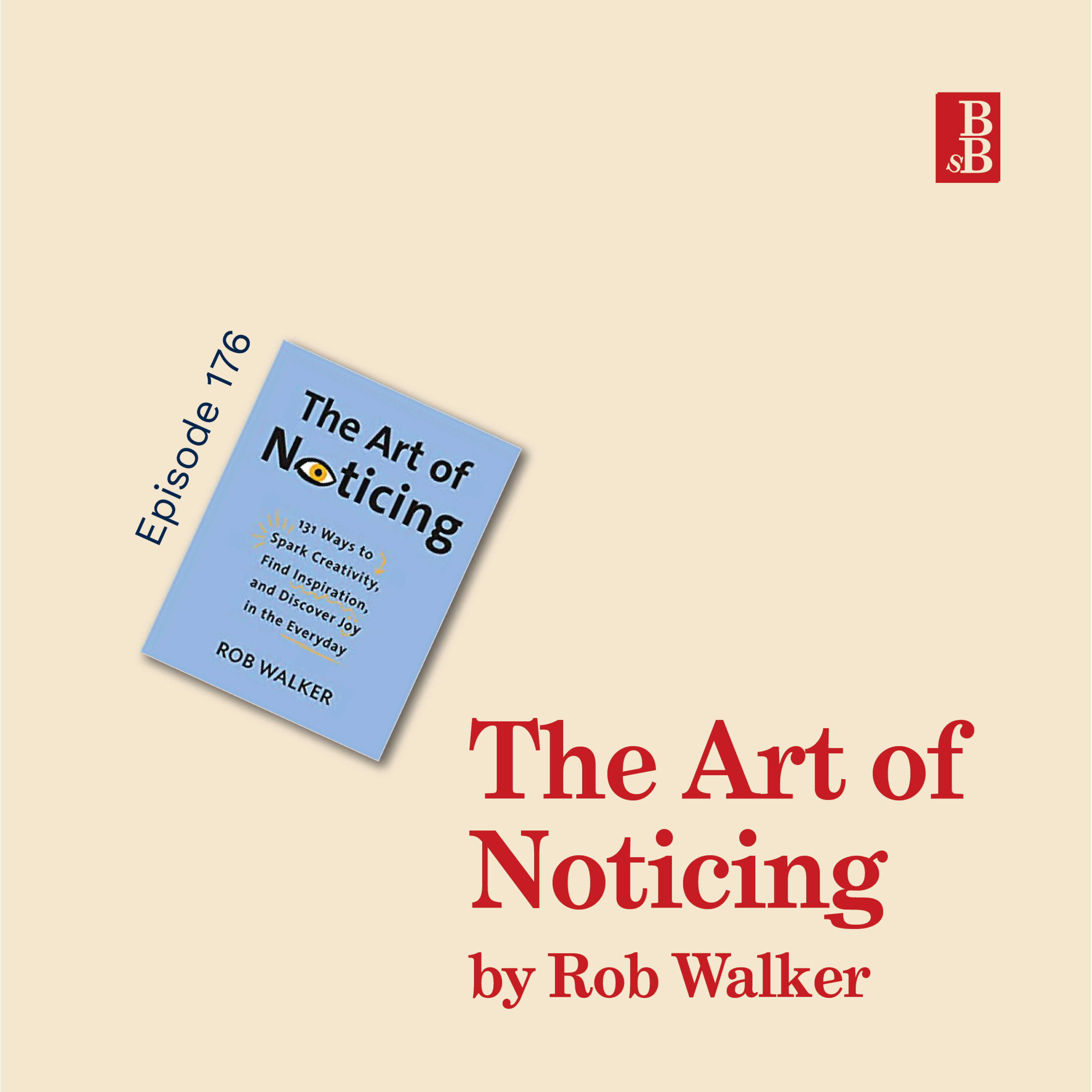
The Art of Noticing by Rob Walker: why curiosity is more important than productivity
from Steph's Business Bookshelf Podcast · host Steph Clarke
About the book A thought-provoking, gorgeously illustrated gift book that will spark your creativity and help you rediscover your passion with “simple, low-stakes activities [that] can open up the world.” — The New York Times Welcome to the era of white noise. Our lives are in constant tether to phones, to email, and to social media. In this age of distraction, the ability to experience and be present is often lost: to think and to see and to listen. Enter Rob Walker’s The Art of Noticing — an inspiring volume that will help you see the world anew. Through a series of simple and playful exercises — 131 of them — Walker maps ways for you to become a clearer thinker, a better listener, a more creative workplace colleague, and finally, to rediscover what really matters to you. Source: https://www.penguinrandomhouse.com/books/570033/the-art-of-noticing-by-rob-walker/ About the author ROB WALKER is a columnist and contributes to a wide of publications including The New York Times, The Atlantic, NewYorker.com, The Boston Globe, and Bloomberg Businessweek. He is the author of Buying In and Significant Objects (coedited with Joshua Glenn) and on the faculty of the Products of Design MFA program at the School of Visual Arts. He lives in New Orleans. Source: https://www.penguinrandomhouse.com/authors/59959/rob-walker/ Big idea #1 — Less productivity, more curiosity The answer to having lots to do and endless lists is not to add more. “A hyper effective schedule designed to maximize productivity is in fact, more likely to distract you from what’s important than help you discover it.” We’re doing so much and we’ve all experienced the situation where you have lots to do but get to the end of the day and feel like you’ve achieved nothing meaningful. Instead, Rob suggests dedicating just one hour per week to consciously directing your attention. Stop trying to be more productive and instead try to be more curious (or embrace “joyous exploration”). The more we do, the more we push against this attention deficit that we are all facing at the moment. Given the complexity of what’s going on in the world, and some of the terrible things that are happening, we really need the best of our attention to solve these problems. We need to push against this attention deficit and our state of peak destruction, and in order to do that we need to practice paying attention, which means practicing noticing. Attention makes us human, let’s get it back through noticing. Big idea #2 — The types of noticing The book is split into five types of noticing. In these five sections there’s different activities with different levels of difficulty that you can do in order to practice noticing. Those five sections are; Looking: eg lifting up your eyes and spotting something new every day, noticing colours, spending time really seeing something (eg spending three hours looking at one piece in a gallery*), or looking for something in particular. Sensing: eg making a sensory map, hunting for scents. Going places: eg looking for imaginary clues, going somewhere new, taking a different route, or taking the hardest route to get somewhere, make up games to play to find new things in the supermarket. Connecting with others: eg follow strangers (don’t be weird about it) and let them lead you to somewhere different, interview other people, make up backstories for strangers you see. Being alone: eg make an inventory/list of stuff (things you didn’t buy / things you touched today), study a rock, get distracted, go on a date with yourself. *there’s a whole section in ‘looking’ chapter about galleries that’s well worth a flick through if you have a gallery visit planned. Big idea #3 — Attention is creativity It’s seeing things well that brings your work or your art to the next level. This is absolutely not only relevant to “creatives” or “artists”, it’s the skill that allows you to transcend the boring and the surface level things and instead see connections that others may overlook. The art of noticing allows sports coaches or scientists to see data links that others might miss, it allows teachers, leaders, or doctors to see subtle clues that might be important, and allows investors to pay attention to undervalued companies. This is the thing that could make the difference between you and others in your field, in your industry, and/or your company and allows you to do what you do really well. “The difference between looking and seeing, between hearing and listening, between accepting what the world presents you and noticing what matters to you.” The art of noticing is the importance of bringing these things together and paying attention to the right stuff at the right time, and making the difference between missing something vitally important, and being able to make the most of it. Support my book habit: https://www.buymeacoffee.com/stephsbookshelfSee omnystudio.com/listener for privacy information.
Embed this episode
NOW PLAYING
The Art of Noticing by Rob Walker: why curiosity is more important than productivity
No transcript for this episode yet
Similar Episodes
No similar episodes found.
Similar Podcasts
No similar podcasts found.