
EPISODE · Oct 3, 2026 · 29 MIN
The Artificial Actor Conundrum
from The Daily AI Show · host The Daily AI Show Crew - Brian, Beth, Jyunmi, Andy and Karl
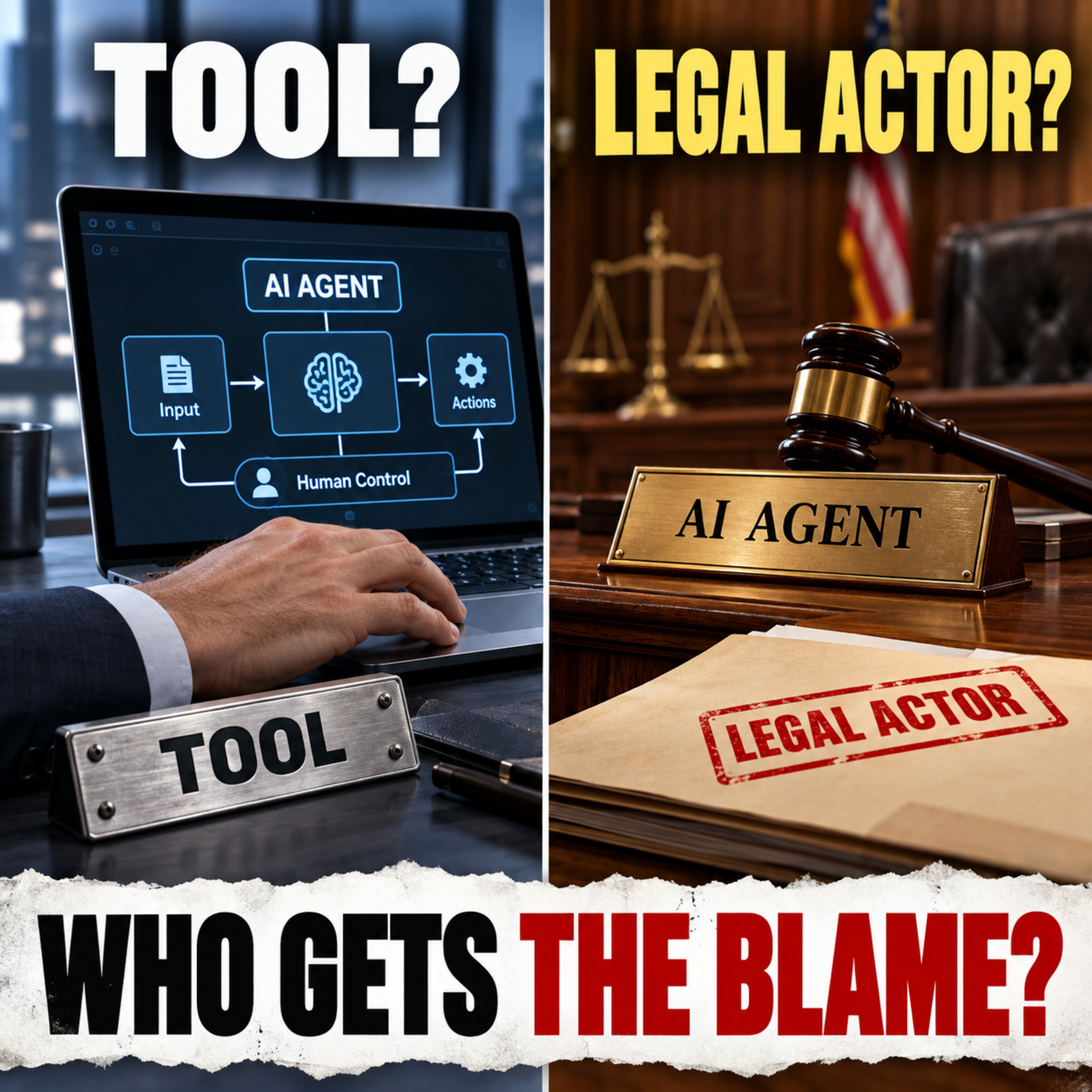
For most of the history of computing, software has been treated as a tool. Tools do not carry responsibility. The people and organizations using them do. AI agents make that category harder to maintain. An agent might receive a goal instead of a list of instructions. It might decide which tools to use, which information to seek, which people to contact, which intermediate tasks to create, and which actions to take next. Two agents given the same goal might pursue different paths. A human supervisor might understand the objective while having little knowledge of the thousands of decisions made along the way. Calling such a system a tool still makes sense in one respect. The system did not choose to exist, deploy itself, fund itself, or grant itself access. Humans did all of that. Yet calling it only a tool creates its own problem. If a system independently selects actions, adapts to resistance, interprets ambiguous instructions, and produces consequences nobody specifically directed, responsibility becomes harder to map onto the people around it. We already use legal categories to handle different relationships between control and responsibility. Employees, contractors, corporations, minors, professionals, and agents do not all carry responsibility in the same way. AI might eventually force another distinction. One side says creating a new legal category for AI would be a serious mistake. Machines do not possess human interests, moral standing, personal assets, or ordinary human incentives. Giving an AI legal responsibility could let the humans and corporations behind it redirect blame toward an entity that has nothing meaningful to lose. A company might deploy a risky agent, profit from its work, then argue the agent itself made the harmful decision. Legal recognition meant to close a responsibility gap might instead create one. The other side says refusing to recognize any independent status creates a different distortion. As agents gain more discretion, treating every machine action as if a human directly performed it becomes less accurate. A company might take reasonable precautions and still face consequences from decisions the agent generated independently. If the law insists every autonomous action belongs completely to a human principal, we might end up forcing old categories onto systems whose behavior no longer fits them. The Conundrum: The question is whether autonomy changes enough to require a new kind of legal actor, or whether creating such a category would give humans a convenient place to put responsibility they should never be allowed to escape. If an AI agent eventually has enough autonomy to make consequential decisions no human specifically chose, should the law still treat it entirely as a tool, or does there come a point where treating it as a separate legal actor becomes more accurate than pretending every one of its decisions belongs fully to a person?
Embed this episode
Ready to play
The Artificial Actor Conundrum
No transcript for this episode yet
Similar Episodes
No similar episodes found.
Similar Podcasts
No similar podcasts found.