
EPISODE · Aug 2, 2026 · 44 MIN
The Attachment Tax: What Boysen Hodgson Learned About Parenting Neurodivergent Kids
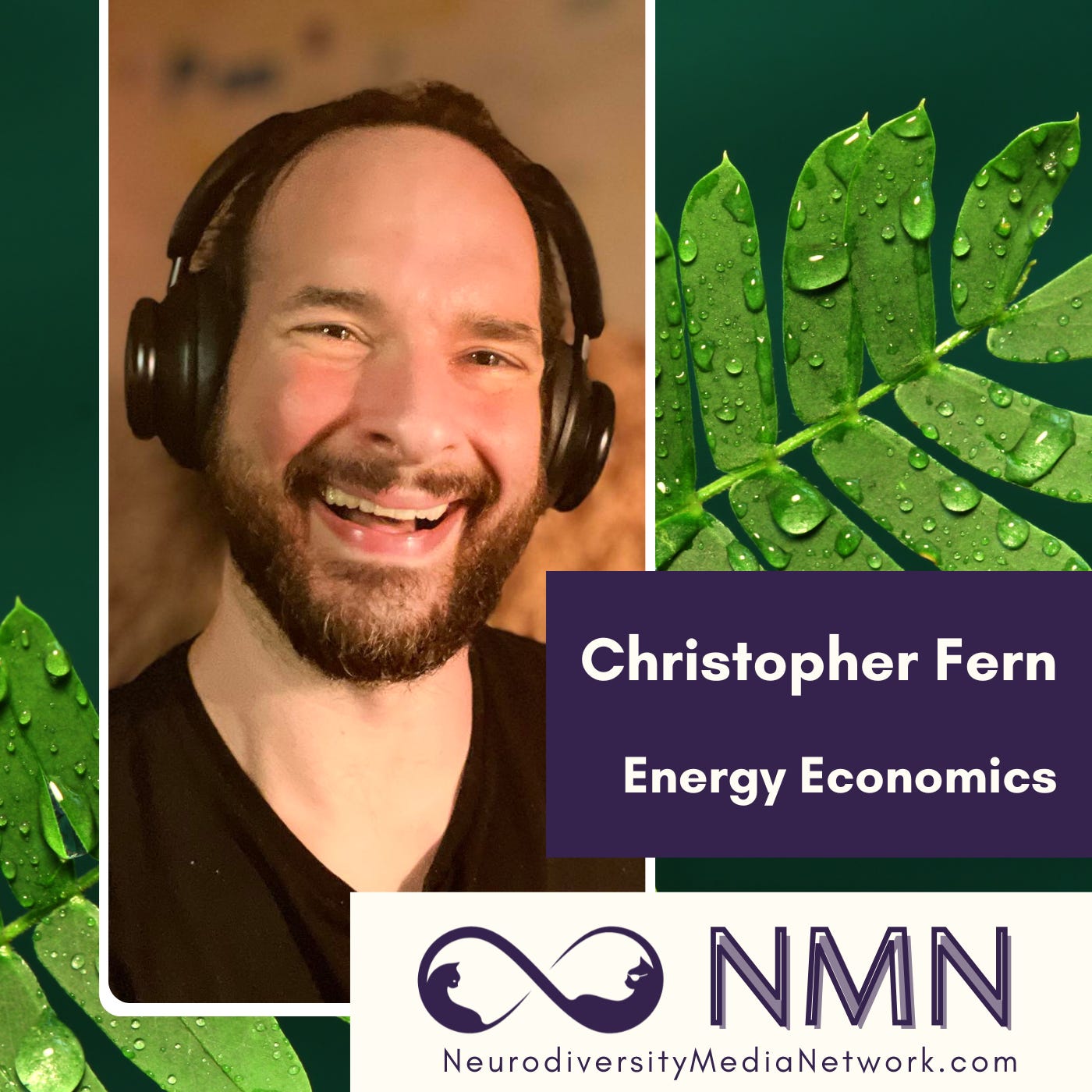
from Energy Economics · host Briar Harvey
Boysen Hodgson spent twenty years in men’s emotional development work before he became a father. When he and his wife Kendra took in two siblings through foster-to-adopt, they’d already done intensive parenting classes and a separate class on parenting kids with trauma. What none of it fully prepared them for was the daily, physical work of raising two neurodivergent kids in a world built for neither of them. On Energy Economics for Parents, he talked with Chris about what that work actually costs—and who ends up paying.The diagnosis is not the childFor years, the labels that got attached to Boysen’s kids were “defiant” and “problem kid.” One child carried a diagnosis long before anyone named it, because behavior got attributed to trauma and PTSD before anyone looked at the kid brain and asked what was really happening. Boysen’s clearest line is a warning about the fix, not just the delay: during the years a kid is forming an identity, turning a diagnosis into the child is one of the most damaging things a family or a school can do. Understanding the pattern is useful. Letting it define the person is not. He frames the whole thing as one sentence with two endings—”I learn differently, so I do it this way,” or “I can’t because I.” One opens a door. The other locks it.Where the energy actually goesThe show’s frame is energy, and Boysen names the tax directly. When he needs the den cleaned now, his way, that urgency belongs to him—and pushing it across the table lands on his kids as a wound. So in his house, “clean up the den” isn’t an order. It’s a bid for a conversation, a negotiation with if-thens and natural consequences instead of punishment. Bedtime ran over an hour for years, all of it nervous-system calming. And when his own tolerance for the songs on repeat and the repetitive patterns runs out, he taps his partner in and steps away on purpose, rather than amping up the stress in the room. He’s blunt that Kendra is better at the letting-go than he is, and that getting a partner who reminds you is part of the method, not a failure of it.The part that’s on the parentPublic school was the hardest stretch of his kids’ lives—Boysen draws a direct line between it and the crisis interventions the family had to undertake, while being careful to separate good, under-resourced counselors from the “why can’t you fit the path” mindset that did the damage. But the sharpest turn in the conversation is inward. Every skill he’s trying to practice with his kids, he says, he has to practice with himself, because the self-judgment a parent won’t own gets projected onto the kids. He ties the cultural default of self-hatred to hustle and productivity pressure, and points at self-compassion as the replacement. He closes with an acronym from his friend Jim Catona—RESPECT: Remember Everyone Suffers Painful Experiences, Communicate Tenderly. It’s a decent summary of the whole hour. This is a public episode. If you'd like to discuss this with other subscribers or get access to bonus episodes, visit members.neurodiversitymedianetwork.com/subscribe
Embed this episode
Ready to play
The Attachment Tax: What Boysen Hodgson Learned About Parenting Neurodivergent Kids
No transcript for this episode yet
Similar Episodes
No similar episodes found.
Similar Podcasts
No similar podcasts found.