
EPISODE · Jan 21, 2026 · 26 MIN
The Aurora: Science, Myth, and Mastery 🌌
from The World Between Us · host Norse Studio
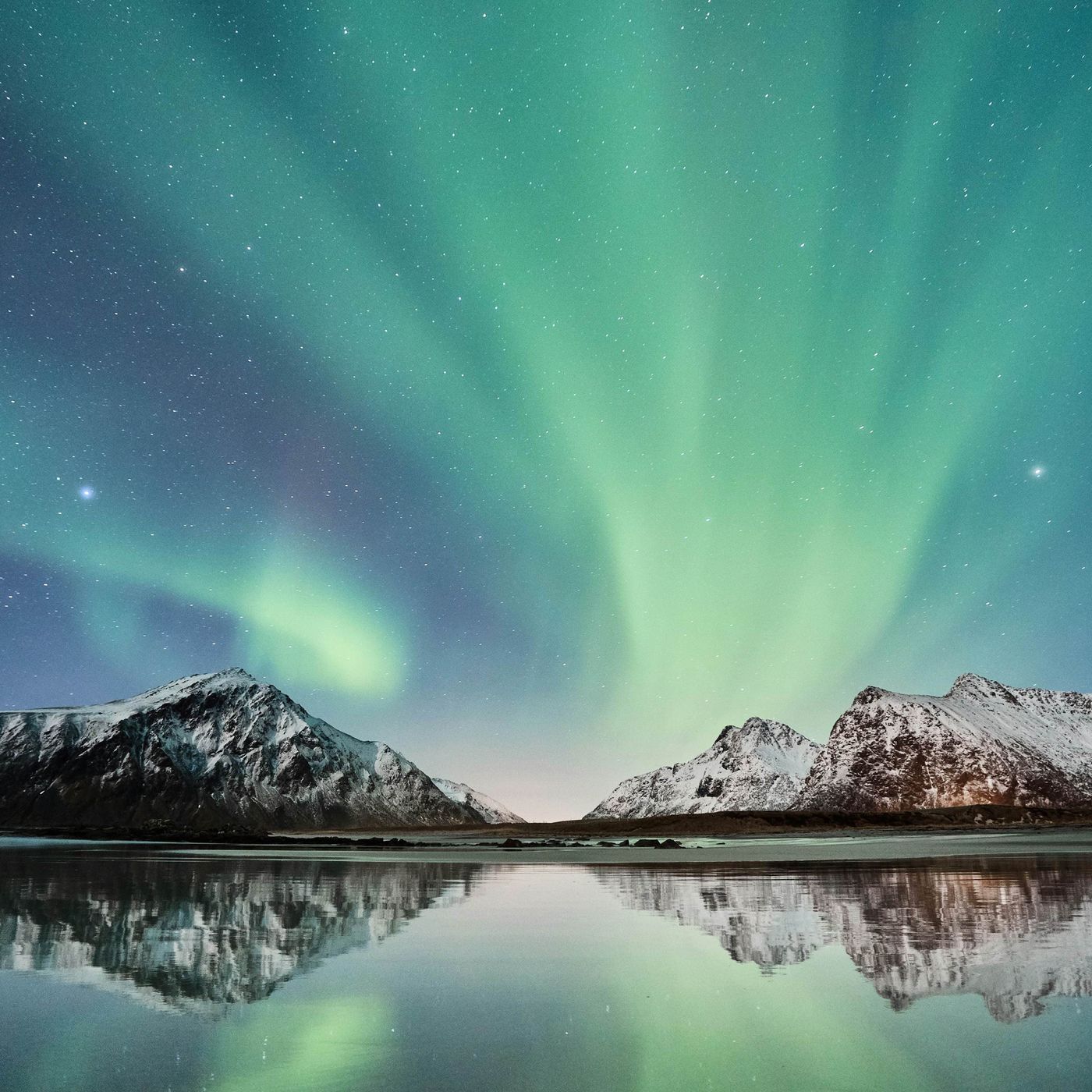
The Northern Lights, or aurora borealis, is a natural light display caused by electrically charged particles from the sun interacting with Earth’s magnetic field and atmosphere. This phenomenon typically occurs at high latitudes, such as Alaska, northern Canada, and Scandinavia, and is most visible during the dark nights of fall and winter.The Science Behind the GlowThe aurora is triggered by solar activity, specifically coronal mass ejections and the solar wind. Scientific research has shown that powerful magnetic waves, known as Alfvén waves, accelerate electrons as they travel toward Earth. These electrons "surf" on the waves and eventually collide with oxygen and nitrogen molecules in the upper atmosphere, between 20 and 200 miles above the surface. These collisions release energy in the form of shimmering light.The resulting colors vary by altitude and the type of atom involved:• Green: The most common color, often appearing as horizon-level blobs or streaks.• Violet and Red: These appear during more intense solar storms, sometimes forming spectacular "coronal" displays that look like inverted crowns.Measurement and VisibilityGeomagnetic activity is measured using the Kp-index, a scale from 0 to 9:• Kp 0–2: Low activity, the lights are mostly confined to regions near the Arctic Circle.• Kp 5: Indicates a minor geomagnetic storm; the lights may become visible in southern Scandinavia and northern Scotland.• Kp 7–9: Represents strong to extreme storms. At these levels, the aurora can be seen much further south, potentially reaching the northern United States, England, and central France.Cultural Myths and LegendsThroughout history, various cultures have created mystical stories to explain the lights:• Inuit Groups: Some believed the lights were spirits of the dead playing a game with a walrus skull. In Point Barrow, Alaska, the aurora was feared as evil, and people carried knives for protection.• Norse Mythology: The lights were thought to be the armor and spears of the Valkyries, warrior women who led fallen soldiers to Valhalla.• Finland: A legend tells of a mystical fox whose bushy tail sprayed snow and sent sparks into the sky as it ran through the mountains.• Scotland: Legend refers to the lights as "Merry Dancers" engaged in a bloody battle.Technological RisksWhile beautiful, the aurora is a sign of space weather that can adversely affect modern technology. Large solar events create Geomagnetically Induced Currents (GIC). These currents can enter the power grid through grounded transformers, leading to:• Grid Failure: Intense GICs can cause transformer saturation and overheating. A notable example is the 1989 Hydro Québec system collapse.• Communication Interference: Solar storms can disrupt high-frequency radio signals and satellite navigation systems, which are critical for aviation and global communication.Tips for Observation and PhotographyTo experience the aurora, you must find a location away from light pollution with a clear view of the northern horizon.For those looking to capture the display:• Equipment: Use a tripod and a fast wide-angle lens (f/2.8 or f/3.5).• Settings: Switch to manual focus set at infinity. Start with an ISO of 1600 and a shutter speed between 8 and 10 seconds.• Post-Processing: Digital sensors often capture colors and details that the human eye cannot see, so a RAW file format is recommended for the best results.Are you planning a trip to see the lights, or are you interested in a specific aspect of the science behind them? I can provide more details on prediction models like Aurorasaurus or the specific impacts of solar storms on infrastructure if you would like to go deeper into those topics. Hosted on Acast. See acast.com/privacy for more information.Become a supporter of this podcast: https://www.spreaker.com/podcast/the-world-between-us--6886561/support.
Embed this episode
NOW PLAYING
The Aurora: Science, Myth, and Mastery 🌌
No transcript for this episode yet
Similar Episodes
No similar episodes found.
Similar Podcasts
No similar podcasts found.