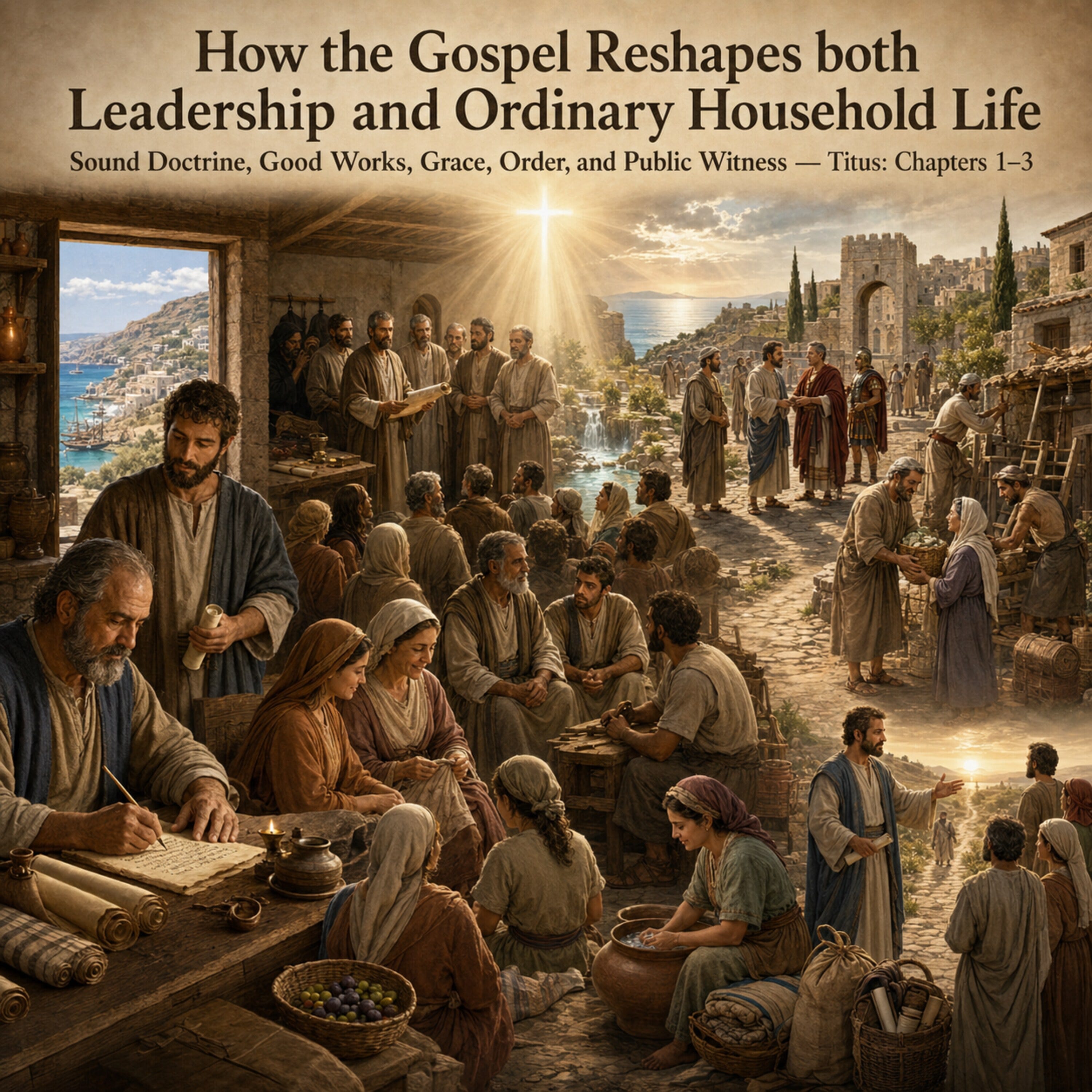
The Bible - NT - 17 - Titus, Chapters 1-3
from Wisdom for the Present: Eastern Wisdom Literature Hosted by Kanu Emeruwa
In a world obsessed with structural precision and organizational charts, the Book of Titus offers a radical counter-narrative: the true foundation of any community is the character of its people. This episode of "Wisdom for the Present" dives deep into the Apostle Paul's letter to Titus, exploring how abstract belief must translate into concrete behavior. Set against the backdrop of first-century Crete—a geopolitical and moral disaster zone—Paul's instructions to Titus are a survival guide for building a resilient, countercultural community. Crete, known for its piracy and deceit, was a challenging environment for Titus, tasked with establishing ethical leadership amidst chaos. Paul’s solution? Character over charisma. He prescribes a leadership profile that prioritizes internal virtues over external accolades, challenging modern assumptions about what makes a leader. The episode unpacks the cultural and historical context of Crete, revealing a society notorious for its deceit and aggression. Yet, the real crisis lay within the early Christian communities, where internal corruption threatened the movement's integrity. Paul’s antidote to this chaos is a focus on character, urging Titus to appoint leaders who embody virtues like self-control, hospitality, and fairness. As we journey through the text, we confront the difficult passages on gender roles and slavery, using historical context to discern timeless wisdom from ancient social structures. The episode explores how the early church navigated the oppressive Roman system, planting seeds of equality that would eventually dismantle the philosophical justifications for slavery. Paul’s letter also offers a transformative view of grace as the engine of behavioral change. Unlike the transactional nature of ancient religious systems, the gospel in Titus presents grace as the starting point, not the reward. This grace empowers believers to live lives of integrity, impacting both private and public spheres. In a hyperpolarized world, Paul’s call for civic engagement marked by gentleness and humility offers a disorienting yet necessary alternative. The episode challenges listeners to practice the "empathy pause," recalling their own past flaws to foster gentler interactions. In This Episode * The illusion of control in modern organizational structures versus the messy reality of human character * Crete’s notorious reputation and the challenge it posed for Titus * Paul's radical focus on character over charisma in leadership * Navigating the cultural obstacles of ancient gender roles and slavery * Grace as the transformative engine for behavioral change * The empathy principle: using past personal flaws to foster gentleness * The balance between engaging with opponents and setting boundaries with division makers * The enduring wisdom of integrity across all spheres of life Practical Reflection 1. Are you operating as a steward or an owner in your leadership roles? How do you handle critical feedback?2. How does your private life reflect your public values? Are you maintaining integrity across all spheres?3. When engaging with others, especially those you disagree with, can you practice the "empathy pause" to foster gentler interactions? Suggested Substack Excerpt In a world obsessed with structural precision, the Book of Titus offers a radical counter-narrative: the true foundation of any community is the character of its people. This episode explores Paul's focus on character over charisma, grace as the engine of change, and the transformative power of empathy in civic engagement. AI Disclosure This episode was created using Google NotebookLM Audio Overview, based on human-curated source material, structured guidance, and editorial review. AI is used as a tool for clarity and delivery, not as a replacement for thoughtful study or engagement with the original texts. Copyright © 2026 Wisdom for the Present / Kamashcu Production Studios. All rights reserved. This is a public episode. If you would like to discuss this with other subscribers or get access to bonus episodes, visit wisdomforthepresent.substack.com
Embed this episode
No transcript yet.