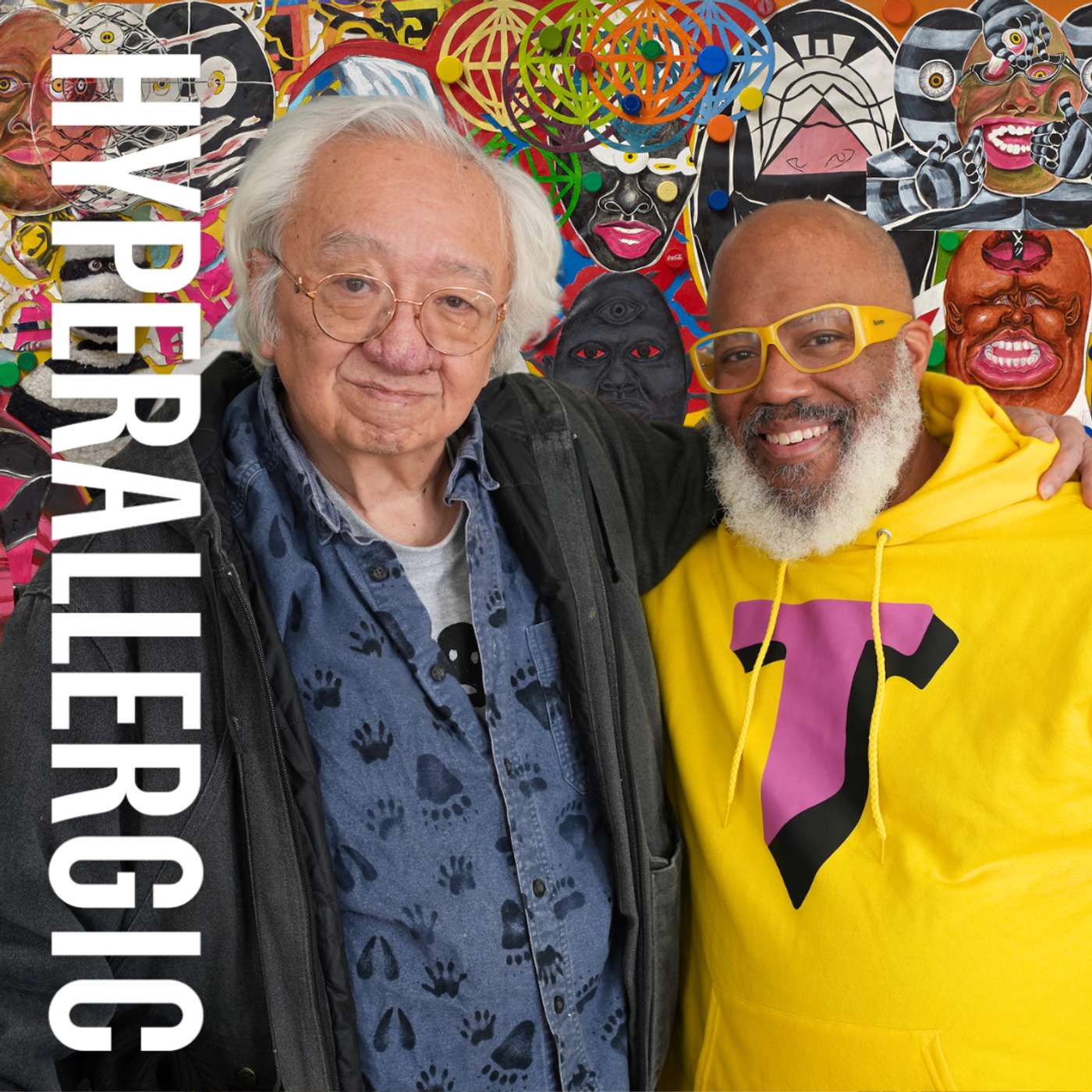
The Boys in the (Klan) Hood: Trenton Doyle Hancock Confronts Philip Guston’s Legacy episode artwork

EPISODE · Feb 25, 2025 · 1H 4M

The Boys in the (Klan) Hood: Trenton Doyle Hancock Confronts Philip Guston’s Legacy

from Hyperallergic · host Hyperallergic

Philip Guston, an Ashkenazi Jew, and Trenton Doyle Hancock, a Black artist with a strict Southern Christian upbringing, came from vastly different backgrounds. But a current show at the Jewish Museum in Manhattan reveals that their perspectives and sensibilities blend seamlessly. Both were maligned for their figurative, comic book-influenced styles: Guston by the elite art world that was scandalized by his abandonment of abstraction for figuration, and Doyle Hancock by the Satanic Panic of the 1980s, when his mother burned his collection of Garbage Pail Kids cards and Dungeons and Dragons materials, believing that she was saving him from eternal damnation. In fact, when Doyle Hancock first came into contact with Guston, he had recently found the freedom he needed at college, away from his stringent home life, to explore new worlds of art. He told Hyperallergic that, at the time, he saw Guston “as another comic book artist.” As he honed his craft to become an editorial cartoon illustrator, he felt a kinship with Guston’s zany caricatures — and soon saw how he could continue his legacy of using comedic aesthetics to highlight the darkest aspects of American racism.Both also confronted white supremacy in various ways throughout their lives: Guston, a proud antifascist, lived through the KKK’s reign of terror in Los Angeles; Doyle Hancock would learn that the fairgrounds of his home in Paris, Texas, the place of many happy childhood memories, were once crowded with onlookers who craned their necks to view the lynching of a teenage Black boy. Further, both question if they themselves are complicit: Guston through his depiction of himself as an artist wearing the Klan hood, and Doyle Hancock through his host of surreal characters who are simultaneously perpetrators and victims of supremacy culture. In this episode of the Hyperallergic Podcast, Editor-in-Chief Hrag Vartanian and Trenton Doyle Hancock come together with poet and critic John Yau, who has been writing about Guston for decades. With his deep knowledge of Guston’s life and work, Yau illuminates what almost seems like a cosmic connection between the two artists. In 2020, Guston’s work came into question over whether it was appropriate to show during a period of reckoning with racist imagery. It would be far from the first time that Guston’s work has been covered up or censored, whether it was by institutions attempting to avoid liability, the Catholic Church in Mexico being wary of standing up to authoritarianism, or anti-communist Los Angeles police units destroying his antiracist paintings. With fascism on the rise in America and around the globe, Doyle Hancock’s “confrontation” with Guston’s work shows the power of addressing white supremacy head-on, with all of its vile truths in view — and then, their power deflated, through comic relief. Draw Them In, Paint Them Out: Trenton Doyle Hancock Confronts Philip Guston continues at the Jewish Museum (1109 Fifth Avenue and East 92nd Street, Upper East Side, Manhattan) through March 30. Subscribe to Hyperallergic on Apple Podcasts, and anywhere you listen to podcasts. This episode is also available with images of the artwork on YouTube.—Subscribe to Hyperallergic NewslettersThis podcast is made possible by the support of our members. Join us today at hyperallergic.com/membership.

Philip Guston, an Ashkenazi Jew, and Trenton Doyle Hancock, a Black artist with a strict Southern Christian upbringing, came from vastly different backgrounds. But a current show at the Jewish Museum in Manhattan reveals that their perspectives and sensibilities blend seamlessly. Both were maligned for their figurative, comic book-influenced styles: Guston by the elite art world that was scandalized by his abandonment of abstraction for figuration, and Doyle Hancock by the Satanic Panic of the 1980s, when his mother burned his collection of Garbage Pail Kids cards and Dungeons and Dragons materials, believing that she was saving him from eternal damnation. In fact, when Doyle Hancock first came into contact with Guston, he had recently found the freedom he needed at college, away from his stringent home life, to explore new worlds of art. He told Hyperallergic that, at the time, he saw Guston “as another comic book artist.” As he honed his craft to become an editorial cartoon illustrator, he felt a kinship with Guston’s zany caricatures — and soon saw how he could continue his legacy of using comedic aesthetics to highlight the darkest aspects of American racism.Both also confronted white supremacy in various ways throughout their lives: Guston, a proud antifascist, lived through the KKK’s reign of terror in Los Angeles; Doyle Hancock would learn that the fairgrounds of his home in Paris, Texas, the place of many happy childhood memories, were once crowded with onlookers who craned their necks to view the lynching of a teenage Black boy. Further, both question if they themselves are complicit: Guston through his depiction of himself as an artist wearing the Klan hood, and Doyle Hancock through his host of surreal characters who are simultaneously perpetrators and victims of supremacy culture. In this episode of the Hyperallergic Podcast, Editor-in-Chief Hrag Vartanian and Trenton Doyle Hancock come together with poet and critic John Yau, who has been writing about Guston for decades. With his deep knowledge of Guston’s life and work, Yau illuminates what almost seems like a cosmic connection between the two artists. In 2020, Guston’s work came into question over whether it was appropriate to show during a period of reckoning with racist imagery. It would be far from the first time that Guston’s work has been covered up or censored, whether it was by institutions attempting to avoid liability, the Catholic Church in Mexico being wary of standing up to authoritarianism, or anti-communist Los Angeles police units destroying his antiracist paintings. With fascism on the rise in America and around the globe, Doyle Hancock’s “confrontation” with Guston’s work shows the power of addressing white supremacy head-on, with all of its vile truths in view — and then, their power deflated, through comic relief. Draw Them In, Paint Them Out: Trenton Doyle Hancock Confronts Philip Guston continues at the Jewish Museum (1109 Fifth Avenue and East 92nd Street, Upper East Side, Manhattan) through March 30. Subscribe to Hyperallergic on Apple Podcasts, and anywhere you listen to podcasts. This episode is also available with images of the artwork on YouTube.—Subscribe to Hyperallergic NewslettersThis podcast is made possible by the support of our members. Join us today at hyperallergic.com/membership.

NOW PLAYING

The Boys in the (Klan) Hood: Trenton Doyle Hancock Confronts Philip Guston’s Legacy

0:00 1:04:14

No transcript for this episode yet

We transcribe on demand. Request one and we'll notify you when it's ready — usually under 10 minutes.

Frequently Asked Questions

How long is this episode of Hyperallergic?

This episode is 1 hour and 4 minutes long.

When was this Hyperallergic episode published?

This episode was published on February 25, 2025.

What is this episode about?

Philip Guston, an Ashkenazi Jew, and Trenton Doyle Hancock, a Black artist with a strict Southern Christian upbringing, came from vastly different backgrounds. But a current show at the Jewish Museum in Manhattan reveals that their perspectives and...

Is there a transcript available for this episode?

Yes, a full transcript is available for this episode. You can read the complete transcript on the episode page.

Can I download this Hyperallergic episode?

Yes, you can download this episode by clicking the download button on the episode player, or subscribe to the podcast in your preferred podcast app for automatic downloads.
URL copied to clipboard!