
EPISODE · Jun 30, 2026 · 41 MIN
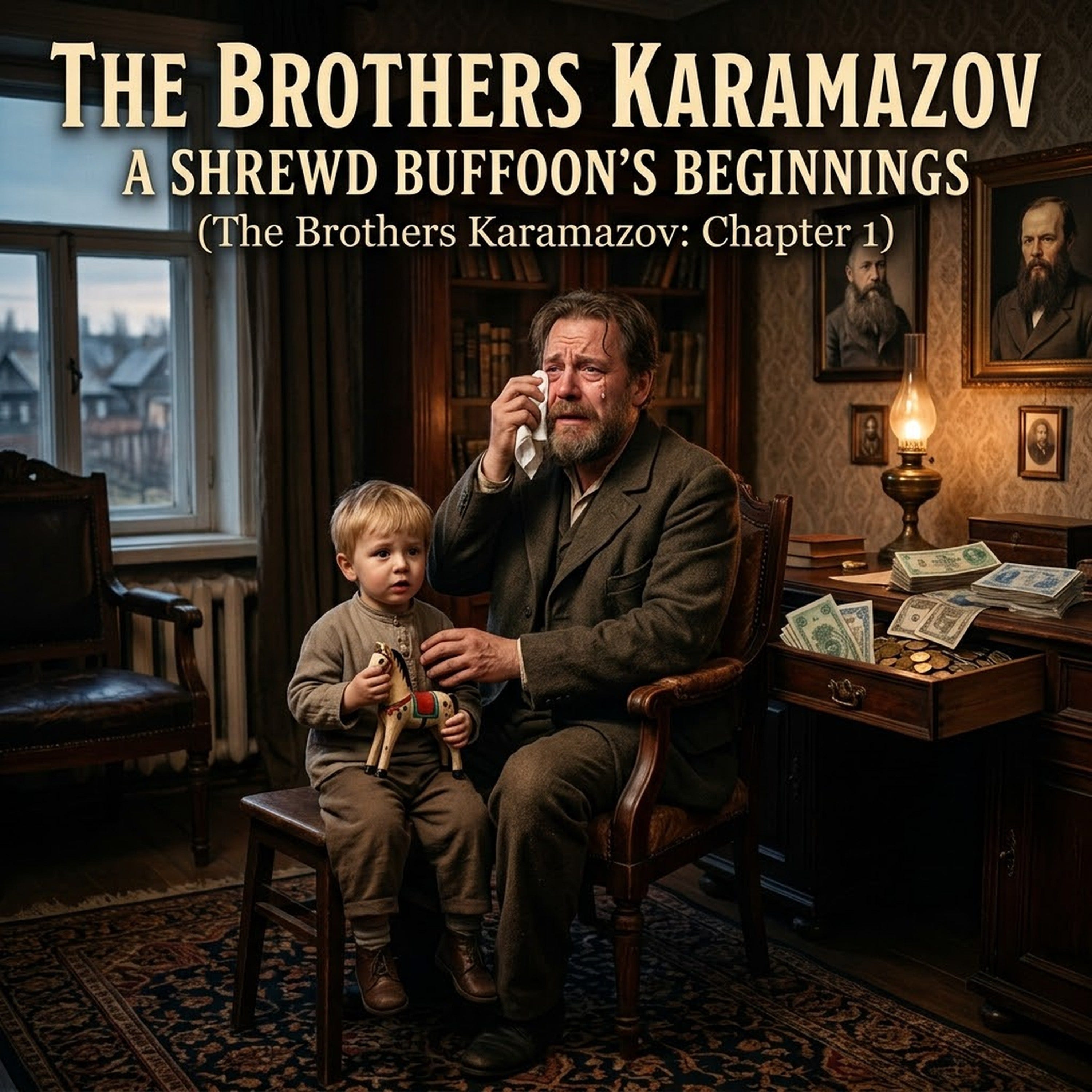
The Brothers Karamazov - 01 - Part 1
from Discipleship for the Present Podcast · host Kanu Emeruwa
It is easy to look at The Brothers Karamazov as a distant, towering work of Russian philosophy. But strip away the 19th-century setting, and Dostoevsky is dissecting the very modern ways we use intellect, religion, and outrage to avoid facing ourselves.The episode opens by examining Smerdyakov’s twisted theology. Confronted with a story of a Russian soldier flayed alive for refusing to renounce Christ, Smerdyakov dismantles the heroism with breathtaking mental gymnastics. He argues that the exact second you even consider saving your life, God instantly excommunicates you. Therefore, you have nothing left to renounce and might as well save your skin. It is the ultimate contractual loophole—using the mechanics of faith to dodge the vulnerability of the cross. Smerdyakov demands that God perform magic tricks on command; if God refuses, man is justified in saving himself.This hyper-legalistic rationalization is encouraged by Ivan, whose cold intellectual detachment presents its own kind of spiritual gap. Ivan’s defining philosophy—that without immortality, "everything is lawful"—plants seeds of absolute moral anarchy. He treats destructive, nihilistic ideas like a parlor game, completely ignoring the real-world fruit those ideas bear in the minds of people who take him seriously. He has built a philosophical fortress so strong that he has trapped himself inside it.Meanwhile, their father, Fyodor, embodies a different kind of rot: total self-deception. Father Zosima gives Fyodor the most piercing advice of the novel: "Above all, don't lie to yourself." Zosima diagnoses the psychological root of Fyodor’s sensualism. Because he lies to himself, he loses respect for himself, ceases to love, and gives way to base passions to distract from the terrifying emptiness. Fyodor actually enjoys being offended. He invents insults and makes mountains out of molehills just to revel in the resentment and feel distinguished—a devastatingly accurate diagnosis of our modern addiction to righteous indignation.The episode then pans out to the seismic paradigm shift occurring in 19th-century Russia: the clash between ancient Orthodox faith and the encroaching tide of European secularism. This tension erupts in a dense debate over ecclesiastical courts and criminal justice. The secularists want the church relegated to a private corner, relying on the state for order. But Ivan argues the state should become the church. Father Zosima redirects the argument entirely, noting that mechanical punishment by the state—cutting off a tainted member through prison or exile—does not deter crime; it only breeds resentment. True transformation only happens when a loving community refuses to mechanically excommunicate the offender, thereby awakening the painful, healing law of Christ within their conscience.From the monastery debates, the episode brings the challenge into the 21st century through the metaphor of the greenhouse. A greenhouse is warm, protected, and essential for growing delicate seedlings. Alyosha has grown strong in the greenhouse of Zosima’s love. But if a plant stays on a shelf forever, it will never fulfill its purpose. Zosima commands Alyosha to leave the peace of the monastery and go out into the chaos of his deeply disturbed family. True discipleship requires weather. It requires taking the peace cultivated in secret and carrying it into messy, complicated reality.Finally, the episode wrestles with the dangerous edges of unquestioning spiritual submission. The Russian institution of the elder demands a complete renunciation of free will. While surrendering the burden of choice can offer psychological relief, outsourcing your individual conscience to a human being borders on spiritual abuse. A true mentor is a signpost pointing to Christ, not a replacement for Him. The episode closes by challenging us to examine our own lives: are we practicing glamorous "dream love" from a safe distance, or the gritty, unglamorous "active love" of washing the dishes, holding our tongues, and engaging the broken world right in front of us?In This EpisodeSmerdyakov’s twisted theology and the use of technicalities to avoid sufferingIvan Karamazov’s philosophy of despair and the danger of "everything is lawful"Fyodor Karamazov’s self-deception and the modern addiction to righteous indignationThe clash between ancient Orthodox faith and 19th-century European secularismWhy mechanical punishment by the state breeds resentment rather than true repentanceFather Zosima’s profound insight on the conscience and internal spiritual transformationThe "greenhouse" analogy: why true discipleship requires leaving comfortable spiritual bubblesThe danger of the Russian "elder" institution and the line between mentorship and spiritual controlHow to practice "active love" rather than "dream love" in everyday relationshipsPractical ReflectionWhere in your life are you exaggerating an offense or making a mountain out of a molehill just to enjoy the dopamine hit of feeling righteously angry?Who is someone you are currently practicing "dream love" with, and what is one hidden, unglamorous act of service you can do for them this week without being noticed?And are you using your community or faith as a comfortable "greenhouse" to escape the world, or as a training ground to prepare you to serve the brokenness around you?Suggested Substack ExcerptIn this episode, we step into the chaotic, warring passions of the Karamazov family to explore Dostoevsky's brilliant diagnosis of self-deception, intellectual despair, and spiritual manipulation. We contrast the modern idol of self-gratification with Father Zosima's radical call to leave the safety of the "greenhouse" and practice active, unglamorous love in the harsh weather of the real world.AI DisclosureThis episode was created using Google NotebookLM Audio Overview, based on human-curated source material, structured guidance, and editorial review. AI is used as a tool for clarity and delivery, not as a replacement for thoughtful study or engagement with the original texts.Copyright© 2026 Discipleship for the Present / Kamashcu Production Studios. All rights reserved. This is a public episode. If you would like to discuss this with other subscribers or get access to bonus episodes, visit discipleshipforthepresent.substack.com
Embed this episode
Ready to play
The Brothers Karamazov - 01 - Part 1
No transcript for this episode yet
Similar Episodes
No similar episodes found.
Similar Podcasts
No similar podcasts found.