
EPISODE · May 29, 2026 · 49 MIN
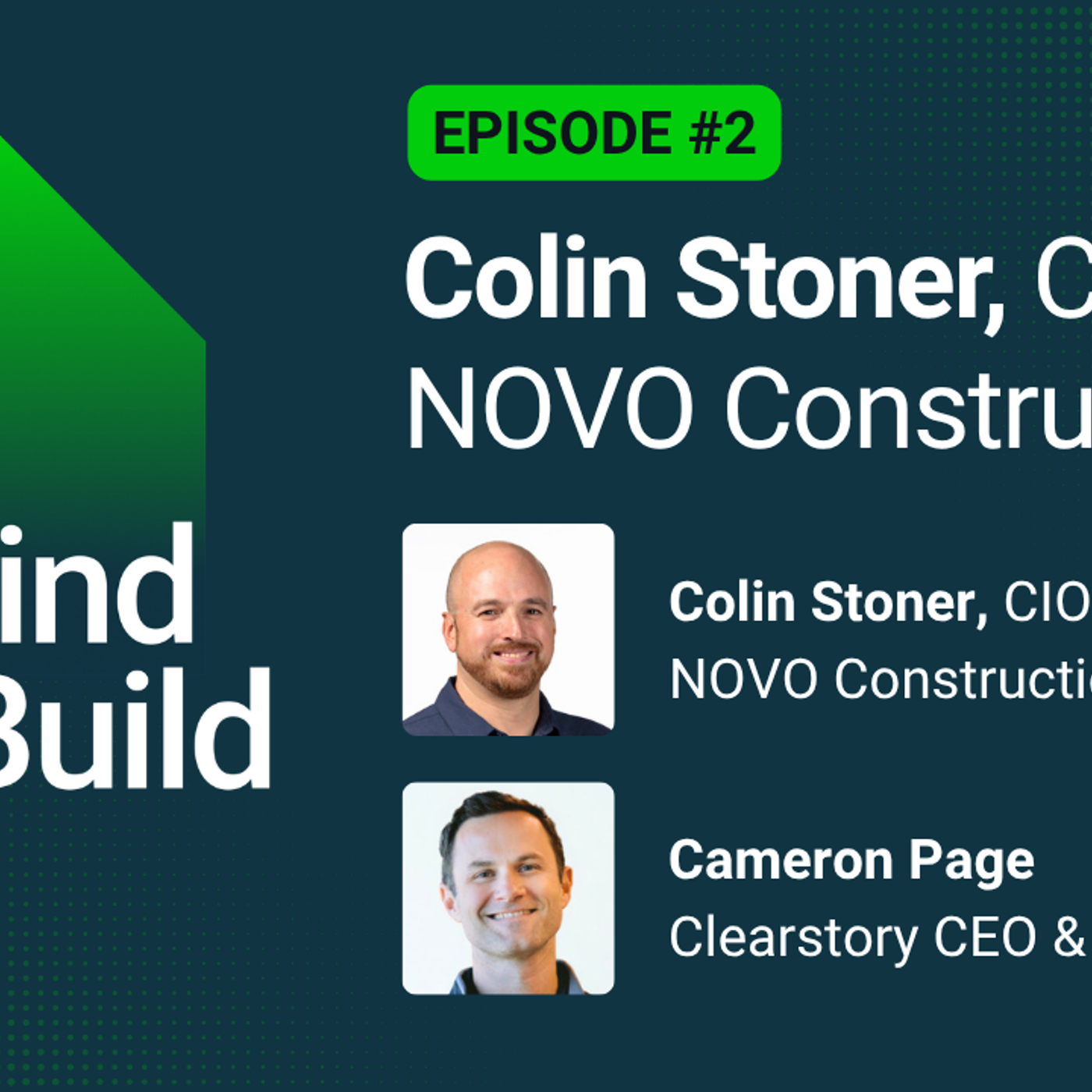
The Build vs. Buy Playbook from NOVO Construction
from Behind the Build · host Clearstory
About This EpisodeMost general contractors are consumers of construction technology. NOVO Construction is something different -- a Bay Area commercial GC that has built its own internal software for 15 years, while also being one of the most deliberate buyers of outside tools in the industry.In this episode, Cameron sits down with Colin Stoner, Chief Innovation Officer at NOVO, to unpack how a large commercial GC actually decides what to build, what to buy, and what to leave alone. From partnering with early-stage startups, Colin's framework is part product manager, part VC, and entirely practical.What You'll LearnThe "wheel and spokes" model NOVO uses to decide what to build internally vs. buy from a partnerWhy NOVO passed on buying large scale platforms and what the "60% solution at 100% of the cost" calculation actually looks likeWhat makes a construction tech partnership work and what founders get wrong in the first five minutesHow AI changed the build vs. buy math by collapsing the cost of an MVP from months to minutesWhy Colin tracks token spend as an adoption indicator, not a cost to controlWhat Colin hopes early-stage founders ask before they pitchEpisode Timestamps0:00 Colin's background and how he landed at NOVO7:00 NOVO's growth and what that ride looked like from the inside12:00 Why NOVO built Sentinel and what problem it was actually solving17:30 The buy vs. build framework: what stays in-house, what gets bought23:00 What NOVO looks for in a technology partner and how early-stage pilots actually work29:00 How AI changed the economics of building internally36:00 What NOVO is working on now: knowledge graphs, drawing parsing, and Conduit42:00 Humanoid robots, context windows, and where the industry is headed50:00 What Colin tells founders who want to sell to GCs55:00 What Colin hopes never changes in construction and what needs toKey TakeawaysBuild what only you can build. NOVO built Sentinel because the market couldn't give them what they needed at the time. That calculus is always live -- when a partner does something better, you buy.Point solutions beat platforms when they're genuinely better. The compliment is in the specificity. If a vendor understands the problem deeper than NOVO ever would internally, that's the buy.The pilot is mutual due diligence. Colin doesn't just evaluate software -- he evaluates founders. Can they think on their feet? Do they know what an RFI actually is and why it exists? The product is part of the bet. The team is most of it.AI collapsed the cost of being wrong. When an MVP took four months, you held on to bad ideas too long. When it takes 30 minutes, throwing something away is just part of the process. That changes what's worth trying.Token spend is a signal, not a line item. Colin's framing for leadership: if NOVO is spending significant money on tokens, that means the team is driving efficiency. Measure it like output, not overhead.The relationship layer doesn't get automated. Whatever AI handles next, Colin's hope is that the human side of construction -- trade relationships, trust, reputation -- gets protected. The bet is that AI handles the grind and the people handle everything that actually matters.
Embed this episode
NOW PLAYING
The Build vs. Buy Playbook from NOVO Construction
No transcript for this episode yet
Similar Episodes
No similar episodes found.
Similar Podcasts
No similar podcasts found.