
EPISODE · Jun 13, 2022 · 14 MIN
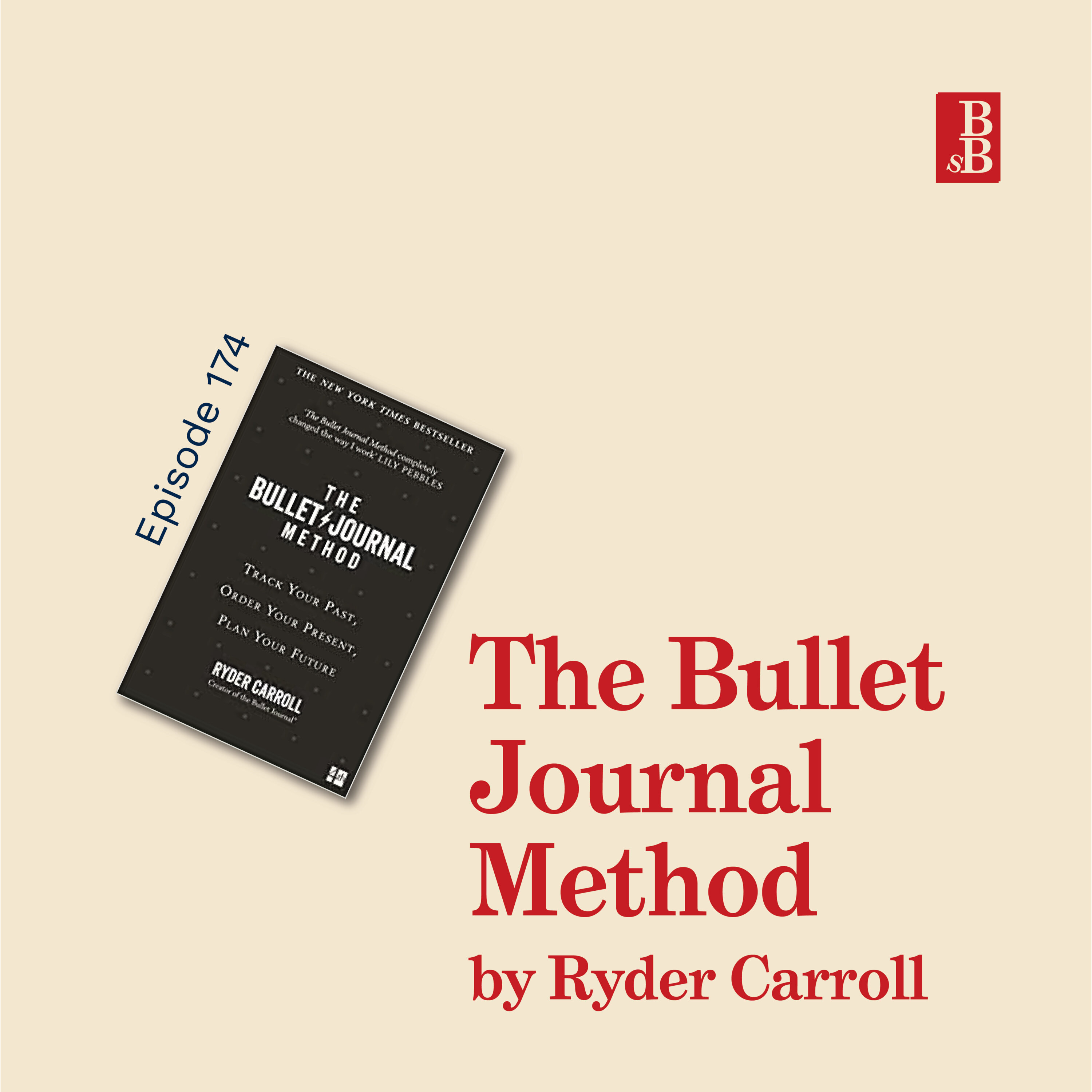
The Bullet Journal Method by Ryder Carroll: why you need to get it all on paper
from Steph's Business Bookshelf Podcast · host Steph Clarke
If you liked this, you might like my twice-monthly email with book reviews and ideas of what you should be reading, and listening to, next. Click here to subscribe. About the book Bullet Journal® (or BuJo® for short) was created by Ryder Carroll, a digital product designer and author living in Brooklyn, NY. Diagnosed with learning disabilities early in life, he was forced to figure out alternate ways to be focused and productive. Through years of trial and error, he developed a methodology that went far beyond simple organization. Now he focuses on helping others learn what the Bullet Journal method is truly about: the art of intentional living. Though it does require a journal, Bullet Journal® is a methodology. It’s best described as a mindfulness practice disguised as a productivity system. It’s designed to help you organize your what while you remain mindful of your why. The goal of the Bullet Journal is to help its practitioners (Bullet Journalists) live intentional lives, ones that are both productive and meaningful. Source: https://bulletjournal.com/pages/about About the author Ryder Carroll is a New York Times best-selling author, digital product designer, and inventor of the Bullet Journal method. He’s been featured by the New York Times, LA Times, Fast Company, The Wall Street Journal, BBC, Vogue, Bloomberg, and others. Watch his TEDx talk on intentionality. Source: https://www.rydercarroll.com/ Big idea #1 — Outsource your brain Our brains are too full, this isn’t what brains are best used for. Before we can start properly journaling we need to first see what we’re working with. The mental inventory is the brain dump of getting everything out of your brain, onto some paper, and into three lists; What you are working on What you should be working on, and What you want to be working on It’s very important that you write it down (pen/pencil and paper), so much of the bullet journal method is based on this pen to paper action, it helps us think and feel at the same time, unlike typing things which can be quite unconscious. Once you’ve written those three lists you can ask two questions of each item; is it vital? does it matter? And if the answer of those two things is no, you can ditch it because it probably shouldn’t be on your list and living rent-free in your brain. “True efficiency is not about speed, it’s about spending more time with what really matters” Note: there’s quite a few similarities between this method and David Allen’s Getting Things Done. Big idea #2 — The system The bullet journal method is part to do list, part journal, part planner, part sketchbook, part scheduler, and anything else you need it to be. And that’s the best thing about it is that you can make it your own and make it yours by mixing and matching. Side note: I don’t recommend looking at BuJo content online before you start because the level of artistic skill that people put into their journals will both amaze and inspire you and absolutely put you off. The actual original method is very simple and contains seven key concepts; Index: helps you locate the content in your bullet journal. Future log: allows you to store future tasks and events that fall outside the current month, so you don’t forget them. Monthly log: an overview of the current month events and tasks. Daily log: your catch all for rapid logging that day; a combination of to do items, events, reminders, observations, and anything you’re tracking. Rapid logging: a system of short form symbols and marks that you use to capture the things in your daily log. Collections: where you would actually block your BuJo content into related items (eg. gym log of workouts, reading log of all the books you want to read/have read) Migration: the monthly process of filtering out things that are floating on your to-do list that actually just don’t need to get done anymore, and pulling forward anything from your future log into the new month. Big idea #3 — Get your goals You can use your bullet journal for setting and smashing your goals. Firstly, the book advises you to consider what interested you in this particular goal, what motivated you to want to invest my time and energy here, what you’re trying to accomplish, what would it require, and your definition of success with this goal. Once you’ve answered these questions you can break it down into sprints, which are self-contained projects. An example from the book is about learning how to cook. A self-contained project as a sprint for this broader goal could be to learn knife skills. You can then block that sprint into your calendar over a period of time and turn this into tasks or activities. This approach creates momentum as these mini goals give you lots of ‘wins’ along the way, because they stand alone as a goal and accomplishment, rather than having to wait until you reach the ‘whole’ goal before you’ve achieved something. You can link to this to your bullet journal by setting up a habit tracker/goal tracker to log your process or consistency towards the goal and see those very satisfying ticks build up over time. Tell me what you're readingLinkedInInstagramSupport my book habit: https://www.buymeacoffee.com/stephsbookshelfSee omnystudio.com/listener for privacy information.
Embed this episode
NOW PLAYING
The Bullet Journal Method by Ryder Carroll: why you need to get it all on paper
No transcript for this episode yet
Similar Episodes
No similar episodes found.
Similar Podcasts
No similar podcasts found.