
EPISODE · Aug 25, 2026 · 1H 7M
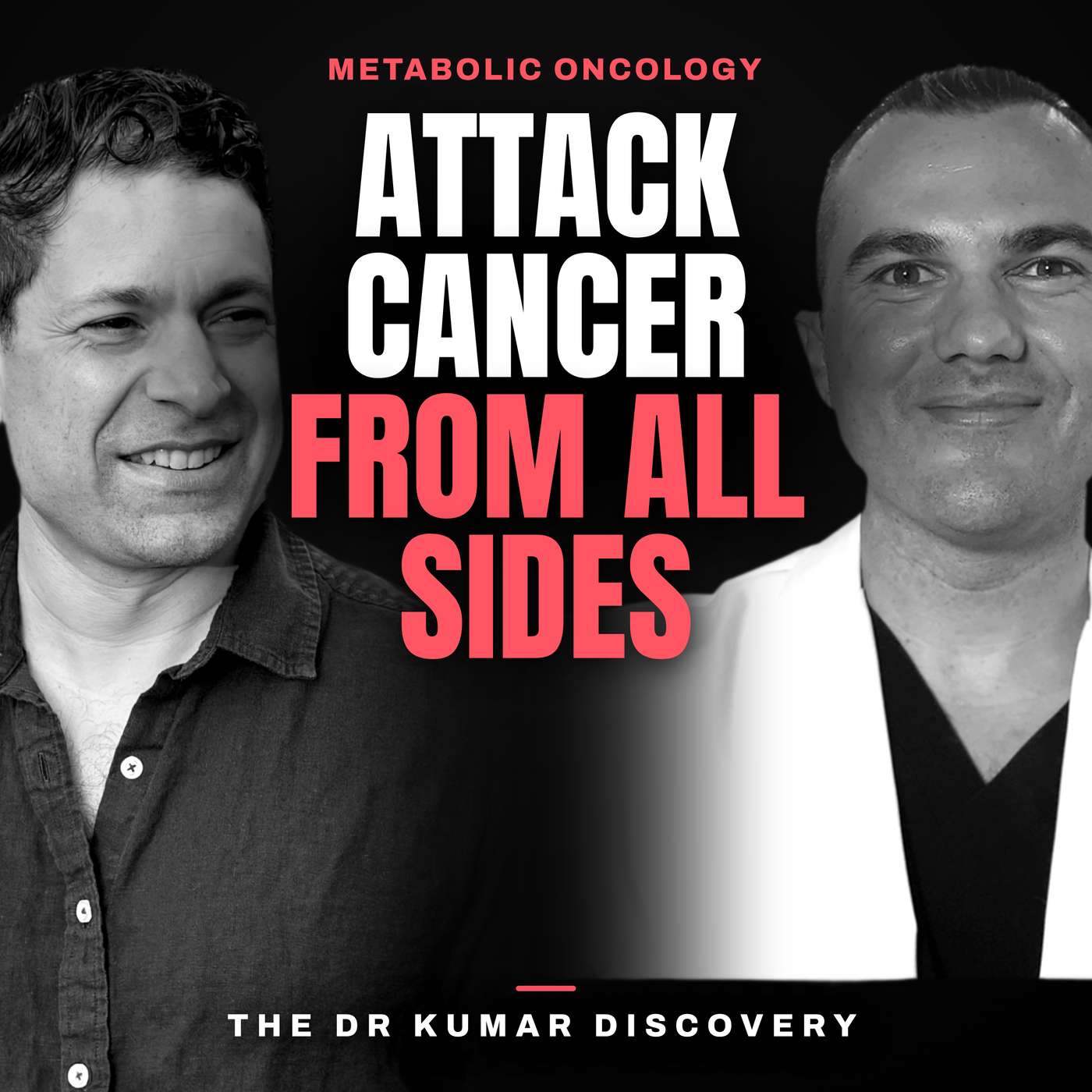
The Cancer Add-On Therapies Most Oncologists Never Mention | Dr. Casey Peavler
from The Dr Kumar Discovery · host Dr Ravi Kumar MD
What if cancer is better understood as a metabolic and mitochondrial disease than a purely genetic one? In this episode, Dr. Ravi Kumar talks with a hospitalist who has spent years digging into the metabolic science of cancer about the idea that mitochondrial dysfunction may actually come first, as a precursor to the genetic abnormalities we associate with tumors, and what that reframing opens up for patients already in treatment.Doctor Peavler is a hospitalist by day who began offering integrative consults to cancer patients a little less than two years ago. He was a flight surgeon in the Air Force, where he took hyperbaric medicine courses, and he now runs a science-heavy YouTube channel with over 200 long-form videos. He takes consults from people all over the world and is upfront that he loses many of them to follow-up, which means he can't claim outcomes data the way a formal trial could.The two dig into the press-pulse framework: a chronic "press," like a therapeutic ketogenic diet paired with mind-body stress reduction, meant to lower glucose, insulin, glucocorticoids and catecholamines over time, combined with intermittent "pulses" delivered when a tumor is already weakened. The logic rests on a quirk of cancer biology. Normal cells with healthy mitochondria and enough oxygen can switch fuels as needed, but cancer cells with damaged mitochondria and hypoxia are stuck relying on glucose and glutamine, the same two fuels that supply most of the NADPH a cell needs to defend itself against oxidative stress.On the pulse side, they cover high dose IV vitamin C, which works less as an antioxidant and more as a pro-oxidant that reacts with extracellular iron to generate free radicals inside iron-hungry tumor cells, and hyperbaric oxygen, which dissolves oxygen into plasma rather than just topping off hemoglobin, letting it reach the hypoxic pockets a tumor's leaky vessels can't. They also get into repurposed drugs like metformin, mebendazole, and ivermectin, and why glutamine, the most abundant amino acid in the blood, is nearly impossible to starve through diet alone. Doctor Peavler is candid throughout: this is an emerging field, he doesn't believe in one magic bullet, and everything discussed is meant to be brought to an oncologist, never used in place of one.Episode ResourcesDr. Peavler's YouTube channelDr. Peavler's Educational CourseDr. Peavler's WebsiteDr. Peavler's InstagramDr. Ravi Kumar's WebsiteThe Dr. Kumar Discovery on YouTubeThe Dr. Kumar Discovery on Apple PodcastsThe Dr. Kumar Discovery on SpotifyThe Dr. Kumar Discovery on InstagramThe Dr. Kumar Discovery on XThe Dr. Kumar Discovery on TikTokThe Dr. Kumar Discovery on FacebookDr. Ravi Kumar on LinkedInIn this episode, you will discoverMitochondrial dysfunction may be the precursor to the genetic abnormalities we see in cancer, not simply a downstream effect of them.Antioxidant-rich diets may help prevent cancer, but once cancer is present, antioxidants like NAC appear to worsen prognosis, disease control, and mortality."Press" interventions are done chronically, like a therapeutic ketogenic diet and stress reduction, while "pulse" interventions are delivered intermittently to hit a tumor when it is vulnerable.Normal cells with working mitochondria can switch fuels, but cancer cells with damaged mitochondria and low oxygen are locked into relying on glucose and glutamine.High dose IV vitamin C acts as a pro-oxidant, reacting with extracellular iron to generate free radicals before entering cells through the GLUT1 transporter.About 80 percent of the NADPH a cell uses to power its antioxidant defenses comes from glucose and glutamine metabolism, so cutting those fuels also strips away a cancer cell's defenses.Hyperbaric oxygen works by dissolving far more oxygen into plasma, not by pushing hemoglobin saturation a couple points higher, which lets it reach hypoxic pockets inside a tumor.Glutaminase may be the most important enzyme in glutaminolysis, since the glutamate it produces feeds fatty acids, nucleotides, other amino acids, energy production, and glutathione.Cancer cells import iron at a much higher rate than normal cells and export less of it, making them especially vulnerable to a form of cell death called ferroptosis.Dosing and infusion rate both matter for IV vitamin C, with expert dosing around 0.5 to 1.5 grams per kilogram and the same total dose spread over 24 hours likely not producing the same effect as a shorter infusion.The glucose ketone index compares blood glucose to ketones to gauge depth of ketosis, with a hard goal of one and a softer, continuous goal of under two.Mebendazole appears to do more than block microtubules, also downregulating glucose transporters and reducing glutaminase expression by 50 to 60 percent at achievable doses.Glutamine is the most abundant amino acid in the bloodstream and can't be meaningfully lowered through diet, so the strategy shifts to hitting several nodes of the system at once.A preclinical ovarian cancer paper showed ivermectin downregulating key glutamine and glucose metabolism enzymes by upwards of 70 percent, though side effects like transient eye floaters showed up in roughly 30 to 50 percent of people at decent doses.Episode Highlights[00:00:00] Cold open and the cancer disclaimer[00:03:52] Is cancer a metabolic disease?[00:08:38] Dogma, career risk, and swimming upstream[00:11:44] Introducing the press pulse framework[00:12:51] What counts as a press[00:15:30] Glycolysis intact, oxphos broken[00:20:03] Who reaches ketosis fast and who does not[00:23:17] Attacking glutaminolysis as a system[00:26:34] Thickening the plot with NADPH and redox[00:29:43] The two pulse tools[00:32:25] Doubling survival in pancreatic cancer[00:35:58] The hydroxyl radical nobody talks about[00:40:23] Dissolved plasma oxygen reaches the tumor[00:43:30] The ecology analogy behind press pulse[00:45:20] Ivermectin, politics, and asking the question[00:49:25] Crossing the blood brain barrier in glioblastoma[00:52:11] Pharmaceutical grade only, with a doctor[00:55:54] An honest accounting of what he has seen[00:59:15] The channel, consults, and community[01:03:02] Question everythingKey TakeawaysNothing here is medical advice, and every therapy discussed, from ketogenic metabolic therapy to IV vitamin C, hyperbaric oxygen, and repurposed drugs, is framed as a potential add-on to be worked through with an oncologist, never a replacement for chemotherapy or standard treatment. The antioxidant question actuall...
Embed this episode
NOW PLAYING
The Cancer Add-On Therapies Most Oncologists Never Mention | Dr. Casey Peavler
No transcript for this episode yet
Similar Episodes
No similar episodes found.
Similar Podcasts
No similar podcasts found.