I'm Redrong, I cover climate and the environment for The New York Times. I recently spent eight weeks on a research ship going to Antarctica, the planet's getting warmer, ice is melting away, sea level rise is going to change our coastal cities. It's one thing to read about what scientists have discovered when they write papers, but it's another thing entirely to be there with them. This is what we do with The New York Times. We want to bring you closer to the biggest stories that matter for how we all live in the world.
If you'd like to support this work, you can become a subscriber. But nytimes.com. Subscribe. From The New York Times, this is the interview. I'm Lulu Garcia Navarro.
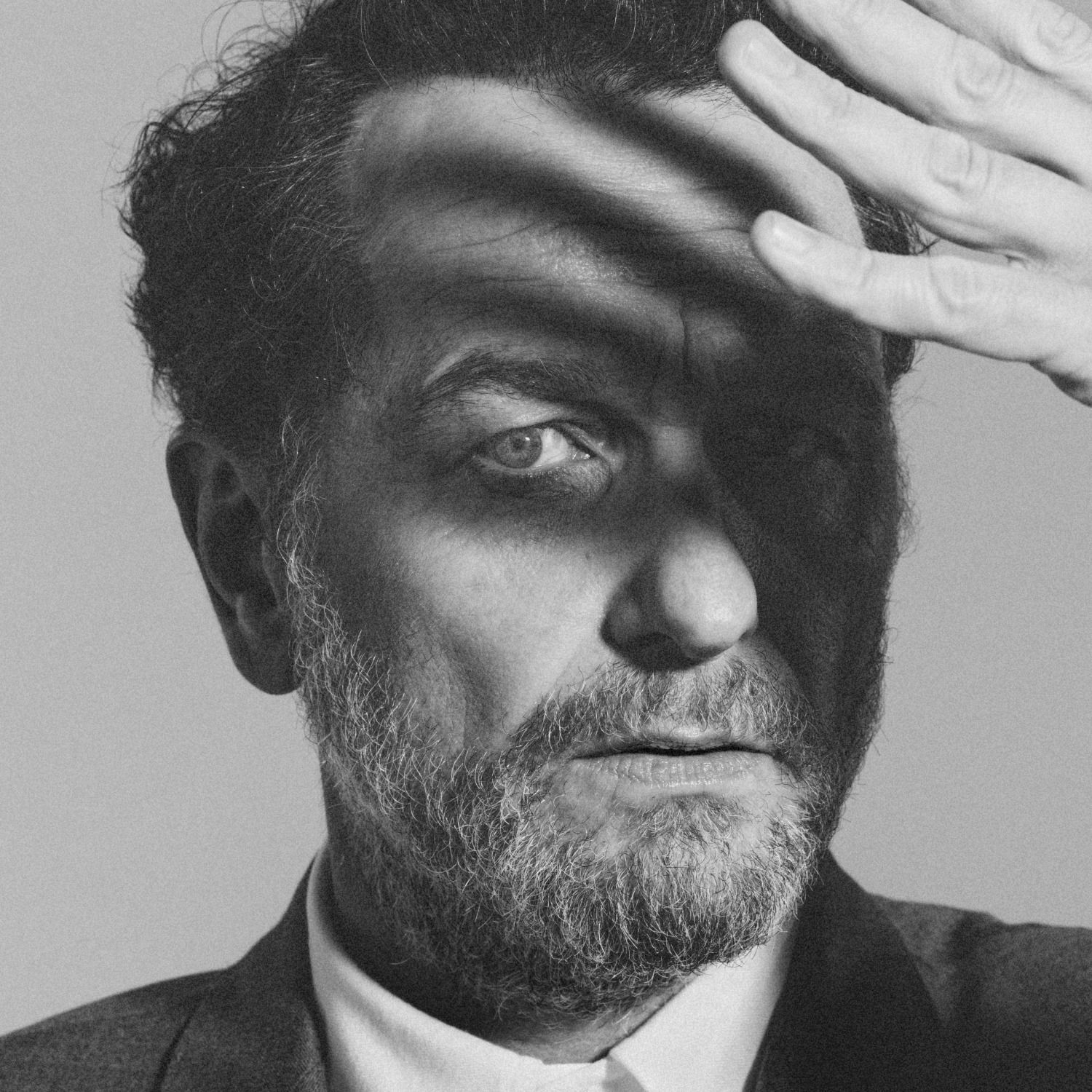
The actor Matthew Reese is on a tear. He started this year's surprise breakout hit, Widows Bay, as a small-time mayor trying desperately to bring tourism to his sleepy island despite locals warning that the place is haunted. Reese also starred in The Beast and Me as Niall Jarvis, a New York real estate developer rumored to have murdered his wife. Both of those parts won him Emmy nominations this year. Yes, he's nominated twice.
But as I found out when we spoke, it doesn't mean he's feeling secure in his career. We got into that and talked about some of his other memorable roles and about his life with his partner, Kerry Russell, who he fell in love with on the set of The Americans. Here's my conversation with Matthew Reese. But first, a quick message. If you're not a subscriber, we have some news for you.
You can now explore the times for free without paywalls during your first month in The New York Times app. Just download the app and we hope you enjoy it. Okay, on to the interview. Matthew Reese, thank you so much for being here. Thank you for being here.
Thank you for the invite. So the best description of you that I've seen is actually your own. Oh, God. Yes. Here we go.
Yeah. I need to do panic. All right. You said once that you are, quote, eternally seeking to channel the spirit of David Niven. And that, of course, is referring to the great leading man who has Welsh roots.
I discovered his autobiography, The Moon is a Balloon, one of my absolute favorite books in the world. Great. Yes, I feel my life or how I am in the world. I'm always really like a nervous Nelly and I'm always like, Oh my God, I said the wrong thing. I did the wrong thing.
And then I look at Niven and he's always so quietly self assured and calm and seemingly said the right thing, even when a naked person ran behind him in the Oscars. And I just wish I could be that person and say the right thing or and be gracious and effortless and always think of others. And every time you read of an actor who works with David Niven, they always say he was just so gracious to everyone and thought of others all the time and said the right thing and I was like, God, I wish I could be that person. Yeah, it's interesting the way that you view him because he is witty and charming and always said the right thing. But also maybe a bit frivolous, maybe a bit.
Frivless in what sense or with what? Well, I mean, he was the perfect party guest. And in terms of his acting, he was a good actor, I would say a great actor. And when I think of your work, I think more of sort of the great Welsh actors, Richard Burton and Anthony Hopkins and the OG Ray Milan, who were sort of brooding dark characters. And so I guess what you're saying is David, Niven in life and perhaps others in work?
Oh, absolutely. Absolutely. And I would say that I would say Richard Burton is on par with Niven in that sense as to who I would aspire to be because Burton seemingly, he was the first to kind of be very, very unwell to me, which was arresting and inspiring. What is unwell? I think we're a small country who have suffered for being England's neighbour, the small kind of cousin who's always ignored and put into the corner and kind of told what to do by England.
And therefore, I think there's a great kind of subservience and insecurity to a degree nationally. And he was one of the first to kind of really with this great confidence in hubris going, I'm not going to be that. I'll take Hollywood by storm. I will challenge Onassis for the Diamond. I will, he was very unwell in his...
bravado. Yes, yeah. And to me, I was like, wow, we're allowed to be that. I want to go just back to the David Niven thing because you described being a nervous Nelly. Can you just elaborate on that a little bit?
Like, what do you mean? I think that just stems from the early days of kind of growing up in a school that was heavily disbored and being the only one who wanted to do acting. And then you go to drama college in London and then being the kind of the young Welsh person. I've always, now, just another fish out of water in America. I've always felt slightly not fitting.
I know it's the boring actors cliche. No. I've never fitted in. And I don't think it's a cross I've had to bear. I'm just saying there's a slight feeling of it.
But I've never just, you know, all the stuff that me and my mob always moan about. I've never felt that kind of confidence, that self-assuredness that I always wished I had, which is maybe why we always pretend to be other people. You fake it pretty well. In so many ways, not just the acting. Yeah.
I'm interested in this period that you had where you had early success. You were in a stage play of the graduate on London's West End. And then you had this period of not being able to find work. In your early parts of your career, did you ever turn anything down because you wanted to have a certain kind of career? Were you being choosy or were you just not finding the kinds of roles that you wanted?
Oh, no, no. It's never choosy. I almost threw up my entire 20s. It was never a choice I had. There's only one job I turned down that I, to this day, bitterly regret, which was to play Hamlet.
And I was 24. I know because it felt like a mountain I was too young to climb. And I was like, I don't have the emotional maturity to play Hamlet at 24. And now, sadly, the day in has passed. But yeah, I don't feel, you know, I'll ever get that chance again.
You knew that you didn't have the emotional maturity? Yeah, I remember saying it to me into the time. I was like, I can't play Hamlet now. I don't have that in me. It's maybe in five, six years, but not now.
There's no way I could play now. And then Ben Wishall did it at 21. What do you feel like you have to have inside of you in order to play a role? Like, what are you, I mean, when you were younger, did you feel like there had to be emotional material there for you to sort of be able to channel the person? Exactly.
You know, obviously, Hamlet's going through so much at the time. I just felt I haven't worn enough shirts. I haven't lived a life yet in order to kind of. You can pretend, isn't that actually? I don't need to be telling your business.
Oh, believe me, how right you are. Yes. And I look back and go, why didn't I just pretend? I think, you know, we do, we do kind of put Hamlet on a plinth and we kind of see it as this Everest that can't be summited, should be summited because they should be summited. And it was for me, I was like, this, you know, it was a, it was just one of those roles.
Do you think it was low self esteem? Without question. I think any number of other actors go, of course I'm going to do it. And I'll do it well. And I was like, I can't do that.
That's not in me. I can't do it. I bitterly regret that. You mentioned something. You studied at Radha, which is the Royal Academy of Dramatic Art in London.
And that's sort of the highest echelon acting school. What would you say the sort of main differences between American acting and British acting or the acting that you, I mean, I have thoughts about this, but the acting that you kind of were brought up in because just hearing you say that, that you kind of needed some emotional material to do it. Yeah. I mean, that, that speaks to a philosophy of acting that I'm wondering what it is. Exactly.
What do you think that philosophy is? Is it more American? I would say it's more, it's more American. I agree. I agree.
And we were taught by a New York acting teacher at Walaradha called Doreen Cannon. She was from the kind of royalty of New York acting schools. So like method acting. Yeah, she'd come through that. So she, yes, that was her ethos and that was the way we were taught.
It was this great subversive moment in the Radha history where Americans were brought into teach acting, you know, kind of let's reinvent the wheel here. Yeah. And how did that, how did that inform how you learned how to act? I loved it because also, as much as I was watching Richard Burton, the huge heroes for me were Brando and Taneer O'Mpaccino. So all of a sudden I felt like I was getting an insight into their world the way they did it.
And I grew up watching the movie. So all of a sudden I was like, oh my God, we're getting the secrets. So it was very exciting to me. It was getting away from this idea that it was pretense. It suddenly became very real.
And in a way, I suppose a little more, this is a self justification of dressing up for a living but kind of more worthy or noble that if you do it for real, it's not for sad, which is a little more humiliating. Well, there's a lot of debate now because female actors have talked about how this is a, it's a male conceit to be a method actor that it's because men are much more comfortable, you know, naval gazing and women have to use their brains in other ways. True, true. I mean, what do you think about that sort of debate? I agree.
I agree that it's the term has become this kind of pariah now for bad behavior. And what I loved about the training we had at college is that they stripped the myth from it. They're like, look, it's like a switch. It's like a toolkit. So there's no self-indulgence.
There's no kind of being rude to people. There's no doing pushups before a take. You know, if you're playing the path, you're not going to become the King of Scotland. So it's like it's giving you a toolkit that you can call upon whenever you need it and when you should need it. But it also makes it a lot more clinical, a lot easier.
There's no, you don't stay in character. There's no reason to stay in character between action and cut. That's it. You don't do that? We were taught a method, but I'm not, I suppose in the modern term, I would say is a method act.
I've never once stayed in character. You don't go home and speak in American accent or? I do sometimes to annoy the kids. And they're like, oh, stuff it. Yeah.
Or if I order food on the phone, I do it in American accent. Because sometimes you're like, it's just quicker. The kid's like, why are you doing that? Yeah. All right.
I want to talk about your Emmy-nominated roles. First of all, congratulations. Thank you very much. 19 Emmy nominations for Widows Bay. Unbelievable.
Unbelievable. Part of what is obviously so unique about the show is this blend of horror and comedy. Yeah. I saw the casting director recently said about you that no one knew how good you were going to be in a comedy role. Which meant you wonder why you were cast, by the way.
But, you know, they said you'd never really done a role like that before. I mean, did you doubt yourself? Why did you want to try to do comedy? Because you're not known as a comedian. No.
And I didn't, I always wanted to kind of give comedy a goal. And then the script came in and I was like, oh my God, this is amazing. And original and weird and quirky. And I was like, is this comedy or is this kind of part you're going to play for real? And I met with Kitty Diplon-Hurimer-I and Hero said, look, we're not playing this as a comedy.
It has to be played as a drama. Otherwise, it doesn't work. I was like, self-conscious and fast-ical. So you have to play for real. And I was like, oh, great.
And the pressure was taken away. And I didn't have to think about it being a comedy. Is that why you steered away from comedy up until now? No, I just think... Because I've seen you in roles where you're yourself, right?
And you're funny. Well, thank you very much. I also think I have what they call the Celtic lid. You know, I've slightly hooded eyes like Robert Bitcham. So you don't have a face for comedy.
People think you're kind of downtrodden and serious all the time. Like, if I have a brighter eye, I might be better for comedy. But it's not something I've overtly or consciously avoided. I just think as in some of the times with this profession, you can slightly get put into your little catter and you stay there. Right.
When you had to go and play the character, did you think, all right, I have to play this for real? And by the way, other actors who do comedy can say that you have to play it straight. Like, in any comedy, you have to be completely committed to the bit. Because if not, it's silly. But this is obviously like a fantastical world.
Yes, yes. And so how do you commit to the bit when you're having to be chased by killer clowns and horny sea hags? Almost the same. What was great was... I was going to say, oh, God.
Well, OK, because I hate talking about the process of my process. Right? OK, so part of the method I was taught is when you approach a project, your character should have a super objective. What is the one thing throughout the whole project he desperately wants? So I thought, if I give myself a very strong super objective for this, for each scene then there's a scenic objective that feeds the super objective.
So I go, OK, if my super objective is, I want my son to flourish, to bloom, to succeed on this island. Every action leading to that super objective has to be me going, I have to make this island succeed. So it gives you this kind of focused zeal when the madness is around you. And that's what helped me kind of when this kind of all borderline fascicle madness around you, if you have this one driving force in your mind, it tends to, for me personally, it helps me kind of keep me slightly on this path, on this keel that I can stick to. And then it makes the playing a bit more real, for me, if that makes sense.
It does. Yeah, it's your motivation. Right? So that's everything. Yes, I said the M word.
Yes, so that's what I try and do. So on the horror front, I want to start with just like a big premise, which is film and our cultural touchstones say something about us and the moment that we're living in. And I think when superhero movies were really having their moment, we wanted things to be black and white. We wanted to be saved. We wanted someone to come and sort of make everything okay.
And I think what this moment might be telling us is that things aren't what they seem, that there's things happening behind the scenes that are beyond our control and aren't particularly nice either. I mean, why do you think horror is having such a moment? Have you thought about it? To a degree, but I haven't come up with any of these areas, but I would... Do we just like to be scared?
I mean, maybe I'm just giving too much of a thing. No, no, because I think it's interesting as to why there's this kind of wealth of horror that's doing well. So it's seemingly more slightly more societal than anything else. Right. And I would agree because I would have thought in these times of such turbulence, you would almost want the superheroes more because you just need to believe in that kind of universal sense of justice, that something or someone ultimately will do the right thing or overcome the bad thing.
But it is. It's this, you know, we're in a strange time of kind of constantly being, oh my God, this is terrible. Shocks to the system. Yes, that it's the things we're seeing horrific, but yet seemingly nothing changes or stops. So it makes perfect sense that we find it in our fictional entertainment.
Do you think about the cultural moment when you're playing a role like this, like what it's feeding into, how it might be received in the world? Well, the big conversation about what it was made was like, how are they going to take this? Is like, we're always going, what is this tone? When my agent said this is horror comedy, I was like, whoa, what? No.
And then I read it, I was like, oh, that's pretty great. And it was pretty great. It was fantastic. And I was like, I know I want to do it, but how is that going to be received? Like that could be, we could die on our asses with this one.
Do you know anything about series two? What's going to happen? Anything about the real mythology that you can tell people who are going to watch this and want to know? I can tell you wholeheartedly. I know nothing.
And I'll say this much. I know even Joe Katie Dippold knows because they've only just gone into the room for season two. And I was like, I was like, what happened? So they're going to sit down for a long time to figure it out. So this is one of my really big pet peeves as a viewer, which is we have to wait to know if a series is a hit before it gets picked up again.
And then there's this long lag point. And by that point, you know, you're kind of forgotten everything about the momentum and the thing that you liked. And you're seeing now all this reporting about viewer drop-off, you know, running point, Netflix series, because that happens. I mean, isn't there a better way? It has to be because this new model is crazy.
That's what everyone says. It's like, now we have to wait over a year for the next season. I'm of the same opinion. You watch one season. And then you're like, wait, what? How long are you worried about losing momentum?
Yeah. Yes. I just hope those editors who do previously on Widow's Bay, you know, kind of a great, just before we break season two, are reintroducing it. But that's not the best answer. All right. The Beast and Me was your other big hit this year.
You're a nominated friend, Emmy, for that too. You play a super rich mogul who was suspected of killing his wife. Have you thought about how much you're playing a character that's hiding something? Obviously, in advance of this interview, just going through a lot of your work. The Americans obviously were Soviet spy, pretending to be an American and any other things along the way.
Beast and Me, you're a murderer pretending to not be a murderer at Widow's Bay. You clearly know more than you let on. About what's happening on the island. Why are you drawn to those particular roles? And why do you keep getting them?
Yeah, that's even more disturbing. I always think when the character has something else going on, it just gives you so much more to play than something slightly shallower or more artificial. It just kind of lays it in a way that other parts can't. You've got so much going on, sometimes in a way, takes you out of the acting, if that makes sense. You're kind of, you're playing so many things, you start, you know, forgetting about the kind of artificiality of it all.
I saw a clip where you were discussing The Beast and Me, and you said, Menison Rage is where I like to live. And we had a big debate as to whether you were kidding or not. Were you? But if you look at your career, that's not untrue. No, no. I'm sure the kids will say that's where I do live.
No, no, I was making a joke. Because your upbringing seems to have been so happy? You talked about it was stable and fun. You were out in the farm and you were out on the sea. It just seemed like a lovely kind of time.
You don't seem to have some sort of dark origin story. No. And so I'm wondering where the attraction to darkness comes from. Right. So like those, it's in the shadows, the interest lies. I, I, I, I, I, I, I believe of that.
It's like, oh my God, what's that about? What must be that like? And the kind of rage, you know, the rage stuff, you kind of go, I hate to say it. Sometimes I find the rage stuff easy to fake because it's just sort of, it's sort of volume and passion. That's about it.
And I think for men, it's, it's this weird little tap you can find quite easily. You know, you can fake that quite easily if you're just kind of passionate and loud enough. Speaking of those dark and layered roles, I want to ask you about a role you played in the HBO show Girls in 2017. Yeah. I just rewatched it. And it's an episode titled American Bitch and you played Chuck Palmer, a famous author who'd been me to,
for taking advantage of younger women. And Hannah played by Lena Dunham goes to his apartment, just getting this in office. After writing about the allegations and what follows is incredibly complex performance. And again, you're playing this sort of charismatic, powerful, deeply manipulative person. And you have this intellectual argument with her about the agency of women and what was really going on for you and how you have been misunderstood.
And then at the end, you expose yourself to Hannah. Yeah. And physically. Yes. Yeah.
Yeah. The look you give in that scene at the end is really quite something. I mean, it was amazing watching it again. Can you tell me what you remember working on that episode and what you understood about the character then? Yes.
And, and, you know, Lena was incredible in that she kind of, I hope I'm not speaking of a turn on her path, but she kind of explained what had happened to her. So it was drawn from truth. So she gave me the background to this, where this kind of piece of fictional writing came from in a very detailed way, which helped enormously. And then, which I've never done before, we rehearsed it, like almost like a play. We went to the location.
And rehearsed and rehearsed and rehearsed, which is utterly luxurious and television where you just, there is no time. So I just remember thinking, wow, we have all this time together this right because it definitely needs to be got right. Especially at that moment, right? It was the subject of a huge discussion. Yeah. Yeah.
In that discussion with her, were you trying to honor her memory or were you trying to be, you know, interpret the character in your own way? No, more exactly that. Trying to honor exactly what she'd written and kind of place it in a very real way, but also she was interested in the real discussion of it. That he couldn't just be villainized off the bat. There had to be some kind of true discussion or discourse within this event that leads to it.
She wanted to kind of push and pull of both sides for it to land in a very real place that ultimately then would hopefully pay off the ending a lot more. Yeah. I mean, it did, obviously. But what was that look? Because what strikes me seeing it now is that, you know, it was this moment in time where we were just starting to have the conversation about consent and power and abuse.
And Lena and the show's creators talked about it, you know, in the after episode discussion and talked about how they wanted the ball to be nuanced. But watching it now for me is just a straight up bad guy. Yeah. Yeah. And to me, that was what the look is at the end. It doesn't matter what we've discussed.
Ultimately, this is all I want to do. That all that kind of quote unquote discussion and, you know, kind of back and forth is meaningless because once that happens, because ultimately, that's all he wants. Yeah. You also got to choose a prosthetic penis in that role. I actually didn't. I didn't. I was given the choice. Right. And I thought, I can't choose my own because I don't know. I'd like somebody else to choose it. Because then I can't be judged about that my choice.
Is that the strangest problem that you've had? Without question. With I've never encountered a tray of prosthetic penises before and the problem has to go in. Do you want to do you want to know? I was like, no, you choose something. I like spoke to the rich and the director. Why don't you pick what you think will help aid the shot at the end.
After the break, recent, I speak about starting to date his longtime partner, Kerry Russell, while co-starring on the Americans. Sometimes we'd argue I'd bring that into the scene and the director's like, why is it going off and you're meant to be getting on really well? I was like, I'm vice versa. You know, so she's far more sure than me. Law transforms agreement into reality. A word becomes an agreement. An agreement becomes a contract. A contract becomes law. Today, Harvey, the AI platform for legal work is writing the next chapter.
More than 200,000 lawyers are building with Harvey, accelerating review, sharpening negotiations and more. This is how the future of agreements is being crafted now. Harvey, learn more at Harvey.AI. Harvey does not provide legal advice. Users should always independently review and verify any output from Harvey.
This week on The Wire Cutter Show, we're talking about face sunscreen. What do you think so far about the ones you have tried at this new ingredient? I think it's sunscreen. And I'm excited it exists. Find out how the new FDA-approved ingredient is changing formulations and whether our expert is worth it. The Wire Cutter Show is on the near time gap or wherever you like to listen.
Okay, we're going to do a weird pivot because I don't know how to get out of prosthetic penis. Yes, no, it's tricky. Yes. So I saw a clip of you saying in Welsh it's all downhill from here speaking about your Emmy nominations. I was wondering, give me the contacts. I mean, it was very pessimistic. You can't just be like, I'm amazing.
Oh my God, no, no, no. I would attribute this to all the Celtic countries. It's almost like an Olympic sport to take someone down once they think they're above their station. My parents are going, what do you think? What's my dad always say? God, he was chocolate-eating himself.
He says about you. No, just about anyone who kind of slightly thinks they might be better than everyone else. I just think, and I do, I really find it like this real Celtic characteristic that all the Celts have, like, that anyone who thinks they're slightly better than the rest needs to be locked at the knees. And I do also think that especially for Welsh we do have a wildly strong sense of pessimism coursing through our veins. I mean, it seems to be very at odds with the American idea of always be selling and in particular itself.
I mean, do you struggle with your own success? Yeah. I mean, yes and no, because I think what, I have this ongoing, I have this parrot keep saying it. So I'm going to fail. Right, you know, it's all going to go downhill. So I have that all the time. And this sounds a perverse name drop.
But Tom Hanks' motto is like, this two-shot pass. And he says that about everything. You've been out to work for a long time, this two-shot pass. You've been two Oscars, this two-shot pass. And what I remember is, after doing the graduate with Catherine Turner, thinking I was just on an ascent.
I was like, this is it. And then I was out to work for a long time. And I realized the entire, the entire journey is the roller coaster. You're just up and then you're done. And so at this point, I know this sounds stupid, but I kind of go, this is just, it's a moment.
It's a fantastic moment, but it's a moment. After the graduate, you were going to join the military. I tried. I tried. And you rejected you.
Yeah. Because they didn't believe me. Which is really sad for an actor. I know. I remember.
You couldn't even convince the recruiter. No. I remember, I went in, I met, I met the sergeant and he was like, she come back next week and meeting Officer. I was like, okay, went back to the interview. And he's obviously so suspicious of me going, why do you want to join the military?
And then like five days later got the letter saying, thank you for your interest in the British Army. And it's sort of amazing that the officer was like, there's something not right about this kid. They're like, I don't believe him. Back to that Welsh pessimism. Yeah. I mean, what do you think the biggest culture clash is between your American living self and your sort of Welsh self?
I always admire, to me, the Americans have such confidence. But what I find in New York, that I do sometimes is I fake this confidence. Because there's this kind of, some say it's aggressive. I find it like more confident. Because there's like this, and it's an honesty too.
That like, you see it's like subway justice. You know, sometimes when you get those people, and it's not necessarily just men and women go, hey, you can't sit there. Like, you know, give up the chair. Or like, I remember going, oh my God, people are like this. They're not just like those bit parts in movies about New York.
The people are like this. And I found it's liberating. Do your kids have that American confidence? Two degree, yeah. Far more so than I did as a kid of the village.
All right. You told the Guardian in 2014 that the most important thing to you was the survival of the Welsh language. Probably was then, yeah. Yeah. I mean, still is. And I grew up in the 80s when the language itself was threatened.
And you know, I remember the protest marches and the kind of, you know, trying to get a language bill and a language act and trying to, you know, one of the oldest languages in Europe, you couldn't open a bank account in the Welsh language. There was, it had no status. I don't think I truly understand sort of the history of how the Welsh language and Wales in particular was subsumed under sort of British culture. Yes, English. Yes.
Yes. They're like, if we strip a nation of its language, we'll, you know, we can dominate. And that's what they did. They tried to eradicate the language. But I think as a result of that, what it did was create a fire in the Welsh to say, you absolutely will not kill this language.
And they fought it for hundreds of years. There was my grandmother's generation was the generation where they used to have the weather, the piece of wood around their neck saying they wouldn't speak Welsh, you know, otherwise it was called the Welsh not. And this is the English did well. They would turn communities on each other. So a child hearing another child speaking Welsh was allowed to put the piece of wood around their neck and then that child at the end of the day would be flogged.
So this is how they kind of did it. So there was a zeal to my parents going, this language will not die. It will never die. We'll make sure it doesn't. You've talked about one of the reasons you find doing American accent easy, but the British accent hard is because of that colonial baggage.
Absolutely. Absolutely. And that's when I feel the most fake when I have to do a Southern English accent, when I have to get the receipt pronunciation RP. That's when I feel like, oh, I just feel fake. Fake and also distasteful.
Yes. I just sit because we grew up in our house mimicking that language in a derogatory way, going, oh, yes darling, do pass the cucumbers sandwiches. So the connotation of it was wildly negative. You're voicing Han Solo in the first ever Welsh dub of Star Wars. I mean, amazing. Have you already done it?
Yes. Please do a scene for me. Absolutely say something and while you're playing Han Solo. Oh my god. What was weird is obviously they'd had to translate all these things that we'd grown up with knowing Star Wars.
And then I was saying it in Welsh and it was kind of like Pelodor Curcke. It's kind of like a it's like tractor beam. Oh, okay. Yeah. Yeah. There were words I've never used before and I was tripping on them going, I couldn't say it.
And at the same time, it was this wildly familiar thing that I got to do. I mean, it was so surreal. The whole thing was surreal. And then also you kind of go, I can't voice how does it fall? Do you talk to me about that?
No, I'm too scared. But in the same vein, I was so glad this is what I would have wanted growing up as a young Welsh kid is to have this experience. It's to have these things that would be commonplace. Like, yeah, we'll translate Star Wars into Welsh. So it buoyed me enormously to kind of go, right.
So there's going to be a generation of kids who watch Star Wars in Welsh. Amazing. I want to talk about Carrie Russell. She's your partner. Thank God.
You first worked together in the Americans, which is just one of my all-time favorite shows. What is it like to fall in love with your co-star? I remember the time going, oh no, because I wouldn't advise it. And back in my twenties, I'd done it and it ended disastrously and usually doesn't do the job any favors. And I kind of went, I'm never doing that again.
And then kind of in my mid-30s, the Americans happened to have us. I was like, oh, no, this is happening again. Do you question it? Because obviously you're playing a romantic partner. Of course. So you're going, hang on.
Let's be very serious about this. And Carrie had two kids and it wasn't something I was going to enter into lightly. And then sometimes you can't fight it. It's ordained. It was. And it was going to happen.
And it did. I'm curious about this also because just when you are on this long-running series and you're working with someone and you're romantically involved with someone, usually our personal worlds and our work worlds are separate. Yeah. Yeah. I mean, is there anything tricky about having that merge?
Wildly tricky. Because by the end of the Americans, she was pregnant with our child. And I was trying to direct a pregnant. But yeah, I'm not good enough or mature enough to kind of, because sometimes when we argue, I bring that into the scene and the director's like, what? It's going up and you're meant to be getting on really well.
And I was like, vice versa. You know, so she's far more mature than me. And so yeah, I found that hard. I really did. I struggled with it.
Yeah. Would you work together again? Without quite a hundred percent. I was saying, but I want to do something like heart to heart or moonlighting, something like that. Although she'd probably want to be Bruce Willis.
Are you competitive with her? Because my husband's a journalist and he's not competitive with me, but I'm very competitive with him. Brilliant. Brilliant. No. No. And I, no.
I'm genuinely trying to think through properly. No. And I think we're two very different people. And we have two very different attitudes towards acting as well. She has quite a complicated relationship with acting in that she kind of goes, you know, I'm not.
And she goes, oh, Matthew's trained. I'm like, that's what makes no difference. It's like someone having gone to Harvard and someone like, you know, and being successful as someone being, you know, a journeyman and equally successful. Right. It's just either you can do it or you can't or you know, you'll succeed or you won't.
There's no, by that point has no bearing. What makes her a great actor in your view? I just believe her always. Like, I'm always there a hundred percent with her. She can't, she in a way, she always says, she can't fake it.
So you're, you're a hundred percent invested on the ride then. And that to me is the kind of almost all of it for acting with me. If I believe it, then I'm off. I'm with you. It doesn't matter where we go.
And I always believe her. How do you both organize your lives? I feel like men don't get asked this enough, which is why I'm asking you. In a sense, we always ask women, how are they organizing their life? And I'm just, I'm wondering actually as both actors, she's in the middle of the diplomat and that's, you know, ongoing series.
Thank God. And how do you organize parenting and acting and all that stuff? Children? Oh, it's like a circus. We both, we both have a Molson planners, we don't, we don't do the calendar.
Oh, no. Yeah. So we sit down with little nubs of pencils. That's how we, that's how we do it. But it's, it is one of the hardest elements of, you know, the circus life.
And I keep making the joke. I'm like, we're just saving money for the kids there if you want to. Like, we don't have a round. So it's hard. It's hard.
It's, it's played spinning. Have you ever turned something down so that Carrie could do it? Or vice versa? But the, the, the one role we kind of have if, if, if there's a project comes along with, like, I can't turn this down. Then we make it work, whatever it is.
There are some, there have been projects whereby clearly a very quite, um, impressive, one made you go, listen, this film is shooting is these are the days, this is the cast. This is the director. I got, I don't want to read it. Just turn it down. Yeah.
Cause I, I'd rather not read it and go, Oh my God. But I know like she's in the middle of the diplomat, I can't do it. So don't send it to me. I've done that a couple of times. But that's, I mean, that's, that's.
Yeah. She's done, she's done the same too. So, you know, it's, it's equal in that sense. Hmm. She's also nominated for, um, the diplomat.
Yeah. You're this real Emmy power couple this year. Yeah. Yeah. Emmy power couple.
Emmy power couple. That's going to be on your back. Yeah. EPC. Yeah.
I mean, do you talk about it and be game down the different scenarios because you know, you, you won for the Americans, she didn't, she's been nominated eight times. I know. It has not won. I know, I know. Um, I mean, do you, do you talk about like she wins, you lose, you lose, she wins.
I mean, I was, I was going to do, um, you know, when they pan to us immediately, I always make jokes. Like I say, if you don't win this time, I'm going to go. Um, she's like, I mean, Jay Z, does it for Beyonce? Right. I mean, there could be a thing.
Right. I should start a thing going, Jesus. Right. Like if she doesn't, if she doesn't win. Um, no, we don't, we don't, we don't really talk about that.
We talk about the logistics of the night and which party you're going to go to after. Mm. Um, would you rather she wins in you? Like if you don't. 100%.
Okay. I saw Samantha Morton say recently she hasn't worked at all since doing the Odyssey. Um, yeah. Um, and it reminded me of what we've just talked about, which is, you know, those times in your life where you've had these fallow periods where, you know, you've had to sort of take the Tom Hanks view of like, this is a moment in a crucial pass and you have to take the long view of your career. Yeah.
Yeah. Yeah. Has this moment right now where, you know, nominated for two Emmys really have the hot show of the summer where everyone's talking about it, you know, Emmy power couple. And the only BC. Yeah.
Um, have you finally, do you think cemented your status with this though? Do you finally feel safe? Yes and no. I know it's terrible answer. You've, I find myself at moments going, maybe I can relax and then, and then you kind of go, oh, that's the death now if you do.
Do you know what I mean? Um, and you've, I've just been through it. I've been through that up and down so much. I kind of go, I never quite comfortable and, and in a way, I think it gives you something. It keeps you a bit, a little bit hungry.
What are you hungry for now? Movies to me is still the kind of the grail because we grew up watching big Hollywood movies. And I was like, oh, movies, do you know what I mean? They still have that lowest, the Oscars to have you lower to me because you kind of go, that's another echelon. You always think, especially with the awards, you think it'll fulfill something gaping holes that's been in you in the entire life.
And you go, if I just went and I want to fulfill everything and it does nothing, the kind of drive, the what you're, the whole, you're trying to feel is still very much at the center of your gut. Is that why you continue to audition? I mean, you auditioned for a role and you didn't get, you really wanted to be in the Bob Dylan, yeah, yeah, yeah. Um, yeah, I mean, is that what drives the, the need to go and kind of still do that? Yes.
Yeah. So you like, if you want something, go and do it, get it, you know, prove to them you can do it. I still, I still have that. I was kind of relieved that I still had that hunger to go, I'll audition. I'm not, you know, I'll go, yeah, of course I will.
But you didn't get it. How do you do with rejection at the stage? It's when they say, I was like, who got it? And they went, Ed Norton. I was like, okay.
That's terrible. It was like, I had no addition for a little bit. And I didn't get, I felt crappy because it reminds you of everything you used to make yourself vulnerable, just give yourself all this hope. And then you'd be knocked down. It was good.
I was, I got, I was kind of in life with me again. It kind of gave me a, I remember the hunger of your twenties when you're like, I'm going to get that part. All right. Last question. Geography.
Exactly. Yes. Yeah. No. You talked about having the super objective, right?
In your work. And it serves your motivation no matter what you're doing. I'm wondering what your super objective is in life. Yeah. Well, I mean, we touched on you because you keep thinking if I just do this, I'll feel satisfied.
If I just, if I win an award, I'll feel how superficial I feel. I'll feel validated. Yes. And I'll fulfill something in myself. And I think ultimately it's to do a part where I can look back and I go, I'm satisfied with that.
That's what keeps you moving forward. It's like, okay, when am I going to do one part that I look at and go, I did it. Your hamlet. Yes. My hamlet at 79 years of age.
And is there a super objective in terms of the way you live your life? How can I get back to your first question about David? I want to get to a place where I just feel confident and just kind of, I'm not faking that. I'm not faking the kind of, oh, I'm, you know, I'm happily confident that I genuinely feel calm and confident in myself. When will that come?
Matthew Reese, I wish it on all of us. I don't think that you're alone in that particular struggle. True, true. Yes. Let us all that say that good shit until we find it.
Until we find it. Thank you so much. Thank you. Let's invite. And I've greatly enjoyed it.
Likewise. That's actor Matthew Reese. To watch this interview and many others, you can subscribe to our YouTube channel at youtube.com.com.com. At symbol the interview podcast. This conversation was produced by White Worm.
It was edited by Alison Benedict, mixing by Sophia Landman, original music by Dan Powell, Alicia Beitut and Marion Lozano. The top of the by Philip Montgomery. The rest of the team is Priya Matthew, Seth Kelly, Paolo Newdorf, Joe Bilbignos, Eddie Costas, Amy Marino, Mark Zemel, David Herr, Gavi Contreras, Kathleen O'Brien and Brooke Minchers. Next week, David talks with conflict resolution expert Priya Parker. In so many circles and so many churches and so many families, we believe that conflict is close to sin.
Right? It's immoral. It's shifting the belief that all conflict is wrong to actually saying the conversations we're not having is preventing us from deeper connections. A family can be a radical shift. I'm Lulu Garcia Navarro and this is the interview from The New York Times.
I'm Gilbert Cruz. This week on The Book Review Podcast, we have a special Halloween treat or trick or treat. Two hard riders recommend some titles that are sure to keep you up at night. I am a big fan of sentient houses in general. I think this is one of the scariest books I've ever read.
Listen to The Book Review wherever you get your podcasts. That door shouldn't be open. Who left it open?