
EPISODE · Aug 26, 2025 · 33 MIN
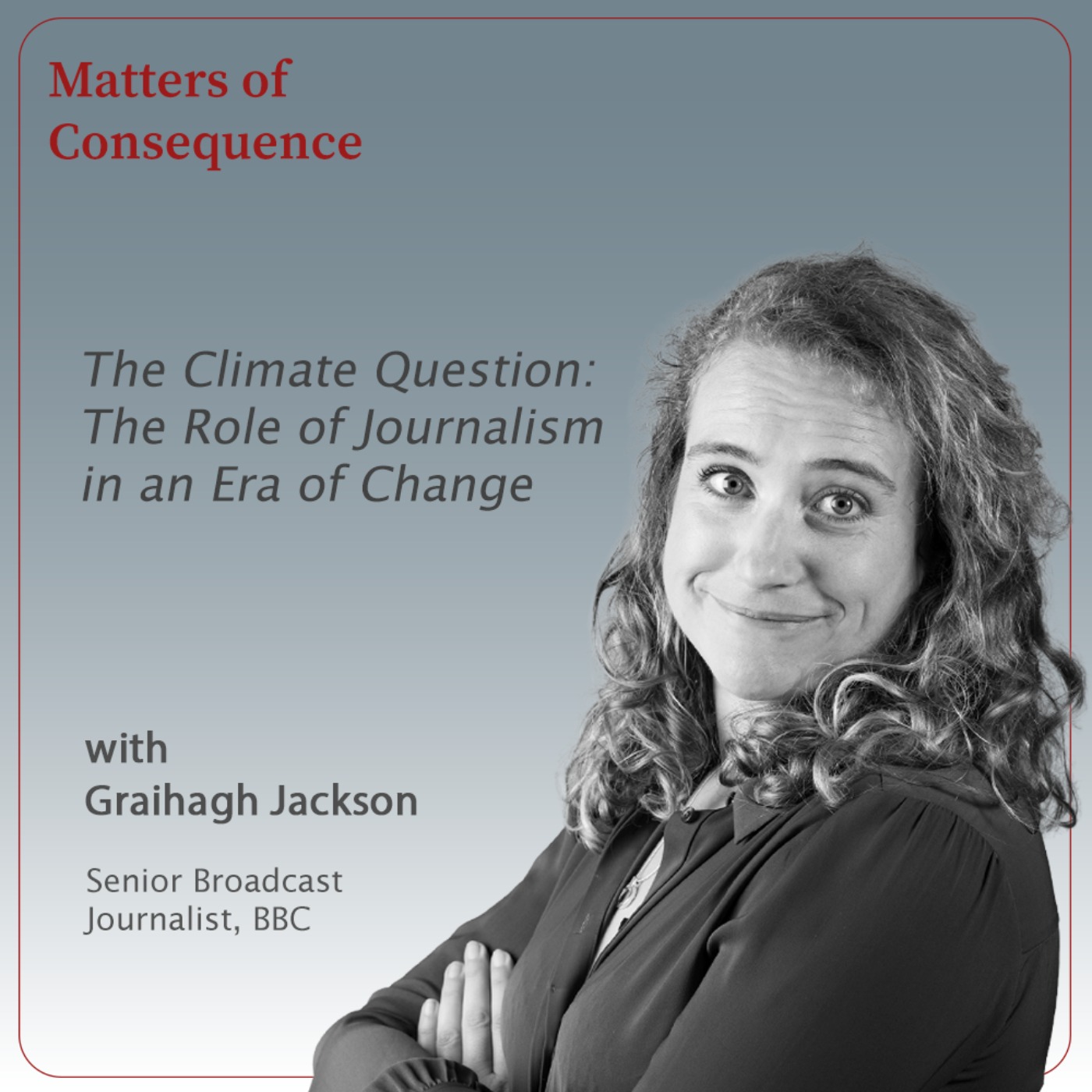
The Climate Question: The Role of Journalism in an Era of Change - On climate fatigue, human stories, and journalism that informs
How can climate journalism cut through the noise, overcome climate fatigue, and help people understand a rapidly changing world?In this episode of Matters of Consequence, Michael Hanf speaks with Graihagh Jackson, Senior Broadcast Journalist at the BBC and presenter of The Climate Question, the BBC World Service programme exploring climate change through science, policy, economics, and personal stories.Graihagh shares how her interest in nature led her to study physical geography and science communication before moving into radio. She explains how The Climate Question combines rigorous reporting with storytelling to make climate change more accessible.Climate change competes for attention with inflation, healthcare, immigration, and the economy. It can also feel abstract and emotionally exhausting. Graihagh explains why the programme focuses on human stories, showing how people and communities experience climate change and respond to it.The conversation explores episodes on electric mobility in Delhi, child marriage in Bangladesh, and communities in Malawi receiving support from the Loss and Damage Fund after a cyclone. These stories connect climate change with air pollution, public health, migration, poverty, gender inequality, and economic development.Graihagh also discusses the BBC’s principle of informing rather than influencing. The BBC is not impartial about established climate science, but it remains impartial about the political and societal choices made in response. Its role is to communicate facts, examine solutions, and help audiences form their own views.Michael and Graihagh examine how journalists can communicate urgency without leaving audiences powerless. Solutions, humour, unexpected questions, and actionable information can help people remain engaged rather than turning away.They also discuss listener questions, which reflect different experiences and priorities around the world, and journalism’s responsibility to challenge misinformation, hold governments and companies accountable, and connect climate change with reporting on health, business, politics, and the economy.Why listen?Learn how the BBC makes climate journalism accessible and relevant.Explore how storytelling can help overcome climate fatigue and news avoidance.Understand the difference between informing audiences and influencing them.Hear how climate change connects with healthcare, migration, poverty, and inequality.Consider journalism’s role in countering disinformation and holding institutions accountable.Whether you work in journalism, communications, sustainability, policy, or climate action, this episode offers a behind-the-scenes look at how trusted reporting can help people understand one of the defining issues of our time.Originally released as an episode of The Future of Sustainability, Season 1.Keywords: Graihagh Jackson, The Climate Question, BBC, BBC World Service, climate journalism, climate communication, climate storytelling, climate fatigue, news avoidance, climate misinformation, climate disinformation, climate change reporting, solutions journalism, environmental journalism, electric mobility India, Delhi electric vehicles, child marriage Bangladesh, climate migration, Loss and Damage Fund, Malawi climate change, climate finance, BBC climate podcast, sustainability communication, Matters of Consequence podcast Hosted on Acast. See acast.com/privacy for more information.
Embed this episode
Ready to play
The Climate Question: The Role of Journalism in an Era of Change - On climate fatigue, human stories, and journalism that informs
No transcript for this episode yet
Similar Episodes
No similar episodes found.
Similar Podcasts
No similar podcasts found.