
I see a lot of roasters a little bit confused with having success and doing some pie-in stuff, being really passionate, now trying to do some volume, some wholesale, potential big customer approaches them, but they need it to be super cheap, but it could be volume, or do we open a second line? Do we do this, do we do that? And it's not saying you shouldn't do it. I just think you need to understand that you're philosophically dabbing in two different, completely different bodies of water, two different universes that have different laws and different values, and you'll be very frustrated if you try to act the same way in each context.
If you're a roaster, you've probably felt it. It's getting harder and harder to find great quality coffee at volumes and prices that still make sense. One origin that's often been overlooked in the search is Honduras. For years, it's been treated as a conventional origin, even though there are producers quietly growing exceptional coffees that never make it into the specialty conversation.
The Honduran Coffee Alliance is a social enterprise with a simple mission. Connect those producers and buyers in a fair, sustainable, and commercially viable way. They work with organized producer groups across regions like El Paraiso, La Paz, Olancho, and Comayagua, helping them evaluate quality, tell their farm stories, and move coffees that belong on specialty menus, not buried in anonymous blends. What that looks like for roasters is previously untapped lots that hit your flavor and quality targets, a minimum of just four bags to get started, transparency reports so everyone can see where every cent of the purchase goes, and turning that first buy into a long-term trade relationship, not just a one-off.
If the idea of forming a long-term relationship with producers in Honduras is of interest to you, reach out to the Honduran Coffee Alliance so that they can work to find you a fit for your 2026 menu. Samples are going to be ready soon. You'll find Sean Warner's WhatsApp and email in the show notes. Send him a message and tell him you heard about the Honduran Coffee Alliance here and start exploring what these overlooked Honduran coffees could do for your menu today.
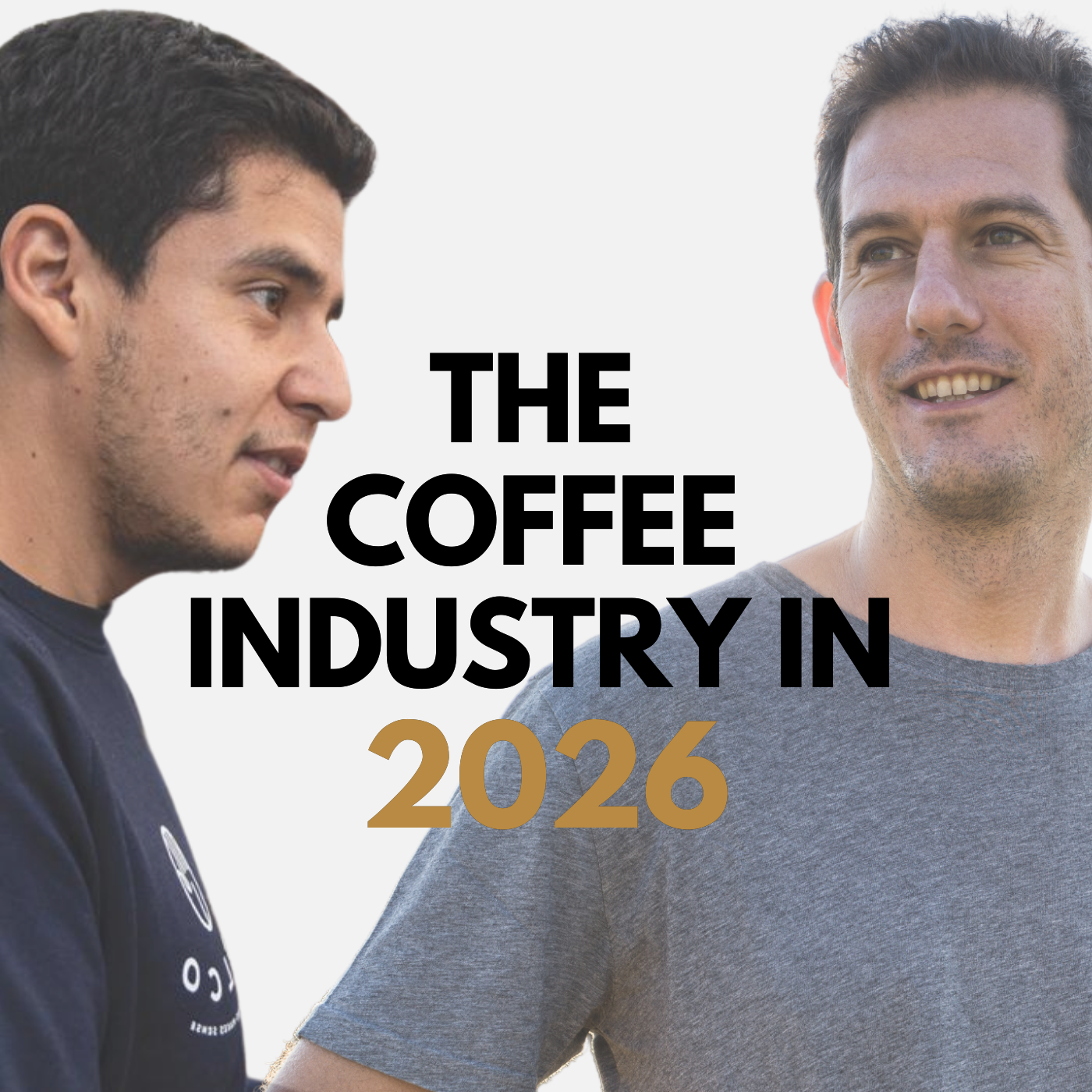
Check the show notes for links. Welcome to the Daily Coffee Pro by Mapper Forward Friends. I'm your host, Lia Zafar, and this is episode three of a five-part series with Felipe and Angel. We are talking about coffee in 2026, and in this episode, we're going to talk about the value of specialty coffee versus commodity in 2026 for different stakeholders in the coffee value chain.
And I think 2025, guys, was one of those moments where a lot more people than had previously thought about the difference between specialty coffee and commodity coffee was really a focus. People started realizing that they can't get as much access to specialty coffee as they previously got because farmers are starting to realize, I can send my money at these prices to the commercial market and get paid right away, and it's done. You guys both deal in specialty and commercial grade coffee, but predominantly specialty. Am I correct?
FAF only works with specialty. I'd say we've been dabbling into very entry-level specialty, but just specialty. Sorry, very entry-level. I would say like blender style, like 82-point coffee, but we've never done commodity, anything below 80 points.
Right, and how about Belco, Angel? Same thing, same thing. Either when we are working here as exporters or as importers in Europe, we could start with entry-level specialty, but we don't do commercial grades right now. Okay, do you think that in a year like 2025...
Although we have done, so we have done. Okay. We have done, yeah. Would you guys say that a year like we just had in 2025 has pushed back for people on the value of the way that they looked at specialty coffee versus commodity coffee?
Whoever wants to take that one can, and I feel like you're going to take that. Well, yeah, you know, essentially, I would think it has particularly changed quite a lot. Like if I recall my first years as a coffee buyer back in 2012, more or less, some... At that time, there were no people in green coffee doing most of the specialty.
I would say we were among the first one in Europe. And the trading houses, they would say last, they would laugh at me for saying that I accept to pay some prices for farmers. People would see that as a ridiculous pink imaginary world, even though that we were believing. It was like, that will never happen in a commercial grade.
And the thing with what has happened right now is that that hit the whole industry. You know, it was like, in a moment, market goes over $4 and everybody pays $4. And it really changes. So of course, you know, I believe through different times in the market, like when the market, when I was a child, I knew a market at 44 cents as a professional.
I believe some markets at 90 cents. So you were paying $2 to $15, you know, people would say that from what country, from what planet are you coming to this kind of thing. So of course, we were really far from one from the other. And in a way, it makes it simple because nobody was willing to pay those prices back then.
Right now, what is happening is that this people are so brutal that everybody had to pay what the market was. So of course, the gap, it really changed. It changed by complete. And because of that, well, basically everybody like loses their mind and loses in a way their identity as well.
Because like big large corporations suddenly and for survival or whatever reasons, they can claim what specialty people was claiming before. And then suddenly specialty people found themselves saying that basically they're paying the same as large corporations for coffee. Although there's always a small gap. So it's that I think it made people lose their value.
And for many, it made lose their direction because people didn't know where to go or what to do. Out of interest, how does Belco define specialty coffee? Well, I think we start with traceability. Okay.
Yeah, it's if you know the coffee you're buying, if you know the traceability of the coffee you're buying, then you can make a lot of definitions. Because in a way, you know your supply and you can act on your supply. It's not that you don't know it and it's just imposed that way. So I would say it all starts with the traceability.
It's a French company as well, so of course the idea of terroir is very important. And if I had to give a definition, we'd like to talk on the global quantity, basically. And that is a good quality in the cup, which is the base of many other definitions accepted globally. But to get that high-quality thing, you need to pay in a proper way for the work they have done to the producers.
And at the same time, those coffees produced, we are really attentive on the impact they have on the environment. So try to be, try to preserve or even regenerate a little bit the ecosystem where they are produced. So I would say we have the global quality on that. And at the end, that triangle makes the communities live.
And how do you guys define commodity? Angel, in Belco. I would say it's a non-traceable bulk coffee. Okay.
Grown any particular way, like bulk production, monocrop. Quality is not really a... Okay. If you don't know the traceability, you cannot assume or pretend that that coffee will represent something, because if you don't know where it's coming from...
Even if I'm not a big fan of the UDR, how it has been handled and everything, I think that the UDR really showed us as well the limit of big corporations, because big corporations, they just say, we cannot have traceability. So when they do not have traceability, basically all of their marketing, it comes to zero. It comes to nothing, because what they are claiming is not real. Right.
Felipe, how at FAF do you guys define specialty coffee? Well, at FAF, we, after 20 years, understand our role in the industry. I should start with that. That's what we define and me on a personal level.
But then in the end, we have clients with different demands and different needs. But our role is, our purpose is to inspire and empower everyone engaging with coffee, from the farmers to the consumer. We have an agenda at FAF. We have a core value and a mission to regenerate our soils and our communities.
And we, anyone who's engaged with us, we push them in that direction. Since 2000, we've pushed people into learning and supporting, and in some cases buying organic or agroforestry. So what it starts with, it starts with the soil. As a farmer, it starts with regenerating, and regenerating is a science.
It's regenerating what? And so there's a method to it. They do a diagnosis and analysis, laboratory, but biological. And then we have an agronomist team, and we do that step by step and bring farmers to have success.
So we definitely push farmers, and we invite our clients to help support. So we have support from customers like Lique and Sweden, who support our band project, which is every week on the road, helping with farmers and developing the human side and cupping with them. And we have our agronomists team. So we have Mr.
Hobans in Hamburg and Johan Edström who support our future farmers program. So we have hired agronomists who are teaching things like cover crops, increasing organic matter. The biggest movement in farming right now is the biofactory movement and on-farm biofactory. So we've invested heavily on that and building biological.
So we produce four fungi and eight bacteria that basically can substitute all of the fungicides Commodity is just bulk. It's just weight. It's 60 kilos. It doesn't matter.
And even if you buy coffee from the board, you get a delivery, it literally could be from anywhere. Anything. It has to be coffee, it has to be a certain grade, but really doesn't matter. So, of course, any definition of value is subjective.
And that changes over social construct over time. But I really urge people to understand that because I think that we've been living in a barista era from 2000, 2020, where the focus, intelligence, capital, time, investment have been on perfecting espresso basics and espresso machines. Of course, I think great things like a couple of excellence and on options and stuff have come out and they've had success. And there's philosophical reasons why they've had success.
Like one person I urge people to read is a Norwegian American philosopher who I always cite, it was Thorstein Veblen who around the turn of the 19th century wrote a lot about why people consume what they consume. And I think that business owners need to go back to that. They need to understand that. So, I see a lot of roasters a little bit confused with having success doing some high-end stuff and being really passionate, now trying to do some volume.
Some wholesale potential big customer approaches them, but they need it to be super cheap, but it could be volume, or do we open a second line, do we do this, do we do that. And it's not saying you shouldn't do it. I just think you need to understand that you're philosophically dabbling in two completely different bodies of water, two different universes that have different laws and different values, and you'll be very frustrated if you try to act the same way in each context. And I think that the clearer you are about your values when you talk about...
Like, I don't think Prada, Gucci, Hermes, I don't think they go all over the place. They're very clear about what they are, what they do, and I don't think they're afraid of, you know, Zara stealing their business. And I just don't think that coffee is there, is that level of clarity. So, I'm in France right now.
I went to visit a natural winemaker and a client's friends from Bordeaux, the alchemist. So, Johan and Arthur connected me with this father-son small farm natural wine called Lunglore. And if you say the name Lunglore in a natural wine bar anywhere in the world, in Sao Paulo, in Tokyo, in anywhere, Sydney, you instantly have credibility. And you can be in a French bar and you can have the most snobbish of snobbish wine person.
If you say that name, all of a sudden the service changes. And so, I went and visited them and they were really nice. They allowed us to come in on a Saturday, father and son, and we talked and talked a lot about farming. And in a very French nonchalant way, they were drinking and they took out a bucket and spitting wine on the ground.
And so, I started spitting as well and then I was like, okay, I want to buy a bottle. And they said, you know, very, what the French do very, very well. They said, no. It's just, no.
Like, we sold it all. We sell it here. We don't sell any bottles. And I got a present from Alchemist later.
I got a couple of bottles of their wine. But now my wife and I, we're the biggest fans of Lunglore. Anywhere we go, we are devoted fans of this wine. And it's really, really good, but it's like, it's just, they did it, you know?
And like there's a supermarket, I'll give you another example. There's a supermarket in Sao Paulo, which I like to take my clients to, which is Intertuction. Intertuction is run by a bunch of hippies. They're now in their 30s.
I thought they were going to go bankrupt in a month. They've been around for nine years and they're growing and they're doing consulting. They do a very good curating. They buy from farms, everything they do.
Mostly organic, but not all. And they have a very clear economic model. They put the price of the product on the shelf that it took to get to the shelf. The cost and the cost, right?
Farm gate plus transportation, whatever. The cost, right? Yeah. And I know it's true because my mom sells beans, banana, honey, coffee, and they don't negotiate.
They rarely negotiate. They put that. And then they put on the wall and on their Instagram and everything. And they suggest that you pay 30% markup.
And they put all their costs on the wall. Salaries, rent, whatever, whatever. And they report there. And this is, okay, this is radical, I admit, but people who shop there, I would risk to say, are the most loyal customers.
They don't look at price. They shop there on a values basis. So I think you can reach people on something special is something that you choose once you've achieved your necessity. And once you have extra money, you choose out of pleasure for whatever reason.
So this reaches people because the product is good, but on a philosophical level. Cafes do this because people enjoy the cafes because the service is good, because it's nice. We need to go back to understanding why people choose to use their excess money to all those things. And it's not just about the cup.
I think the cup is very important. It has to guide us. And as an industry, we're also discussing these things. But I think it's important that we do that.
And the more as an entrepreneur, as a small business, the more that you differentiate yourself, and a lot of Fox customers have even, I would risk to say, have become huge fans of regenerative. I think now, now even a lot of them have actually become regenerative in Agroforestry in their own home gardens and stuff. But I would say they first and foremost found a business model to differentiate themselves in their markets. And then they sort of grew into that and stuff like that.
So, and connected to the communities they've connected. And, and, and so I would say that the small businesses have actually done that better recently. You raise two particular industries that are very, going through a very interesting time right now. You mentioned wine and you mentioned the clothing industry.
And the wine industry is experiencing a very similar thing to what I think that the coffee industry, the specialty coffee industry, whatever the fuck that means anymore. But the specialty coffee industry is going to experience in, let's say some time in the next five years. So the wine industry is because Gen Z are no longer really drinking alcohol. Nowhere near as much the generations that came before them.
The very top of that industry is staying where it is, right? The fine wines are still getting consumed. The natural wines are still getting consumed, but there are a record number of farms going out of business and pulling trees out of the ground because of the shift in, in drinking habits of young people and people who drink alcohol, a lot less people are drinking alcohol these days. In the clothing industry, it's a different force that's impacting consumer habits.
Consumer habits in the luxury brands and in brands like Zara are being impacted by geopolitics. You have bans being placed on a lot of those brands because they're owned by businesses or brands that support Israel. So what you're seeing is brands like Zara, brands like Hermes, brands like all of these big brands who would have had consumers before, a lot of people are bowing to the pressures of the, you know, these ban, this boycott culture. And so what I'm seeing is to both of your points about what specialty is, right?
Specialty may be traceability and specialty may be about quality and brand identity and values. It's no longer just a definition. No... Please go ahead.
I'm sorry, sorry. Well, I just wanted to say that the idea of specialty these days is no longer what it started as the definition of. Everything is now being impacted by everything. We're no long...
There's a holistic shift in the global culture of everything that is impacting the way that we participate with each other, the way that we participate with businesses, with brands, how we define everything, how we spend our money, how we don't spend our money. And I think that these definitions are shifting all the time, whether, you know, what do we define as something that's commercial commodity versus something that is specialty or special, right? Please go ahead, I... You know, two things that I think, it's the first one, when I think, when I started working in coffee, the first people I buy coffee from the first people I sell coffee, I think they share the same values, the same principle.
And that's why we're doing business. And that, I think is something that we tend to forget with time. Like a roaster could say like, I want to sell in supermarket because it's going to be a big volume, but they will never have the same values you have. So in a moment, it would make, it would make you lose yours.
And that's, that's the thing. And the other thing that I'm thinking, and that I think that it's very important because we can talk about the specialty, but we can also talk about how specialties start to go in a moment, like the ultra specialty with all the fermentations with this, with that, et cetera. In French, they will say entre-soi, which is between us, you know, in a moment it was good. Nobody understood what we were talking about, et cetera.
And I don't know if you remember this documentary Bowling for Columbine. No, it's Michael Moore. Oh yeah, yeah, yeah. Yeah, exactly.
And they bring Marilyn M You can influence people's values, you know, just try to influence that a little bit. Otherwise, eventually that business is going to go on to a bigger roaster, a bigger whatever who can do it cheaper. But specialty is about a choice. And so understanding that, understanding that why people choose what they choose.
And I think the smaller you are, the more you need to be clear about that. And you resonate with people and that's how, that's how people learn to, that's how people engage with your product and just have so much value, you know, because it is like wearing a T-shirt that supports Israel. That is saying something to the community, to different communities, you know, and you can influence people's values over time. So you know, landscaping in Britain and France when it came about, was about planting things that don't produce food.
So it was grass and flowers. And it was about telling your neighbors, I've made it, I've become so rich. I don't need to plant my own food. People replicate that without knowing, and it doesn't even match with a lot of people's values these days.
And they have green lawns. You start to see people changing their lawns now to more natural themes and just natural bushes and stuff like that. So, so people do listen and they can, and you can change. I wouldn't, maybe you don't change people's values, but you ignite something inside them.
So understanding, studying, going back and studying philosophically what people, how people choose what they choose. I think that's especially the multi-faceted, multidisciplinary discipline thing. And I guess to wrap this conversation up, that's what we hope this whole podcast is about, right? Giving people the You were saying, unhill that people do things because that's how everybody does it.
Right. And what we're trying to do is to get people to say, Yeah, no bro, you don't have to do it that way. Like you can do whatever is your jam. You can decide that specialty coffee all comes from one origin if you like, and it's based on anything you decide it is.
Nobody's got the, you know, governmental law that says you must sell specialty coffee if it does this. Start thinking outside of the box. Start making decisions and values and ideas for what you, everybody out there that's listening to this, please start thinking for yourself. It's basically what we're saying.
So, all right, next episode, join us for a discussion between the difference between the corporate coffee industry and the small business side of our industry. Please stop and peanut butter. Have an amazing rest of your day. If you enjoyed this episode, consider supporting Mapper Forward, our guests and advertisers on social media.
Also subscribe, hit the like button, leave a comment, and share this episode with a friend to help get the show to more people. And if you'd like to support our work more directly, become a paid premium YouTube subscriber or Patreon backer to get early access to the show ad-free delivered directly to your inbox each week. You can find links in the show notes.