
EPISODE · Jun 22, 2026 · 34 MIN
The Confessions of St. Augustine - 2 - Book Two - Book Four
from Discipleship for the Present Podcast · host Kanu Emeruwa
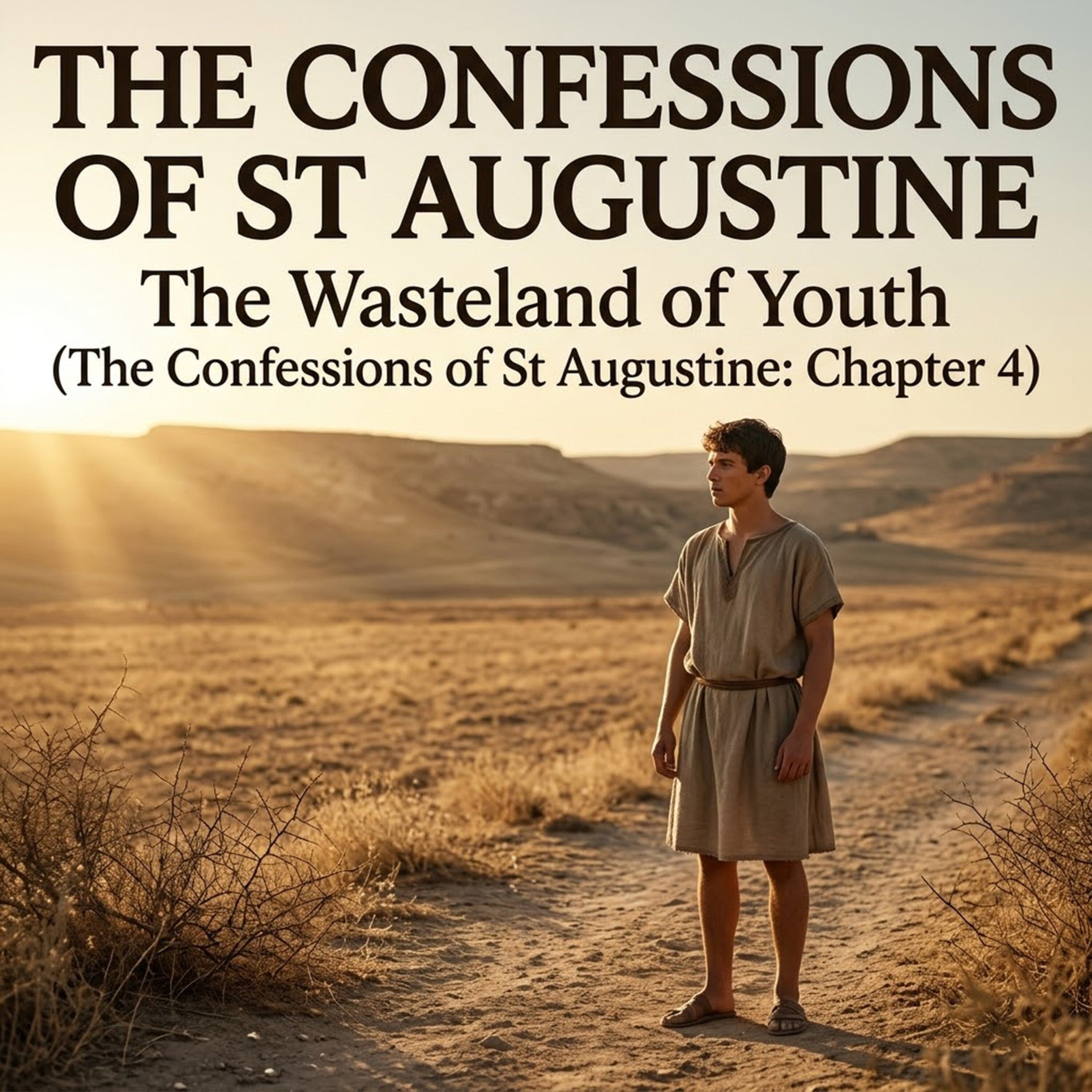
Most of us remember Augustine of Hippo as a towering theologian and a pillar of the early church. But his late teens and early twenties begin in a much darker place.The episode opens by stripping away his polished historical legacy and looking carefully at the young Augustine—a brilliant student who plunged headfirst into the metropolis of Carthage, a city he describes as boiling over in a “cauldron of unholy loves.” Before the profound revelations and the spiritual mastery, we are introduced to a young man crippled by his own ambition, who famously wrote of his sixteenth year: “I became to myself a wasteland.” It is a haunting self-diagnosis of a soul that was outwardly crushing every metric of Roman success while remaining inwardly barren and hostile to life.That wasteland becomes even clearer when we examine the soil he was planted in. Augustine’s parents, Patricius and Monica, offer a masterclass in misplaced priorities. His father celebrates his physical maturity with toxic ambition, caring nothing for his character so long as he becomes a persuasive orator. Even his devout mother makes a tragic cultural compromise, prioritizing his education and earning potential over his spiritual safety. She delays his marriage, fearing it might hinder his resume. That opening detail sets the tone for a world where upward mobility is treated as the ultimate virtue, leaving the soul exposed and unprotected.At the center of his youthful rebellion is one of the episode’s key events: the theft of the pears. With a toxic peer group known as the “Wreckers,” Augustine steals quantities of bad pears he doesn’t even want to eat, simply for the thrill of the transgression. He writes, “It was foul and I loved it.” The episode draws this into modern life by examining the concept of “counterfeit liberty”—the illusion that by breaking a rule, we are asserting our own freedom. Augustine recognizes that he needed an audience for his rebellion, admitting the painful truth that he was “ashamed to be less shameless” than his friends. It is a striking perversion of secret obedience, where we broadcast our wickedness just to secure validation in the mud.From there, the episode turns to the seduction of the stage and the theater of false compassion. Augustine loved the “wretched madness” of watching tragedies because they allowed him to experience deep emotional empathy without the responsibility of real action. This is not treated as a relic of ancient Rome. In context, it is a sober recognition of our modern digital habits: outrage scrolling, leaving crying emojis on documentaries, and feeling righteous without ever lifting a finger to serve our physical neighbors.This leads to one of the episode’s central explorations: how intellectual pride and grief create profound spiritual blindness. Augustine initially rejects the humble, unvarnished style of the Scriptures because his rhetorical ego demands sophistication. Instead, he falls into the absurd cosmic traps of Manichaeism and astrology, using the stars as an excuse to avoid personal accountability for his own sin. But his neat philosophical systems shatter when his closest childhood friend dies. Augustine had taken the total devotion that belongs only to the Creator and placed it onto a fragile, mortal being. When that friend dies, his world becomes a “torture room.” The wisdom here is not to avoid deep love, but to recognize that burdening mortal relationships with the infinite expectations of a savior will only lead to absolute despair.The episode closes with a practical question: if your closest friends, intellectual achievements, and career ambitions were stripped away tomorrow, what would remain of your identity? Have you anchored your soul in things that pass away, or are you building a foundation that can actually sustain the weight of your life?In This EpisodeWhy Augustine’s youth is a perfect mirror for modern ambition and spiritual exhaustionThe chilling psychology behind the theft of the pears and the illusion of “counterfeit liberty”Toxic parental ambition and the danger of prioritizing a resume over characterThe Wreckers, peer pressure, and the terrifying desire to be “ashamed to be less shameless”The theater of false compassion: experiencing emotional empathy without the responsibility of actionIntellectual pride and why a brilliant mind can reject simple, life-saving truthThe absurdity of Manichaeism and caring more for a fig than a starving human beingAstrology as the ultimate cosmic excuse to evade personal accountability and self-denialThe devastating loss of a friend and the danger of burdening mortal relationships with infinite expectationsHow the prevailing intellectual cultures of our day can blind us to the simple instructions of JesusPractical ReflectionWhere are you seeking the thrill of “counterfeit liberty”—rebelling or compromising your values simply to prove you aren’t bound by the rules, or to avoid appearing foolish to your peers?How often do you settle for the “theater of false compassion,” feeling outrage or sorrow online without taking any physical, sacrificial action to love your actual neighbor?Who or what in your life is crumbling under the weight of your expectations because you are relying on them to be your ultimate source of identity, security, and peace?Suggested Substack ExcerptBefore he was a revered theologian, Augustine of Hippo was a brilliant, spiritually exhausted young man who described his own soul as a “wasteland.” Books 2-4 of his Confessions reveal a chaotic search for truth marked by toxic peer pressure, intellectual pride, and the crushing weight of idolized relationships. In this episode, we explore Augustine’s wild youth alongside the core instructions of Jesus, diagnosing the ancient habits of the heart that perfectly mirror our modern lives.AI DisclosureThis episode was created using Google NotebookLM Audio Overview, based on human-curated source material, structured guidance, and editorial review. AI is used as a tool for clarity and delivery, not as a replacement for thoughtful study or engagement with the original texts.Copyright© 2026 Discipleship for the Present / Kamashcu Production Studios. All rights reserved. This is a public episode. If you would like to discuss this with other subscribers or get access to bonus episodes, visit discipleshipforthepresent.substack.com
Embed this episode
Ready to play
The Confessions of St. Augustine - 2 - Book Two - Book Four
No transcript for this episode yet
Similar Episodes
No similar episodes found.
Similar Podcasts
No similar podcasts found.