
EPISODE · Mar 29, 2025 · 3 MIN
The Cosmic Secrets of Clouds: What Shapes in the Sky Reveal About Our Universe
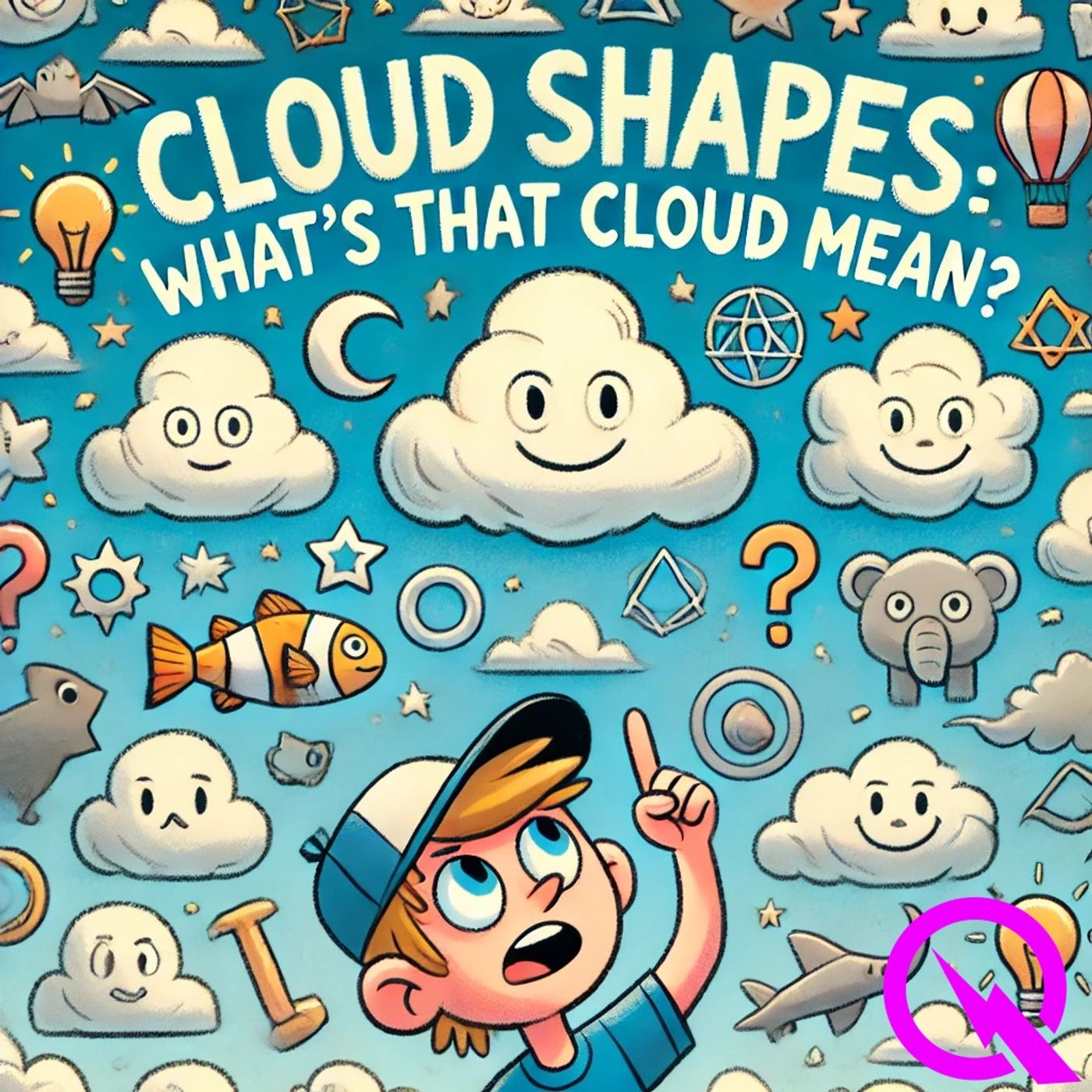
from Cloud Shapes What’s That Cloud Mean? · host Inception Point AI
Hey there, Jed Why here, your favorite former tinkerer turned audio explorer. You know, back in my tinkerer days, I used to spend hours staring at clouds, wondering if those fluffy white blobs up there were the key to some cosmic puzzle. Huh, that's weird—let's unpack it. Today, we're diving into the world of cloud shapes and what they might mean. So grab your lukewarm coffee, settle in on that creaky porch chair, and let's get started. It was a typical Thursday morning, and I was sipping my coffee, watching the clouds drift by. There's something mesmerizing about them, you know? One minute they're a fluffy sheep, the next a majestic dragon. But I started wondering—what do these shapes actually mean? Are they just random, or is there some hidden message up there? As I pondered this, I remembered hearing about a study from the University of Hawaii that found people tend to see faces and animals in clouds more often than other shapes. It's called pareidolia, this tendency to see patterns in random things. Isn't that fascinating? It's like our brains are wired to find meaning, even in the sky. But then I stumbled upon something even weirder. Did you know that some ancient civilizations believed cloud shapes could predict the future? The Mayans, for instance, used cloud watching as a form of divination. They thought certain cloud formations could signal good or bad omens. Now, I'm not saying we should start making life decisions based on cloud shapes, but it's pretty cool to think about how people have been staring at the sky for thousands of years, trying to make sense of it all. As I was digging deeper into this, I came across a practical tip that I just had to share. If you're ever lost in the wilderness, you can use cloud shapes to help navigate. Cirrus clouds, those high, wispy ones, often indicate fair weather and can help you determine the direction of the wind. And if you see cumulonimbus clouds, those towering, anvil-shaped ones, it's a good idea to find shelter pronto—they're a sign of thunderstorms. But let's get back to the fun stuff. Have you ever noticed how clouds can look like food? I once saw a cloud that looked exactly like a giant slice of pizza. Turns out, I'm not the only one who's seen this. There's a whole subreddit dedicated to cloud food, where people share pictures of clouds that resemble everything from burgers to ice cream cones. It's a reminder that even in the most mundane things, there's room for a little whimsy. As I was scrolling through these cloud food pics, I stumbled upon a fascinating fact. Did you know that the largest cloud ever recorded was a cumulonimbus cloud that stretched over 200 miles long and 70 miles wide? It was spotted over the Bay of Bengal in 2007. That's the equivalent of about 14 million football fields. Imagine seeing a cloud that big—it would be like staring at a floating continent. But here's where things get really weird. Some scientists believe that clouds might play a role in the for This content was created in partnership and with the help of Artificial Intelligence AI.
Embed this episode
NOW PLAYING
The Cosmic Secrets of Clouds: What Shapes in the Sky Reveal About Our Universe
No transcript for this episode yet
Similar Episodes
No similar episodes found.
Similar Podcasts
No similar podcasts found.